

We may earn a commission when you buy through links on this page, at no extra cost to you. Learn more.
The Farberware wine opener is a practical manual corkscrew option for opening traditional wine bottles, with winged and waiter’s designs offering different levels of convenience. The Farberware Professional Black Wing Corkscrew, model 5216100, combines a manual extraction mechanism, stainless steel construction, and a built-in bottle opener. Farberware also offers a Professional Wing Corkscrew with Foil Cutter and a compact waiter’s corkscrew, so choosing the right version matters more than choosing the brand name alone.
Farberware wine openers appeal to shoppers looking for straightforward bar tools rather than complicated electric equipment. The winged design is particularly approachable for occasional wine drinkers, while the waiter’s corkscrew offers a more compact alternative for people who prefer a traditional restaurant-style opening technique. This review examines the available designs, manufacturer specifications, customer feedback, practical limitations, and the features worth considering before buying.
Specs and Key Features
The Farberware Professional Black Wing Corkscrew is a manual wine opener designed around a rotating head and two lifting levers. Its straightforward mechanism, compact dimensions, and additional bottle-opening function make it a practical candidate for a home bar, although its design differs from a traditional waiter’s corkscrew.
Walmart identifies the black Professional Wing Corkscrew as model 5216100. Its listing describes stainless steel construction, a manual operating mechanism, and a built-in bottle opener. The product does not require batteries or electrical power, which makes it suitable for a kitchen drawer, cabinet, or bar setup without requiring charging equipment.
The dimensions are relatively compact for a winged opener. At 7.28 inches high, 2.36 inches long, and 1.57 inches wide, it can fit into many standard kitchen utensil storage areas. Its assembled weight of 0.34 pounds also makes it relatively easy to move between a kitchen counter and a serving area.
There is another relevant option in the Farberware range: the Professional Wing Corkscrew with Foil Cutter, model 5216099. Farberware describes this version as having comfortable-grip wings, zinc alloy construction, one-piece cork removal, and an integrated bottle opener. Its product description also specifies hand washing.
| Feature | Professional Black Wing | Professional Wing with Foil Cutter |
|---|---|---|
| Model | 5216100 | 5216099 |
| Opener style | Manual winged | Manual winged |
| Construction | Stainless steel | Zinc alloy |
| Finish | Black | Silver |
| Built-in bottle opener | Yes | Yes |
| Dimensions | 7.28 x 2.36 x 1.57 inches | Not specified on product page |
| Weight | 0.34 pounds | Not specified on product page |
| Power | Manual | Manual |
| Cleaning | Hand wash | Hand wash |
These specifications come from the respective product descriptions, rather than assumptions based on the appearance of the products. The two models share the basic winged-corkscrew concept, but their listed construction materials differ. Buyers should not assume that every Farberware wing opener has identical dimensions, finishes, or included accessories.
The Farberware Professional Black Wing Corkscrew specifications provide a useful reference when comparing the 5216100 with other manual openers. The manufacturer’s model 5216099 product description provides additional details about the alternative construction and grip design.
One important distinction concerns the phrase foil cutter. Although model 5216099 includes that wording in its product name, its description does not provide detailed dimensions or a separate technical explanation of the foil-cutting mechanism. Buyers interested in a specific accessory should confirm the package contents before purchasing.
For a home bar, the built-in bottle opener is a useful extra. It provides a second opening function for capped beverages without requiring a separate tool. However, it does not replace the corkscrew itself, and the two mechanisms serve different bottle closures.
What Owners Like
The strongest practical advantages of the Farberware winged corkscrew are its familiar operating method, manual construction, and additional bottle-opening function. These characteristics make it an approachable choice for households that open wine occasionally and want a straightforward tool rather than an electronic appliance.
The winged design is particularly easy to understand. Instead of requiring the user to coordinate a small folding lever against the bottle neck, it provides two visible lifting arms. Turning the top handle drives the spiral into the cork while raising the wings. Pressing both wings downward then provides the leverage needed to remove the cork.
This arrangement can be reassuring for beginners. The mechanism gives a clear indication of when the spiral has entered the cork and when the opener is ready for the extraction stage. Someone opening a bottle for a weekend dinner does not need to learn the more precise leverage technique associated with a waiter’s corkscrew.
Another positive feature is that the model 5216100 operates without batteries. Electric openers can be convenient, but they introduce charging requirements, additional components, and another appliance to maintain. A manual Farberware corkscrew can remain in a kitchen drawer for extended periods without needing an electrical connection.
The integrated bottle opener is also useful in a mixed-drink setting. A household serving wine, sparkling water in capped bottles, or other bottled beverages may appreciate having more than one opening function available in a single utensil. This is particularly helpful when organizing a small serving station with limited drawer space.
Farberware’s waiter’s corkscrew offers a different type of convenience. BevMo describes its Professional Waiters Corkscrew as combining a sharpened stainless steel spiral, serrated foil cutter, bottle opener, and utility knife. The components fold into the handle, giving the design a compact shape for storage and travel.
That versatility is useful for people who prefer a traditional bar tool. A folding waiter’s corkscrew takes up less space than a winged model and can be carried in a small wine-accessory case. It also provides more direct control over cork extraction once the user becomes familiar with its lever.
There is a practical difference between customer enthusiasm and independently established product performance. Walmart displays a five-star rating for model 5216100, but the listing shows only one rating. That is encouraging but represents a very small amount of customer feedback. It should not be treated as proof that every buyer will have the same experience.
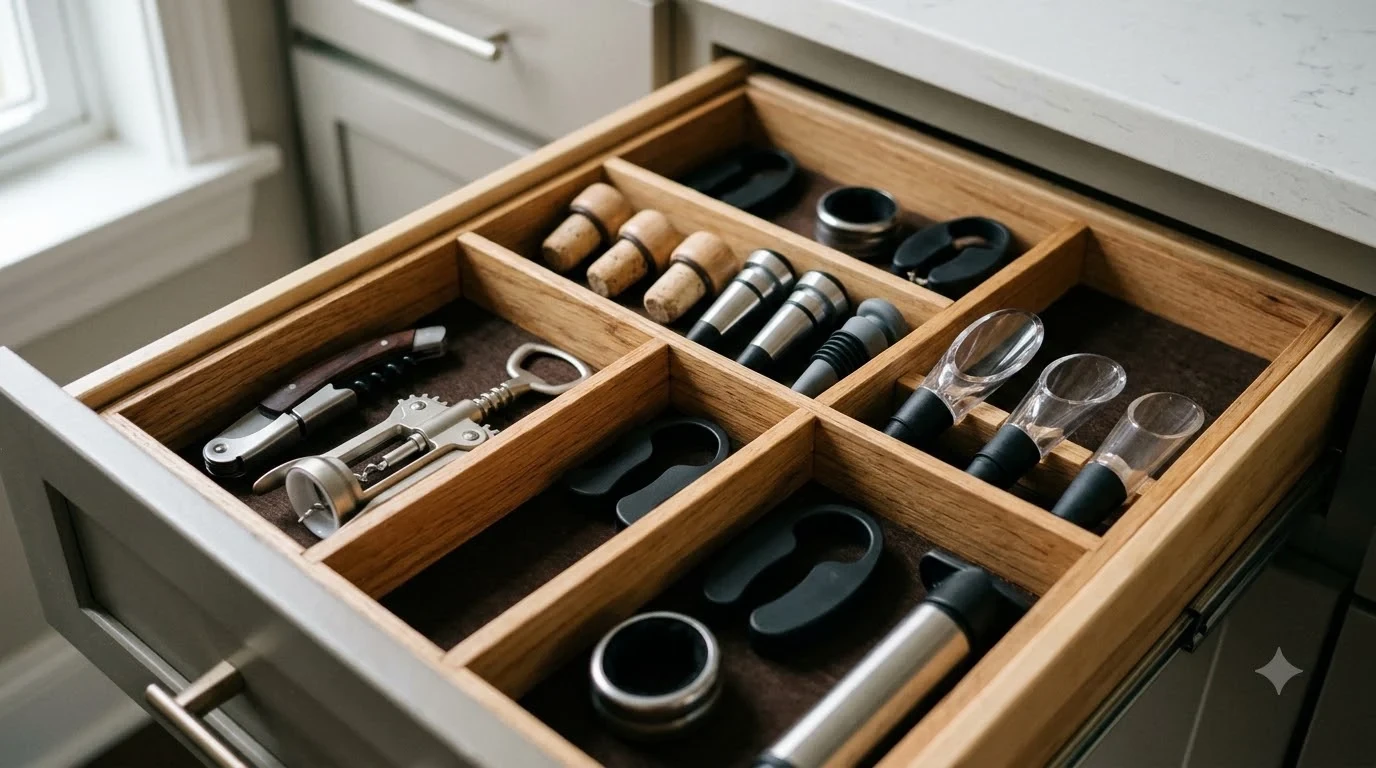
For a more complete home-bar arrangement, a corkscrew can be paired with a wine opener and preserver set. The opener handles the initial extraction, while a preservation accessory helps manage remaining wine after the bottle has been opened.
Common Complaints
The main limitations to consider are the physical effort involved in manual operation, the space required by the winged design, and the limited amount of detailed owner feedback available for the individual models. These considerations do not make the Farberware opener unsuitable, but they help establish realistic expectations.
First, a manual winged corkscrew still requires the user to apply downward pressure. Although the two wings provide mechanical leverage, opening a bottle is not entirely automatic. The user must hold the bottle securely, turn the top handle, and press the wings down evenly.
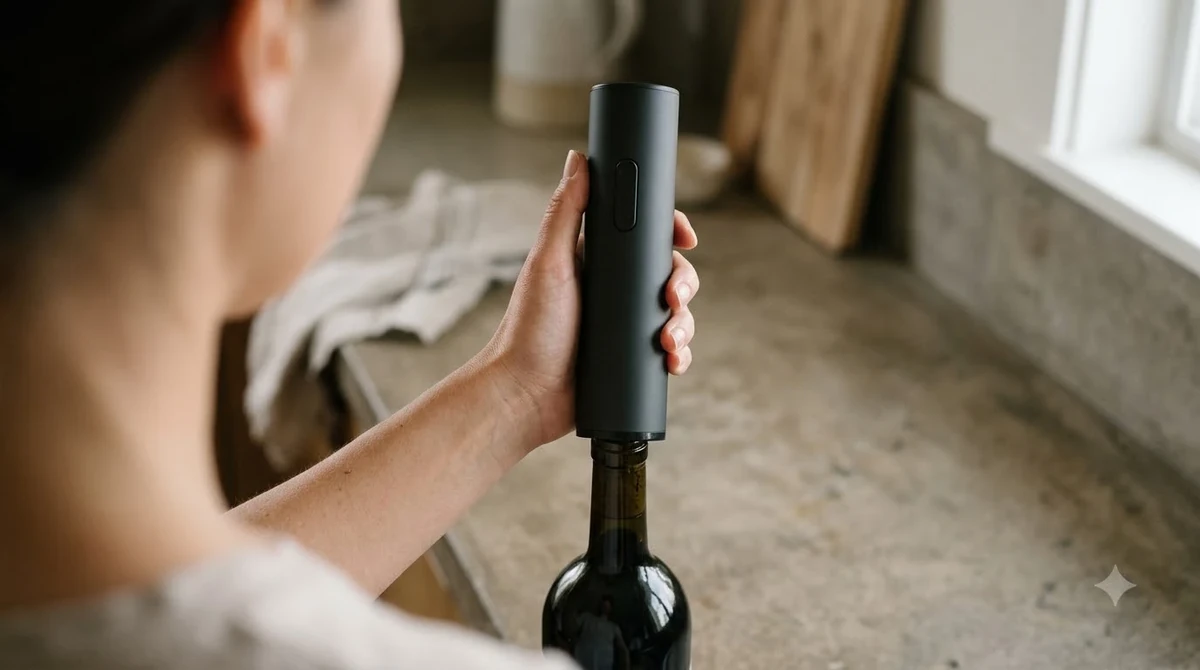
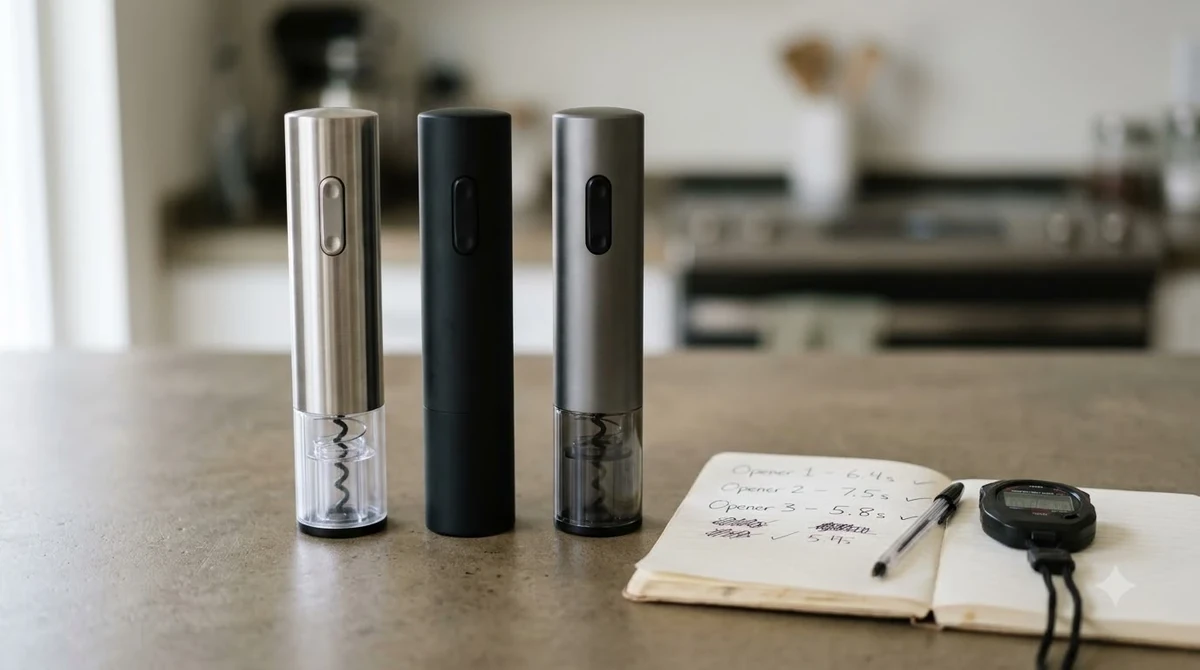
People who prefer a one-button opening process may find an electric wine opener more convenient. An electric model typically handles the insertion and extraction process using a motor. The trade-off is that it needs a power source, takes up additional storage space, and introduces electronic components that a basic manual opener does not have.
Second, winged openers can be somewhat awkward when storage space is restricted. Their extended arms create a wider profile than a folding waiter’s corkscrew. A compact apartment kitchen with shallow drawers may therefore benefit more from the smaller alternative.
Third, the available customer feedback is limited. Walmart displays one rating for model 5216100, while the Farberware product page for model 5216099 does not display customer reviews. There is not enough evidence to identify a recurring defect, a consistent durability problem, or a widespread complaint about either model.
This distinction matters because product listings sometimes encourage shoppers to treat ratings as a complete measure of reliability. A single favorable rating cannot establish long-term performance across different cork types, bottle necks, or opening frequencies. Similarly, a lack of published negative feedback does not guarantee that problems never occur.
Another potential concern is the difference between similarly named Farberware products. A search for a Farberware bottle opener may return a cap opener, can opener, or wine corkscrew. These are not interchangeable tools. The Professional Can Bottle Opener, for example, is designed around can and bottle-opening functions rather than extracting wine corks.
Before purchasing, look for the words wing corkscrew or waiter’s corkscrew in the actual product description. A spiral worm designed to enter a cork is essential for traditional cork-sealed wine bottles. A simple metal opener for crown caps will not perform the same job.
Finally, manual operation requires a little technique. If the spiral enters the cork at an angle, extraction can become less controlled. Applying excessive force or pressing one wing before the other may also make the process unnecessarily difficult. These are general considerations for winged corkscrews rather than documented recurring Farberware defects.
Tip: Keep the bottle upright on a stable counter, center the corkscrew spiral, and turn the handle steadily. When both wings reach their raised position, press them down together rather than forcing one side independently.
Who Should Buy and Who Should Skip
The Farberware winged corkscrew makes the most sense for occasional wine drinkers, casual hosts, and households that want a manual opener with a familiar mechanism. It is less suitable for shoppers who prioritize compact travel equipment, powered extraction, or specialized wine-service tools.
Buy the winged version if:
- You regularly open traditional cork-sealed wine bottles at home.
- You prefer a visible mechanism that is relatively easy to understand.
- You want a manual tool that does not need batteries or charging.
- You appreciate having a bottle-cap opener incorporated into the same accessory.
- You have enough drawer or bar-cart space for a winged design.
- You prefer a simple utensil over an electric appliance with multiple components.
The model 5216100 is especially worth considering if stainless steel construction and its black finish fit the rest of your kitchen or bar accessories. Its published dimensions also make it easier to evaluate whether the opener will fit into an existing storage arrangement.
Skip the winged version if:
- You want a very compact opener for travel or a picnic basket.
- You regularly open many bottles and prefer a professional-style lever system.
- You want automatic cork extraction with minimal manual movement.
- You need detailed independent durability evidence before making a purchase.
- You primarily open bottles with alternative closures rather than traditional corks.
A waiter’s corkscrew may be a better choice for experienced wine servers. Its folding handle and compact construction make it practical for restaurant-style service, while its integrated foil knife helps prepare the bottle before extraction. The technique takes some practice, but the tool is versatile and easy to carry.
People setting up a dedicated entertainment area should also consider the wider collection of accessories. A corkscrew, foil cutter, stopper, and appropriate glassware create a more useful arrangement than relying on a single multipurpose tool. A well-organized bar cart can keep these essentials accessible without filling the kitchen counter with equipment.
There is also no reason to choose an electric opener simply because it appears more sophisticated. For a household opening one or two bottles during a typical gathering, a manual winged corkscrew may provide all the functionality required. The best choice depends on opening frequency, preferred technique, and storage requirements.
How It Compares to Alternatives
Farberware’s main advantage is the availability of multiple manual corkscrew styles under one brand. The winged model, Professional waiter’s corkscrew, and other folding designs address different opening preferences rather than offering the same experience in slightly different finishes.
Farberware Professional Wing Corkscrew: The winged design is the most approachable choice for people who want a familiar turning-and-pressing action. The model 5216100 has a stainless steel construction, black finish, and built-in bottle opener. Its dimensions and weight are also documented in Walmart’s listing, making it relatively easy to evaluate for storage.
Farberware Professional Wing Corkscrew with Foil Cutter: Model 5216099 is another winged option, with Farberware describing comfortable-grip wings and zinc alloy construction. It also features a built-in bottle opener. Buyers considering this version should distinguish its published description from the more detailed dimensional specifications available for model 5216100.
Farberware Professional Waiters Corkscrew: This style prioritizes compactness and multifunctionality. BevMo identifies a sharpened stainless steel spiral, serrated foil cutter, utility knife, and bottle opener. Its folding design makes it easier to store in a narrow drawer or carry with wine accessories.
The waiter’s style is generally more versatile in a service environment because the user can manage the foil and cork with one folding implement. However, it requires the correct lever placement and a more controlled extraction technique. Someone who rarely opens wine may find the winged version easier to learn.
Electric wine openers: These are a separate category rather than a direct Farberware model comparison. They use motorized extraction instead of manually turning a spiral and pressing lifting arms. Their advantages include reduced manual effort and a straightforward operating sequence. Their disadvantages include battery or charging requirements and additional electronic components.
| Opener style | Main advantage | Main limitation | Best suited to |
|---|---|---|---|
| Farberware winged | Simple lever-assisted extraction | Requires downward pressure | Home wine drinkers |
| Farberware waiter’s | Compact folding construction | Requires more technique | Travel and serving |
| Electric opener | Motorized extraction | Requires power | Frequent opening with less manual effort |
| Basic cap opener | Quick crown-cap removal | Cannot extract traditional corks | Beer and capped beverages |
For shoppers who want a dedicated compact tool, a wine bottle opener keychain may be useful as a secondary accessory. It should not be confused with a full-size winged corkscrew, and its usefulness depends on the specific opening mechanism.
Another consideration is the type of wine closure in the bottles you usually buy. A traditional corkscrew is appropriate for natural and many synthetic corks. Screw-cap bottles do not require a corkscrew, while crown-cap beverages need a separate cap-opening mechanism.
Overall, Farberware’s winged and waiter’s options cover two common preferences. The winged model favors straightforward operation, while the folding waiter’s design favors portability and multifunctionality. There is no universal winner because the preferred mechanism depends on how the opener will actually be used.
Frequently Asked Questions
Can a Farberware wine opener remove synthetic corks?
Many manual corkscrews can remove synthetic corks, although the amount of resistance can vary with the closure material and fit. Synthetic corks are often less porous than natural cork, and their surface can feel different during extraction. A centered spiral and steady turning motion help maintain control.
Can a Farberware winged corkscrew open Champagne bottles?
No traditional corkscrew should be used to extract the pressurized cork from a Champagne or other sparkling wine bottle. Remove the foil and wire cage carefully, keep a hand over the cork, and rotate the bottle while controlling the cork’s movement. Sparkling wine closures require a different opening method from still wine corks.
What should I do if a cork breaks during opening?
Keep the bottle upright and avoid pushing the remaining cork fragments into the wine. If enough cork remains exposed, reposition the spiral carefully and extract the remaining section slowly. A two-pronged Ah-So opener is another specialized tool designed for certain fragile or deteriorating corks.
Can I use a Farberware corkscrew on bottles with plastic screw closures?
A plastic screw closure is not a traditional cork and should generally be removed by twisting it rather than inserting a corkscrew. Some bottles use alternative synthetic closures that resemble corks, so the closure’s construction matters. Inserting a spiral into a screw closure can damage it without providing useful extraction leverage.
How can I tell whether a wine opener is suitable for older bottles?
Older wines can have fragile natural corks that deteriorate with age and storage conditions. A traditional winged corkscrew may be less suitable for particularly delicate closures because its extraction action can place pressure on weakened cork material. Wine professionals often use two-pronged or specialized cork extractors when handling fragile older corks.
The Farberware wine opener range offers practical manual options, particularly for households that prefer a straightforward winged mechanism or a compact waiter’s corkscrew. Model 5216100 is a sensible option to investigate for its documented stainless steel construction, manual operation, and integrated bottle opener, while model 5216099 provides a separate winged alternative. Compare the mechanism, construction, storage requirements, and available product information before choosing the version that best fits your home bar.
More in Wine Accessories
 Vinglace Wine Tumbler Review: A Glass-Lined Choice for Better SippingUpdated Nov 20, 2026
 ZWILLING Electric Wine Opener Review: Features and DrawbacksUpdated Nov 20, 2026
 Vinturi Electric Wine Opener Review for Easy UncorkingUpdated Nov 20, 2026
 Vinabon Wine Aerator Review for Easier, Cleaner Wine ServingUpdated Nov 20, 2026
 Vacu Vin Electric Wine Opener Review: Easy Cork Removal for Home Wine LoversUpdated Nov 20, 2026
 Rabbit Wine Accessories for Easier Home Wine ServiceUpdated Nov 20, 2026