

We may earn a commission when you buy through links on this page, at no extra cost to you. Learn more.
The clearest reason to seek out eola amity hills wine is its combination of bright acidity, firm structure, and cool-climate Pinot Noir character. The Oregon appellation sits northwest of Salem in the Willamette Valley, where Pacific air funnels through the Van Duzer Corridor and cools vineyards during the growing season. Pinot Noir leads the plantings, while Chardonnay and smaller amounts of other varieties show how different slopes and soils shape the region.
Eola-Amity Hills is a useful name to know when choosing Oregon wine because it points to a particular growing environment rather than simply a broad state or valley origin. Understanding its wind, elevation, geology, and grape mix makes it easier to recognize what sets these bottles apart and choose one for dinner or a tasting.
What Eola-Amity Hills Wine Is Known For
Eola-Amity Hills wine comes from a cool, wind-influenced American Viticultural Area (AVA) within Oregon’s Willamette Valley. Its identity rests on the combination of Pacific cooling, varied hillside sites, and a strong emphasis on Pinot Noir.
The AVA lies northwest of Salem, Oregon’s capital, and is one of 11 nested appellations within the larger Willamette Valley AVA. The Eola Hills form the southern part of the area near the 45th parallel, while the Amity Hills extend along its northern spur. The appellation became official in 2006. Its full area covers about 39,200 acres, but only about 3,040 acres are planted to wine grapes, so vineyards occupy a relatively small part of the landscape. The Oregon Wine regional profile places the hills northwest of Salem and explains how the corridor shapes the local climate.
| Regional measure | Figure or detail |
|---|---|
| AVA established | 2006 |
| Total AVA area | 39,200 acres |
| Planted wine-grape area | 3,040 acres |
| Elevation of most vineyard sites | 250–700 feet |
| Predominant grapes | Pinot Noir, Chardonnay, Riesling, Gamay Noir |
The region’s agricultural history reaches back to the mid-19th century, but winegrowing developed in earnest during the 1970s. That history helps explain why the AVA is now known through individual vineyard sites as well as the regional name. The name on a bottle gives a useful geographic clue, not a promise that every Pinot Noir will taste identical: exposure, elevation, soil, vineyard farming, and cellar choices all matter. Readers comparing Oregon appellations can also explore red hills wine and Dundee Hills vineyards to see how neighboring parts of the Willamette Valley express different growing conditions.
The Van Duzer Corridor and Cool Growing Season
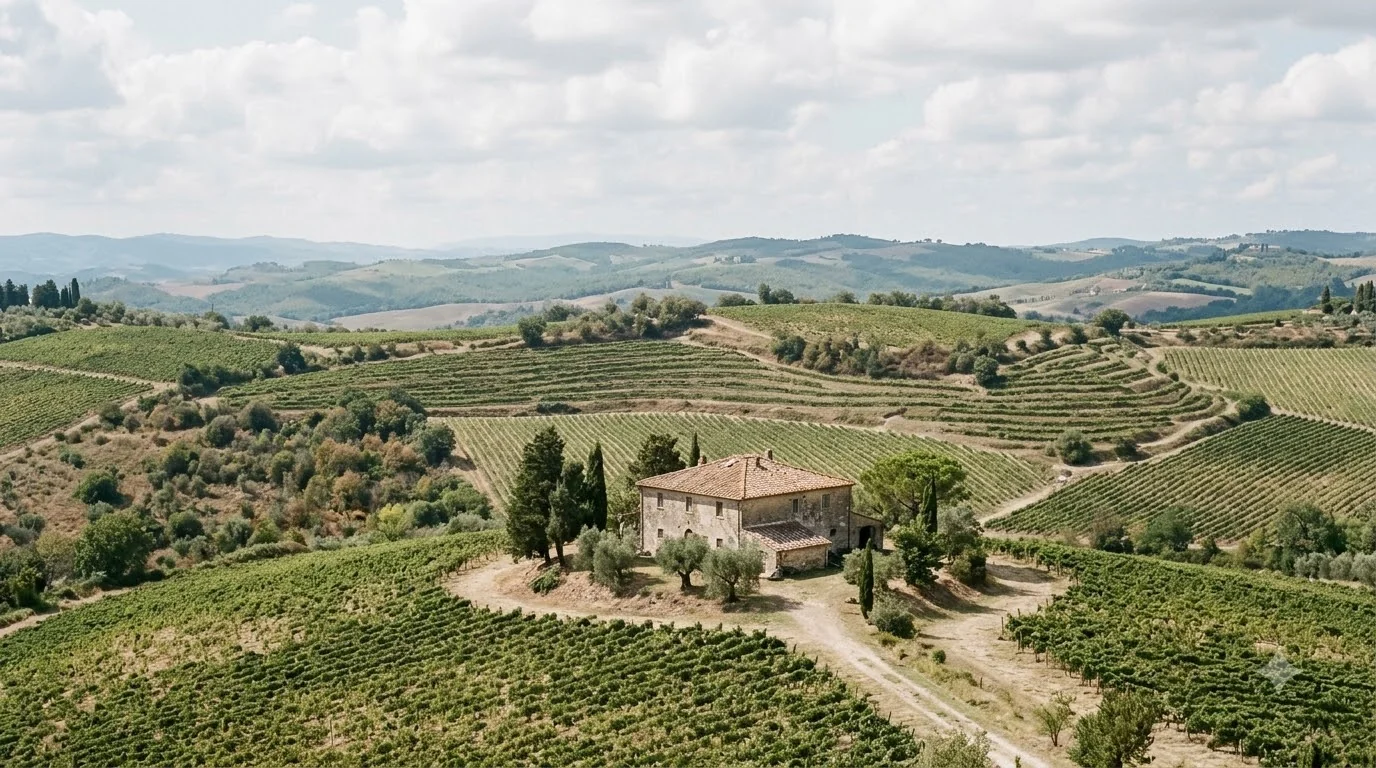
The Van Duzer Corridor is the defining climate feature of Eola-Amity Hills. This natural break in the Coast Range lets cool Pacific air move inland, bringing regular afternoon breezes and helping grapes retain acidity as they ripen.
Most vineyard sites sit roughly 250 to 700 feet above sea level, according to Oregon Wine, along a main ridge that runs north to south with smaller ridges extending east and west. The daily wind pattern is especially important late in summer, when afternoon temperatures can fall sharply. Cooler evenings slow the loss of natural acidity, so grapes can continue developing flavor without becoming as soft or broad as they might in a warmer setting. This is one reason regional wines are often described as lively and firmly structured.
Wind does more than cool the air. The north-south ridge creates slopes with different exposures, and a vineyard facing the strongest wind does not experience the same conditions as a more sheltered block. In Wine Enthusiast’s regional overview, Antica Terra winemaker Maggie Harrison describes wind-exposed grapes developing notably thick skins. Thicker skins can contribute color, flavor concentration, and a firmer sense of tannin in Pinot Noir, though the effect depends on the site and the season rather than following a simple rule.
That contrast between warm daylight and brisk late-day air is a practical clue when tasting. A ripe-fruited aroma does not necessarily mean a wine will feel heavy; the finish may remain brisk and mouthwatering. It also helps explain why two wines from nearby vineyards can differ in body and texture. A producer working on a sheltered eastern-facing slope may make a different stylistic choice from one farming a west-facing site that receives stronger corridor winds. Wind intensity also varies by day and by position; the corridor does not hold every block at one steady temperature. A sheltered row may retain more heat, while an exposed row can face stronger wind and different canopy-management demands.
Basalt, Marine Sediment, and Vineyard Variation
The region’s geology is unusually mixed: volcanic basalt, ancient marine sedimentary rock, and lower-elevation alluvial deposits occur within the AVA. These materials create a mosaic of shallow, rocky, well-drained soils rather than one uniform vineyard floor.
Volcanic basalt is associated with ancient lava flows, while marine sedimentary soils preserve evidence of a time when parts of the area lay beneath the sea. Wine Enthusiast describes marine shale, siltstone, and sandstone beneath the hills, together with later layers of basalt from repeated lava flows. On the eastern side, volcanic soils such as Jory and Nekia are common; the western side has a stronger marine-sedimentary influence. At lower elevations, alluvial deposits add another soil type to the mix.
Shallow, well-drained soils can limit vine vigor and encourage smaller berries, which may contribute to concentrated fruit and structure. That does not mean that every rocky block automatically makes a better wine. Soil depth, water availability, slope, aspect, rootstock, vine age, and farming decisions interact. A producer’s vineyard-specific bottling can therefore be a more precise expression of place than a broad regional blend, but a regional blend may show a wider cross-section of the AVA.
Small-scale variation can be striking. Wine Enthusiast notes that volcanic rocks and fossilized seashells can occur within the same 10-acre vineyard area. The Eola-Amity Hills Winegrowers Association also describes Antica Terra as an 11-acre rocky hillside vineyard where fossilized oyster shells appear in fractured sandstone. These details make the AVA especially interesting for tasting side by side: a wine from basalt-rich ground and one from marine sediment may share the region’s freshness while differing in weight, texture, and savory character.
Pinot Noir, Chardonnay, and Other Grapes
Pinot Noir is the signature grape of Eola-Amity Hills, with Chardonnay a clear second. The cool growing season and varied sites also support Pinot Gris, Riesling, Gamay Noir, and other smaller plantings.
The Willamette Valley Wineries Association lists Pinot Noir at about 79.83% of the area’s common grape varieties, Chardonnay at 8.29%, and Pinot Gris at 3.32%. Those figures show how strongly the region leans toward Pinot Noir, but they should not be mistaken for a complete census of every planted variety. Oregon Wine also identifies Riesling and Gamay Noir among the area’s predominant varieties. Smaller plantings broaden the options for visitors who want something beyond the familiar red and white pair.
Eola-Amity Hills Pinot Noir commonly emphasizes freshness, red or dark cherry fruit, cranberry, spice, and savory detail, framed by lively acidity and noticeable structure. Some examples are delicate and floral; others feel darker, firmer, and more compact, especially when fruit comes from exposed or rocky sites. Site notes for Daffodil Hill Vineyard describe black cherry with lavender, fennel, and rosemary, while Carter Vineyard reports dark blue and black fruit with firm acidity and moderate tannins. The goal is not to expect one fixed flavor profile, but to notice the tension between ripe fruit and a cool, energetic finish. That combination is part of the region’s distinctive personality.
Chardonnay from the AVA can offer citrus and orchard-fruit notes with a firm line of acidity. Barrel fermentation, new or neutral oak, lees contact, and malolactic fermentation can make a particular bottling rounder or creamier, so the grape name alone does not tell the whole story. Pinot Gris may give a lighter-bodied white with pear and citrus character, while Riesling can bring a more pronounced acid line and, depending on the producer, a touch of residual sweetness. Gamay Noir offers another red option for people who enjoy bright fruit and a lighter frame.
How to Choose and Taste a Bottle
A regional label is a useful starting point, but producer and vineyard details help explain the style in the glass. Compare wines by grape, site, and winemaking choices instead of assuming that every bottle carrying the AVA name will have the same weight or flavor.
Start with the grape. Pinot Noir is the natural first choice for a classic introduction, while Chardonnay gives a useful look at how the region’s acidity and site differences translate into a white wine. If two Pinot Noirs are available, compare a regional bottling with a single-vineyard bottling. The first may blend fruit from several sites to create a house style; the second can place more emphasis on one slope, soil type, or exposure. Neither format is automatically superior. They answer slightly different questions about the place.
Tip: Ask whether a Pinot Noir is an AVA-wide blend or a single-vineyard bottling, then compare its site information with the wine’s acidity, tannin, and oak character. This is a practical way to learn how place and cellar decisions work together.
Producer names can help orient a tasting, without serving as a ranking. Bethel Heights, Antica Terra, Evesham Wood, and Bryn Mawr are among the wineries associated with the AVA in Wine Enthusiast’s regional reporting. Look for the vineyard name, the vintage, and any description of elevation or soil. If the winemaker provides production details, note whether the Pinot Noir was fermented with whole clusters, aged in new or neutral oak, or bottled after a long period in barrel. Those choices can change tannin, aroma, and texture even when the fruit comes from the same district.
Taste with a simple sequence. First notice the aroma, then consider the weight of the wine, its acidity, tannin, and finish. For Pinot Noir, ask whether the fruit is red-toned or darker, whether the texture feels silky or firm, and whether spice or earthy notes emerge as the wine opens. For Chardonnay, focus on the balance between citrus or orchard fruit, acidity, and any creamy or toasted notes from winemaking. A few minutes in the glass can reveal more than a quick first sip. A side-by-side tasting is more useful than judging one wine in isolation: pour two Pinots at the same temperature, use similar glassware, and compare them before a strongly flavored dish. Consider the mid-palate as well as the finish, since acidity can make a wine feel firm even when its tannins are modest. This also helps separate oak aromas from the character of the fruit. For broader background on appellations and regional labels, see the site’s Wine Regions resource.
Food Pairing and Serving Temperature
The region’s bright acidity makes many Eola-Amity Hills wines versatile at the table. Match the wine’s weight to the dish, keep acidity in balance, and avoid pairing a tannic red with delicate oily fish or very hot chile heat.
Pinot Noir works naturally with roast chicken, duck, pork tenderloin, mushroom dishes, and salmon prepared with herbs or a crisp-skinned sear. Its typically low-to-medium tannin makes it less likely to overwhelm fish than a heavily tannic Cabernet Sauvignon or Syrah. Acidity helps refresh the palate with dishes that include butter, roasted poultry fat, or earthy mushrooms. For a more structured Pinot Noir, try braised short ribs or grilled lamb with moderate seasoning; the protein and savory flavors can stand up to the wine without burying its fruit.
Chardonnay is a good match for roast chicken, scallops, crab, lobster, and creamy pasta, especially when the dish has enough richness to meet the wine’s body. Pinot Gris can accompany salads, pork, and lighter seafood, while Riesling is useful with dishes that have aromatic herbs or a little heat. If serving a sweet wine with dessert, the wine should be at least as sweet as the dish. Acidic food also needs a wine with equal or higher acidity; otherwise the wine can seem flat beside a sharp vinaigrette or tomato-based sauce. Salt and fat soften tannin, while chili heat makes alcohol and tannin feel more pronounced.
Serve lighter-bodied red Pinot Noir slightly cool, around 55 to 60 degrees Fahrenheit, rather than at a warm room temperature. A fuller Chardonnay is generally comfortable at 50 to 55 degrees, while a lighter white can be served at 45 to 50 degrees. A standard 5-ounce pour gives the wine room to release its aromas without warming too quickly in the glass. If a bottle remains, recork it and refrigerate it; most opened still wines keep their best character for about three to five days.
Frequently Asked Questions
These quick answers cover a few vineyard and history details that help put the AVA’s broader identity into context.
Who helped establish the Eola-Amity Hills AVA?
Russ Rainey, founder of Evesham Wood, planted the Le Puits Sec vineyard in 1986 and helped push for recognition of the appellation. Ted Casteel of Bethel Heights was another driving force behind the AVA’s creation.
Can growers plant Tempranillo in the Eola-Amity Hills?
Yes. Aeolus Vineyard lists both Pinot Noir and Tempranillo among its varieties, with its first vines planted in 1982 and five acres planted. That is a small example of how growers experiment beyond the region’s best-known grapes.
Are there certified sustainable vineyards in the area?
Anahata Vineyard lists both LIVE Certified and Salmon-Safe credentials. The property has 24 planted acres divided into nine blocks, with Pinot Noir and Chardonnay among its varieties.
Can vineyard elevations exceed 700 feet?
Yes. Bethany Heights Vineyard in the AVA is described as running from 700 feet at its lower section to 900 feet at the top. That is higher than the elevation band occupied by most regional vineyard sites.
Is Riesling grown in Eola-Amity Hills?
Yes. Royer Vineyard focuses on white varieties and lists Chardonnay, Riesling, and Sauvignon Blanc among its plantings. Its 17 planted acres sit on the southwest-facing tip of the Eola Hills at elevations of about 600 to 700 feet.
Eola-Amity Hills is worth exploring for the way its cool Pacific winds, mixed geology, and varied vineyard exposures shape wines with freshness and structure. Start with Pinot Noir, compare a Chardonnay, and pay attention to the vineyard and producer details that make each bottle distinct.
More in Wine Regions
 Willcox Wine Trail: Discover Arizona’s High-Elevation Wine CountryUpdated Nov 20, 2026
 Yakima Valley Wine Region: Find the Best Styles to TryUpdated Nov 20, 2026
 Vosne Romanee Wine Tasting: Identify Aromas and Choose Better PairingsUpdated Nov 20, 2026
 Yakima Valley Wine Festival: Find the Best Seasonal Wine EventsUpdated Nov 20, 2026
 Wales Vineyards: Discover Cool-Climate Wines and Where to VisitUpdated Nov 20, 2026
 Yountville Wine Festival: Discover Napa Wines and Local FoodUpdated Nov 20, 2026