

We may earn a commission when you buy through links on this page, at no extra cost to you. Learn more.
Red Hills wine is the Cabernet-led wine of California’s Red Hills Lake County AVA, a high-elevation district shaped by volcanic hills above the southwest shore of Clear Lake. Its red, rocky soils, warm sunny days, and cooling afternoon breezes help produce concentrated red grapes while preserving freshness. Cabernet Sauvignon is the signature variety, but Cabernet Franc, Petite Sirah, Malbec, Syrah, Zinfandel, and other grapes add range to the appellation.
Red Hills is a useful name to know when looking beyond Napa and Sonoma for California Cabernet. The region sits in Lake County, north of Calistoga, and its identity rests on a specific combination of elevation, iron-rich volcanic ground, and a climate moderated by Clear Lake. Understanding those factors makes it easier to choose a bottle, recognize the region’s style, and pair its wines at the table.
Where Red Hills Wine Is Grown
Red Hills wine comes from the Red Hills Lake County American Viticultural Area (AVA), on the southwestern edge of Clear Lake in Northern California. The district lies in the northern Mayacamas Mountains, with volcanic hills between the lake and the higher ridges to the south.
The appellation is part of two larger wine regions: the Clear Lake AVA and the North Coast AVA. Those names can appear as broader origins on wine labels, while “Red Hills Lake County” identifies the more specific growing area. The Lake County Winegrape Commission describes the landscape as dozens of volcanic hills; the vineyards themselves range from 1,350 to 2,600 feet above sea level, and most planted acreage is at or above 2,000 feet. The surrounding hills rise higher than the planted vineyard sites, so the AVA is not one flat bench or valley floor.
The Red Hills Lake County AVA was established in 2004. Federal regulators later approved a 679-acre boundary expansion, effective in 2024, and the region remains nested inside Clear Lake and North Coast. For a bottle to use an AVA name as its appellation of origin, federal rules generally require at least 85 percent of the wine’s grapes to come from that named area, along with the other applicable labeling requirements. That threshold makes an AVA label meaningful, but it does not mean every grape in the bottle must come from a single vineyard or a single variety.
According to the Lake County Winegrape Commission, the AVA covers 32,215 acres. That figure describes the appellation’s total land area, not the acreage planted with vines. The distinction matters: the name covers a broad landscape of ridges, rocky slopes, roads, and other land, while vineyards occupy only suitable sites within it. The region’s identity is therefore tied to a defined place rather than a particular winery or one signature bottling.
Volcanic Soils and Mountain Elevation
Red Hills is known for red volcanic soil mixed with black obsidian, quartz, and gravel. These shallow, well-drained sites are low in fertility and water-holding capacity, conditions that help explain why the appellation is especially associated with structured red grapes such as Cabernet Sauvignon.
The red color comes from iron-rich material in the soil, while the volcanic origin is visible in the dark glassy pieces of obsidian scattered through some vineyard ground. The Sol Rouge appellation description says more than 90 percent of Red Hills soils are volcanic in origin. It identifies three broad soil groupings: Glenview-Bottlerock-Arrowhead, Konocti-Benridge, and Collayomi-Aiken. Those names describe mapped soil families, not a flavor formula; vineyard location, vine age, crop level, weather, and cellar choices also shape the finished wine.
The Lake County Winegrape Commission notes that suitable vineyard soils can sit above deeply fractured rock extending to about 20 feet in places. The soil profile is lean and skeletal, with rock fragments reaching as much as 35 percent. A mix of soil and rock allows roots to follow fractures downward, but the ground holds relatively little available water and is not especially rich in nitrogen or phosphorus. Growers must manage canopy growth and water carefully, especially during dry stretches.
For grape quality, the practical effect can be moderate vine vigor and smaller berries with a high ratio of skins to juice. That can contribute to concentrated color, flavor, and tannin, though it does not guarantee a powerful style. Nearby vineyards can still differ in slope, exposure, soil depth, and access to cooling air.
| Red Hills detail | Reported figure | Why it matters |
|---|---|---|
| Total AVA area | 32,215 acres | Measures the full appellation, not planted vineyard area |
| Vineyard elevation | 1,350–2,600 feet | Creates varied slopes and exposure |
| Surrounding volcanic hills | 1,350 to over 3,700 feet | Shows the wider terrain range |
| Rock fragments in suitable soils | Up to 35% | Contributes to lean, well-drained soil profiles |
| AVA boundary expansion | 679 acres | Added parcels to the federally recognized area |
Clear Lake Winds and the Growing Season
Red Hills has a warm, sunny growing season with a notable shift between afternoon heat and cooler evenings. Clear Lake and the district’s changing elevations help generate breezes that cool exposed ridges later in the day and support acidity as grapes ripen.
The Lake County Winegrape Commission reports that daytime temperatures in Red Hills are usually a few degrees warmer than in other Lake County appellations. Low relative humidity and varied topography allow ridgetop vineyards to cool quickly in late afternoon and evening. This pattern gives growers a combination of abundant daytime warmth and a daily cooling period, rather than the steadier coastal conditions found in fog-influenced parts of the North Coast.
Clear Lake is central to the local climate. Federal regulators describe the Red Hills AVA as more influenced by the lake than by the Pacific Ocean. Temperature contrasts between the water and surrounding land create winds that can reduce frost risk, while the broader Lake County Subwatershed receives less fog and warmer temperatures than many other parts of the North Coast AVA. Red Hills therefore does not behave like a cool coastal vineyard district, even though evenings can cool quickly.
That balance helps explain why Cabernet Sauvignon is so important here. Warm days allow the variety to ripen, while cooler evenings can help retain acidity. Earlier picking can emphasize freshness and firmer structure; later picking can push fruit toward riper, darker flavors and a fuller body. Low water-holding soils and sunny slopes still require careful management of canopy, crop load, and harvest timing.
Cabernet Sauvignon and Other Red Grapes
Cabernet Sauvignon is the leading reference point for Red Hills, supported by Cabernet Franc, Petite Sirah, Malbec, and Petit Verdot. The broader local mix also includes Syrah, Zinfandel, Grenache, Mourvèdre, Cinsaut, Counoise, Barbera, and Sangiovese, giving the region more than one expression of red wine.
Cabernet Sauvignon and Bordeaux varieties
Cabernet Sauvignon fits the area’s warm days and lean volcanic slopes. In the glass, it commonly brings dark berry and black-fruit flavors, firm tannin, and enough acidity to keep the finish from feeling flat. Cabernet Franc may offer a more aromatic profile, with red or dark fruit, herbs, and floral notes. Malbec and Petit Verdot often appear in blends, where they can contribute color, fruit density, or structure. A Cabernet-led blend may include more than one of these grapes, so the variety named on the front label is not always the whole recipe.
Petite Sirah, Syrah, and Zinfandel
Petite Sirah is a natural option for drinkers who enjoy deep color, substantial tannin, and dark-fruited intensity. Syrah can move toward blackberry, pepper, savory herbs, and a plush or firm texture depending on picking and cellar choices. Zinfandel offers a different direction, often leaning into ripe berry fruit and spice. These are useful starting points rather than fixed regional tasting notes: producer decisions and vintage weather can shift the balance substantially.
Wine Enthusiast’s Red Hills listings include Cabernet Sauvignon, Cabernet Franc, Petit Verdot, and Petite Sirah, while the Lake County Winegrape Commission names the same varieties alongside Malbec. Sauvignon Blanc is grown on a much smaller scale. Compare wines by structure as well as grape: Cabernet and Petite Sirah can have substantial tannin, Cabernet Franc can be more aromatic, Syrah can add savory spice, and Zinfandel often leans toward riper fruit. For broader comparisons of how place shapes wine, explore our eola amity hills wine, dundee hills vineyards, and adelaide hills vineyards profiles, then browse the Wine Regions index for other regional styles.
What Red Hills Wine Tastes Like
Many Red Hills reds combine ripe fruit with firm structure and a savory edge. Expect blackberries, dark cherries, wild berries, and spice in Cabernet-led wines, with earthy or flinty impressions appearing in some bottlings alongside oak and herbal notes.
The Sol Rouge appellation profile describes local reds as bold and fruit-rich, with blackberry, cherry, wild berry, spice, and sometimes earthy or flinty notes. Treat those as broad guideposts, not a checklist: a younger Cabernet may emphasize black fruit and oak, while a restrained example can show herbs, savory detail, and acidity.
Structure, ripeness, and acidity are equally important. Cabernet Sauvignon is naturally high in tannin, Petite Sirah can show substantial grip, Merlot tends to be softer and medium in tannin, and Syrah can range from medium-plus to high. Warm days develop ripe berry character, while evening cooling can support acid retention. Look for balance among fruit, acidity, tannin, alcohol, and oak rather than judging a bottle only by its color or power.
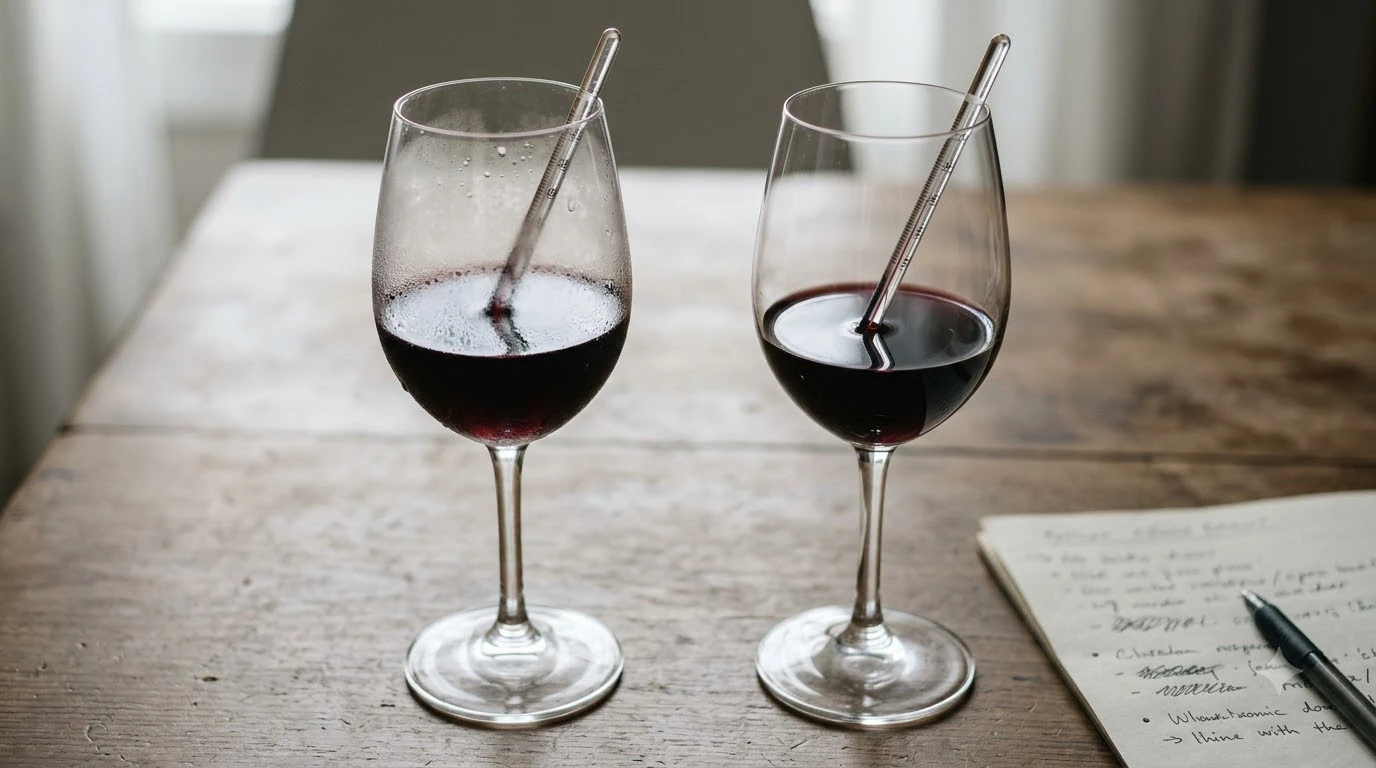
Tip: When comparing two Red Hills Cabernets, note the alcohol level, grape blend, and harvest or vineyard details if the producer provides them. Then taste for fruit ripeness, tannin, and acidity as separate elements rather than treating “volcanic” as a flavor descriptor on its own.
Producer information can make the label more useful. Look for vineyard names, elevation, blend percentages, aging details, and whether the wine comes from one block or several sites. The Lake County Winegrape Commission’s Red Hills AVA profile explains the region’s soil and elevation range, while a Decanter interview on Lake County Cabernet discusses the area’s vineyard potential and its volcanic setting.
How to Serve and Pair Red Hills Bottles
Serve fuller-bodied Red Hills Cabernet and Petite Sirah slightly below typical room temperature, around 60–65°F. Give a young, tannic red 30–60 minutes in a decanter when it seems closed or especially firm, and pair its structure with dishes that have enough protein, fat, and savory flavor to meet it.
Grilled steak, lamb chops, braised short ribs, and burgers with browned edges are dependable matches for Cabernet. Protein and fat soften tannin, while roasted flavors echo the wine’s dark fruit. Petite Sirah and structured blends can pair with smoked brisket, aged hard cheese, or hearty lentils. Very delicate fish and lightly dressed greens can be overwhelmed by dense reds, and oily fish such as salmon can clash with a heavily tannic wine.
Cabernet Franc suits roast chicken, herb-roasted pork, grilled vegetables, and tomato dishes; Merlot can work with meatloaf or mushroom pasta. Syrah pairs well with pepper-crusted meats, while Zinfandel can handle savory barbecue. Seasoning matters: salt and fat soften tannin, but chili heat is amplified by alcohol and tannin. With very spicy dishes, choose a lower-tannin wine or reduce the pepper heat.
A standard 5-ounce pour gives about five glasses from a 750-milliliter bottle. Keep the bottle cool before serving and let it warm gradually in the glass; a Red Hills Cabernet served at 60–65°F will usually show its fruit and structure more clearly than one poured at a warm indoor temperature.
Frequently Asked Questions
These answers clarify a few practical details about the district’s climate, harvest, and boundaries. They also explain what the Red Hills name does—and does not—tell you about a bottle.
How much rain does Red Hills receive each year?
The Sol Rouge appellation description gives an average annual rainfall range of 25 to 40 inches. Actual rainfall varies by season, and the timing of rain matters as much as the annual total for vineyard decisions.
Do Red Hills vineyards need frost protection?
Some growers have frost-protection measures in place, although federal regulators noted that they may not be needed every year. The temperature contrast between Clear Lake and nearby land creates winds that are credited with reducing frost risk, but individual vineyard sites can still face different conditions.
When are Red Hills grapes usually harvested?
The federal boundary decision records that growers in the established AVA and its expansion area rarely harvest before October 1. That is a regional observation, not a fixed harvest date: variety, elevation, slope exposure, crop load, and the season’s weather can move picking earlier or later.
Is Mount Konocti inside the Red Hills AVA?
Mount Konocti stands immediately north of the appellation and helped shape the region’s volcanic terrain. The original federal boundary description excludes the mountain above its 2,600-foot elevation line, so the peak itself is not simply interchangeable with the vineyard district.
Are Red Hills soils the same as soils elsewhere around Clear Lake?
No. The federal AVA description contrasts Red Hills’ mostly red volcanic soils with the more uniform sandy-loam and clay-loam soils cited for the larger Clear Lake area. That distinction helps explain why Red Hills is treated as a separate appellation within Clear Lake.
Red Hills is worth exploring for California drinkers who want Cabernet Sauvignon with a clear sense of place: volcanic ground, substantial elevation, sunny days, and evening cooling. Start with Cabernet Sauvignon to understand the appellation, then compare Cabernet Franc, Petite Sirah, Syrah, or Zinfandel to see how different grapes respond to the same mountain landscape.
More in Wine Regions
 Willcox Wine Trail: Discover Arizona’s High-Elevation Wine CountryUpdated Nov 20, 2026
 Yakima Valley Wine Region: Find the Best Styles to TryUpdated Nov 20, 2026
 Vosne Romanee Wine Tasting: Identify Aromas and Choose Better PairingsUpdated Nov 20, 2026
 Yakima Valley Wine Festival: Find the Best Seasonal Wine EventsUpdated Nov 20, 2026
 Wales Vineyards: Discover Cool-Climate Wines and Where to VisitUpdated Nov 20, 2026
 Yountville Wine Festival: Discover Napa Wines and Local FoodUpdated Nov 20, 2026