


We may earn a commission when you buy through links on this page, at no extra cost to you. Learn more.
Dry white wine sugar content is generally no more than 4 grams of residual sugar per liter, although international wine standards allow up to 9 grams per liter when sufficient acidity balances the sweetness. Most dry white wines contain considerably less sugar than that upper limit, with some approaching zero grams per liter. Understanding residual sugar, acidity, and labeling terminology makes it easier to distinguish genuinely dry wines from off-dry and sweet styles.
Dry white wine is a popular choice for people who enjoy crisp, refreshing flavors without pronounced sweetness. However, the word dry can cause confusion because a wine may taste fruity, floral, or even slightly sweet while containing very little residual sugar. The difference becomes clearer when you understand how fermentation works, how wine professionals classify sweetness, and why acidity changes what you experience on the palate. This guide explains the numbers, compares popular grape varieties, and provides practical advice for choosing a dry white wine.
What Dry White Wine Sugar Content Actually Means
Dry white wine contains very little residual sugar left after fermentation. Most of the natural glucose and fructose in the grape juice has been converted into alcohol and carbon dioxide, leaving a finished wine with little measurable sweetness.
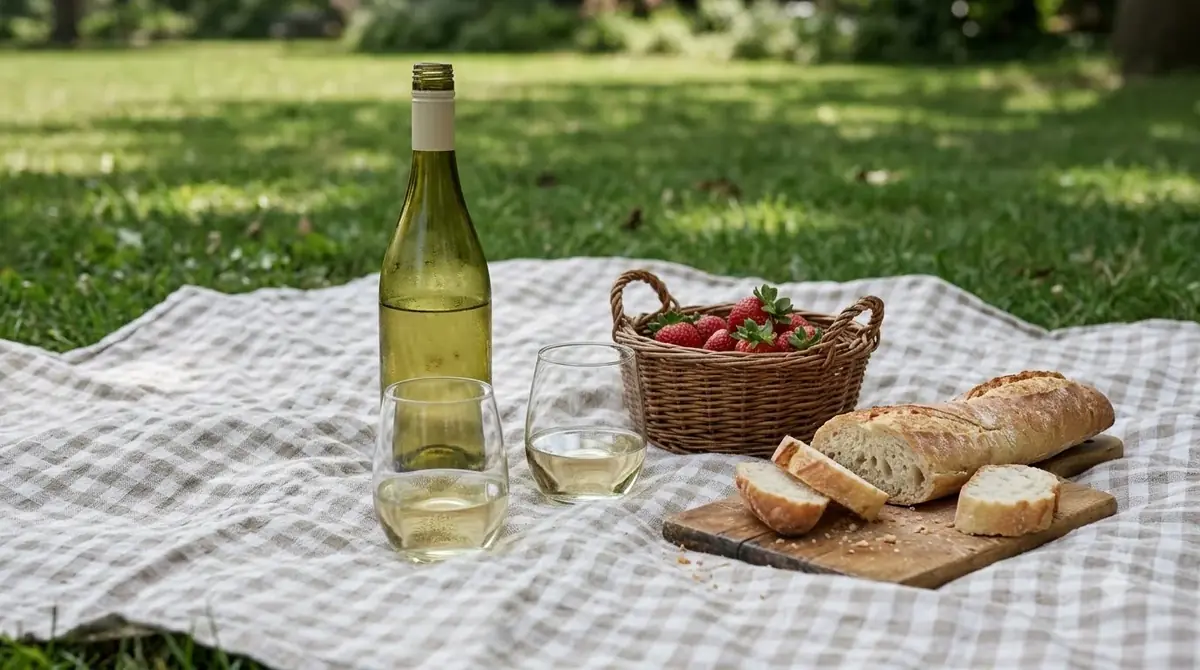
Residual sugar, commonly abbreviated as RS, is measured in grams per liter (g/L). It represents the glucose and fructose that remain in the finished wine rather than the total amount of sugar originally present in the grapes. According to the International Organisation of Vine and Wine (OIV), dry wine generally contains no more than 4 g/L, with an allowance up to 9 g/L under specific acidity conditions.
These figures help explain why two bottles labeled dry can have different sugar measurements. One might contain 1 g/L, while another contains 7 g/L. Both may qualify as dry under the appropriate classification, even though their residual sugar levels are not identical.
For a practical comparison, consider a standard 750 ml bottle. A wine containing 4 g/L has approximately 3 grams of residual sugar in the entire bottle. A 5-ounce serving, which is about 148 ml, contains approximately 0.6 grams. Even at 9 g/L, the same serving contains approximately 1.33 grams.
These calculations show why dry white wine generally has such a restrained sweetness profile. The amount of residual sugar in an individual glass is usually quite small.
It is also important to distinguish residual sugar from total carbohydrates. Residual sugar measures specific remaining sugars, while carbohydrate measurements can include other compounds. They are related but are not interchangeable terms.
How Much Sugar Is in Dry White Wine?
Most dry white wines contain between 0 and 4 grams of residual sugar per liter, although some qualify as dry at higher levels when acidity provides sufficient balance. The exact amount depends on grape ripeness, fermentation decisions, and the finished wine’s chemical composition.
The following table illustrates how different residual sugar concentrations translate into a typical 5-ounce glass. The serving calculations use 148 ml, and the sugar figures are mathematical examples rather than fixed measurements for individual grape varieties.
| Residual sugar (g/L) | Sugar per 5 oz glass | General sweetness description |
|---|---|---|
| 0 g/L | 0 g | Completely sugar-free by measurement |
| 1 g/L | 0.15 g | Very dry |
| 2 g/L | 0.30 g | Very dry |
| 4 g/L | 0.59 g | Dry threshold |
| 6 g/L | 0.89 g | Dry under qualifying acidity conditions |
| 9 g/L | 1.33 g | Dry under qualifying acidity conditions |
| 12 g/L | 1.78 g | Medium-dry boundary |
| 18 g/L | 2.66 g | Medium-dry under qualifying acidity conditions |
| 45 g/L | 6.66 g | Upper boundary of semi-sweet classification |
The OIV’s classification is based on both residual sugar and total acidity. A wine with 8 g/L of sugar may still qualify as dry if its acidity meets the required relationship. This is different from simply treating every wine above 4 g/L as sweet or off-dry.
For everyday shopping, the most useful starting point is to look for a wine described as dry, then consider the grape variety and producer’s style. A dry Sauvignon Blanc, for example, will usually provide a noticeably crisp impression, while an aromatic dry Gewürztraminer can feel richer even with little residual sugar.
Tip: To calculate the approximate residual sugar in a glass, multiply the wine’s grams per liter by 0.148 for a 5-ounce serving. For example, a wine containing 3 g/L has approximately 0.44 grams of residual sugar per glass.
Dry, Off-Dry, and Sweet White Wine Differences
The main difference between dry, off-dry, and sweet white wine is the quantity of residual sugar remaining after fermentation. International classifications provide useful reference points, although acidity can change the permitted boundaries and the way a wine tastes.
The OIV distinguishes four broad still-wine sweetness categories. These classifications are useful for understanding European terminology and comparing different styles, although labeling regulations can vary between markets.
Dry white wine
Dry wine generally contains up to 4 g/L of residual sugar. The limit can increase to 9 g/L when the required acidity relationship is satisfied. These wines typically emphasize freshness, citrus, mineral, herbal, or restrained fruit characteristics rather than obvious sweetness.
Examples include many Sauvignon Blancs from Marlborough, New Zealand, Chablis from Burgundy, and dry Albariño from Rías Baixas in Spain. These wines often pair well with seafood, salads, and lighter dishes because their acidity provides a refreshing contrast.
Medium-dry or off-dry white wine
Medium-dry wines contain more residual sugar than dry wines, generally up to 12 g/L. Under specific acidity conditions, the upper limit can reach 18 g/L. These wines may offer a subtle sweetness without tasting like dessert wine.
Some Rieslings and Chenin Blancs are made in this style. Their natural acidity helps maintain freshness, making them suitable for dishes that combine sweetness, spice, and savory flavors.
Semi-sweet and sweet white wine
Semi-sweet wines contain more sugar than the medium-dry category and up to 45 g/L. Sweet wines contain at least 45 g/L under the OIV definition. These styles can range from gently honeyed wines to rich dessert wines with concentrated fruit flavors.
Moscato, late-harvest Riesling, and Sauternes illustrate different approaches to sweetness. Their flavor profiles and production methods vary considerably, but they generally contain more residual sugar than conventional dry white wine.
For a broader understanding of wine categories, the Wine by Type resource can help distinguish still, sparkling, red, white, and dessert wine styles.
Why Acidity Changes the Perception of Sweetness
Acidity is one of the most important factors in how a white wine tastes. A wine with substantial acidity can taste crisp and dry even when it contains measurable residual sugar, while a lower-acid wine with the same sugar concentration may seem noticeably sweeter.
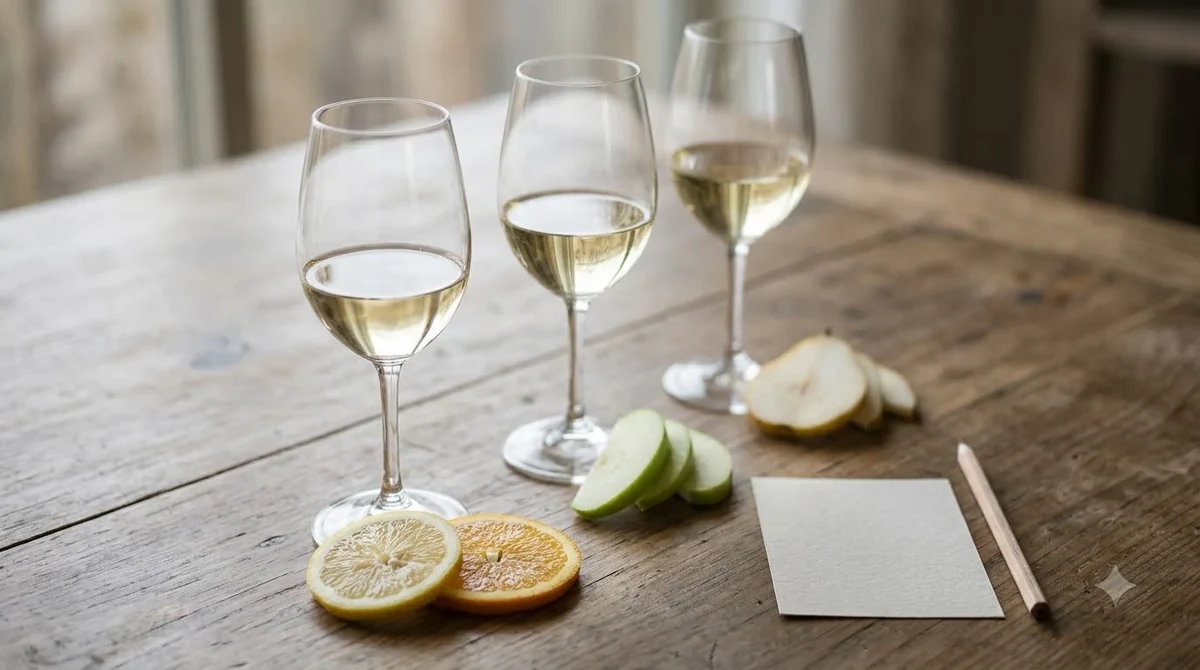
This happens because sweetness and acidity interact on the palate. Acidity provides a sharp, mouthwatering sensation that balances sugar and keeps the overall flavor profile from seeming heavy. The relationship is especially important in Riesling and Chenin Blanc, two grapes that naturally retain considerable acidity in suitable growing conditions.
According to the OIV, the dry classification can extend from the usual 4 g/L threshold to 9 g/L when total acidity is no more than 2 g/L below the residual sugar concentration. This rule recognizes that sweetness cannot be evaluated by measuring sugar alone.
Consider two hypothetical white wines. The first contains 6 g/L of residual sugar and 7 g/L of total acidity. The second contains 6 g/L of residual sugar and 3 g/L of total acidity. Although their sugar measurements are identical, the first wine has a stronger acidic counterbalance and may taste considerably less sweet.
How to recognize acidity when tasting
High-acid white wines often create a mouthwatering sensation shortly after a sip. Lemon, lime, grapefruit, green apple, and tart pear are common flavor associations. The mouth may continue watering after swallowing, indicating a pronounced acidic character.
Wine education resources from the Wine and Spirit Education Trust (WSET) explain salivation as a useful way to recognize acidity. Sauvignon Blanc, Riesling, Chenin Blanc, and Albariño are common examples of white grapes associated with high acidity.
By contrast, Viognier and Gewürztraminer often have softer acidity and fuller aromatic profiles. This can make them seem rounder or sweeter, even when their residual sugar is relatively low.
Climate also influences acidity. Cooler regions generally help grapes retain more natural acid during ripening. Chablis in France and the Mosel in Germany are well-known examples of regions associated with fresh, high-acid white wines.
Acidity also matters when choosing food pairings. A useful rule is to match acidic dishes with wines that have equal or higher acidity. A sharp lemon dressing, for example, can make a low-acid Chardonnay seem flat, while a lively Sauvignon Blanc is more likely to maintain its balance.
For a deeper explanation of how sugar and acidity interact, read Decanter’s explanation of residual sugar in wine, which discusses sweetness classifications and the factors that influence how a wine tastes.
Popular Dry White Wine Grapes and Their Sugar Profiles
Several white grape varieties regularly produce dry wines, but the grape name alone does not guarantee a particular residual sugar measurement. Winemaking choices can create dry, off-dry, or sweet expressions from the same variety.
Understanding the typical style of each grape makes choosing a bottle easier. The following varieties offer useful starting points for people who prefer white wine with restrained sweetness.
Sauvignon Blanc
Sauvignon Blanc is one of the most recognizable dry white wine styles. It commonly features high acidity, citrus flavors, green apple, fresh herbs, and sometimes tropical fruit. Its refreshing structure makes it a natural option for people who prefer wines without pronounced sweetness.
Examples from Marlborough in New Zealand often emphasize passion fruit, lime, and herbal notes. French Sauvignon Blanc from the Loire Valley, including Sancerre and Pouilly-Fumé, frequently offers a more restrained profile with citrus and mineral characteristics.
Chardonnay
Chardonnay can produce dry white wines with different textures depending on climate and winemaking techniques. Unoaked examples often emphasize apple, citrus, and mineral flavors, while barrel-aged versions may show vanilla, toast, and buttery characteristics.
Chablis is a useful reference for a crisp, typically unoaked Chardonnay style. Some California Chardonnay wines, by comparison, can have fuller bodies and richer fruit characteristics. These flavor differences do not necessarily indicate higher residual sugar.
Riesling
Riesling is particularly important for understanding the relationship between sweetness and acidity. It can produce extremely dry wines, lightly off-dry expressions, and intensely sweet dessert wines.
German Riesling labeled Trocken indicates a dry style, while Alsace Riesling also commonly appears in dry expressions. The grape’s natural acidity can make wines with some residual sugar taste surprisingly crisp.
Wine Enthusiast highlights Riesling’s range through examples from the Mosel and Alsace. The grape demonstrates why a variety’s name alone cannot establish the sugar concentration of a particular bottle.
Pinot Grigio and Pinot Gris
Pinot Grigio is frequently made in a dry, light-bodied style with refreshing acidity. Italian examples commonly show lemon, pear, green apple, and subtle floral notes.
The related Pinot Gris style can be richer and more textured, particularly in regions where the grapes develop greater ripeness. Some Alsace Pinot Gris wines can contain more noticeable residual sweetness, so the grape name does not automatically indicate a completely dry wine.
Albariño and Chenin Blanc
Albariño from Spain’s Rías Baixas region is often dry, aromatic, and refreshing. Its citrus, peach, and sometimes saline characteristics make it a strong companion for shellfish, grilled fish, and other seafood dishes.
Chenin Blanc offers a wider range of styles. Dry examples from the Loire Valley can show apple, pear, citrus, and pronounced acidity, while other expressions can be off-dry or sweet. The producer’s fermentation decisions have a significant influence on the finished sugar level.
Gewürztraminer deserves separate consideration because its lychee, rose, and tropical fruit aromas can create an impression of sweetness. Although some examples are dry, many are off-dry or sweet. The wine’s aromatic intensity should not be mistaken for a measured residual sugar concentration.
For additional examples of how grape varieties influence perceived sweetness, Wine Enthusiast’s explanation of dry white wine explores Riesling, Gewürztraminer, Sauvignon Blanc, and Chardonnay styles.
How Fermentation and Winemaking Determine Residual Sugar
Residual sugar is largely determined by what happens during alcoholic fermentation. Yeast consumes the natural sugars in grape juice and produces alcohol and carbon dioxide, but the winemaker controls how far that process proceeds and how much sugar remains in the finished wine.
Before fermentation begins, ripe grapes contain natural glucose and fructose. Their concentrations depend on grape variety, growing conditions, harvest timing, and fruit ripeness. As fermentation progresses, yeast converts much of this sugar into alcohol.
When fermentation continues until nearly all fermentable sugar has been consumed, the result is generally a dry wine. However, a small amount of sugar may remain because certain compounds are not readily fermented or because fermentation stops before every available sugar molecule is consumed.
Fermenting wine until dry
Many conventional dry white wines are fermented until very little residual sugar remains. This approach creates wines that emphasize acidity, fruit, mineral character, and other characteristics without noticeable sweetness.
Temperature control can also influence fermentation speed and aroma development. White wines are often fermented under controlled, relatively cool conditions to preserve delicate fruit and floral characteristics.
Stopping fermentation early
Winemakers can deliberately stop fermentation before all available sugar has been converted into alcohol. Cooling the ferment and removing yeast through filtration are among the techniques used to retain sweetness in certain wine styles.
This approach helps explain why Riesling, Chenin Blanc, and Gewürztraminer can have very different sweetness levels despite being made from the same grape varieties across different producers.
Adding sweetness after fermentation
Some wines receive a measured addition of grape-based sweetening material after fermentation. This allows producers to adjust the finished balance and create a slightly sweeter style without relying exclusively on fermentation timing.
In every case, residual sugar needs to be managed carefully because remaining fermentable sugar can allow yeast or other microorganisms to produce unwanted fermentation activity after bottling. Producers use appropriate stabilization and filtration techniques to maintain the intended wine style.
For comparison, the dry red wine sugar content guide explains how the same residual sugar principles apply to red wines, where tannin adds another important influence on perceived dryness.
How to Choose and Serve Dry White Wine
Choosing a dry white wine is easier when you consider three characteristics together: residual sugar, acidity, and body. These qualities determine whether a wine tastes crisp and light, rounded and creamy, or intensely aromatic.
For a reliably crisp starting point, consider Sauvignon Blanc, Albariño, Chablis, or a dry Riesling. If you prefer a fuller texture, an unoaked or lightly oaked Chardonnay may be a better match. People who enjoy expressive floral aromas can explore dry Gewürztraminer, although sweetness levels vary considerably within the category.
Read wine descriptions carefully
Terms such as dry, bone-dry, crisp, and unoaked can provide useful clues, but they describe different characteristics. Dry refers to residual sugar, bone-dry suggests an especially low-sugar style, crisp often describes acidity, and unoaked refers to the wine’s maturation approach.
For a more specific choice, look for descriptions that mention Trocken Riesling, Brut Nature sparkling wine, dry Sauvignon Blanc, or mineral-driven Chablis. These terms can narrow down the style before opening the bottle.
Some labels provide a sweetness scale or technical information that includes residual sugar in grams per liter. Such information is particularly useful for comparing wines from the same producer or region.
Serve dry white wine at the right temperature
Temperature affects how aromas, acidity, and texture appear in a glass. Serving a white wine too warm can make it seem less refreshing, while excessive chilling can hide delicate aromas and make its structure harder to appreciate.
Useful serving temperatures include:
- Light-bodied dry whites: 45–50°F, suitable for Pinot Grigio, Sauvignon Blanc, and Albariño.
- Fuller-bodied dry whites: 50–55°F, suitable for Chardonnay and richer white blends.
- Sweet white wines: 43–50°F, depending on their body and concentration.
- Sparkling wines: 40–50°F, depending on their style.
A refrigerator can cool most white wines before serving. If the wine becomes too cold, allowing it to warm slightly in the glass can reveal more of its aroma and texture.
Match the wine with food
Dry white wine works particularly well with dishes that benefit from acidity and freshness. Sauvignon Blanc is a good choice for goat cheese, green salads, and grilled seafood. Albariño complements shrimp, oysters, and grilled white fish, while Chardonnay can pair well with roast chicken and creamy pasta.
Acidity is particularly helpful with foods containing lemon, vinegar, or tomato. Wines with equal or higher acidity generally maintain their balance alongside these dishes.
Salt and fat can soften tannin and change how wine feels, although dry white wines usually contain much less tannin than red wines. A fuller Chardonnay can work well with buttery sauces, while a leaner Riesling or Sauvignon Blanc can provide contrast to richer seafood dishes.
Chili heat requires more care. Alcohol and tannin can amplify the sensation of heat, so a high-alcohol wine or heavily tannic red is not always the best companion for spicy food. A lower-alcohol white with some residual sugar can offer a more comfortable contrast.
Finally, oily fish generally works better with a fresh, high-acid white than with a tannic red. Choosing a wine based on the sauce and cooking method, rather than simply the main ingredient, often produces a more balanced pairing.
People exploring sweeter red styles can also compare the Merlot sugar content guide and the Port sugar content guide to understand how fermentation and residual sugar create different finished wine styles.
Frequently Asked Questions
Does dry white wine contain carbohydrates?
Yes. Dry white wine contains small amounts of carbohydrates, including residual sugars and other naturally occurring compounds. The exact carbohydrate amount varies by wine and cannot be determined precisely from the word dry alone. Nutrition information may provide a separate carbohydrate measurement from residual sugar.
Is Sauvignon Blanc always lower in sugar than Chardonnay?
No. Both varieties can produce very dry wines, and the difference between individual bottles depends more on winemaking decisions than grape identity. A dry Chardonnay can contain less residual sugar than an off-dry Sauvignon Blanc. Comparing measured residual sugar is more reliable than comparing grape names.
What does Trocken mean on a German white wine label?
Trocken is the German term for dry wine. German wine regulations use specific analytical limits for the term, including an acidity-related allowance. It is a useful indication when shopping for a dry German Riesling rather than assuming every Riesling is sweet.
Can sparkling white wine be dry even if it contains sugar?
Yes. Sparkling wines use a separate sweetness classification based on dosage and residual sugar. Brut Nature generally contains no more than 3 g/L, Extra Brut no more than 6 g/L, and Brut no more than 12 g/L under the standard sparkling-wine scale. Consequently, a Brut sparkling wine can contain measurable sugar while still tasting dry.
Does white wine become sweeter as it ages in the bottle?
Not necessarily. Bottle aging does not normally cause a dry wine to develop additional residual sugar. However, changes in fruit aromas, acidity, texture, and other flavor components can alter the impression of sweetness. A mature white wine may therefore seem different from its younger version without having gained sugar.
Dry white wine offers a broad range of styles, from crisp Sauvignon Blanc and mineral-driven Chablis to fuller Chardonnay and aromatic Riesling. The most useful starting point is to understand residual sugar in grams per liter and consider how acidity influences the wine’s perceived sweetness. With those details in mind, comparing bottles becomes much easier, and choosing a dry white wine that suits your taste and meal becomes a more straightforward process.
More in Wine Types & Grapes
 What Does Ruby Port Taste Like? Flavor Notes, Styles, and Serving TipsUpdated Nov 21, 2026
 What Does Ribolla Gialla Taste Like? Crisp White and Amber Styles ExplainedUpdated Nov 21, 2026
 What Does Semillon Taste Like? Flavor Profile, Styles & PairingsUpdated Nov 21, 2026
 What Does Scuppernong Taste Like? Flavor, Styles, and Pairing GuideUpdated Nov 21, 2026
 What Does Saperavi Taste Like? Flavors, Styles, and Pairing GuideUpdated Nov 21, 2026
 What Does Natural Wine Taste Like? Flavors, Styles, and Serving TipsUpdated Nov 21, 2026