

We may earn a commission when you buy through links on this page, at no extra cost to you. Learn more.
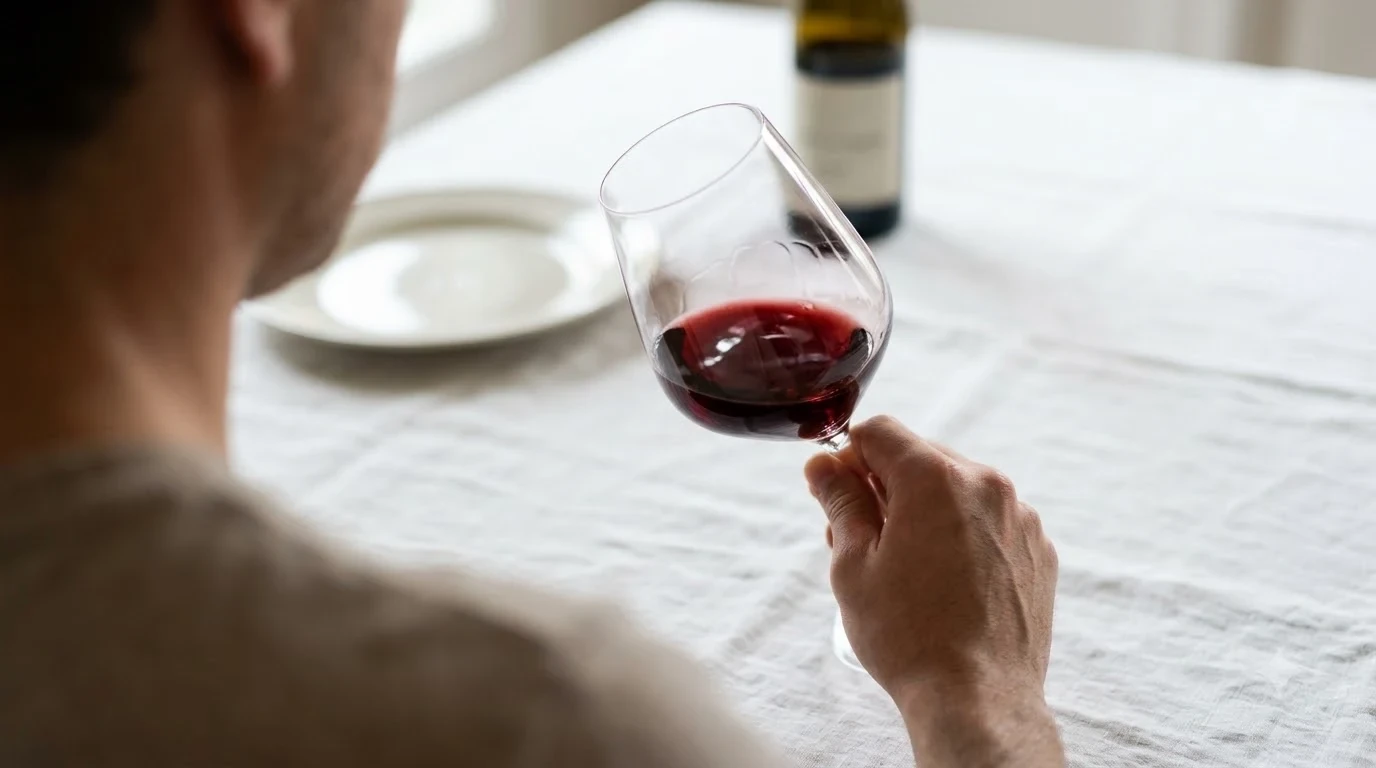
In a typical bottle, dry red wine sugar content is usually about 0.5 to 3 grams of residual sugar per liter, so a typical 5-ounce glass contains only a fraction of a gram. The exact amount varies by bottle, but Cabernet Sauvignon, Merlot, Pinot Noir, Syrah, and many other familiar reds are generally fermented until nearly all grape sugar has been converted into alcohol. A wine can still smell or taste like ripe berries, vanilla, or jam without containing much actual sugar.
Understanding residual sugar makes it easier to compare red wines, interpret sweetness descriptions, and choose a bottle for dinner. The key is to separate the sugar left in the finished wine from the fruit flavors, alcohol, tannin, and oak that shape how a wine feels.
What Dry Red Wine Sugar Content Actually Measures
Dry red wine sugar content refers to residual sugar, the glucose and fructose left after alcoholic fermentation. Most conventional dry reds have very little remaining, commonly around 0.5 to 3 grams per liter, rather than the much higher levels found in sweet or dessert wines.
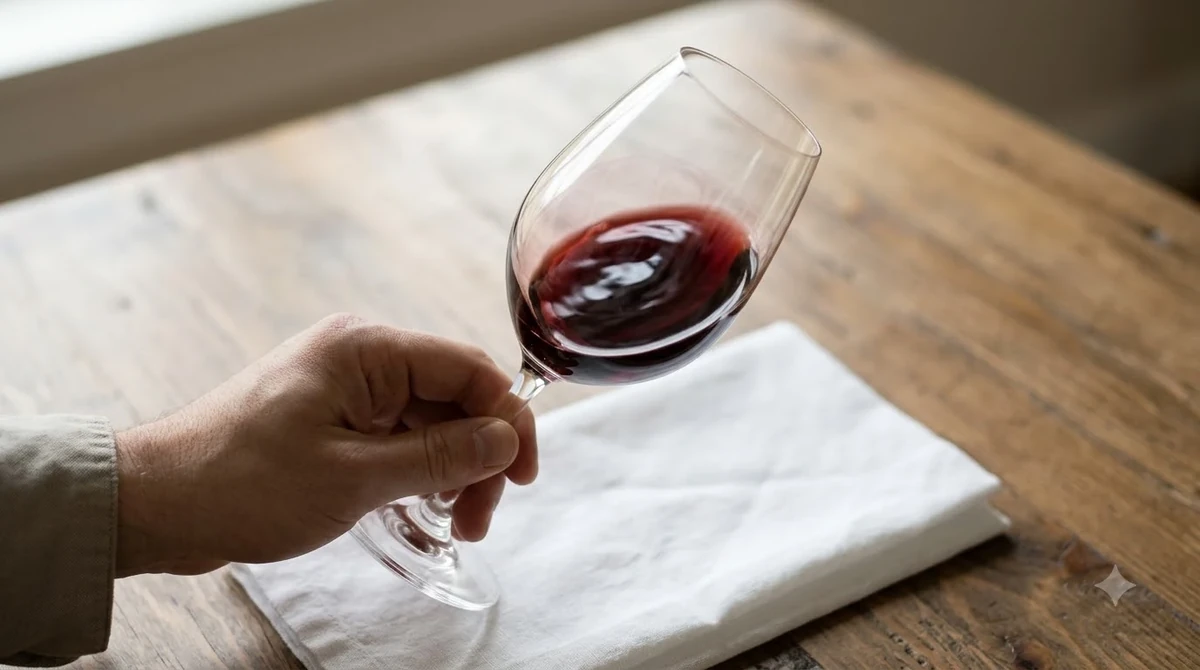
Residual sugar is measured in grams per liter, abbreviated g/L. That unit describes the concentration in the wine, not the amount in an entire bottle or serving. For a familiar comparison, a 750-milliliter bottle contains five standard 5-ounce pours. At 2 g/L, the bottle holds about 1.5 grams of residual sugar in total, and each glass contains about 0.3 gram. At 3 g/L, the same pour contains about 0.45 gram.
These are small quantities. Wine Enthusiast’s overview of red wine sweetness describes common dry red varieties such as Cabernet Sauvignon, Merlot, Grenache, Zinfandel, Malbec, and Pinot Noir as typically fermented to dryness, with around 0.5 to 2 g/L of residual sugar. VinePair gives 2 to 3 g/L as a typical figure for dry red wine. Those figures overlap enough to provide a useful working range, but individual wines can fall below or above it.
The sugar level is not the only thing that decides whether a red tastes dry. A high-tannin Cabernet Sauvignon can feel firm and drying, while a ripe, fruit-forward Zinfandel may seem plush. Neither sensation proves that the wine contains appreciable sugar. For a broader look at categories and styles, browse Wine by Type.
How Fermentation Determines Residual Sugar
Dryness is mainly a result of how far fermentation proceeds: yeast consumes grape sugars and produces alcohol and carbon dioxide. When fermentation continues until most fermentable sugar is used, the wine finishes dry; when the process is stopped earlier or fermentation cannot finish, more residual sugar remains.
Red grapes arrive at the winery with natural glucose and fructose in their juice. After crushing, the must ferments with the skins, which contribute color, tannin, and flavor compounds as yeast converts sugar into alcohol. A winemaker monitoring a Cabernet Sauvignon or Merlot fermentation can track density or sugar depletion to judge how the process is progressing. Once fermentation has run its course, the finished wine is analyzed to determine its residual sugar level.
There are several reasons a wine may retain more sugar than a typical dry red. A winemaker may intentionally stop fermentation to preserve sweetness, or yeast activity may slow or stop before all fermentable sugar is consumed. Very ripe grapes also begin with more sugar, although high starting sugar does not automatically mean the finished wine will be sweet: fermentation can convert most of it into alcohol.
Sweet red styles illustrate the difference. Port is fortified during fermentation with grape spirit, which halts yeast activity and leaves sugar in the wine. Recioto della Valpolicella is made from dried grapes that concentrate their sugars before fermentation. These are different production choices from a dry table red, not simply more fruit-forward versions of Cabernet or Pinot Noir. The distinction is useful when comparing dry reds with Port sugar content.
Typical Sugar Levels in Cabernet, Merlot, Pinot Noir, and Other Reds
Most familiar still red varieties are made dry, and grape name alone does not determine residual sugar. The figures below separate common dry-red levels from international classification thresholds, which are broader and depend partly on acidity.
| Wine or classification | Residual sugar | How to interpret it |
|---|---|---|
| Typical dry red wine | About 0.5–3 g/L | Common range reported for dry reds |
| Dry red, 5-ounce pour at 2 g/L | About 0.30 g | Calculated serving amount |
| Dry red, 5-ounce pour at 3 g/L | About 0.44 g | Calculated serving amount |
| OIV dry category | Up to 4 g/L, or 9 g/L with sufficient acidity | International classification rule |
| OIV medium-dry category | Above dry limit, up to 12 g/L, or 18 g/L with sufficient acidity | Acidity can affect the permitted ceiling |
| OIV sweet category | 45 g/L or more | Far above the usual dry-red range |
The International Organisation of Vine and Wine (OIV) defines a still wine as dry when it contains no more than 4 g/L of sugar, with a conditional allowance up to 9 g/L when total acidity is sufficiently high. The OIV also sets medium-dry ceilings of 12 g/L, or 18 g/L under a separate acidity condition, and places sweet wine at 45 g/L or more. These are classification thresholds, not a claim that every dry red contains 4 or 9 grams per liter.
Cabernet Sauvignon, Merlot, Grenache, Zinfandel, Malbec, and Pinot Noir are all commonly made dry. The differences people notice among them are more often related to structure and flavor than to sugar: Cabernet Sauvignon tends to have high tannin; Merlot has medium, softer tannin; Pinot Noir usually has low-to-medium tannin and high acidity; Syrah can have medium-plus to high tannin. Those traits can make two wines with similar residual sugar feel quite different.
A useful comparison is to think of the grape as a guide to texture and flavor, not a sugar guarantee. A cool-climate Pinot Noir may have bright acidity and red-cherry character, while a warm-climate Zinfandel may show ripe blackberry and a fuller body. Both can be dry. For a variety-specific comparison, see Merlot sugar content.
Why a Dry Red Can Taste Sweet Without Much Sugar
Fruit aromas and a rounded texture can suggest sweetness even when a wine has very little residual sugar. Ripe black cherry, raspberry preserves, vanilla, baking spice, and chocolate-like oak notes can make a dry red seem sweet on the nose or palate, although those impressions are not measurements of sugar.
Wine Enthusiast notes that particularly ripe fruit aromas, dried-fruit impressions, vanilla, caramel, and oak-related compounds can create a sweet impression in wines that remain dry. This is why a jammy Zinfandel or a plush Merlot may taste richer than a leaner red without necessarily containing more residual sugar. Smelling blackberry compote is not the same as measuring grams of glucose and fructose in a laboratory.
Acidity and tannin also shape perception. Acidity gives a wine freshness and can make sweetness seem less prominent, while tannin creates a drying, grippy sensation that can make a red seem less sweet. A high-tannin Cabernet Sauvignon may therefore come across as firmly dry, whereas a lower-tannin, fruit-forward red can feel softer even when both wines contain a similar amount of residual sugar.
Alcohol is another source of perceived roundness. Wines with higher alcohol can feel warmer, fuller, or slightly sweet, but alcohol is not residual sugar. Oak aging may add aromas associated with vanilla or toast, and ripe fruit can add a sweet-smelling quality. To assess actual sweetness, focus on the wine’s balance and technical information rather than using one aroma or the word “smooth” as a shortcut.
How to Find and Compare Sugar Information
The most useful number is the finished wine’s residual sugar in g/L, but it is not always printed prominently on a bottle. A winery’s technical sheet or product information may list the figure directly; otherwise, the producer or importer may be able to provide it. Sweetness terms also help with an initial comparison, although regional definitions differ.
Under the OIV standard, dry means no more than 4 g/L in the usual case, with an acidity-based allowance up to 9 g/L. In the same classification, sweet begins at 45 g/L. Decanter’s explanation of residual sugar discusses these sweetness categories and the way acidity can change how sugar is perceived. Those distances show why a wine described as dry is not expected to resemble a sweet red or Port.
When a technical sheet gives a number, compare wines using the same unit. A figure of 2 g/L means 2 grams in a liter of wine; it does not mean 2 grams in each glass. For a 5-ounce serving, multiply the g/L number by approximately 0.148 liters. For example, 3 g/L multiplied by 0.148 L works out to about 0.44 gram per serving. This conversion is more useful than comparing bottle totals when one wine is sold in a 750-milliliter bottle and another in a different size. Do not confuse residual sugar with total carbohydrates, calories, or the natural sugar originally present in grapes. Fermentation converts much of the grape sugar into alcohol, so a finished dry wine can have very little residual sugar even though its grapes began with substantial natural sweetness. Alcohol still contributes energy, which is why a full-bodied 14.5% ABV red is not necessarily lower in calories than a lighter wine simply because both are dry.
Tip: For a quick serving estimate, multiply the residual-sugar figure in g/L by 0.15. A red listed at 2 g/L has about 0.3 gram of residual sugar in a 5-ounce glass; at 4 g/L, it has about 0.6 gram.
If the exact number matters to your comparison, check the label once and then look for the winery’s technical details if the figure is missing. Be cautious with broad marketing phrases such as “no added sugar”: that wording does not necessarily mean that a finished wine contains zero naturally occurring residual sugar. The more precise term to seek is residual sugar, usually abbreviated RS and expressed in g/L.
Food Pairing and Serving Temperature for Dry Reds
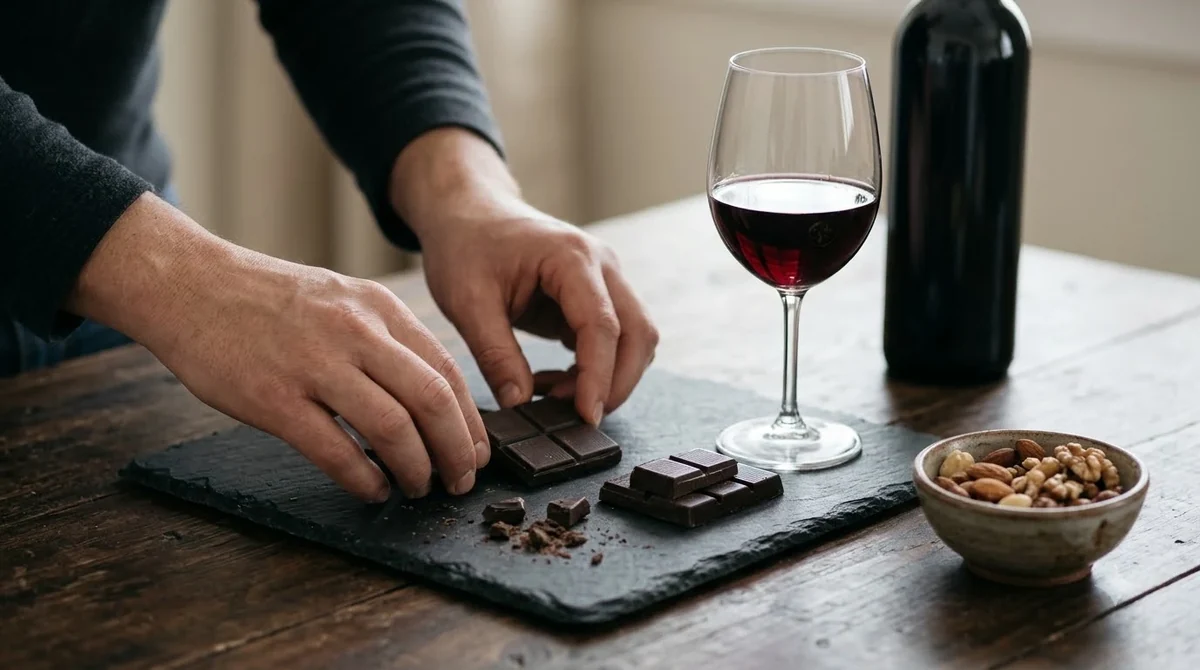
Dry red wine works especially well with foods that can meet its tannin, acidity, and body. Salt and fat soften the impression of tannin, so grilled beef, lamb, aged cheese, and rich mushroom dishes can pair comfortably with structured reds such as Cabernet Sauvignon or Syrah.
Match the wine’s weight to the dish rather than choosing by sugar alone. A high-tannin Cabernet Sauvignon can stand up to a fatty ribeye or lamb chop, while a softer Merlot suits meatloaf, roast chicken with mushrooms, or a burger. Pinot Noir’s higher acidity and lower-to-medium tannin make it a natural fit for duck, roast pork, salmon, and mushroom dishes; avoid pairing a very tannic red with oily fish because the combination can taste harsh. Spice needs a little care, too. Chili heat can feel stronger alongside wine with high alcohol and tannin, so a powerful Syrah or Cabernet may intensify the burn of hot peppers. For spicy barbecue, try a less tannic red with moderate alcohol, or keep the heat level gentle enough that the wine’s structure does not dominate. With tomato-based dishes, choose a red with enough acidity to match the sauce rather than a soft wine that tastes flat beside it.
Serving temperature also changes the impression of a red. Light-bodied reds such as many Pinot Noirs are best around 55–60°F, while fuller reds such as Cabernet Sauvignon and Syrah are generally served around 60–65°F. A modest chill can make a ripe, higher-alcohol red feel fresher; serving it too warm can emphasize alcohol and make its fruit seem heavier. A standard pour is 5 ounces, and a 750-milliliter bottle provides about five such glasses.
Frequently Asked Questions
These answers cover common points that can be confusing when comparing dry red wine sugar content, including trace sugar, winemaking choices, and the difference between dry and sugar-free. The typical dry-red range is about 0.5–3 g/L, but a 5-ounce pour can contain a different amount depending on the bottle’s actual concentration.
Does dry red wine contain zero sugar?
No. Many dry reds contain a small trace of residual sugar rather than an absolute zero. Decanter explains that it is rare for wine to fall below 1 g/L because some sugars cannot be consumed by yeast. A laboratory result of 0 g/L may also reflect rounding or the reporting method.
Can a red blend have more residual sugar than a single-variety wine?
Yes, but blending does not automatically make a wine sweeter. A finished blend’s sugar concentration depends on the residual sugar and proportions of the component wines, as well as any later cellar adjustment. A blend of two dry wines can remain dry, while a blend that includes a sweeter component can finish with a higher figure.
Does decanting remove sugar from red wine?
No. Decanting exposes wine to oxygen and can help a young, tannic red open up, but it does not remove dissolved residual sugar. A young full-bodied red may benefit from 30 to 60 minutes in a decanter, yet its measured sugar level remains essentially the same.
Does a higher alcohol level mean a red wine has more sugar?
Not necessarily. During fermentation, yeast converts grape sugar into alcohol, so a wine that ferments further can have more alcohol and less residual sugar. The relationship is affected by the grapes’ starting sugar, fermentation conditions, and whether the winemaker stops the process before it is complete.
Can a dry red wine be made from very ripe grapes?
Yes. Very ripe grapes can contain substantial sugar at harvest, but that sugar can ferment into alcohol if fermentation proceeds far enough. This is one reason a powerful, ripe-tasting red can still be technically dry, even when its aromas suggest blackberry jam or dark cherry liqueur.
For most classic red styles, residual sugar is low enough that tannin, acidity, alcohol, oak, and fruit character have a much greater effect on the drinking experience. Use the g/L figure when you need a precise comparison, and use grape variety, structure, and food pairing to choose a bottle that suits the occasion.
More in Wine Types & Grapes
 What Does Mourvèdre Taste Like? Flavor Profile, Regions, and PairingsUpdated Nov 20, 2026
 What Does Marsanne Taste Like? Flavors, Styles, and Food PairingsUpdated Nov 20, 2026
 What Does Malvasia Taste Like? Styles, Flavors, and Food PairingsUpdated Nov 20, 2026
 What Does Grenache Blanc Taste Like? Flavor Profile, Styles, and PairingsUpdated Nov 20, 2026
 What Does Garnacha Taste Like? Key Flavors, Styles, and Pairing TipsUpdated Nov 20, 2026
 What Does Fruit Wine Taste Like? A Complete Flavor and Style BreakdownUpdated Nov 20, 2026