

We may earn a commission when you buy through links on this page, at no extra cost to you. Learn more.
A dry dessert wine is a wine with little or no residual sugar, making it a crisp, refreshing choice for desserts that are not excessively sweet or for drinkers who prefer a less sugary finish. Although traditional dessert wines are usually sweet, dry wines can also complement fruit pastries, lightly sweetened desserts, cheese courses, and rich dishes. The key is understanding residual sugar, acidity, and flavor intensity so the wine does not taste unpleasantly sharp beside the food.
Choosing wine for dessert can be confusing because the term dessert wine usually suggests a sweet, concentrated bottle. However, not everyone enjoys intensely sweet wine after a meal. Dry Riesling, sparkling Brut, dry Chenin Blanc, and other crisp styles offer alternatives for people who prefer freshness over pronounced sweetness. This guide explains what to look for, which bottles deserve consideration, and how to make a successful pairing without overwhelming either the wine or the dessert.
What Does Dry Dessert Wine Actually Mean?
A dry dessert wine is generally a dry-style wine selected to accompany dessert rather than a traditionally sweet dessert wine. Its defining characteristic is low residual sugar, which gives it a crisp, relatively unsweetened finish. Understanding the difference helps shoppers avoid confusing a wine’s intended serving occasion with its actual sweetness level.

During fermentation, yeast converts the natural sugars in grape juice into alcohol. When fermentation consumes nearly all the available sugar, the finished wine tastes dry. The remaining sugar is called residual sugar, commonly abbreviated as RS, and is measured in grams per liter. A wine can have noticeable fruit aromas without containing enough residual sugar to taste sweet. For example, a dry Riesling may smell strongly of green apple, peach, lime, and citrus while finishing with a crisp, refreshing character.
Dryness is not the same as acidity, alcohol content, or body. A wine can be dry and full-bodied, or dry and light-bodied. Similarly, a wine with pronounced acidity may taste particularly refreshing even when it contains a small amount of residual sugar. Tannin also changes the impression of sweetness because its drying sensation can make a wine seem less sweet than its actual sugar content suggests.
Understanding residual sugar measurements
Residual sugar provides a useful starting point when comparing bottles. The following ranges offer a practical guide to still-wine sweetness, although individual regulations and winemaking practices can vary.
| Sweetness category | Residual sugar | Typical impression |
|---|---|---|
| Bone-dry | Less than 1 g/L | Very crisp, with almost no perceived sweetness |
| Dry | 1–17 g/L | Little sweetness, often with a clean finish |
| Off-dry | 17–35 g/L | Light sweetness balanced by acidity |
| Medium-sweet | 35–120 g/L | Noticeably sweet, sometimes honeyed |
| Very sweet | More than 120 g/L | Concentrated sweetness and a rich finish |
These figures are useful shopping references rather than a guarantee of how every wine will taste. The OIV’s international wine sugar definitions use a stricter technical definition of dry wine, generally allowing up to 4 g/L, or up to 9 g/L under specified acidity conditions. A high-acid Riesling, for example, can taste particularly crisp compared with a softer wine containing a similar amount of sugar.
For shoppers, the important distinction is that a dry wine can accompany dessert, but it will not behave like a traditional sweet dessert wine. If the dessert is heavily sweetened, the wine may taste sour or thin. If the dessert is lightly sweetened, fruity, creamy, or savory, a dry wine can be a much more comfortable match.
Best Dry Wine Styles to Serve with Dessert
Several familiar wine styles work particularly well when the goal is a refreshing finish rather than an intensely sweet pairing. Dry Riesling, Sauvignon Blanc, sparkling Brut, and dry Chenin Blanc are useful starting points because they offer freshness, fruit character, or bubbles without pronounced sweetness.

Dry Riesling
Dry Riesling is one of the most versatile choices for people who want a wine with aromatic fruit and high acidity but little sweetness. Common flavor characteristics include lime, green apple, lemon, pear, and sometimes floral or mineral notes. Its acidity can balance creamy textures and refresh the palate after buttery pastries.
Look for a bottle specifically described as dry or labeled trocken when shopping for German Riesling. Riesling is made across a wide range of sweetness levels, so the grape name alone does not tell you whether a bottle is dry. Dry examples from Germany, Alsace, Washington State, and New York’s Finger Lakes can offer different expressions of the grape while retaining its characteristic freshness.
Sauvignon Blanc
Sauvignon Blanc is another useful option, particularly with desserts featuring citrus, green fruit, or herbs. Its naturally high acidity and flavors of lemon, grapefruit, lime, and fresh herbs create a sharp contrast with creamy or lightly sweet dishes.
A citrus tart with restrained sugar, for example, can work with a dry Sauvignon Blanc because the wine’s acidity echoes the fruit. However, a heavily sweetened lemon meringue pie is likely to make the wine taste excessively sour. For this reason, Sauvignon Blanc is generally better with lightly sweetened fruit preparations than with rich cakes or sugary frosting.
Dry Chenin Blanc
Chenin Blanc can be made in dry, off-dry, and sweet styles. Dry examples often feature apple, pear, quince, citrus, and floral characteristics, while their acidity makes them useful companions for creamy foods and fruit-based pastries.
Look for dry Vouvray or dry Chenin Blanc from South Africa when comparing bottles. The distinction between dry and demi-sec is important because some Chenin Blanc wines contain noticeable residual sugar. A dry version works particularly well with apple tart, pear pastry, and lightly sweetened custard.
Brut sparkling wine
Dry sparkling wines offer another attractive option. Brut Champagne, dry Cava, and other Brut sparkling wines combine lively acidity with bubbles that refresh the palate after rich foods. Their citrus, apple, and bread-like characteristics can complement pastry and creamy textures.
Champagne and Cava use bottle fermentation, which contributes to their characteristic texture and flavor development. Prosecco, by contrast, is typically made primarily from Glera grapes using the tank method. For shoppers interested in Spanish sparkling wine, dry Cava is a useful category to explore.
Remember that sparkling wine sweetness terminology can be confusing. Extra Dry is actually sweeter than Brut, while Brut Nature is among the driest styles. A shopper looking for the crispest possible bottle should compare Brut Nature, Extra Brut, and Brut before choosing a wine.
Dry Dessert Wine Versus Traditional Sweet Dessert Wine
The main difference between dry and sweet dessert wine is the amount of residual sugar remaining in the finished bottle. Dry styles emphasize acidity, freshness, and restrained fruit, while traditional dessert wines concentrate sweetness through specific grape-growing and winemaking techniques.
Traditional dessert wines include late-harvest Riesling, Sauternes, Tokaji Aszú, ice wine, Port, and sweet Sherry. These wines can be made by harvesting very ripe grapes, concentrating their juice through dehydration, using noble rot, freezing grapes on the vine, or adding grape spirit during fermentation.
For example, ice wine is produced from grapes that freeze naturally while still attached to the vine. Pressing the frozen fruit separates concentrated juice from much of the frozen water. The result can have intense tropical fruit, honey, and citrus flavors balanced by refreshing acidity. Canadian producers commonly use Vidal and Riesling for this style.
Botrytized wines use the beneficial fungus Botrytis cinerea, often called noble rot. Under suitable conditions, the fungus helps dehydrate grapes and concentrate their sugars and flavors. Sauternes from France and Tokaji Aszú from Hungary are familiar examples. Tokaji commonly features Furmint, a grape that contributes acidity and aromatic complexity.
How fortified dessert wines differ
Fortified wines follow another production approach. Winemakers add grape spirit to the base wine, sometimes during fermentation, which stops yeast activity and preserves some natural grape sugar. Port, Madeira, and sweet styles of Sherry belong to this broad category.
Port typically has a richer alcohol level than ordinary table wine, often around 19% ABV. Ruby Port emphasizes red and dark fruit, while Tawny Port develops more dried-fruit, nut, caramel, and baking-spice characteristics through aging. Both can be excellent with chocolate desserts, although they are very different from dry table wines.
Sherry is not automatically sweet. Fino and Manzanilla are examples of dry styles, while Pedro Ximénez and Moscatel bottlings are commonly very sweet. Madeira also spans a sweetness range, from drier expressions to rich Malmsey.
The distinction matters when choosing a bottle for a particular meal. Someone seeking a crisp finish should not automatically select a bottle labeled dessert wine. Someone serving a dense chocolate cake, meanwhile, may find that a traditional sweet fortified wine is much more satisfying than a bone-dry white.
How to Pair Dry Wines with Different Desserts
Successful dessert pairing depends on sweetness, acidity, body, and flavor intensity. A dry wine is usually most successful with a dessert that is not excessively sweet, while a traditional sweet wine is often a better choice for heavily sweetened cakes, chocolate, and concentrated fruit desserts.
Fruit tarts and citrus desserts
Fruit-based desserts are among the easiest places to begin experimenting with dry wines. Apple tart, pear galette, lemon pastry, and fresh berry desserts can work with crisp white wines when their sugar levels remain moderate.
Try dry Riesling with an apple tart or Sauvignon Blanc with a lightly sweetened lemon dessert. The fruit flavors provide a natural connection, while acidity keeps the combination refreshing. For a richer pastry crust, sparkling Brut can provide additional freshness.
Pay attention to the sweetness of the filling rather than just the fruit itself. Fresh raspberries are relatively tart, but raspberries cooked into a sugary sauce can become much sweeter. A wine that works with fresh berries may taste overly acidic alongside a heavily sweetened berry compote.
Cheesecake and creamy desserts
Cheesecake, panna cotta, vanilla custard, and lightly sweetened cream desserts can work with dry sparkling wine or an aromatic dry white. Acidity helps balance dairy richness, while bubbles create a refreshing contrast with creamy textures.
A Brut sparkling wine can be especially useful with a plain cheesecake that does not contain heavy frosting or a sugary fruit topping. Dry Chenin Blanc is another option for a dessert featuring pear, apple, or vanilla.
However, the amount of sugar matters. A cheesecake topped with caramel sauce or a thick layer of sweetened chocolate may require an off-dry or sweet wine instead. A dry wine should not have to compete with a dessert that is substantially sweeter than it is.
Chocolate and nut desserts
Chocolate is more challenging for dry wines because its bitterness and sweetness can create an unpleasant contrast with high acidity or tannin. Dark chocolate with restrained sugar is generally easier to pair than milk chocolate, chocolate frosting, or sweet ganache.
If serving a dry red wine, consider the grape’s tannin level. Cabernet Sauvignon has high tannin, while Merlot is generally softer and medium in tannin. Pinot Noir tends to have low-to-medium tannin and higher acidity. These differences affect how each wine interacts with chocolate and nut-based desserts.
A dry Merlot may work with a less-sweet dark chocolate preparation, particularly when toasted nuts or fruit are included. For more information about this grape’s flavor profile, see our guide to dry Merlot.
For intensely chocolate-based desserts, consider changing direction and selecting a traditional sweet wine. Ruby Port, Tawny Port, and Pedro Ximénez Sherry are established options because their sweetness and concentrated flavors can stand alongside chocolate and caramel.
Cheese, nuts, and lightly sweetened plates
Not every dessert course needs cake or pastry. A cheese plate with walnuts, almonds, dried fruit, and fresh pear can be an excellent setting for a dry wine. Sparkling Brut and dry Riesling provide freshness, while a dry white with good acidity can balance the richness of soft cheese.
Salt also changes wine perception. Salt can soften the impression of tannin, while fat makes tannic wines seem less aggressive. This is one reason a cheese course can work with a wider range of dry reds than a sugary chocolate cake.
For a dessert plate featuring blue cheese, consider an off-dry or sweet wine rather than assuming a completely dry wine will provide the best result. Sweetness can complement the saltiness and intensity of the cheese.
Tip: Start with the dessert’s sweetness rather than its name. A lightly sweet apple tart may work with dry Riesling, but a heavily sweetened apple pie is usually better with an off-dry or sweet wine.
How to Choose a Bottle When Shopping
Choosing the right bottle becomes easier when shoppers compare sweetness terminology, grape varieties, alcohol levels, and production styles. Start with the intended food pairing, then narrow the options to wines with suitable acidity and body.
Read the sweetness terminology
On still wines, words such as dry, sec, and trocken can help identify wines with little residual sugar. German Riesling labels are especially important to understand because the same grape can produce wines ranging from bone-dry to intensely sweet.
Spätlese indicates a late-harvest category, but it does not automatically guarantee a sweet wine. A bottle marked Spätlese trocken is a dry-style wine. Likewise, the word Riesling by itself does not establish the sweetness level.
For sparkling wine, use the sweetness hierarchy as a guide:
- Brut Nature: Extremely dry, generally with no more than 3 g/L sugar under the standard category.
- Extra Brut: Very dry, with up to 6 g/L.
- Brut: Dry, with up to 12 g/L.
- Extra Dry: Sweeter than Brut, typically 12–17 g/L.
- Dry: Sweeter than Extra Dry in sparkling wine terminology, typically 17–32 g/L.
- Demi-Sec: Noticeably sweet, generally 32–50 g/L.
- Doux: The sweetest traditional category, generally above 50 g/L.
This classification explains why a sparkling wine labeled Extra Dry may not be the best choice for someone specifically seeking the driest possible bottle.
Compare grape varieties
Grape variety offers clues about flavor, acidity, and tannin. Sauvignon Blanc and Riesling are generally high-acid choices, while Chardonnay usually has medium acidity. Moscato commonly has lower-to-medium acidity and is frequently made in sweeter styles, although dry versions exist.
For red wines, Cabernet Sauvignon is typically high in tannin, Merlot has medium and softer tannin, and Pinot Noir generally has lower-to-medium tannin with higher acidity. Syrah can have medium-plus to high tannin and a fuller flavor profile.
Shoppers comparing dry red wines may also want to explore dry Malbec. Its fruit-forward character can make it a useful option for savory cheese plates and some less-sweet chocolate preparations, although it is not a traditional dessert wine.
Consider alcohol and body
Alcohol content can influence how heavy a wine feels and how it interacts with food. Ordinary dry table wines commonly offer a lighter drinking experience than fortified dessert wines, which often fall around 17–20% ABV.
Higher alcohol can also amplify the perception of chili heat. This matters if the dessert contains chili, spicy chocolate, or other hot ingredients. In such cases, a high-alcohol fortified wine may make the heat feel stronger rather than providing a refreshing contrast.
Before buying, consider whether the dessert is delicate or rich. A light fruit tart generally needs a lighter wine, while a dense chocolate preparation can overwhelm a delicate white. Matching the intensity of both components is as important as matching sweetness.
Serving Temperature, Glassware, and Storage
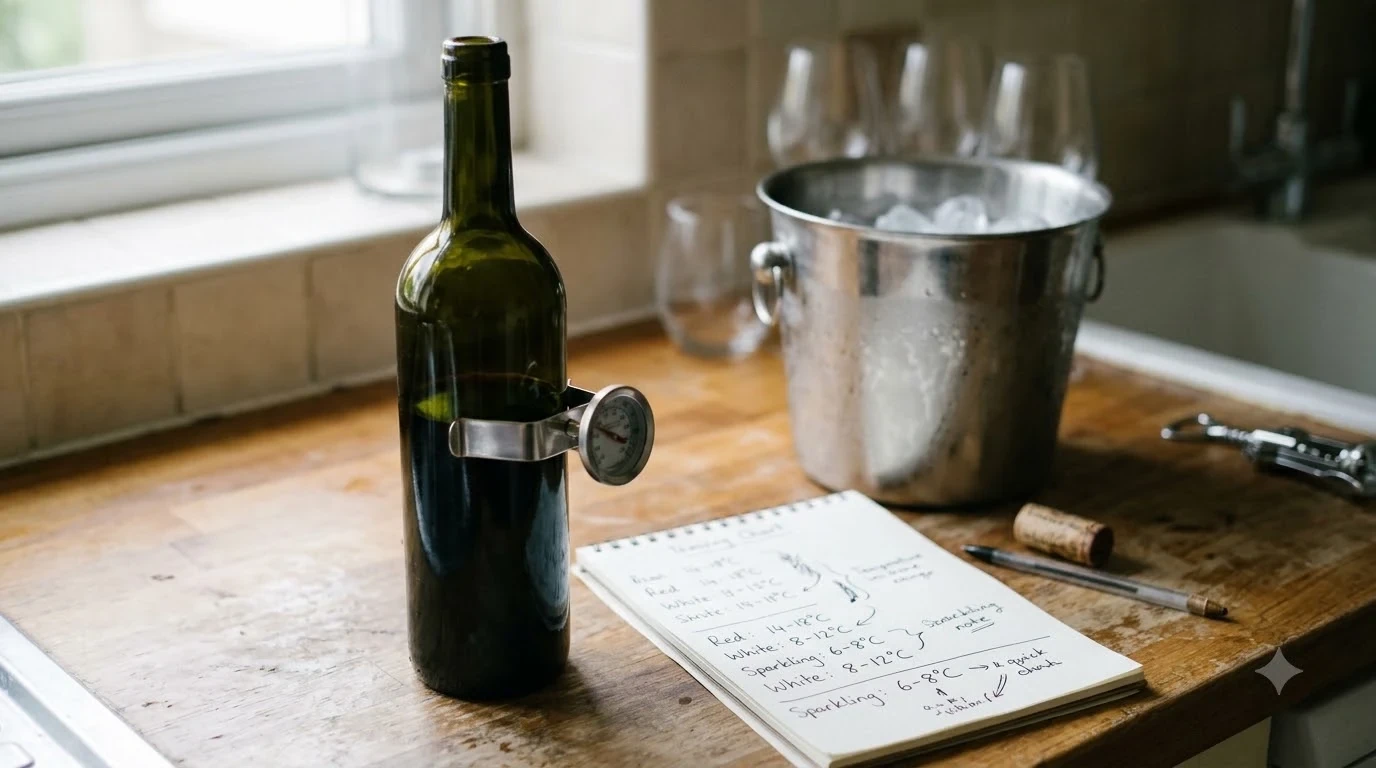
Serving temperature can change the way a dry wine tastes with dessert. Cooler temperatures emphasize freshness and acidity, while warmer temperatures can make alcohol and fuller-bodied flavors more noticeable.
For most dry sparkling wines, aim for 40–50°F. Light-bodied whites and rosé are generally best around 45–50°F, while fuller-bodied whites are usually served around 50–55°F. These temperatures help preserve freshness without making the wine excessively cold.
For dry red wines, lighter styles such as Pinot Noir are often best around 55–60°F. Fuller-bodied reds such as Cabernet Sauvignon and Syrah are generally served around 60–65°F. Serving red wine too warm can make alcohol seem more prominent and reduce the impression of freshness.
Choose the right serving size
A standard wine pour is approximately 5 ounces. A 750-milliliter bottle provides about five standard glasses, although smaller pours are often appropriate when serving wine with a dessert course.
For a tasting that includes multiple desserts, consider pouring 2–3 ounces of each wine rather than filling a standard glass. This makes it easier to compare a dry Riesling, Brut sparkling wine, and dry Chenin Blanc without serving unnecessarily large portions.
Use an appropriate wine glass that allows room for aromas to develop. Sparkling wine is traditionally served in a flute or tulip-shaped glass, while still whites and reds benefit from glasses with enough bowl space to release their aromas.
Store opened and unopened bottles properly
Store unopened wine bottles on their sides in a cool, dark place near 55°F when the closure is suitable for horizontal storage. Consistent temperature is more important than frequently moving bottles between different storage locations.
After opening, refrigerate still wines and use them within approximately 3–5 days for the best quality. Sparkling wines generally retain their character for around 1–3 days when properly resealed. Fortified wines can remain enjoyable for several weeks, depending on their style and storage conditions.
For a dessert tasting, open the bottles shortly before serving and avoid leaving dry sparkling wine exposed to air for extended periods. Its bubbles and fresh aromas are an important part of the experience.
Frequently Asked Questions
Can dry wine be called a dessert wine?
Yes. Dessert wine can describe the wine’s role in a meal rather than a strict production category. A dry sparkling wine or dry Riesling can be served during a dessert course even though it does not have the concentrated sweetness associated with traditional dessert wines.
Is Brut Champagne considered a dry dessert wine?
Brut Champagne is a dry sparkling wine category, not a traditional sweet dessert wine. Champagne must come from the designated Champagne region of France, and the term Brut describes its sweetness classification. It can accompany a dessert course when the food is not excessively sweet.
Can dry dessert wine be used in cooking?
Yes. Dry white wine can be used in fruit poaching liquids, cream-based sauces, and some pastry preparations. Its acidity can provide balance, while the alcohol largely evaporates during sufficiently long cooking, although the exact result depends on the recipe and cooking method.
Does dry wine contain zero sugar?
No. Many dry wines retain a small amount of residual sugar after fermentation. Bone-dry wines can contain less than 1 gram per liter, but the word dry does not necessarily mean that every trace of grape sugar has disappeared.
Can sparkling wine sweetness change after opening?
The wine’s residual sugar does not normally disappear simply because the bottle has been opened. However, the loss of carbonation can change the overall sensory impression, making the wine seem less lively and altering the balance between acidity, texture, and sweetness.
Dry wines can make an excellent ending to a meal when the dessert is selected with their freshness, acidity, and flavor intensity in mind. Start with dry Riesling, Sauvignon Blanc, Chenin Blanc, or Brut sparkling wine, and adjust the choice according to the sweetness of the food. For heavily sweetened chocolate, caramel, or fruit desserts, a traditional sweet wine may be the better match, but a carefully selected dry bottle can provide a refreshing alternative for a lighter finish.
More in Wine Buying Guides
 Cheap Red Blend: How to Find a Flavorful Bottle for LessUpdated Nov 20, 2026
 Pinot Grigio Gift: How to Choose a Bottle They’ll EnjoyUpdated Nov 20, 2026
 Best White Wine at Total Wine for Every MealUpdated Nov 20, 2026
 Wine Fridge Replacement Shelves: Find the Right FitUpdated Nov 20, 2026
 Best Sparkling Wine Under 20: Find Bubbles Worth BuyingUpdated Nov 20, 2026
 Best Wine For Birthday Celebrations With Perfect Party PairingsUpdated Nov 20, 2026