

We may earn a commission when you buy through links on this page, at no extra cost to you. Learn more.
Casillero del Diablo white wine is a Chilean range of still whites made from varieties such as Sauvignon Blanc, Chardonnay, Pinot Grigio and Pedro Jiménez. The bottles do not all taste alike: the Sauvignon Blanc leans toward lime, peach and herbs, while the Chardonnay is rounder and the Pinot Grigio is lighter, with pear and orchard-fruit notes. For a crisp seafood pairing, start with Sauvignon Blanc; for creamy pasta or a fuller white, choose Chardonnay.
The name on the label identifies a family of wines, not one grape or one fixed flavor profile. The producer’s online catalog also lists Viognier and special white-wine bottlings, while the exact selection available to US shoppers can vary by market and vintage. Knowing the grape, Chilean origin and cellar treatment is the simplest way to choose a bottle that suits the meal.
What the White Range Includes
Casillero del Diablo white wine covers several varietal styles, so the grape name is the most useful first clue. The producer’s global catalog identifies Sauvignon Blanc, Chardonnay, Pinot Grigio, Pedro Jiménez and Viognier, alongside additional white-labeled expressions such as Reserva Especial Chardonnay and Sauvignon Blanc.
That range matters because a Sauvignon Blanc and a Chardonnay are not interchangeable. One is usually chosen for freshness, citrus and herbal lift; the other can offer a broader palate, ripe fruit and a little more texture. Pinot Grigio is generally the lighter, more delicate option. Pedro Jiménez brings another Chilean white-grape name into the lineup, while Viognier is listed in the portfolio but may be harder to find in some markets.
Think of the catalog as a map of the producer’s range rather than a promise that every bottle is on every store shelf. A retailer may carry only one or two core varietals, and a particular bottling may appear under Reserva, Reserva Especial or another collection name. The label’s grape and origin will tell you more than the umbrella brand name alone. For context on how one label can span several grapes and styles, see Wine Brands.
How the Main White Varieties Taste
The clearest difference among the principal whites is the balance of citrus, orchard fruit, acidity and body. Sauvignon Blanc is the zesty, herbal choice; Chardonnay is rounder and can show a measured oak influence; Pinot Grigio is light and lively, while Pedro Jiménez is described by the producer as smooth, fresh and citrus-led.
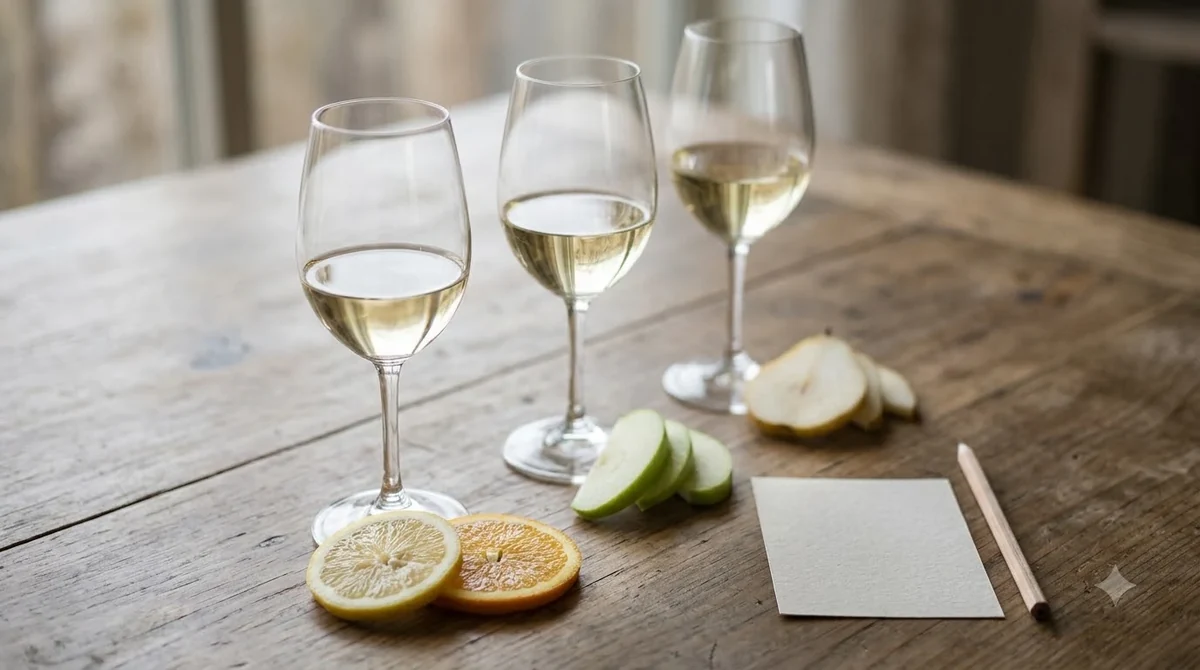
Sauvignon Blanc: The Reserva bottling is described with lime, peach and a touch of herbs, followed by freshness and medium, balanced acidity. Concha y Toro’s product notes for its Casablanca-origin wine add mineral character, peach and redcurrant, and identify salmon ceviche as a good pairing. It suits people who like a bright white without relying on acidity alone.
Chardonnay: This is the richer direction in the range. The producer describes ripe-fruit aromas, mild acidity and freshness, with French oak barrels used for storage and stainless-steel tanks for fermentation. That combination can create more breadth than the tank-fermented Sauvignon Blanc. Suggested pairings include fish, seafood and creamy pasta dishes.
Pinot Grigio and Pedro Jiménez: The Casillero del Diablo Pinot Grigio is presented as light and vibrant, with quince, green apple, pear and a delicate mineral note. Pedro Jiménez is described with fruit, floral and citrus notes, a smooth, rounded palate and crisp acidity. The latter’s name is easy to misread as a promise of a sweet, sherry-like wine; the producer’s description instead emphasizes freshness, so assess that Chilean bottling on its own terms rather than assuming it is a dessert wine. Viognier: This is another white grape in the wider catalog. Since availability and technical detail can vary by market, treat the grape name as the starting point and look for the local product description before expecting a particular aroma or body. In brief, Sauvignon Blanc is sharper, Chardonnay rounder, and Pinot Grigio lighter.
Chilean Valleys and Winemaking Choices
Casablanca Valley and Limarí Valley help explain the freshness and mineral notes associated with several of these whites. The producer links its Reserva Sauvignon Blanc to Casablanca and its Pinot Grigio to Limarí, while the Chardonnay description discusses the influence of both coastal Limarí soils and fruit from Casablanca.
Casablanca sits close to the Pacific and is known for maritime cooling and morning fog. Wines of Chile describes the valley’s cooler lower areas as favorable for vibrant whites, especially Sauvignon Blanc and Chardonnay; its regional map lists 2,235 hectares of Sauvignon Blanc and 1,420 hectares of Chardonnay there. Wine Enthusiast also explains how the Humboldt Current, coastal fog and local soils help shape Sauvignon Blanc from Casablanca. Those conditions can slow ripening and help grapes retain natural acidity.
Limarí offers a different but related coastal influence. Wines of Chile describes it as a semi-arid region with morning fog, maritime influence and some of Chile’s calcareous soils; its regional data lists 780 hectares of Chardonnay and 196 hectares of Sauvignon Blanc. Concha y Toro identifies Limarí as the origin of its listed Pinot Grigio, while its Chardonnay page names Limarí in the denomination and discusses the mineral character of the area. That context suits the pear, quince and mineral notes cited for the Pinot Grigio.
Cellar decisions also help separate the wines. The producer says its Reserva Sauvignon Blanc is fermented in stainless steel, and the Chardonnay entry specifies stainless-steel fermentation alongside storage in French oak barrels. The Pinot Grigio page also identifies stainless-steel fermentation. Steel fermentation is a common way to preserve fresh fruit character, while barrel contact can add breadth and a different texture; neither method alone tells you the wine’s precise weight or sweetness. These regional and cellar details are best used as clues, not guarantees: vintage, harvest conditions and the exact bottling can shift the final profile. For a broader perspective on how coastal Chile shapes the grape, Wine Enthusiast’s overview of Chilean Sauvignon Blanc describes the distinctive effects of Casablanca and Leyda rather than treating all Chilean whites as one style.
Sweetness, Acidity, Body and Aroma
These wines are presented as fresh, food-friendly table whites rather than dessert wines. The producer’s descriptions of Sauvignon Blanc, Pinot Grigio and Pedro Jiménez emphasize freshness, fruit and acidity; Chardonnay is described with ripe fruit, mild acidity and a rounder palate. None of those tasting descriptions alone establishes an exact residual-sugar figure.
For a useful first comparison, think of Sauvignon Blanc as the most overtly citrus-and-herb driven, Pinot Grigio as lighter and more orchard-fruited, and Chardonnay as the broader style. Sauvignon Blanc as a grape is known for high acidity, although the Casillero del Diablo Reserva page describes its own version as having medium, balanced acidity. That distinction matters: general grape character is a guide, while the producer’s note describes the specific wine.
Body is not the same as sweetness. A wine can feel broad or creamy without being sweet, and a crisp wine can still carry ripe peach or tropical-fruit aromas. Oak may make Chardonnay seem fuller, but it does not automatically make it buttery or heavily oaked. Similarly, floral and citrus aromas in Pedro Jiménez do not prove that the wine contains substantial residual sugar. Use three quick questions when comparing bottles: do you want citrus and herbal notes, or softer orchard fruit; will the wine be served with delicate seafood or a creamy entrée; and do you prefer a leaner finish or a rounder mouthfeel? Those questions narrow the choice faster than the general word “white.” The producer’s Casillero del Diablo red wine range also varies by grape, from softer Merlot to more tannic Cabernet Sauvignon.
Food Pairings for Seafood, Salads and Richer Dishes
The strongest matches for these whites are dishes that suit their acidity and body. Sauvignon Blanc is a natural partner for ceviche and fresh seafood, Pinot Grigio works with delicate fish and shellfish, and Chardonnay has enough breadth for richer fish preparations and creamy pasta.
With Sauvignon Blanc, look to ceviche, sea bass, salmon ceviche, oysters, shrimp and green salads. The citrus and herbal profile works especially well when the dish has lime, lemon, fresh herbs or a vinaigrette. Acidic food needs a wine with equal or higher acidity, otherwise the wine can seem flat beside the dish. This is why a fresh Sauvignon Blanc is often a more convincing partner for ceviche than a soft, low-acid white. Pinot Grigio suits lighter plates: sole, simply cooked white fish, shrimp, oysters and salads. Keep sauces restrained so the delicate pear and green-apple character remains noticeable. A lemon dressing or a little fresh herb is usually easier to match than a heavy cream sauce. Pedro Jiménez, with its floral and citrus notes, is also suggested by the producer for fish, shellfish, salads and appetizers, so it can serve a similar role at a casual seafood meal.
Chardonnay is the more flexible choice for dishes with richer texture. Try it with grilled fish, seafood in a butter-based sauce, roast chicken, or pasta with cream, mushrooms or mild cheese. The producer itself lists fish, seafood and creamy pasta as pairings for its Chardonnay. A fuller white meets a rich sauce more comfortably than a very lean one, while acidity keeps the dish from feeling heavy.
For a mixed table, match the bottle to the most prominent ingredient or sauce. A platter of oysters, shrimp and ceviche points toward Sauvignon Blanc or Pinot Grigio; a seafood pasta with cream points toward Chardonnay. Salt and fat can soften tannin in red wine, but these white styles do not rely on heavy tannin for structure. Very spicy dishes can still make higher-alcohol wines seem hotter, so keep chili moderate when the goal is to notice delicate citrus and fruit detail. Those choosing a red alongside the whites can compare the firmer structure of Casillero del Diablo Cabernet with the lighter, more refreshing white-wine options.
Serving Temperature, Storage and Buying Tips
Serve the lighter Casillero del Diablo whites cold but not numbingly cold, and give the fuller Chardonnay a little more warmth. The brand’s Reserva Sauvignon Blanc page recommends 8–10°C, which converts to about 46–50°F; that sits within the usual 45–50°F range for light whites.
| White wine style | Suggested serving temperature | What the range emphasizes |
|---|---|---|
| Sauvignon Blanc | 45–50°F (7–10°C) | Citrus, herbs and fresh acidity |
| Pinot Grigio | 45–50°F (7–10°C) | Light body and delicate pear notes |
| Pedro Jiménez | 45–50°F (7–10°C) | Floral and citrus freshness |
| Chardonnay | 50–55°F (10–13°C) | Ripe fruit and a rounder texture |
| Viognier | 50–55°F (10–13°C) | A fuller aromatic white style |
These are practical serving targets, not a claim that every bottling has the same weight. If a Sauvignon Blanc comes straight from a very cold refrigerator, allow it a few minutes in the glass so the aromas can open. A Chardonnay served too cold can seem muted, while a warmer glass can make its ripe-fruit and barrel notes easier to notice. The producer’s specific recommendation for its standard Reserva Sauvignon Blanc is 8–10°C, so that is a sound reference point for that bottle.
A standard 750-milliliter bottle gives about five 5-ounce pours. Store unopened bottles away from sunlight and temperature swings, ideally near 55°F; keep cork-closed bottles on their sides. After opening, put still white wine back in the refrigerator and aim to finish it within 3–5 days. Use a stopper to limit air exposure, and bring the next pour back to the right serving temperature.
Tip: Choose the grape before choosing the meal: Sauvignon Blanc for ceviche and crisp salads, Pinot Grigio for delicate fish, and Chardonnay for creamy pasta or richer seafood. Then check the bottle’s stated origin and vintage to compare like with like.
When shopping, compare grape, collection and origin together. A Reserva Sauvignon Blanc from Casablanca is a different choice from a Chardonnay associated with Limarí or Casablanca. If the shelf carries Belight or Reserva Especial, use its own description rather than assuming it matches the standard Reserva bottling. A shopper comparing the brand with another Chilean or international producer can also browse the site’s profile of Baron Philippe de Rothschild wine to see how producer, region and grape work together in a label’s identity.
Frequently Asked Questions
Does Casillero del Diablo make a low-calorie white wine?
Yes. Concha y Toro lists a Casillero del Diablo Belight Sauvignon Blanc and marks that bottling as “Low in calories.” The producer describes it as a Central Valley wine with no barrel aging, which makes it a distinct option from the standard Reserva Sauvignon Blanc.
Has Casillero del Diablo Sauvignon Blanc received awards?
The brand’s Sauvignon Blanc page records James Suckling recognition for the 2018 vintage and The Tasting Panel recognition in the US for the 2019 vintage. Those references apply to the vintages named, not automatically to every later release.
Is Casillero del Diablo Chardonnay labeled vegan?
Concha y Toro’s product entry for its 2020 Casillero del Diablo Chardonnay carries a vegan designation. That detail refers to the listed product entry, so shoppers with specific certification requirements should look for the relevant mark or documentation on the bottle sold in their market.
Does the producer make white wine beyond the four main styles?
Yes. The global Casillero del Diablo catalog also lists Viognier, Belight Sauvignon Blanc, Reserva Especial Chardonnay, Reserva Especial Sauvignon Blanc and an item called Devil’s White. These names show a broader portfolio than the four common varietal choices, although local availability can differ.
Where does the Pedro Jiménez bottling come from?
Concha y Toro identifies its Casillero del Diablo Pedro Jiménez as a Limarí Valley wine. Its product description lists alluvial, colluvial and clay-loam soils, with a coastal, semi-arid climate.
Casillero del Diablo’s white wines are easiest to understand by starting with the grape: Sauvignon Blanc for citrus and herbs, Pinot Grigio for a lighter feel, Chardonnay for a rounder texture, and Pedro Jiménez for floral freshness. Match the bottle to the dish, serve it at the right temperature, and use the stated origin and vintage to make a more informed comparison.
More in Wine Brands
 Louis Latour Wine Price: Compare Bottles by Style and TierUpdated Nov 20, 2026
 Yellow Tail Moscato Price: What to Expect Before You BuyUpdated Nov 20, 2026
 Sutter Home Sweet Red Review: Find the Right Food PairingsUpdated Nov 20, 2026
 Franzia Chillable Red Review: Find the Right Serving StyleUpdated Nov 20, 2026
 Veuve Clicquot Rose Review: Flavor, Food Pairings and Buying AdviceUpdated Nov 20, 2026
 Rombauer Wine Price: Compare Bottles Before You BuyUpdated Nov 20, 2026