

We may earn a commission when you buy through links on this page, at no extra cost to you. Learn more.
can you store wine upright? Yes, for a few weeks or even a few months if you plan to drink it soon, but long-term storage is better on its side, especially under a natural cork. A bottle standing on a shelf does not immediately spoil, and the closure matters more than the wine’s color or grape variety. For a bottle you intend to age, horizontal storage is the safer routine; for an everyday bottle, cool, dark and steady conditions matter most.
Wine storage advice often makes bottle position sound like an urgent choice. It is not. The goal is to keep the wine away from heat, light and repeated temperature swings while choosing an orientation suited to its closure and how long you plan to keep it. Here is how to decide without rearranging every bottle in the house.
When Upright Storage Works
Standing a bottle upright is a practical option for wine you expect to open within a few weeks or a few months. The position alone will not ruin a sound bottle over that short period, provided it is kept cool, dark and away from heat or sunlight.
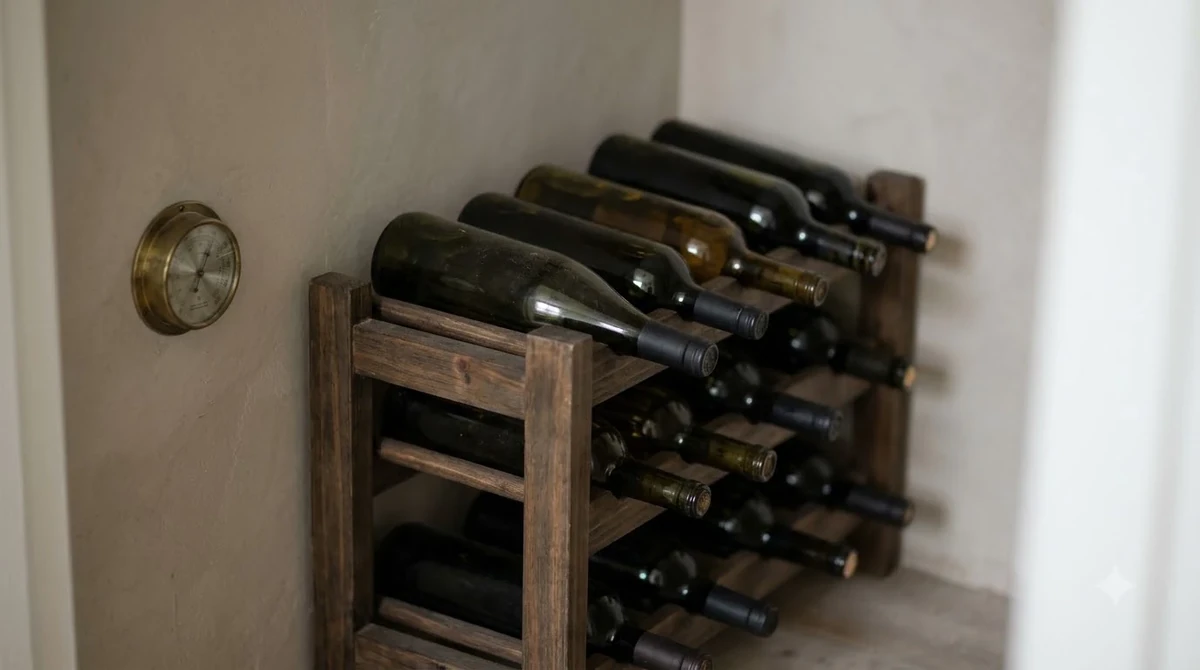
This rule suits everyday bottles bought for dinner, a weekend gathering or a near-term gift. Most wines are made to be enjoyed young, not stored for years; a Sauvignon Blanc for next weekend or a Pinot Noir for Tuesday dinner can wait upright in a suitable cupboard.
The time distinction appears in expert guidance. Sommelier Shanna Nasiri told VinePair that a bottle not intended for aging can stand upright for a few weeks or months. Decanter’s advice on screw-cap bottles likewise sees little difference when wine will be opened within 12 months, but prefers horizontal storage for longer cellaring. Treat upright storage as a convenient holding position, not a preservation method. A cool pantry is suitable for a bottle planned for next month; if the plan changes to several years of aging, change its position too.
| Storage situation | Recommended position | Time frame |
|---|---|---|
| Everyday wine, not being aged | Upright is fine | A few weeks to a few months |
| Screw-cap wine intended for near-term drinking | Upright or horizontal | Within 12 months |
| Natural-cork wine intended for aging | Horizontal | Long-term storage |
| Age-worthy modern screw-cap wine | Horizontal preferred | More than 12 months |
Tip: Mark bottles you plan to keep beyond the next 12 months, then lay age-worthy natural-cork bottles horizontally before they disappear into the back of a cupboard.
Natural Cork and Long-Term Storage
For a wine sealed with a traditional natural cork and intended for extended storage, laying the bottle horizontally remains the standard recommendation. The wine touches the underside of the cork, helping limit the chance that the cork dries, shrinks or loses its seal over time.
A natural cork is not an airtight plastic plug; its structure allows small amounts of oxygen to pass through. If it becomes too dry, it may lose elasticity and seal less effectively, exposing the wine to more oxygen. Excess oxygen can strip fresh fruit character and create tired, oxidized aromas, so contact with the wine is a sensible precaution during long storage. Wine Enthusiast’s wine storage advice also recommends horizontal positioning to help keep natural corks hydrated.
A cork does not dry out the moment a bottle is stood upright. Wine Enthusiast recommends side storage to keep corks hydrated, while the Australian Wine Research Institute summarizes studies showing that orientation effects vary by wine and closure. In one trial comparing six closure types on red and white wines, upright bottles had slightly higher yellow-brown color readings after 24 months, but the overall difference was not significant. Oxidation was higher in upright samples with agglomerated corks, and white-wine acetaldehyde was elevated from the three-month measurement onward.
A second study followed barrel-aged Chardonnay and Riesling for 60 months and found little effect from bottle position on measured composition or sensory properties. This is a useful reminder that an upright bottle does not automatically fail, but it does not overturn the practical rule: lay age-worthy natural-cork wines on their sides because bottles and storage conditions vary. A horizontal rack cannot rescue a bottle kept beside a radiator or sunny window. Orientation is only one part of storage, not a substitute for a stable environment.
Screw Caps and Other Closures
A screw cap removes the traditional need to keep wine in contact with a natural cork, so upright storage is generally convenient for bottles with this closure. For extended aging, however, some winemakers and wine specialists still favor horizontal storage because modern screw-cap liners are designed to manage small oxygen exchanges.
Not all screw caps seal wine in exactly the same way. Decanter explains that modern systems such as Stelvin are designed with controlled oxygen permeability to support maturation. Peter McCombie MW gives a reason to store these bottles on their sides: contact between wine and seal may support exchange with air passing through it. He sees little difference for bottles opened within 12 months, but prefers horizontal storage for longer cellaring.
This is more subtle than the rule for natural cork: a screw cap does not need wine contact to prevent cork drying. Side storage is a reasonable long-term choice for a wine meant to mature, while upright storage is fine for near-term drinking. A screw cap alone does not mean a wine will improve with age. Synthetic corks and glass stoppers differ from natural cork, and their manufacturers may specify other practices. For a wine intended to age for years, follow the producer’s advice. You can identify the closure without opening the bottle: look for a screw cap, a natural cork beneath foil, or a glass or synthetic stopper. Match it to your time horizon: short-term bottles can stand; long-term natural-cork bottles should lie down; age-worthy screw-cap bottles can also lie down as a conservative choice.
Temperature, Humidity, Light and Movement
A bottle kept at a steady, suitable temperature in the dark is better protected than one in a perfect horizontal position beside an oven. Wine Enthusiast identifies about 55°F as a useful storage target for red, white, sparkling and fortified wines, and its guidance puts relative humidity around 50 to 80 percent.
Heat speeds unwanted changes. The Australian Wine Research Institute reports that wine stored at 30°C for 12 months developed faulty flavors and lower quality; above 40°C, visible and sensory changes can occur within days. Its research on wine transport and storage illustrates why avoiding prolonged heat exposure matters. Avoid a garage, attic, car trunk or kitchen shelf that gets hot for long periods. An upright bottle in a cool, stable place is better off than one lying flat in a hot spot.
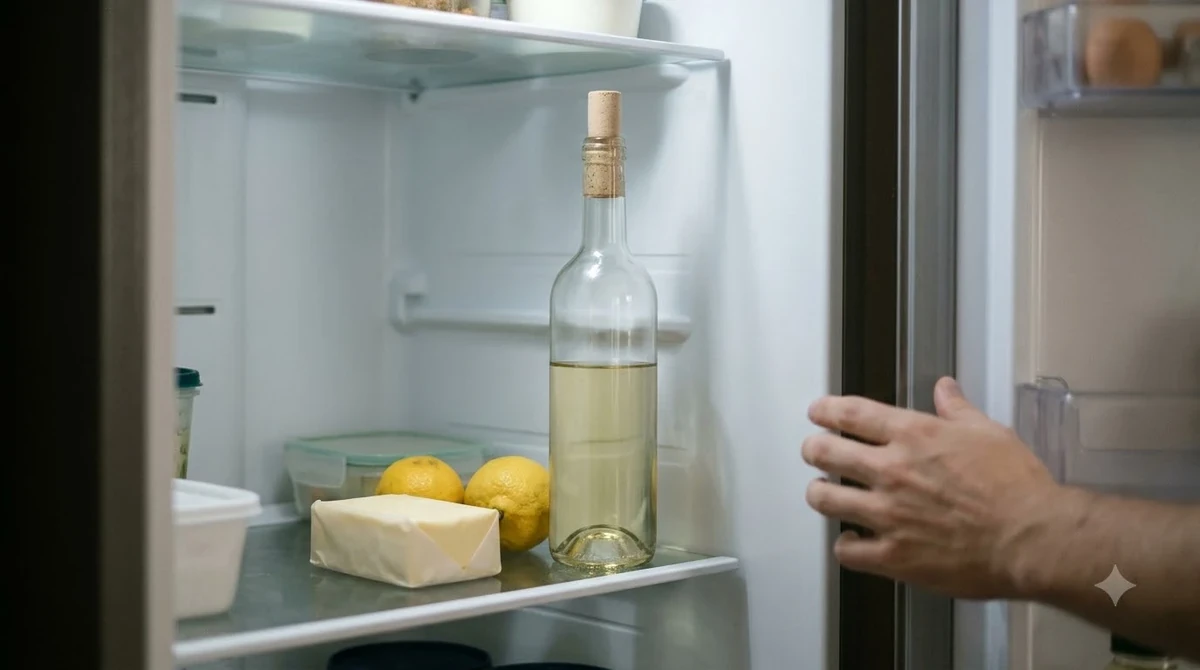
Very cold conditions are not a long-term solution either. A regular refrigerator is useful for chilling wine you will drink within a few days, but it is colder and drier than a wine-storage environment. Wine Enthusiast describes a typical household refrigerator at around 40°F, too cold for extended storage. For a quick chill and its risks, see our advice on can you store wine in the freezer; a freezer is not a permanent home for a bottle.
Light and vibration matter too. Direct sunlight and ultraviolet exposure can create light-struck aromas, so choose a dark cupboard over a windowsill. Repeated vibration can disturb sediment; avoid a shelf on a refrigerator, washing machine or other frequently running appliance. Wine Enthusiast’s suggested 50 to 80 percent range aims to limit cork drying without the label damage or mold associated with excessive dampness. A humidifier is unnecessary for two pantry bottles, but a very dry room is not ideal for an aging collection.
Choosing a Storage Spot at Home
For bottles you plan to drink soon, choose the coolest, darkest stable place you have. A pantry or interior closet can work well; an under-bed space may also be suitable if it stays temperate and is not exposed to sunlight, heating equipment or strong odors.
Wine Enthusiast says everyday bottles can sit in a closet or pantry; a counter can work briefly if it is away from sun and heat. VinePair suggests a bedroom closet or space beneath a bed for large-format bottles such as a magnum that will not fit on a standard rack. The kitchen can be a poor choice near an oven, stove, dishwasher or sunny window. Cooking creates heat and temperature swings, and cabinets above appliances can become warmer than expected. A bottle for tonight can wait on the counter; a case meant to stay for months needs a more consistent spot.
For a small natural-cork collection, a horizontal rack keeps corks in contact with wine and stops bottles rolling. A stable upright shelf is fine for short-term screw-cap bottles. A wine refrigerator should offer steady temperature, limited vibration and room for horizontal storage rather than merely chilling bottles. Keep wine away from solvents, fuel, paint, cleaning chemicals and smoke. Persistent strong odors around cork-closed bottles are not suitable for long storage, so keep a wine cabinet clean and free of household products that release strong aromas. Storage temperature is not serving temperature. A bottle kept around 55°F may need extra chilling before pouring, especially sparkling wine or a light white. Chill it shortly before serving rather than storing it in a warm room.
If a Bottle Has Been Standing Already
A bottle that has stood upright for two weeks at around 55°F does not need a special rescue routine; position alone is not proof of spoilage. Do not panic because a bottle has spent days or a few weeks upright. A short upright period is not an automatic sign of spoilage, and changing its position now is more useful than worrying about the time it spent on the shelf.
If you plan to open it in the near future, keep it somewhere cool and dark until serving. If you intend to age a natural-cork bottle, move it gently onto its side and leave it there. There is no need to shake it, roll it or repeatedly turn it to compensate for the time it stood upright. A wine with sediment may need a quiet period before opening, but routine bottles do not need a special recovery process.
Look for storage problems rather than judging by orientation alone. A pushed-out cork, sticky residue around the capsule, seepage down the neck or a low fill level can point to heat exposure or a compromised seal. These signs do not prove the wine is ruined, but they matter more than the fact that it stood upright. When opened, assess the wine normally. A damp-cardboard smell can indicate cork taint; bruised-apple or nutty notes in a wine that should be fresh may suggest oxidation. A tired-tasting wine is not necessarily unsafe; our separate explainer on can wine make you sick addresses food-safety concerns. Position alone does not tell you whether a bottle is sound. Our Wine Q&A library covers other everyday questions about storing and serving bottles. The main decision is straightforward: upright for near-term drinking, horizontal for long-term natural-cork cellaring, and good environmental conditions in either case.
Frequently Asked Questions
These quick answers cover issues that often come up after you have chosen a shelf: sediment, cork taint, opened bottles and packaging formats. The main storage cutoffs are a few weeks to a few months for short-term upright placement and 12 months as the point in Decanter’s screw-cap guidance where the orientation distinction becomes more relevant.
Does storing a bottle upright cause cork taint?
No. Cork taint is generally associated with TCA and related compounds that contaminate wine or its closure; it is not caused by standing the bottle up. Horizontal storage addresses cork moisture and the seal, not the chemical cause of cork taint.
Should I stand an older red wine upright before serving?
That can help sediment collect at the bottom of the bottle before you pour. For an older wine with visible sediment, stand it carefully for several hours or overnight rather than moving it repeatedly just before opening. Pour slowly and stop before the sediment reaches the neck.
Does bottle position matter after the wine has been opened?
After opening, the main concern is limiting the wine’s contact with oxygen, not keeping a cork wet from the inside. Replace the closure promptly, keep the bottle refrigerated and use a suitable stopper or vacuum device when appropriate. An opened bottle should not be treated like a sealed bottle being aged for years.
Can bag-in-box wine be stored upright?
Yes. Bag-in-box wine is designed to be used with its internal flexible bag and tap, so the natural-cork rule for glass bottles does not apply. Keep the box in a cool place away from direct sunlight, and follow the producer’s guidance after opening.
Does a bottle need to lie perfectly flat?
No exact angle is required for ordinary home storage. The practical aim with natural cork is to keep wine in contact with the cork, so a modest tilt is generally compatible with the purpose of a horizontal rack. Avoid positions that let bottles roll, wobble or rest against a heat source.
Upright storage is a sensible short-term choice, not a mistake that ruins wine overnight. For bottles you want to age, especially those sealed with natural cork, lay them on their sides and protect them from heat, light and vibration. A steady storage spot will do more for the bottle than constant adjustments to its position.
More in Wine Basics
 What Is The Best Wine For Mimosas? Choose Bubbly That Balances Orange JuiceUpdated Nov 20, 2026
 Which Prosecco Is Best for Your Taste and OccasionUpdated Nov 20, 2026
 Which Wine Is Best For Health? Understand the Risks and BenefitsUpdated Nov 20, 2026
 Which Champagne Is Best for Your Taste and OccasionUpdated Nov 20, 2026
 What To Put In A Wine Gift Basket For A Thoughtful, Memorable GiftUpdated Nov 20, 2026
 What Is the Best Wine for Mulled Wine? Choose a Smooth, Fruity RedUpdated Nov 20, 2026