

We may earn a commission when you buy through links on this page, at no extra cost to you. Learn more.
Campania wine country is a diverse wine-producing region in southwestern Italy, where visitors can discover celebrated Aglianico reds, distinctive Fiano and Greco whites, volcanic vineyards, and traditional wineries near Naples, Avellino, and the Amalfi Coast. Its four DOCG appellations include Taurasi, Fiano di Avellino, Greco di Tufo, and Aglianico del Taburno. From the inland hills of Irpinia to the vineyards overlooking the Tyrrhenian Sea, Campania offers a remarkable range of native grapes, wine styles, and regional food traditions.
Campania is an excellent destination for wine enthusiasts who want to explore Italian varieties beyond the familiar bottles of Tuscany and Piedmont. The region combines ancient winemaking traditions with varied landscapes, including mountain valleys, coastal terraces, volcanic slopes, and Mediterranean islands. Understanding its main wine districts makes it easier to plan tastings, select bottles, and appreciate the differences between individual appellations.
Understanding the Geography of Campania Wine Country
Campania’s wine geography stretches from the inland mountains of Avellino and Benevento to the coastal districts around Naples, Salerno, and the islands. Each area has its own combination of elevation, soil, climate, and native grapes, producing wines with noticeably different personalities.
Naples is a practical starting point for exploring the region. It provides access to the volcanic vineyards around Mount Vesuvius and Campi Flegrei, while the inland wine districts require travel toward Avellino and Benevento. Farther south, the Amalfi Coast and Cilento introduce smaller vineyard areas where steep terrain and proximity to the sea influence grape growing.
Campania has five provinces: Avellino, Benevento, Caserta, Naples, and Salerno. The regional government recognizes 4 DOCG, 15 DOC, and 10 IGT wine designations. This range reflects the region’s unusually broad collection of local varieties and growing environments.
Irpinia, in Avellino province, is particularly important because it contains three of the region’s four DOCG appellations. Its elevated vineyards, calcareous-clayey soils, volcanic components, and marked differences between daytime and nighttime temperatures help preserve acidity in the grapes. These conditions are particularly useful for producing structured white wines and age-worthy Aglianico reds.
The coastal districts offer a contrasting experience. Vineyards around Campi Flegrei, Ischia, and the Amalfi Coast are shaped by maritime influences and varied volcanic or rocky terrain. Some vineyards occupy steep slopes where cultivation requires considerable manual work. The resulting wines frequently emphasize freshness, savory character, and local grape identity.
Travelers planning a visit should avoid treating the whole region as one compact winery district. A drive from Naples to an inland winery in Irpinia involves a different landscape and travel experience from a coastal excursion to Sorrento or Amalfi. Choosing one or two neighboring wine areas for each day makes tastings more practical.
The Four DOCG Wines That Define the Region
Campania has four DOCG appellations, the highest Italian designation for controlled and guaranteed origin. Three are located in Avellino province, while Aglianico del Taburno represents the wine-growing territory around Benevento.
Taurasi DOCG is the region’s best-known structured red wine. It is based on Aglianico, a grape associated with substantial tannin, naturally high acidity, dark fruit, and the ability to develop complexity through aging. The appellation covers 17 municipalities in Avellino province. Its minimum aging requirement is three years, increasing to four years for Riserva. These requirements make Taurasi an especially interesting choice for collectors and travelers who enjoy traditional Italian reds.
Fiano di Avellino DOCG is one of Campania’s most distinctive white wines. It is produced from Fiano across 26 municipalities. The wine commonly displays white-fleshed fruit, citrus, floral notes, and hazelnut characteristics. Its refreshing acidity and ability to develop with age distinguish it from many immediately aromatic Mediterranean whites. Riserva versions offer another opportunity to explore the variety’s development.
Greco di Tufo DOCG comes from eight municipalities around the town of Tufo. Greco produces a more structured and savory white wine, often showing citrus, orchard fruit, mineral impressions, and a firm finish. The appellation also allows sparkling wine and Riserva styles, giving visitors several expressions of the same grape to compare.
Aglianico del Taburno DOCG comes from the Benevento area and provides another important expression of Campania’s leading red grape. It can offer dark berry fruit, firm tannins, and savory character. Compared with the wines of Taurasi, its regional identity reflects the different growing environment around the Taburno massif.
| DOCG appellation | Primary grape | Wine style | Key production detail |
|---|---|---|---|
| Taurasi | Aglianico | Red | 3 years minimum aging; 4 for Riserva |
| Fiano di Avellino | Fiano | White | 26 municipalities |
| Greco di Tufo | Greco | White and sparkling | 8 municipalities |
| Aglianico del Taburno | Aglianico | Red | Benevento wine district |
For a focused introduction to the three Avellino appellations, the Irpinia wine consortium’s appellation descriptions provide useful details about their grapes, production areas, and distinguishing characteristics.
When tasting these four DOCG wines together, pay attention to the contrast between the whites and reds. Fiano and Greco both offer freshness, but Fiano often emphasizes fruit and nutty complexity, while Greco tends toward a firmer, more savory impression. Taurasi and Aglianico del Taburno share the Aglianico grape but express different local growing conditions.
Native Grapes and Their Characteristic Wine Styles
Campania’s native grapes are central to its identity, and learning a handful of varieties helps make unfamiliar wine labels easier to understand. Aglianico, Fiano, Greco, and Falanghina are essential starting points, while Piedirosso, Coda di Volpe, Asprinio, and Pallagrello provide additional regional character.
Aglianico is the region’s leading red variety. It produces deeply colored wines with pronounced tannins, substantial acidity, and flavors that can include black cherry, blackberry, dried herbs, and spice. Taurasi is its most famous expression, although Aglianico also appears in wines from Benevento and other Campania districts.
Fiano is a white grape that produces wines with texture, freshness, and attractive aromatic complexity. Citrus, pear, white flowers, and hazelnut are common descriptors. Well-made examples can develop additional savory and nutty characteristics over several years in the bottle.
Greco produces structured white wines with lively acidity and a savory character. Greco di Tufo is the most recognized expression. Its combination of citrus fruit, mineral impressions, and firm texture makes it a useful partner for seafood and shellfish.
Falanghina is another important white grape, especially in Benevento and Sannio. Its wines often show lemon, apple, floral aromas, and fresh acidity. They are generally approachable when young and work well with seafood, vegetables, and lighter regional dishes.
Several other grapes deserve attention. Piedirosso is a red variety associated with Naples, the Vesuvian area, and Campi Flegrei. It commonly produces wines with red fruit, floral notes, and a less forceful tannic structure than Aglianico. Coda di Volpe is a white grape used in several Campania wine styles, while Sciascinoso contributes additional regional red-wine diversity.
Caserta province is particularly interesting for travelers seeking less familiar varieties. Pallagrello Bianco can offer citrus and soft fruit characteristics, while Pallagrello Nero produces red wines with fresh red-fruit notes. Casavecchia is another distinctive local red grape worth recognizing when browsing regional wine lists.
Asprinio is especially unusual because of its traditional cultivation system. In the Aversa area, its vines have historically been trained vertically alongside poplar trees. The grape is associated with fresh, citrus-driven wines, making it an appealing contrast to the fuller-bodied whites of Irpinia.
Tip: Try the same grape from two different Campania appellations whenever possible. Comparing Aglianico from Taurasi with Aglianico del Taburno, or tasting Falanghina from Sannio alongside Campi Flegrei, reveals how location influences the finished wine.
Exploring Irpinia, Sannio, and the Inland Wine Districts
Inland Campania is the best place to begin for travelers primarily interested in serious wine tasting. Irpinia offers three DOCG appellations, while neighboring Benevento and Sannio provide excellent opportunities to discover Falanghina, Aglianico, and other native varieties.

In Irpinia, the towns of Avellino, Taurasi, Tufo, and Lapio provide useful geographical reference points. Taurasi is associated with the famous Aglianico red, Tufo with Greco di Tufo, and Lapio with Fiano di Avellino. These communities help organize a wine-focused itinerary around specific appellations rather than treating every winery as interchangeable.
The area’s mountainous character has a direct influence on vineyard conditions. Elevation and substantial temperature differences between daytime and nighttime help maintain freshness in the grapes. The mixture of volcanic, calcareous-clayey, and marly soils adds another layer of variation between individual vineyard sites.
Visitors should also explore the wider Irpinia DOC designation. Unlike the three specialized DOCG appellations, Irpinia DOC covers the province of Avellino and includes several wine styles. Its permitted varieties include Fiano, Greco, Aglianico, Falanghina, Coda di Volpe, Piedirosso, and Sciascinoso. This makes the designation useful for discovering smaller producers and less familiar local combinations.
Traveling north toward Benevento introduces the Sannio wine district. Falanghina is particularly important here, and Falanghina del Sannio DOC provides a useful reference point for the grape. The wider Sannio DOC includes additional varieties and styles, while Aglianico del Taburno DOCG offers a more structured red-wine alternative.
Solopaca and Sant’Agata dei Goti are among the local names worth recognizing when exploring the Benevento area. These communities are associated with traditional wine production and the broader identity of Sannio. Tastings can provide a useful introduction to the differences between Falanghina, Aglianico, and other regional grapes.
For a first inland wine trip, plan to visit two or three wineries in one district rather than attempting to cover every appellation in a single day. Allow time for a relaxed tasting, a regional lunch, and travel between villages. Winery appointments are particularly important for smaller producers, whose visitor schedules may be limited.
Coastal Vineyards, Volcanoes, and Island Wines
Coastal Campania offers a very different wine experience from the mountains of Irpinia. The vineyards around Naples, Mount Vesuvius, Campi Flegrei, Ischia, Capri, and the Amalfi Coast combine maritime influences with distinctive volcanic or rocky terrain.
Campi Flegrei DOC is located in the volcanic landscape west of Naples. Falanghina and Piedirosso are important varieties here. White wines commonly offer fresh citrus and floral characteristics, while Piedirosso produces red wines with red-fruit and floral notes. The proximity to Naples makes this area a convenient choice for visitors who want a wine excursion without traveling far inland.
Vesuvio DOC is associated with vineyards on and around Mount Vesuvius. Its best-known wine name is Lacryma Christi del Vesuvio, which appears in both white and red styles. Piedirosso and Aglianico contribute to the red expression, while local white grapes help define the white wines. The volcanic landscape provides a memorable setting for understanding the connection between geology and viticulture.
Ischia DOC represents the island’s distinctive wine tradition. Vineyard sites are influenced by steep slopes, Mediterranean weather, and the island’s volcanic geological history. Biancolella and Forastera are among the native white grapes associated with Ischia, while Piedirosso also contributes to local red wines.
Capri DOC offers another island expression of Campania wine. Falanghina and other local white varieties are important to the island’s wine identity. The combination of limestone terrain, sea breezes, and limited vineyard space creates a distinctive setting for small-scale production.
The Costa d’Amalfi DOC is especially interesting for travelers who appreciate unusual native varieties. Its three named subzones are Furore, Ravello, and Tramonti. Producers work with grapes including Fenile, Ginestra, Ripolo, Pepella, and Tintore. Steep terraces and difficult vineyard access make this an especially distinctive wine-growing landscape.
The Sorrento Peninsula also has its own DOC designation, with the subzones Lettere, Gragnano, and Sorrento. Gragnano is particularly recognizable to visitors because its traditional wine styles are associated with local food culture and pizza. Exploring this district alongside the Amalfi Coast provides a broader picture of coastal Campania.
Further south, Cilento DOC and Castel San Lorenzo DOC represent the wine-producing territory around Salerno. These districts extend the regional wine journey beyond the more frequently discussed destinations near Naples and the Amalfi Coast.
Planning a Wine Trip and Choosing the Best Time to Visit
A successful Campania wine itinerary starts with choosing a geographical focus. The region has seven recognized wine routes, including routes covering Campi Flegrei, Ischia and Vesuvio, the Sorrento Peninsula, the Amalfi Coast and Capri, Caserta, and the Sannio and Benevento districts.
For a short trip based in Naples, Campi Flegrei and Vesuvio are practical options. Both provide opportunities to explore local wines while also enjoying the region’s archaeological sites, coastal scenery, and traditional restaurants. A separate day can be dedicated to Ischia or Capri, depending on ferry schedules and the amount of time available.
Travelers particularly interested in DOCG wines should prioritize Irpinia. A two-day itinerary can include visits around Taurasi, Tufo, and Lapio, with time for a meal in Avellino or a nearby village. This approach allows visitors to compare Aglianico, Fiano, and Greco without spending most of the day on the road.
For those with more time, Benevento makes a natural addition to an inland wine trip. The Sannio district provides an opportunity to explore Falanghina and Aglianico del Taburno, along with the region’s traditional food culture. Caserta can be another stop for travelers interested in Asprinio, Falerno del Massico, Pallagrello, and Casavecchia.
Autumn is particularly interesting because it coincides with the grape harvest. Picking schedules vary by grape variety, vineyard elevation, and weather conditions. Early-ripening white grapes may be harvested before later-ripening Aglianico, which can remain on the vine into the later part of the season.
Spring and early fall are also attractive periods for combining vineyard visits with coastal sightseeing. Summer brings warm weather and lively coastal destinations, but traffic and visitor numbers can make some journeys slower. In winter, winery availability and outdoor activities may be more limited, although inland wine districts can still provide rewarding experiences.
Before setting out, contact wineries directly to confirm opening hours, tasting availability, languages, and appointment requirements. Small family producers may not operate like large commercial tasting rooms. A confirmed reservation also helps the winery prepare an appropriate tasting rather than having to accommodate an unexpected arrival.
Visitors who want to understand how Italian wine districts compare with American wine destinations can also explore Wine Regions for a broader introduction to appellations, grape varieties, and regional wine traditions.
Campania Food Pairings and How to Taste Its Wines
Campania’s wines make the most sense alongside the region’s food. Fresh seafood, tomatoes, local cheeses, grilled meats, vegetables, and traditional pasta dishes provide natural opportunities to discover how acidity, tannin, body, and aroma interact with food.
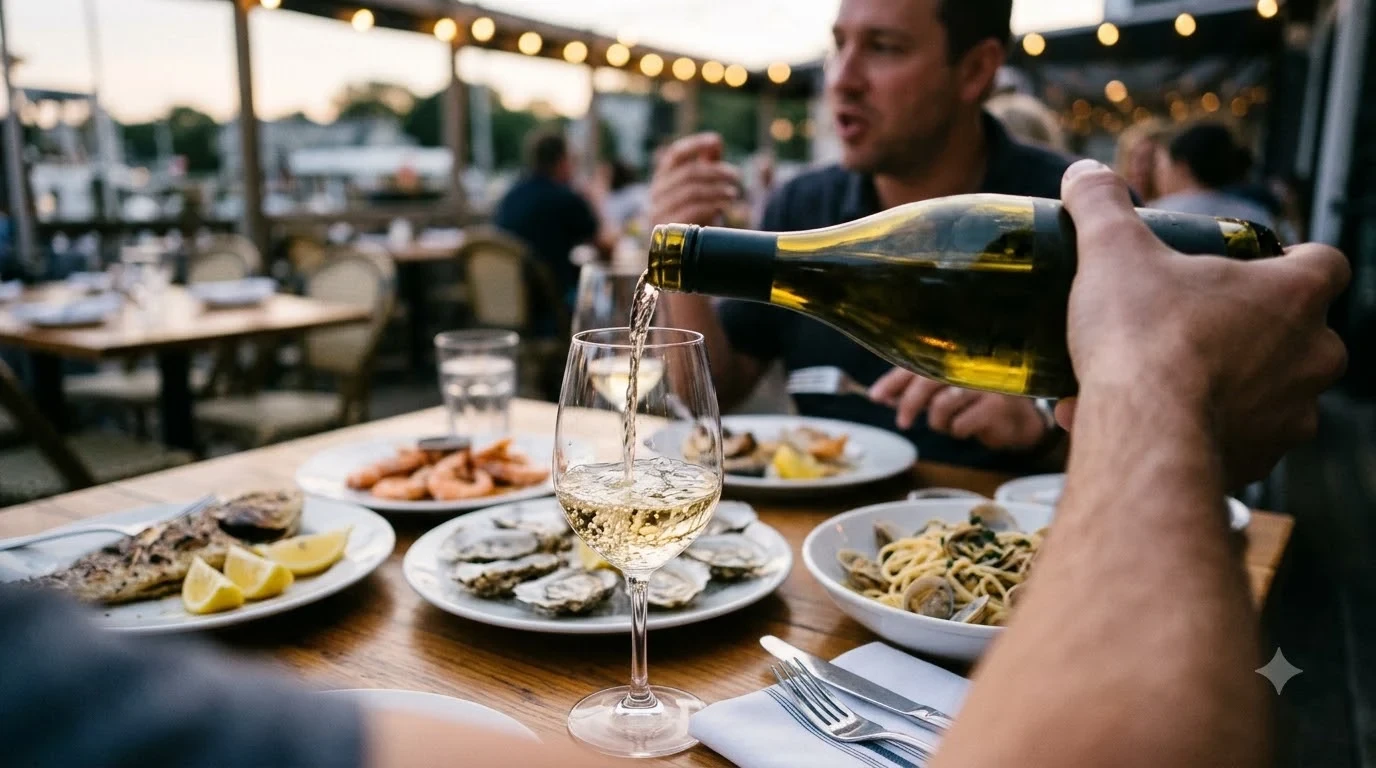
Start with Fiano di Avellino and seafood. Its acidity and textured character complement grilled fish, shellfish, and dishes prepared with olive oil and lemon. Greco di Tufo is another excellent seafood partner, particularly with shellfish, shrimp, and richer fish preparations. Its savory profile works especially well when the dish includes herbs or a little salt.
Falanghina is a flexible option for lighter meals. Pair it with grilled vegetables, mozzarella, seafood pasta, or dishes based on fresh tomatoes. Its acidity helps balance the freshness of the ingredients, while its fruit character makes it accessible alongside a variety of Mediterranean flavors.
For red wines, Aglianico needs food with enough flavor and texture to match its tannins. Taurasi works particularly well with grilled beef, lamb, slow-cooked meat dishes, game, and aged cheeses. Salt and fat can soften the perception of tannin, making rich meat dishes particularly effective partners.
Piedirosso is often a more approachable choice for tomato-based dishes, roasted vegetables, and grilled meats. Its red-fruit character can complement the freshness of tomato sauce without overwhelming the food. It is also a useful alternative for diners who want a regional red without the more substantial tannic structure of Taurasi.
Campania’s sparkling wines and lighter whites also deserve a place at the table. Greco di Tufo Spumante can work as an aperitif or alongside fried seafood. Asprinio-based wines provide another fresh option for dishes featuring shellfish and citrus. The key is to match the wine’s acidity to the acidity and intensity of the dish.
Traditional local specialties offer plenty of pairing opportunities. Pizza, pasta with tomato sauce, seafood risotto, grilled vegetables, and regional cheeses can all work with different Campania wines. For a tomato-heavy dish, choose a wine with enough acidity to keep the pairing balanced. A wine that is less acidic than the food may seem flat beside it.
Serving temperature also affects how the wines taste. Serve sparkling wines around 40–50 F, light whites around 45–50 F, and fuller-bodied whites around 50–55 F. Light reds such as Piedirosso generally benefit from 55–60 F, while fuller reds such as Taurasi are best served around 60–65 F.
A 750 ml bottle provides approximately five standard 5 oz pours. This makes it practical to compare several wines during a tasting without pouring large glasses. Take time between samples, note the grape and appellation, and pay attention to how acidity, tannin, and finish change from one wine to another.
Travelers exploring American wine destinations can also compare Campania’s regional approach with Yadkin Valley wine country or Hill Country vineyards. These regions offer different climates and grape-growing traditions, but the same principles of local varieties, vineyard conditions, and food pairing help explain their individual wine identities.
Frequently Asked Questions
Is Campania one of Italy’s oldest wine-producing regions?
Yes. Campania’s winemaking traditions extend back to ancient Greek settlement and Roman times. The ancient Roman wine Falernian was associated with the historic Falernum territory in the northern part of the region. This long history helps explain why Campania has preserved such a wide range of indigenous grape varieties.
What does DOCG mean on an Italian wine label?
DOCG stands for Denominazione di Origine Controllata e Garantita. It is Italy’s highest traditional wine-origin classification and includes specific rules concerning geographical origin and production. The designation also involves official controls and numbered identification on qualifying bottles.
Can Campania wines be aged for ten years or longer?
Yes. Some high-quality Taurasi wines can develop over a decade or longer, depending on the vintage, producer, and storage conditions. Well-made Fiano di Avellino and Greco di Tufo can also develop interesting tertiary characteristics as they mature. Not every bottle is intended for extended cellaring, so producer guidance and the individual wine’s structure matter.
Is Campania famous for wine made from ancient grape varieties?
Yes. The region has preserved many locally important grapes, including Catalanesca, Caprettone, Pallagrello Bianco, Pallagrello Nero, and Casavecchia. Some have relatively limited production compared with Fiano, Greco, and Aglianico. Their continued cultivation helps maintain the diversity of Campania’s wine heritage.
What is the difference between Italian DOC, DOCG, and IGT designations?
DOC and DOCG are geographical designations with defined production rules, while IGT offers a broader geographical category with greater flexibility in grape selection and production methods. IGT stands for Indicazione Geografica Tipica. A wine’s classification does not automatically determine its quality, and excellent wines can be found across all three categories.
Campania wine country rewards travelers who take time to explore its individual districts rather than focusing on one famous bottle or destination. From Taurasi and Fiano di Avellino to Falanghina, Piedirosso, and the coastal wines of the Amalfi Coast, its native grapes offer an unusually varied picture of southern Italian winemaking. Start with one or two appellations, enjoy the local food, and use each tasting to discover another part of this distinctive wine region.
More in Wine Regions
 Willcox Wine Trail: Discover Arizona’s High-Elevation Wine CountryUpdated Nov 20, 2026
 Yakima Valley Wine Region: Find the Best Styles to TryUpdated Nov 20, 2026
 Vosne Romanee Wine Tasting: Identify Aromas and Choose Better PairingsUpdated Nov 20, 2026
 Yakima Valley Wine Festival: Find the Best Seasonal Wine EventsUpdated Nov 20, 2026
 Wales Vineyards: Discover Cool-Climate Wines and Where to VisitUpdated Nov 20, 2026
 Yountville Wine Festival: Discover Napa Wines and Local FoodUpdated Nov 20, 2026