

We may earn a commission when you buy through links on this page, at no extra cost to you. Learn more.
There are roughly 122 calories in cabernet sauvignon per standard 5-ounce glass, with a full 750-milliliter bottle averaging around 610 calories. Nearly 90 percent of those calories come from alcohol rather than residual sugar, because Cabernet Sauvignon is typically fermented dry. Depending on the region and alcohol by volume (ABV), a 5-ounce pour can range from about 120 calories in cooler-climate styles up to 175 calories in bold, high-alcohol California bottles.
Knowing the exact energy count of your favorite full-bodied red takes the guesswork out of pouring a glass at dinner or tracking your weekly intake. Because wine labels in the United States rarely list full nutritional panels, understanding how alcohol percentage, serving size, and climate shape what ends up in your glass gives you an easy way to estimate any bottle on the shelf.
Calories in Cabernet Sauvignon by Pour Size and Bottle
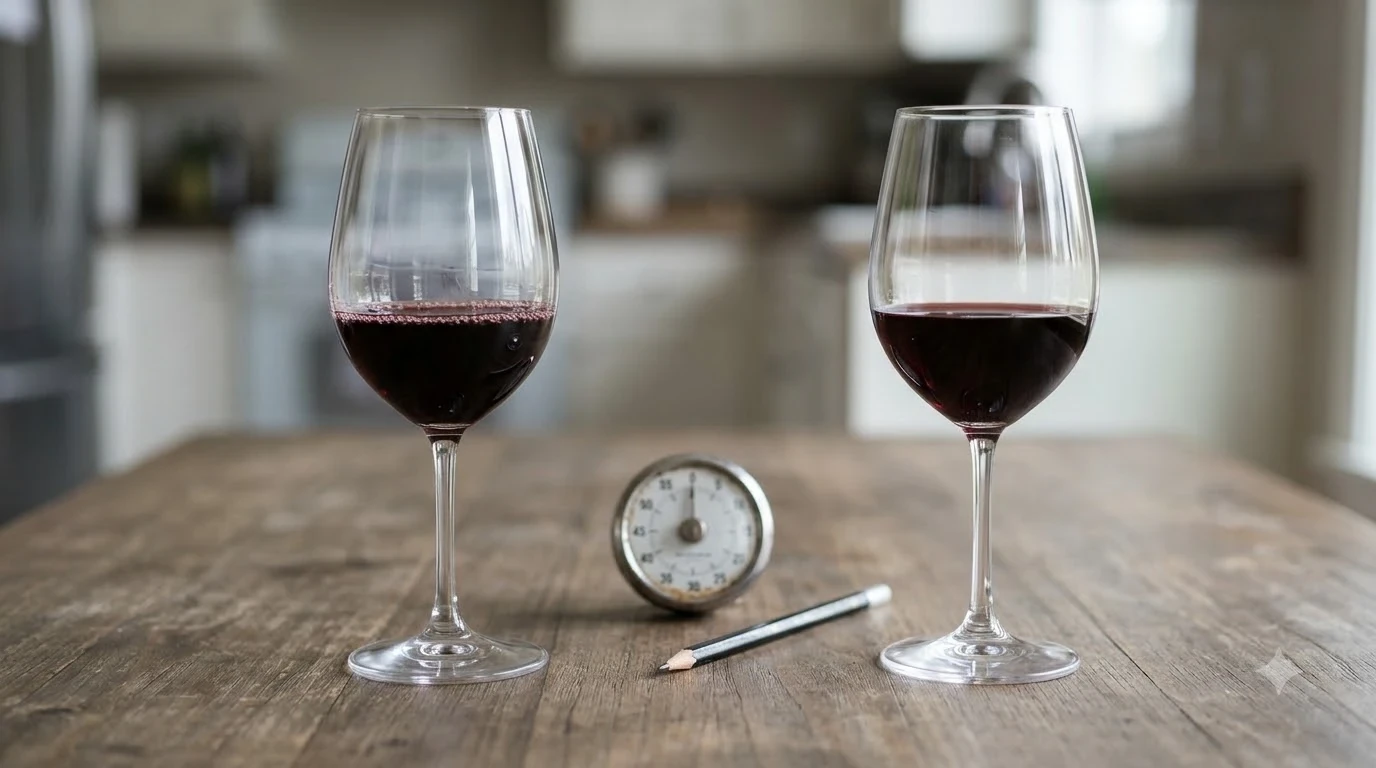
A standard U.S. serving of table wine measures 5 fluid ounces (about 147 to 150 milliliters), which equals roughly one-fifth of a standard 750-milliliter bottle. Scaling that pour up or down changes the total calorie count directly, making glassware size one of the biggest factors in how much energy you actually consume.
At home, oversized red wine bowls make it easy to pour 6, 8, or even 9 ounces without realizing it. While a restaurant tasting pour of 3 ounces keeps your intake around 73 calories, a generous 8-ounce evening pour jumps to nearly 195 calories—more than half again as much as a standard serving. Paying attention to the widest part of the bowl on a standard Bordeaux glass usually keeps your pour right near the 5-ounce mark.
If you share a 750-milliliter bottle across two people, each person drinks roughly 12.5 ounces, or two and a half standard glasses. That half-bottle share works out to approximately 305 calories for an average Cabernet Sauvignon, though richer, higher-ABV bottles will push that number closer to 350 or 390 calories per half-bottle.
| Serving Size | Milliliters (Approx.) | Average Calories (13.5%–14% ABV) | Carbohydrates | Residual Sugar |
|---|---|---|---|---|
| 3 oz (Tasting Pour) | 89 ml | 73 cal | 2.3 g | 0.5 g |
| 5 oz (Standard U.S. Glass) | 148 ml | 122 cal | 3.8 g | 0.9 g |
| 6 oz (Large Restaurant Pour) | 177 ml | 146 cal | 4.6 g | 1.1 g |
| 8 oz (Generous Home Pour) | 237 ml | 195 cal | 6.1 g | 1.5 g |
| 25.4 oz (750 ml Bottle) | 750 ml | 610 cal | 19.1 g | 4.6 g |
Where the Calories Come From: Alcohol vs. Residual Sugar
Unlike soda or fruit juice, where calories come almost entirely from sugar, the calories in Cabernet Sauvignon come overwhelmingly from ethanol. Alcohol packs roughly 7 calories per gram, whereas carbohydrates—including grape sugar—contain 4 calories per gram.
During fermentation, wine yeasts consume the natural glucose and fructose in crushed Cabernet Sauvignon grapes and convert them into ethanol and carbon dioxide. Because winemakers almost always allow Cabernet Sauvignon to ferment until virtually all the sugar is gone, a standard 5-ounce glass contains only about 3.8 grams of total carbohydrates and less than 1 gram of residual sugar. Those trace carbs contribute roughly 15 calories to the glass, while the remaining 107 calories come straight from the alcohol.
This math explains why a dry, full-bodied red often has more calories than a noticeably sweet, low-alcohol white wine. As researchers at Wine Folly point out, alcohol density drives the calorie count far more aggressively than sweetness does, meaning a 14.5 percent ABV dry red carries more energy per ounce than an 8 or 9 percent ABV off-dry Riesling.
How Region and ABV Change the Calorie Count
Not every bottle of Cabernet Sauvignon delivers the exact same calorie load, because growing conditions directly dictate sugar ripeness at harvest and final alcohol levels. Warm, sunny regions ripen grapes further, yielding higher sugar levels that yeasts ferment into higher cabernet sauvignon alcohol content.
In classic cool-to-moderate regions such as Bordeaux’s Left Bank in France, Cabernet Sauvignon blends frequently finish between 12.5 percent and 13.5 percent ABV. A 5-ounce glass from these cooler vintages typically lands around 120 to 160 calories depending on the exact vintage ripeness and house style, yielding a leaner, structured profile.
By contrast, warm-climate regions such as California’s Napa Valley, Paso Robles, or parts of South Australia regularly produce Cabernet Sauvignon between 14.5 percent and 15.5 percent ABV. Editors at VinePair note that a 14.5 percent ABV California Cabernet sits at the upper end of dry table wine calorie counts, and Wine Folly estimates that bold California styles can reach up to 175 calories per 5-ounce glass, or roughly 788 calories for the entire bottle.
Entry-level, mass-market bottles priced under fifteen dollars sometimes retain a touch more residual sugar—occasionally between 2 and 12 grams per liter—to soften harsh tannins and round out the mid-palate. Even then, an extra 10 grams per liter of residual sugar only adds about 6 calories per 5-ounce glass, so checking the ABV printed on the front or back label remains your single best predictor of calorie density.
Does Oak Aging or Tannin Add Calories?
Many wine drinkers assume that a rich, chewy, oak-aged Cabernet Sauvignon contains significantly more calories than a light-bodied red, because the wine feels heavier and more viscous on the palate. In reality, flavor compounds, oak extraction, and phenolic structure contribute zero calories to the glass.
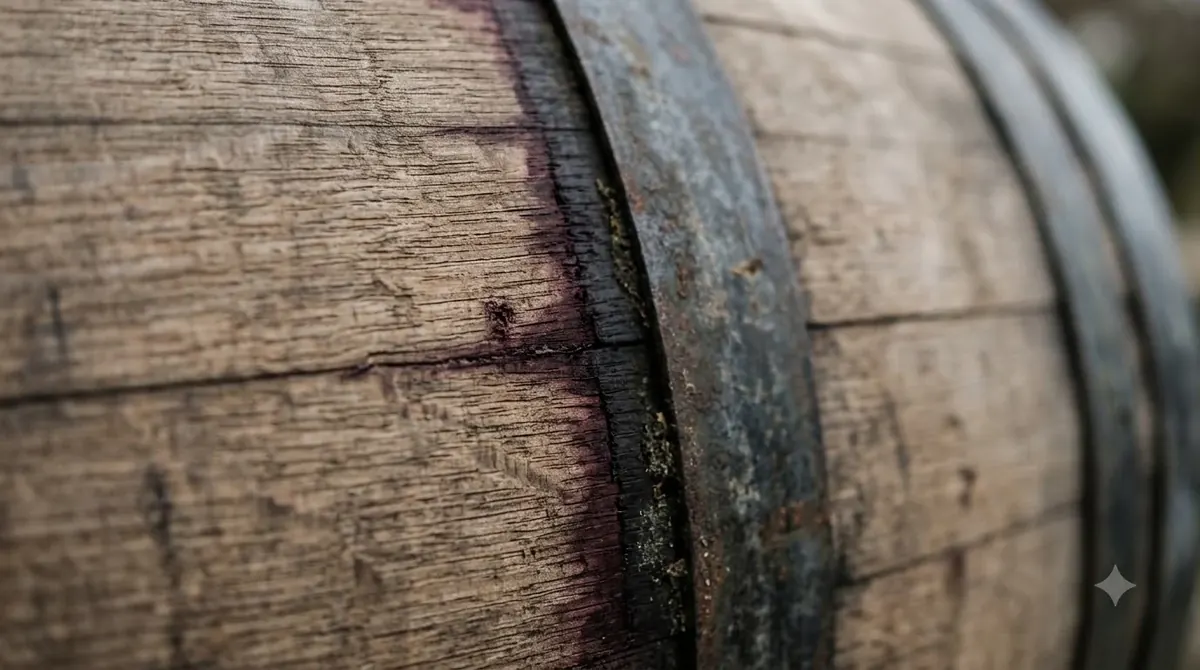
Tannins—the polyphenolic compounds extracted from thick Cabernet grape skins, seeds, and French or American oak barrels—create a drying, textural sensation on your gums and tongue. Similarly, compounds like vanillin, clove, and toast from charred barrel staves shape aroma and what does cabernet sauvignon taste like without adding digestible carbohydrates, fats, or proteins.
The only indirect connection between oak aging and calories involves ripeness. Winemakers typically reserve expensive new oak barrels for their ripest, most concentrated vineyard lots, and riper grapes naturally produce higher alcohol levels. If an oak-aged reserve Cabernet has more calories than an unoaked everyday bottle, the higher ABV—not the oak itself—is responsible.
Tip: Check the ABV percentage on the bottom corner of the wine label before buying—choosing a 13% ABV bottle over a 15% ABV bottle saves roughly 15 to 20 calories per glass without sacrificing dry, classic Cabernet character.
How Cabernet Sauvignon Compares to Other Wines
When stacked against other popular Wine by Type categories, Cabernet Sauvignon sits squarely in the middle of the dry table wine pack. Its calorie count is virtually identical to Merlot, Syrah, and full-bodied Chardonnay, and only marginally higher than lighter dry whites.
Compared to crisp white varieties, the gap is smaller than most people expect. Looking at sauvignon blanc alcohol content and nutrition figures, a standard 5-ounce glass of Sauvignon Blanc averages around 119 calories—just 3 calories fewer than a standard 122-calorie pour of Cabernet Sauvignon. Pinot Noir and Pinot Grigio also hover right around 120 to 122 calories per glass.
The major calorie jumps happen when you move away from dry table wines into fortified or late-harvest styles. A 5-ounce pour of sweet Sauternes tops 200 calories, while Ruby Port reaches roughly 230 calories per 5 ounces due to both high alcohol (around 19.5 percent ABV) and heavy residual sugar, though fortified wines are customarily served in smaller 2-ounce pours.
Practical Ways to Estimate Calories on Any Wine Label
Because federal regulations in the United States do not require standard wine bottles to display a Nutrition Facts box, learning a quick mental formula lets you calculate the calories in any bottle on the spot. All you need is the bottle’s ABV percentage and your pour size in ounces.
To get a reliable estimate for a standard 5-ounce glass of dry Cabernet Sauvignon, multiply the ABV percentage by 9.5. For example, a 13 percent ABV Cabernet works out to roughly 123.5 calories (13 × 9.5), while a 14.5 percent ABV bottle comes out to about 138 calories (14.5 × 9.5). If you suspect the wine has a touch of noticeable sweetness, simply add 5 to 10 calories to that total.
Keep in mind that U.S. labeling laws allow winemakers a margin of 1.5 percentage points above or below the stated ABV for table wines at or under 14 percent alcohol, and 1 percentage point for wines above 14 percent. Even with that small variance, the ABV-times-9.5 rule gets you within a handful of calories of the true lab figure every time.
Frequently Asked Questions
How many calories are in a 5 oz glass of Cabernet Sauvignon?
A standard 5-ounce glass of Cabernet Sauvignon contains an average of 122 calories, based on typical dry table wine figures around 13.5% to 14% ABV. Lighter cool-climate bottles may sit closer to 120 calories, while rich, high-alcohol California versions can reach 140 to 175 calories per glass.
How many carbs and grams of sugar are in Cabernet Sauvignon?
A standard 5-ounce pour of dry Cabernet Sauvignon contains about 3.8 grams of total carbohydrates and roughly 0.9 grams of residual sugar. Because almost all grape sugars are converted into alcohol during fermentation, dry Cabernet is naturally low in sugar and carbohydrates.
Does Cabernet Sauvignon have more calories than Pinot Noir or Chardonnay?
Cabernet Sauvignon has almost the exact same calorie count as both Pinot Noir and Chardonnay. A 5-ounce glass of Cabernet averages 122 calories, compared to roughly 120 calories for Pinot Noir and 120 to 123 calories for Chardonnay, with any slight difference driven by alcohol percentage rather than grape color.
How many calories are in an entire bottle of Cabernet Sauvignon?
A standard 750-milliliter bottle of Cabernet Sauvignon holds five 5-ounce glasses and contains roughly 610 calories on average. Higher-alcohol bottles at 14.5% ABV or above can range between 650 and 788 calories per bottle depending on final alcohol and trace residual sugar levels.
Whether you are pouring a weeknight glass alongside grilled steak or pacing yourself over a multi-course dinner, keeping an eye on serving size and label ABV makes tracking Cabernet Sauvignon effortless. Stick to a measured 5-ounce pour in a standard glass, and you can enjoy everything from a lean Bordeaux blend to a bold Napa Valley Cabernet with full clarity on what is in your glass.
More in Wine Types & Grapes
 Zinfandel Sugar Content: Dry Red vs. White Zinfandel GramsUpdated Nov 21, 2026
 Best Zinfandel Substitute Options for Sipping and CookingUpdated Nov 21, 2026
 Zweigelt Food Pairing: Best Dishes, Cheeses, and Serving TipsUpdated Nov 21, 2026
 Zinfandel Tannins Explained: How Structure Shapes Every BottleUpdated Nov 21, 2026
 Zinfandel Sweetness Level: Dry Red vs. Sweet White Zin ExplainedUpdated Nov 21, 2026
 Xinomavro Food Pairing: Best Dishes, Styles, and Serving TipsUpdated Nov 21, 2026