


We may earn a commission when you buy through links on this page, at no extra cost to you. Learn more.
The best wine storage cabinet for most homes is a temperature-controlled, UV-protected compressor unit sized to hold at least thirty percent more bottles than your current collection. If you want smooth kitchen integration, a front-venting undercounter cabinet keeps bottles chilled at serving temperature without sacrificing floor space. Collectors aging fine reds for years should prioritize a high-capacity freestanding cellar with humidity management, while casual entertainers often prefer a furniture-style credenza or non-refrigerated wooden rack cabinet that blends into dining room decor.
Storing wine properly comes down to protecting bottles from heat swings, ultraviolet light, dry air, and constant vibration. While a simple counter rack works for bottles you plan to open this weekend, building a lasting collection requires dedicated furniture or refrigeration engineered around standard 750 mL bottle dimensions and stable internal climates.
Quick Comparison
Different cabinet designs solve distinct space, capacity, and climate-control challenges depending on where you place them and how long you hold your bottles.
| Cabinet Type | Cooling Method | Typical Capacity | Best Placement | Primary Strength |
|---|---|---|---|---|
| Undercounter Built-In | Front-venting compressor | 18 to 50 bottles | Kitchen islands, wet bars, pantries | Flush cabinetry integration for daily serving |
| Tall Freestanding Cellar | Compressor with humidity control | 80 to 300 bottles | Basements, dining rooms, utility spaces | Long-term aging stability and high bottle count |
| Dual-Zone Entertaining Cabinet | Dual-evaporator compressor | 30 to 150 bottles | Dining rooms, open living areas | Simultaneous red storage and white chilling |
| Furniture Credenza & Bar Cabinet | Integrated mini-cooler or passive | 18 to 60 bottles | Dining rooms, living spaces | Multi-purpose storage for stemware, spirits, and wine |
| Non-Refrigerated Wood Cabinet | Passive ambient storage | 24 to 120 bottles | Cool basements, interior closets | Expandable capacity without electrical draw |
Best for Kitchen Integration: Front-Venting Undercounter Cabinets
Front-venting undercounter cabinets slide directly beneath standard kitchen counters, using a lower grille to exhaust heat so the unit can sit flush against surrounding millwork without overheating.
Why it stands out: Unlike freestanding appliances that require several inches of rear and side clearance for airflow, built-in models feature zero-clearance hinges and front-mounted exhaust vents. Reviewers at Wine Enthusiast note that shallow counter-depth frames and smooth-gliding universal shelves allow kitchens and butler’s pantries to house dozens of Bordeaux and Burgundy bottles within arm’s reach of meal prep.
Keep in mind: Because these units fit a standard 24-inch or slim 15-inch base cabinet cutout, interior space is tighter than in full-height towers, and larger Champagne or magnum bottles can reduce total rack capacity. Best for homeowners remodeling a kitchen or adding a dedicated wet bar who want ready-to-pour bottles tucked neatly below counter height.

- Capacity
- 30 bottles (750 ml)
- Temp Range
- 40-65°F
- Cooling
- Compressor, frost free
- Install
- Undercounter or freestanding
Narrow kitchens and wet bars suit this 15-inch cooler, which fits under a counter or stands on its own. Six beech wood shelves hold up to 30 bottles, and the temperature can be set from 40°F to 65°F for reds and whites. A one-touch digital control remembers your last setting after a power cut, and the double glass door keeps the collection visible.
Pros & ConsView
- Holds 30 bottles on six wooden shelves
- Adjustable from 40°F to 65°F
- Temperature memory restores settings after power loss
- Single zone, so reds and whites share one temperature
- 30-bottle capacity fills fast for growing collections
Best for Long-Term Aging: Tall Freestanding Wine Cellars
Tall freestanding wine cellars mimic the dark, steady environment of an underground vault, combining heavy thermal insulation, low-vibration compressors, and humidity regulation for multi-year bottle aging.
Why it stands out: Wine ages reliably when held around 55°F with relative humidity between 50 and 70 percent so natural corks stay moist and sealed against oxidation. High-capacity freestanding cabinets often include solid insulated doors or double-pane UV-treated glass, vibration-dampened shelving, and carbon air filters that prevent musty odors from passing through breathable corks over a decade or more.
Keep in mind: Full-size cabinets holding 150 to 300 bottles are heavy—a single filled 750 mL bottle weighs roughly three pounds—so they require level, load-bearing flooring and a dedicated electrical outlet with breathing room around the back and sides. Best for serious collectors building a multi-year cellar in a climate-controlled room, spare nook, or basement.
Best for Mixed Collections: Dual-Zone Wine Storage Cabinets
Dual-zone cabinets divide the interior with an insulated thermal barrier, allowing you to store reds at cellar temperature in one compartment while chilling whites, rosés, and sparkling wines in another.
Why it stands out: Serving a crisp Sauvignon Blanc at 45°F and a structured Cabernet Sauvignon at 60°F from the same cabinet eliminates the need to transfer reds to the counter ahead of dinner or crowd your kitchen refrigerator with white bottles. Independent digital thermostats and separate air circulation fans keep each zone locked to its target setting without temperature bleed.
Keep in mind: The internal divider and second cooling assembly take up rack space, meaning a dual-zone cabinet holds slightly fewer bottles than a single-zone model of identical exterior dimensions. Best for households that regularly drink a variety of wine styles and want both long-term storage and immediate service temperatures in one footprint.

- Capacity
- 18 bottles, 88 cans
- Zones
- Wine 41-64°F, drinks 35-50°F
- Cooling
- Compressor, fan circulation
- Install
- Built-in or freestanding
Anyone with a mixed collection of wine and canned drinks can run two independent zones: wine from 41°F to 64°F on the right and beverages from 35°F to 50°F on the left. Capacity is listed at 18 bottles plus 88 cans. A front vent allows built-in or freestanding use, and a lockable glass door, touch controls, and blue LED lighting come standard.
Pros & ConsView
- Two zones with separate temperature control
- Front vent allows built-in or freestanding use
- Lockable glass door and fan-assisted compressor cooling
- Only 18 bottles fit alongside the cans
- Wire shelves look plainer than wood shelving
Best for Dining Room Entertaining: Furniture-Style Credenzas and Bar Cabinets
Furniture-style wine credenzas wrap quiet refrigeration or horizontal racking inside hardwood cabinetry, pairing bottle storage with drawers, stemware racks, and serving surfaces.
Why it stands out: Built from solid woods and veneers like walnut, oak, or mahogany, these pieces look like traditional sideboards rather than kitchen appliances, making them easy to place in formal dining rooms or living areas. Many designs combine a compact 18- to 50-bottle cooling zone on one side with adjustable shelves for decanters, spirits, and hanging wine glasses on the other, plus a durable tabletop for pouring.
Keep in mind: Integrated cooling modules inside wood furniture typically offer smaller bottle capacities and fewer customizable shelf configurations than dedicated metal-framed wine coolers. Best for hosts who want an all-in-one entertaining station that matches existing dining room furniture.

- Size
- 85"W x 15.8"D x 35.4"H
- Doors
- 6 doors, 2 pieces
- Material
- MDF, wood grain finish
- Shelves
- 8, adjustable in right sections
For dining room entertaining, this two-piece farmhouse sideboard turns a wall into a serving station for glassware, coffee gear, and liquor bottles. It spans 85 inches with six doors, a roomy tabletop, and four compartments, including a 3-level adjustable shelf. The MDF build has a black wood-grain finish described as scratch-resistant, and a door alignment manual is included.
Pros & ConsView
- Wide 85-inch tabletop works as a serving surface
- Six doors hide bottles and tableware
- Adjustable shelf in the right-side compartments
- No cooling, so wine temperature is not controlled
- Weighs 147.8 pounds and requires assembly
Best for Cool Basements and Budget Expansion: Non-Refrigerated Wood Rack Cabinets
Non-refrigerated wood cabinets rely on naturally cool, dark rooms rather than active cooling machinery, organizing bottles horizontally in modular cubbies, diamond bins, or sliding cradles.
Why it stands out: Without compressors, fans, or power cords, a well-built wine rack cabinet runs silently, never needs mechanical servicing, and lets you dedicate every cubic inch of interior volume to bottles. Stackable hardwood modules and furniture-grade enclosures with louvered or solid doors make it simple to organize bottles by region, vintage, or producer as your buying habits grow.
Keep in mind: Passive cabinets cannot protect wine if room temperatures climb above 75°F or swing dramatically between day and night, so placement is restricted to naturally stable spaces. Best for collectors with an unfinished basement, cool interior closet, or climate-controlled pantry who want maximum capacity per square foot.
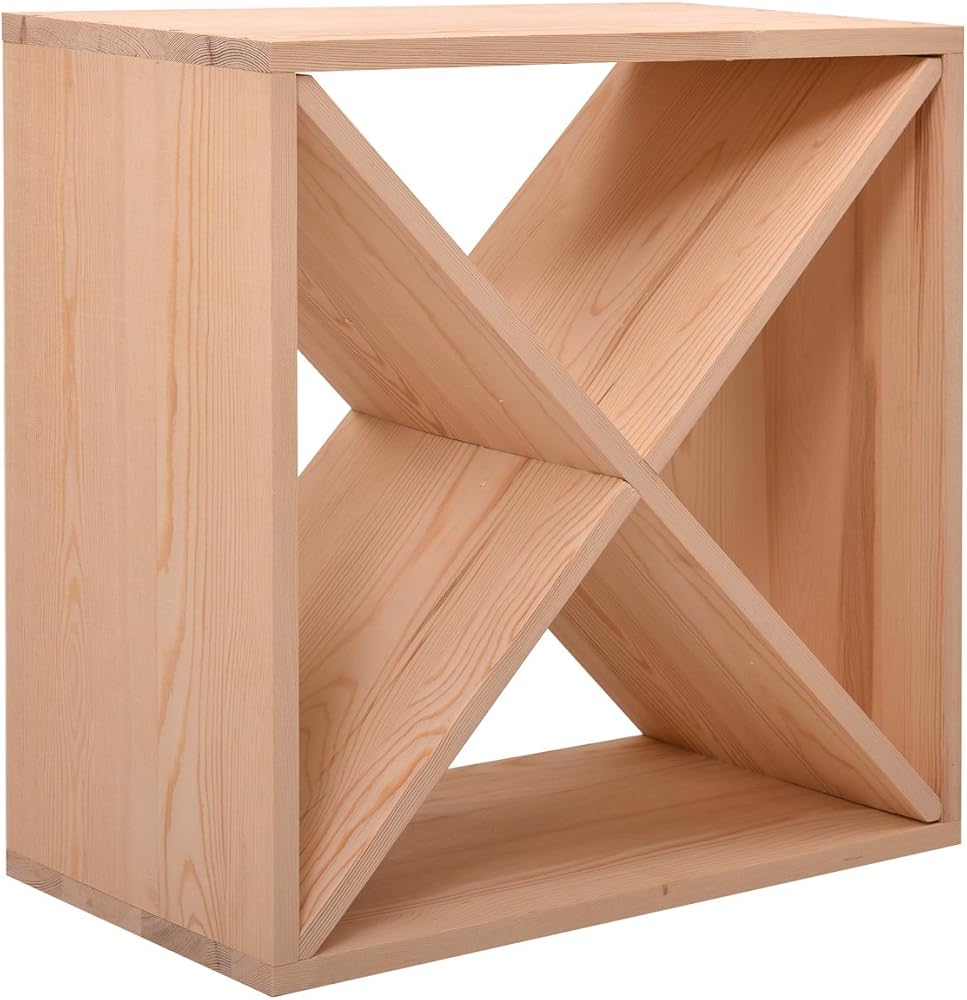
- Capacity
- 24 bottles, 4 cubes
- Material
- Fir wood
- Size
- 19.7 x 10.2 x 19.7 in
- Finish
- Natural, paintable
A counter or pantry corner is the right home for this compact wooden cube. Its four compartments each hold six bottles, and the footprint is under 20 inches in every direction. Extra units can be stacked if the collection outgrows it. The sustainable fir has a natural finish that accepts paint, and the manual numbers every part for a straightforward build.
Pros & ConsView
- Four compartments store six bottles each
- Compact 19.7 inch cube fits counters
- Extra units stack for added capacity
- Requires assembly from a manual
- Natural wood needs painting to change color
How to Choose
Selecting the right cabinet starts with auditing both your current bottle inventory and the physical environment where the unit will live. Industry specialists recommend sizing up by at least thirty percent beyond what you own today, since an average wooden shipping box holds a dozen bottles—if you ever wonder how many bottles in a case of wine you need to accommodate, planning around 12-bottle increments prevents overcrowding shelves right after a winery shipment arrives.
Check the bottle dimensions listed on manufacturer spec sheets before committing to a layout. Capacity ratings are almost always calculated using slim, straight-sided Bordeaux bottles; wider Burgundy, Pinot Noir, Syrah, and Champagne bottles frequently require removing a shelf or choosing cabinets with adjustable pitch and wider spacing. According to Wine Folly, any bottle sealed with a natural cork must rest horizontally so liquid stays in contact with the cork to prevent drying and premature oxidation, whereas screw-cap bottles can stand upright without risk.
Pay close attention to ventilation requirements, ambient temperature ratings, and door construction. Built-in cabinets must vent through the front toe kick, while freestanding models need two to five inches of clearance behind and beside the cabinet so the compressor can shed heat efficiently. If the cabinet sits in a bright room, look for double-pane, UV-blocking tinted glass and low-heat interior LED lighting rather than incandescent bulbs.
Tip: Before placing a heavy cabinet on hardwood or tile floors, verify that the unit has adjustable leveling feet and let a compressor-cooled cabinet stand upright for at least 24 hours after delivery before plugging it in so refrigerant oils settle properly.
Frequently Asked Questions
What temperature and humidity should I set my wine storage cabinet to?
For multi-year aging across red, white, and sparkling wines, set a single-zone cabinet to 55°F with relative humidity between 50 and 70 percent. Consistency matters more than hitting an exact single degree, because rapid temperature swings cause liquid inside the bottle to expand and contract, pushing wine past the cork and drawing oxygen in.
Can I put a freestanding wine cabinet inside a kitchen cabinet opening?
No, freestanding wine cabinets vent heat from the rear or sides and will overheat, cycle constantly, and fail early if enclosed in tight cabinetry. Only front-venting built-in models are engineered to operate safely flush beneath a countertop with minimal side clearance.
How do I organize bottles inside a wine storage cabinet?
Keep bottles you plan to drink within the next few months on upper or front-facing shelves for easy access, and tuck age-worthy bottles toward the bottom or back where temperatures stay steadiest. Grouping bottles by wine style, region, or drink-by window—or mapping rows and columns in a simple spreadsheet—prevents you from leaving the door open while searching.
When is a simple open rack better than an enclosed wine cabinet?
If you live in a naturally cool home and drink most of your bottles within six to twelve months of purchase, an open wine rack offers faster visual access without electrical noise or cabinet doors to swing open. You can browse modular tabletop, wall-mounted, and floor-standing options in our Racks & Storage hub when active climate control is not necessary.
Matching your cabinet style to your room’s ambient climate, available footprint, and drinking timeline ensures every bottle opens the way the winemaker intended. Whether you choose a built-in kitchen cooler, a dual-zone entertaining credenza, or a high-capacity aging vault, prioritizing steady temperatures, UV protection, and flexible shelving will protect your collection for years to come.
More in Racks & Storage
 Best Wine Barrel Racks for Distinctive Bottle StorageUpdated Nov 20, 2026
 Best Wine Storage Tower: Sizing, Protection and Room LayoutUpdated Nov 18, 2026
 Best Pyramid Wine Rack: Materials, Sizes and Where It FitsUpdated Nov 18, 2026
 Best Kitchen Cabinet Wine Rack Insert for Built-In Bottle StorageUpdated Nov 18, 2026
 Best 16 Bottle Wine Rack Options for Kitchens, Bars and CellarsUpdated Nov 18, 2026
 Best 48 Bottle Wine Rack Options for Cellars, Kitchens, and Tight SpacesUpdated Nov 18, 2026