

We may earn a commission when you buy through links on this page, at no extra cost to you. Learn more.
The best kitchen island wine refrigerator is a built-in or under-counter unit with front or clear-venting airflow, sized to fit the island cabinet and kept away from direct heat. Island placement puts the fridge in a busy spot where it gets opened often, so the right model balances capacity, cooling stability, and how it breathes inside the cabinetry.
A wine refrigerator built into a kitchen island is one of the most useful upgrades for entertaining. The island is already the center of the room, so a cooled wine zone there fits naturally into how people move, talk, and serve. Bottles sit within reach of the counter, guests can grab a glass without walking to a pantry, and the unit can look like part of the cabinetry. This guide explains how to choose a kitchen island wine refrigerator, what to check before buying, and which setups suit different kitchens.
Quick Comparison of Island Wine Refrigerator Setups
An island wine refrigerator is not a single product type. The right choice depends on how the unit is installed and how it vents. The table compares the common setups on the criteria that matter most in a kitchen island.
| Setup | Airflow | Fit inside the island | Best fit |
|---|---|---|---|
| Built-in, front venting | Air exits at the front grille | Slides into a cabinet opening | Finished islands with panels |
| Built-in, rear venting | Needs a clear back space | Requires a cabinet with rear access | Islands with a back gap |
| Freestanding compact | Vents on the sides or top | Sits beside the island | Rentals and flexible layouts |
| Dual-zone built-in | Same as built-in models | Needs a larger opening | Serious collections |
Venting is the detail that most often goes wrong. A unit that cannot breathe runs harder, gets warmer, and can drift outside its ideal range. Before you order, measure the opening, confirm the clearance the manufacturer requires, and check whether the venting path matches the island design.
Best for Open-Concept Entertaining Islands
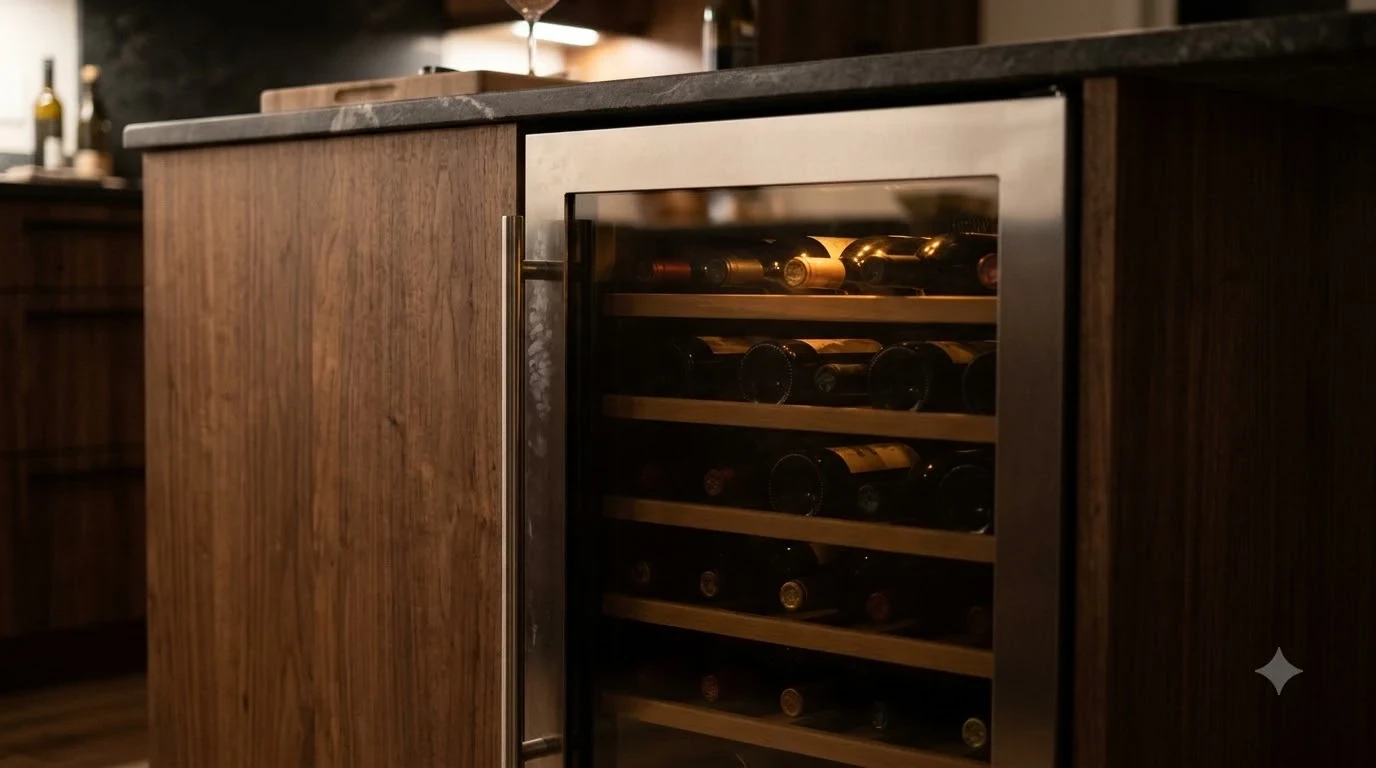
When an island faces the living room, the wine refrigerator becomes part of the view. Front-venting built-in models suit this layout because they keep the airflow at the base and let the panel match the cabinet finish.

Front-venting units also suit a homeowner who wants the island to look finished from every angle. Because the grille sits at the base, the top of the island stays clear for serving trays and glasses, and the panel can match the surrounding drawers so the appliance reads as part of the cabinetry.
Why it stands out: Front venting keeps the back of the island free, and a matching panel makes the unit look like custom cabinetry.
Keep in mind: Front grilles collect dust. Plan a simple cleaning routine, especially in kitchens near cooking areas.
Best for: Hosts who want bottles visible and close at hand during parties.
Best for Islands With a Rear Gap
Some islands leave room at the back for a cord, a stool, or a service panel. A rear-venting built-in can use that gap for airflow, but only if the space stays clear. Measure the gap before you commit, because a tight back panel can choke the unit.
Why it stands out: Rear venting keeps the front of the island clean and works well in tight, finished runs.
Keep in mind: The gap must stay open over time. Keep cords, boxes, and décor from pressing against the vent path.
Best for: Owners who built the island with the appliance in mind and can plan the clearance.
Best for Compact Islands and Small Kitchens
A small island may not have room for a full built-in opening. A compact unit sized for the space can still sit beside the island, which keeps bottles close without changing the cabinet layout.
Why it stands out: A smaller footprint fits narrower islands and lets you place the unit where it has the most open air.
Keep in mind: Compact units hold fewer bottles. If you stock wine for guests often, plan for the capacity you actually need.
Best for: Apartments and kitchens where the island is more of a prep surface than a bar.
Best for Dual-Zone Wine Collections
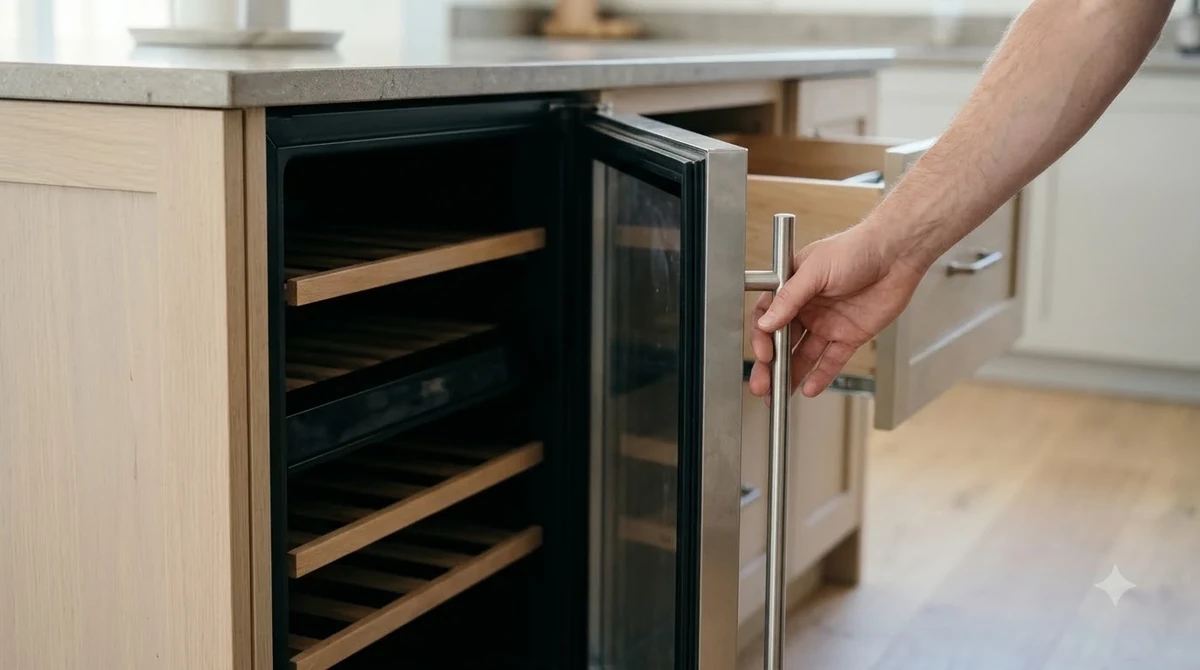
If you keep reds and whites at different temperatures, a dual-zone built-in gives you two settings in one cabinet. The extra zone needs a larger opening, so confirm the dimensions with the island’s cabinet maker or your installer before you buy.
Why it stands out: Separate zones let reds sit slightly warmer than whites, which suits mixed collections.
Keep in mind: Dual-zone units use more space inside the cabinet, and the opening must be planned from the start.
Best for: Collectors who want serving temperature control without a second appliance.
Best for Long-Term Storage in the Kitchen
A kitchen is a warm, busy room, so storing wine in an island for months takes some planning. The Wikipedia overview of wine cellars notes that wine ages normally between about 10 and 14 °C (50 and 57 °F), and that large temperature swings can cause wine to breathe through its cork and age faster. A built-in unit with steady cooling helps, but the island should stay out of direct sun and away from the oven.
Why it stands out: A built-in with a stable compressor keeps the environment steadier than a bottle rack in a warm room.
Keep in mind: Kitchen islands sit near heat from cooking. Choose a spot that stays cool and dark when possible.
Best for: Buyers who plan to keep wine for longer stretches and want it close to the kitchen.
How to Choose the Right Island Wine Refrigerator
Many buyers begin with the wine style they like most and only later think about the cabinet. That order often causes problems, because a beautiful bottle collection cannot be stored in an opening that is too small. Begin with the physical space, then choose the features that fit it.
Start with the island measurements and the venting path, then move on to capacity and controls. The checklist below covers the decisions that matter most.
- Opening size: Measure the cabinet opening width, height, and depth before you shop.
- Venting: Confirm front, rear, or side airflow and keep the path clear.
- Capacity: Decide how many bottles you stock for a normal week and for a party.
- Zones: Choose single-zone for one wine type at a time, or dual-zone for mixed collections.
- Controls: Look for a visible display and a simple temperature setting.
Island width also shapes how the room works. A wide island can hold a full-width unit and still leave room for stools on the other side, while a narrow island may suit a unit that sits at one end. Walk the space with a tape measure and imagine a guest reaching for a bottle, because that movement tells you more about the right spot than any spec sheet.
If your island is not wide enough for a full unit, a smaller option may fit better. The guide to 24-inch wine coolers explains which models fit a standard cabinet width.
Frequently Asked Questions
Can a wine refrigerator go inside a kitchen island?
Yes, if the cabinet opening matches the unit’s dimensions and the venting path has enough clearance. Check the manufacturer’s installation guide before you build or order the island.
Should an island wine fridge be front or rear venting?
Front venting suits islands with a finished panel and no rear access. Rear venting works when the island leaves a clear gap at the back. Choose the layout that keeps the airflow unobstructed.
Is a kitchen island a good place to store wine?
It is convenient for daily bottles. For long-term aging, keep the unit away from direct sun and cooking heat, because large temperature swings can affect the wine.
How many bottles fit in a kitchen island wine fridge?
Capacity varies by model and by whether the unit uses single or dual zones. Compare the listed bottle count and choose a size that matches how often you host.
Plan the project early if you are building a new island. Ask the cabinet maker to leave the opening and venting path in the drawings, and confirm the unit’s specification sheet before the countertop goes in. Changing the opening after the island is finished is far harder than planning it at the start, and it is the most common reason a built-in ends up in the wrong place.
A kitchen island wine refrigerator works best when the opening, venting, and capacity are planned together. Measure first, pick the venting style that fits the island, and keep the unit in a stable spot. For more ideas on where bottles fit in the home, see wine fridges by room.
More in By Room & User
 Wine Fridge in Bedroom: Choose Quiet Storage That Fits Your SpaceUpdated Nov 20, 2026
 Wine Fridge in Living Room: Choose the Right Size, Style, and SetupUpdated Nov 20, 2026
 Wine Fridge In Dining Room: Choose the Right Size and StyleUpdated Nov 20, 2026
 Wine Fridge In Pantry: Choose the Right Size and SetupUpdated Nov 20, 2026
 Wine Fridge In Kitchen: Choose the Right Fit and PlacementUpdated Nov 20, 2026
 Wine Fridge In Garage: Choose a Cooler That Handles Temperature SwingsUpdated Nov 20, 2026