

We may earn a commission when you buy through links on this page, at no extra cost to you. Learn more.
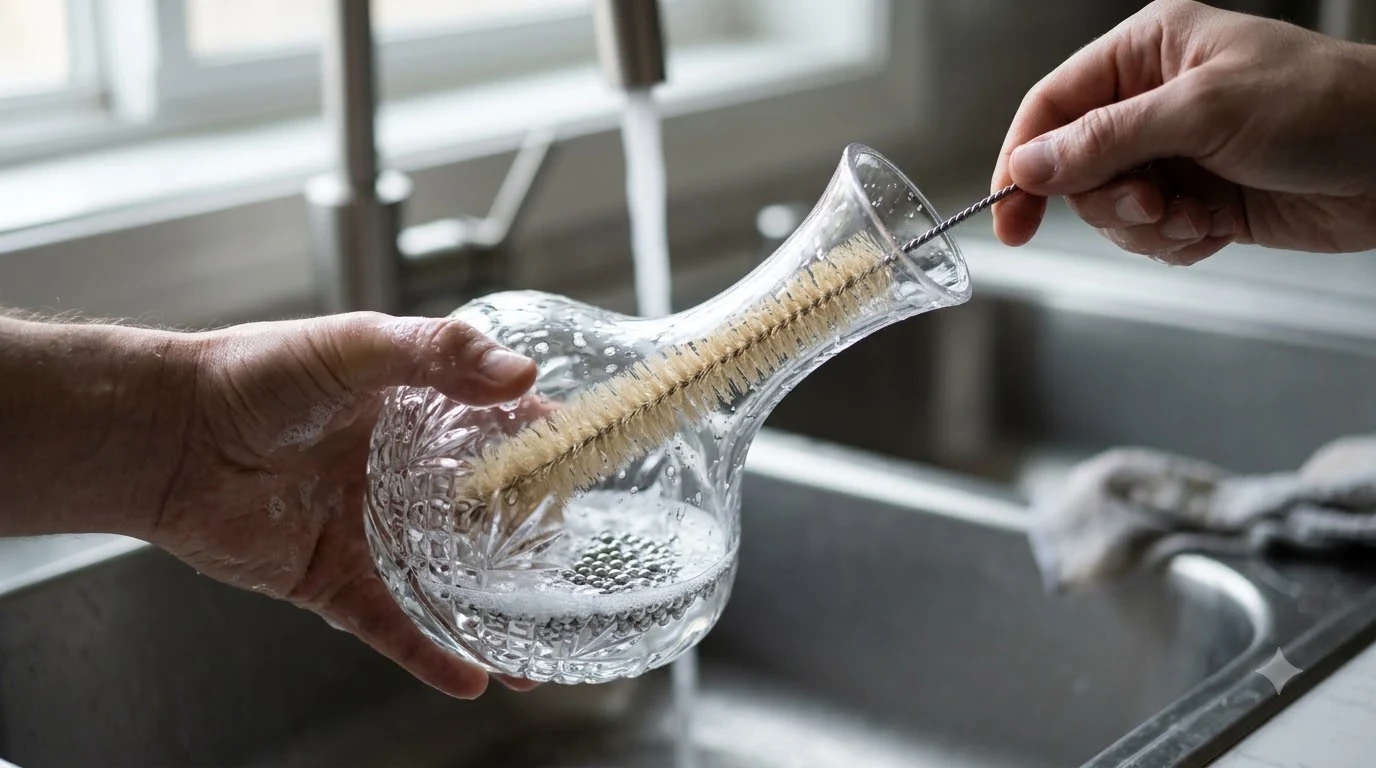
The best decanter cleaning beads are small, smooth, non-abrasive beads that you swirl with warm water and a little mild soap, because they scrub the inside of a decanter without scratching the glass. Pick a set sized for the decanter’s body, choose a gentle material for crystal, and make sure you can dry the vessel completely afterward. A long-handled brush or a narrow-neck option matters more than the number of beads.
A decanter is an easy vessel to fill with residue. Wine leaves a film on the glass, and the narrow necks used on many decanters make it hard to reach the sides with a cloth. Cleaning beads solve that problem: you add them with water, cover the opening, and swirl. The motion lifts the residue from the walls, and the beads can be rinsed and stored. This guide groups the main types by the decanter you own and the way you clean.
Quick Comparison
Most cleaning beads look alike, but the differences show up in the material, the bead size, and whether they come with a tool for reaching the base. The table compares the types you are most likely to find.
| Bead type | Gentleness on glass | Reach | Best fit |
|---|---|---|---|
| Hard plastic beads | Firm scrub | Good on standard bodies | Everyday glass decanters |
| Soft-textured beads | Very gentle | Moderate | Crystal and delicate pieces |
| Small-diameter beads | Moderate | Strong for narrow necks | Tall decanters with slim openings |
| Bead kit with brush | Moderate | Best for hard-to-reach bases | Decanters with wide bodies or deep corners |
The Wikipedia entry on decanters explains that the vessel has traditionally been made of glass or crystal, and that Venetian makers developed the long, slender neck that increases a wine’s exposed surface area. That narrow neck is exactly why many people struggle to clean a decanter by hand, and why beads that travel through the opening are useful.
Best for everyday glass decanters
A standard glass decanter is the most common case. Its walls are durable, and a firm bead can loosen the residue that a cloth misses. These beads suit a regular cleaning routine after a few bottles.
Why it stands out. Hard plastic beads have enough body to scrub the walls while still moving freely when you swirl. They rinse quickly and are easy to keep in a drawer or on a shelf near the sink.
Keep in mind. A firm bead is a poor match for delicate glass or crystal with fine cuts. Check the decanter for etching first, and switch to a softer type if you see any wear.
Best for. Owners of plain glass decanters who clean after most bottles and want a simple routine.
Best for crystal and delicate pieces
Crystal decanters often have cut patterns or thin walls, and the same beads that work on plain glass can leave small scratches over time. A softer material is the safer choice for these pieces.
Why it stands out. Soft-textured beads give a gentler scrub and still lift the residue from the walls. They are a good fit for heirloom pieces and for decanters with decorative cuts that a firm bead could catch on.
Keep in mind. Softer beads may need more swirling and more rinses to clear a heavy film. For a thick residue, soak the decanter in warm water first rather than relying on beads alone.
Best for. Collectors and owners of crystal or cut-glass decanters who want to protect the finish.
Best for tall decanters with narrow necks
Tall decanters with slim openings are the hardest to clean by hand. A narrow neck limits how much you can reach through the opening, so the bead size becomes the deciding factor.
Why it stands out. Smaller-diameter beads pass easily through a slim neck and reach the lower walls when you tilt and swirl the decanter. They suit decanters where a standard bead would stick at the opening.
Keep in mind. Small beads cover less surface per swirl, so the job takes longer. They can also slip out of the opening if you tip too far, so cover the neck firmly with your hand.
Best for. Owners of slim, tall decanters that have a long neck and a narrow mouth.
Best for wide bodies and hard-to-reach corners
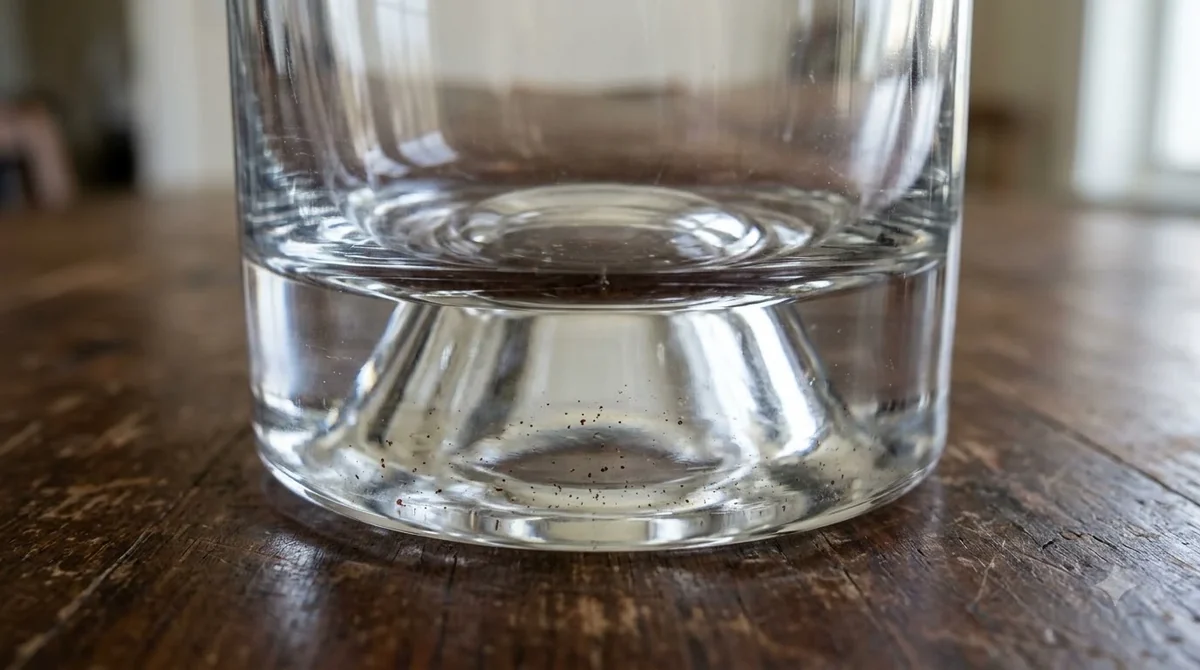
Wide-bodied decanters and those with angled shoulders leave residue in corners that beads alone may not reach. A kit that includes a brush gives you a second tool for the places the beads miss.
Why it stands out. A bead kit with a brush lets you scrub the base and the shoulders directly, then use the beads for the body. The combination handles both the open area and the corners in one session.
Keep in mind. A brush can scratch if it has a stiff head, so choose one with soft bristles for glass. Dry the brush fully before storing it, since trapped moisture can encourage odor.
Best for. Owners of wide or angled decanters who want one kit that covers the whole vessel.
Best for regular cleaning after every bottle
If you open decanters often, the best option is the one that makes cleaning quick enough to do every time. A simple set you can use in a few minutes after dinner keeps residue from building up between uses.
Why it stands out. A compact bead set with a clear routine fits into everyday habits. Rinsing right after use is easier than letting wine dry, which makes the film harder to remove later.
Keep in mind. Beads do not replace a full drying step. Air-dry the decanter upside down on a clean towel so no water is left in the base, and store the stopper separately.
Best for. Frequent decanter users and hosts who clean the vessel right after serving.

How to Use Decanter Cleaning Beads
The method is the same for most types. Warm water loosens the film, the beads do the scrubbing, and drying finishes the job. The steps below keep the process simple and protect the glass.
- Rinse the decanter with warm water to loosen any loose wine residue.
- Add the beads and a small amount of warm water with mild soap, then cover the opening.
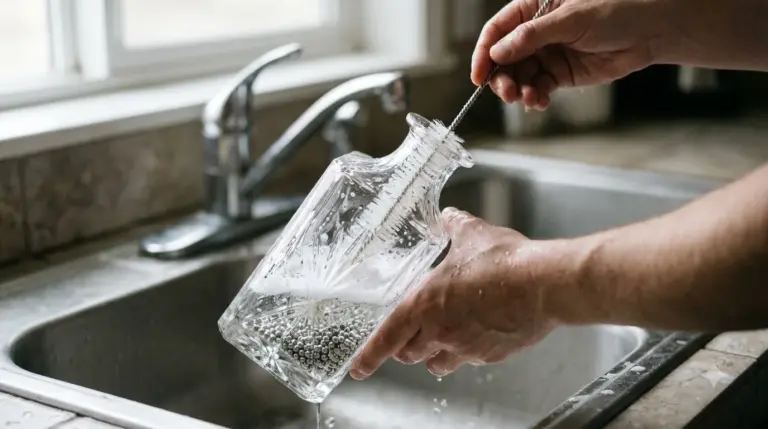
- Swirl gently, tilting the decanter so the beads cover the walls, then rinse until the water runs clear.
- Dry the decanter upside down on a clean towel, and let it air-dry fully before storing it.
Tip: Use lukewarm water rather than very hot water on crystal, since sudden temperature changes can stress thin glass.
How to Choose
Choose by the decanter you own and how often you clean it. The checklist below turns those points into a short list you can use while shopping.
- Decanter material: firm beads for plain glass, softer beads for crystal and cut pieces.
- Neck width: measure the opening so the beads can pass through without sticking.
- Body shape: wide or angled bodies may need a brush to reach the corners.
- Drying space: make sure you have room to air-dry the decanter upside down.
If you are still deciding on the vessel itself, the guides to wine decanters and decanter sets cover the main styles. For a deeper look at how decanters are used, the Wikipedia entry on decanters describes their history and the reasons people decant.
Frequently Asked Questions
Do cleaning beads scratch a decanter?
They can if the material is too firm for the glass or if there is grit on the beads. Rinse the beads and the decanter first, and use a softer type on crystal or cut glass to reduce the risk.
Can I clean a decanter without beads?
Yes. A long brush, warm soapy water, and a rinse work for most decanters, but the beads help with the walls you cannot reach directly. Use whichever method suits the shape of your decanter.
How do I stop a decanter from smelling musty?
Rinse it promptly after use and let it dry fully before you put the stopper back. Trapped moisture is the usual cause of odor, so a clean, dry vessel stored with the stopper off is the simplest fix.
Are decanter cleaning beads worth it for a small decanter?
For a small, wide-mouth decanter, a brush or a soft cloth may be enough. Beads are most useful when the neck is narrow or the walls are hard to reach, so match the tool to the decanter’s shape.
Good decanter cleaning is a short routine: rinse, swirl with beads, dry fully. Choose the bead type that matches your glass, and the decanter will stay clear for the next bottle. For more on decanter care, browse the Aerators & Decanters section.
More in Decanters & Aerators
 Best Whiskey and Wine Decanter: Choosing One Vessel for Both DrinksUpdated Nov 18, 2026
 Best Tower Decanter: How to Pick the Right Shape for Your WineUpdated Nov 18, 2026
 Best Cleaning Brush Decanter Options for Narrow Necks and Deep BowlsUpdated Nov 19, 2026
 Best U Shaped Decanter Picks for Aerating Bold Red WineUpdated Nov 18, 2026
 Best Electric Decanter Styles for Faster, Smoother Wine PoursUpdated Nov 18, 2026
 Best Hand Blown Decanter Styles for Every Bottle and TableUpdated Nov 18, 2026