

We may earn a commission when you buy through links on this page, at no extra cost to you. Learn more.
Arroyo Grande vineyards are located in California’s San Luis Obispo County, where Pacific Ocean fog, cool coastal winds, and varied elevations create distinctive wines, particularly Pinot Noir, Chardonnay, and Zinfandel. The Arroyo Grande Valley American Viticultural Area (AVA) is part of the Central Coast wine region and has been officially recognized since 1990. Its combination of maritime influence, historic vineyards, and contrasting growing conditions makes it an interesting destination for discovering California wines beyond the state’s better-known appellations.
South of San Luis Obispo and close to the Pacific coastline, Arroyo Grande Valley offers a different expression of California wine country. Instead of relying exclusively on warm-weather varieties and ripe, powerful reds, local growers work with cool-climate grapes alongside traditional varieties that benefit from warmer inland slopes. The result is a geographically compact region with considerable variation in wine styles. Understanding its geography, principal vineyards, grape varieties, and winery history helps explain why this part of the Central Coast deserves attention.
Where Arroyo Grande Valley Vineyards Are Located
Arroyo Grande Valley lies in southern San Luis Obispo County, California, approximately 12 miles southeast of the city of San Luis Obispo according to the original federal AVA establishment description. The valley extends inland from the Pacific Coast, with its orientation allowing cool maritime air to travel through the growing area. This geography is central to the character of its wines.
The federal government established the Arroyo Grande Valley AVA in 1990. The original boundary covers approximately 67 square miles, incorporating the drainage of Arroyo Grande Creek and surrounding grape-growing terrain. The creek travels roughly 12 miles southwest from Lopez Lake toward the Pacific Ocean, connecting the upper valley with the coastal environment. The region’s official boundaries are more precise than the general geographical meaning of the name Arroyo Grande, so a vineyard located nearby does not automatically qualify for the appellation.
The valley is now also part of the larger San Luis Obispo Coast AVA, established in 2022. This broader appellation encompasses both Arroyo Grande Valley and neighboring Edna Valley, recognizing the wider coastal wine-growing environment. The federal government explains that an American Viticultural Area identifies a defined grape-growing region with distinguishing geographical or climatic characteristics. An AVA designation therefore provides information about grape origin rather than guaranteeing a particular wine style or quality level.
For visitors, Arroyo Grande offers convenient access to several recognizable Central Coast destinations. The town of Arroyo Grande, nearby Pismo Beach, and the agricultural countryside provide different ways to experience the area. Wine exploration can also be combined with coastal scenery and local food. Those planning a longer California itinerary may find it useful to compare this area with other destinations featured in our Wine Regions overview.
Climate, Fog, and Vineyard Geography
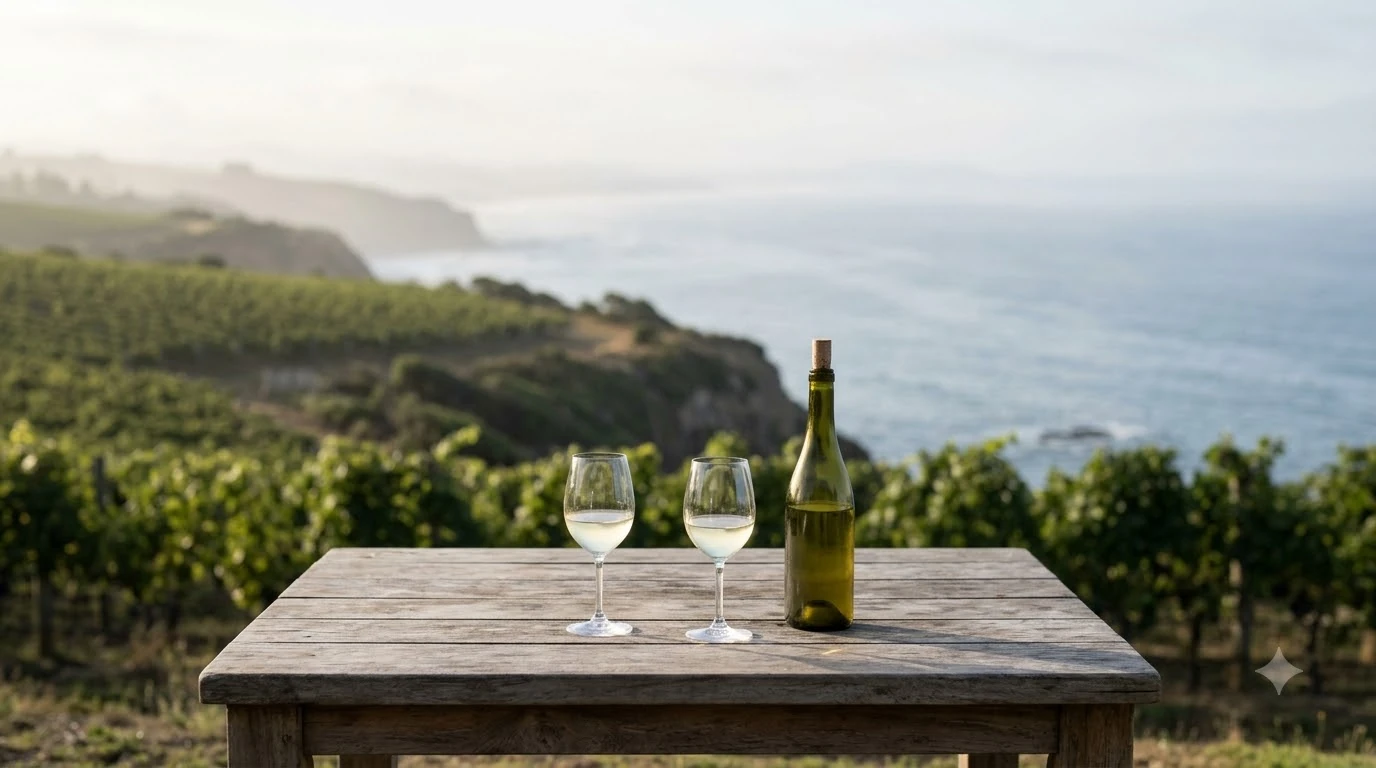
The defining environmental feature of Arroyo Grande vineyards is their relationship with the Pacific Ocean. Cool marine air, morning fog, and afternoon sunshine create conditions that allow grapes to ripen while retaining freshness. However, the valley is not climatically uniform, and elevation makes a meaningful difference to vineyard conditions.
The Arroyo Grande Valley AVA has an east/northeast orientation that channels coastal fog and cool air inland. According to the SLO Coast Wine Collective, the appellation extends approximately 16 miles. This orientation creates a recognizable division between cooler, fog-influenced vineyards and warmer upper elevations. Coastal influence can slow ripening, giving growers additional time to develop balanced fruit flavors while preserving natural acidity.
The original federal AVA establishment document provides useful historical climate information. It describes strong onshore air movement during March, April, and May, which can delay early-season growth. It also records approximately 20 inches of average annual rainfall, with about 80 percent falling between December and March. These figures describe the conditions documented in the original establishment process rather than a guaranteed modern annual weather pattern.
Elevation adds another layer of complexity. The original federal description places the valley floor between sea level and 400 feet, while the wider AVA reaches elevations of approximately 1,000 feet. Upper vineyards can experience warmer conditions and less persistent fog than lower coastal sites. This difference helps explain why Pinot Noir and Chardonnay thrive in cooler locations while Zinfandel and Petite Sirah can perform well farther inland.
Tip: When comparing two Arroyo Grande Valley wines made from the same grape, look for the vineyard location and elevation. A coastal Pinot Noir and an inland Zinfandel can express very different growing conditions despite sharing the same appellation.
Grape Varieties and Wine Styles to Discover
Pinot Noir and Chardonnay are the leading reference points for Arroyo Grande Valley, but they are not the region’s only important varieties. The cooler vineyards support fresh, aromatic wines, while warmer sites provide opportunities for fuller-bodied reds. Albariño, Zinfandel, and Petite Sirah add further diversity.
Pinot Noir is particularly suited to the cooler sections of the valley. It generally produces wines with red cherry, raspberry, cranberry, and sometimes earthy or savory notes. Its naturally moderate tannin and bright acidity make it a versatile food wine. Depending on vineyard conditions and winemaking decisions, Arroyo Grande Pinot Noir can range from delicate and red-fruited to darker, more structured expressions.
Chardonnay is another important variety. Cooler coastal conditions can encourage citrus, green apple, pear, and mineral characteristics. Oak maturation and malolactic fermentation may introduce additional textures and flavors, including vanilla, toasted nuts, and creaminess. Consequently, Chardonnay from the same appellation can offer very different experiences depending on the producer’s approach.
Albariño provides an appealing alternative for people who prefer aromatic white wines. This Iberian grape is known for citrus, stone fruit, floral notes, and refreshing acidity. Its presence reflects the willingness of some Central Coast growers to explore varieties beyond the traditional California selections.
Farther inland, Zinfandel and Petite Sirah benefit from warmer growing conditions. Zinfandel typically produces generous fruit flavors such as blackberry, raspberry, and plum, often accompanied by pepper or baking spice. Petite Sirah generally delivers deeper color, substantial tannin, and concentrated dark-fruit flavors.
| Grape variety | Typical style | Common flavor characteristics | Growing area |
|---|---|---|---|
| Pinot Noir | Light to medium-bodied red | Cherry, raspberry, cranberry | Cooler coastal vineyards |
| Chardonnay | Dry white | Apple, lemon, pear | Cooler coastal vineyards |
| Albariño | Dry, aromatic white | Citrus, peach, floral notes | Cooler valley locations |
| Zinfandel | Medium to full-bodied red | Blackberry, plum, pepper | Warmer upper elevations |
| Petite Sirah | Full-bodied red | Blackberry, dark plum, spice | Warmer inland locations |
These are general stylistic descriptions rather than fixed rules. Harvest timing, vineyard management, fermentation, oak use, and aging can all change the final wine. For a broader comparison of international cool-climate wine regions, readers can also explore our coverage of Tasmania vineyards, where maritime conditions similarly influence grape growing.
Historic Vineyards and Established Producers
Arroyo Grande Valley has a wine history shaped by family agriculture, pioneering growers, and vineyards that demonstrate the area’s range of growing conditions. Laetitia Vineyard, Talley Vineyards, and Saucelito Canyon are three especially useful names to know. Each contributes a different perspective on the region’s wine identity.
Laetitia Vineyard
Laetitia Vineyard was founded in 1982 as Maison Deutz, a sparkling wine house. Its early emphasis on sparkling wine reflects the suitability of the cool coastal environment for grapes harvested with the acidity and balance required for traditional-method sparkling production. The winery describes its origins and current focus on small-lot Pinot Noir and sparkling wines on its official Laetitia Vineyard website.
Its production includes both sparkling and still wines. This combination makes Laetitia an especially interesting reference point for understanding how coastal grape-growing conditions can support different winemaking approaches. Visitors can compare sparkling bottlings with estate Pinot Noir to explore the range of styles associated with the property.
Visitors interested in sparkling wine should pay attention to the production method. Traditional-method sparkling wines undergo their second fermentation in the bottle, developing additional complexity during contact with yeast lees. This differs from the tank method commonly used for Prosecco.
Talley Vineyards
Talley Vineyards has deep connections with the agricultural history of Arroyo Grande Valley. The family began farming vegetables in the area in 1948, and Don Talley later established vineyards on surrounding hillsides. The winery produced its first wine in 1986.
Wine Enthusiast identifies Oliver’s, Rosemary’s, and Rincon as important vineyard names associated with the Talley operation. These vineyard sites illustrate how differences in location and soil can contribute to variations in Pinot Noir and Chardonnay. Rather than treating the appellation as a single uniform growing environment, Talley provides an opportunity to explore vineyard-specific expressions.
For anyone beginning to learn about Arroyo Grande wine, Talley’s Pinot Noir and Chardonnay are useful reference styles. Comparing bottlings from different vineyard sites can reveal changes in fruit character, texture, acidity, and overall structure.
Saucelito Canyon
Saucelito Canyon is especially notable for its historic Zinfandel vines. Wine Enthusiast reports that the vineyard was planted in 1880. Bill Greenough acquired the property in 1974 and developed its reputation for old-vine Zinfandel.
Old vines can produce a distinctive expression of a grape variety, although vine age alone does not guarantee superior wine. Crop levels, soil, water availability, vineyard health, and growing conditions all contribute to the finished product. In this case, Saucelito Canyon offers a particularly valuable contrast with the region’s better-known coastal Pinot Noir and Chardonnay.
These three producers demonstrate that Arroyo Grande Valley is not defined by a single grape or winemaking tradition. Sparkling wine, site-specific Pinot Noir, Chardonnay, and old-vine Zinfandel all form part of its identity.
Soils, Elevation, and Differences Between Vineyard Sites
Soil diversity helps explain why neighboring vineyards can produce wines with different textures and aromatic profiles. Arroyo Grande Valley contains a mixture of marine-influenced and inland geological features, while elevation and exposure affect the way each site receives sunlight, fog, and wind.
The federal AVA documentation describes the area’s relationship with surrounding mountains, coastal air, and creek drainage. The broader SLO Coast region also has complex geology, including marine shale, sand, fossilized shells, and volcanic material. These geological characteristics contribute to the range of growing environments found across the coastal appellations.
One useful distinction is between the cooler lower valley and the warmer upper locations. Cooler vineyards tend to favor varieties that benefit from longer, moderate ripening periods. Pinot Noir and Chardonnay are natural examples. Warmer slopes near Lopez Lake offer more suitable conditions for varieties such as Zinfandel and Petite Sirah.
Water availability is another consideration for growers. Wine Enthusiast identifies scarce water resources as a challenge for establishing new vineyards in the combined Arroyo Grande and Edna Valleys. Agricultural land also competes with other potential uses, which can limit vineyard expansion. These factors help explain why the region’s established vineyards and their individual identities are important.
Soil should not be treated as an isolated explanation for flavor. A vineyard’s exposure, temperature, water management, vine age, and winemaking practices interact with geological conditions. For example, a Chardonnay grown in a cool coastal location and fermented in stainless steel may taste very different from one harvested from a warmer site and matured in oak.
Understanding these distinctions makes tasting more rewarding. Rather than simply deciding whether a wine is good or bad, consider how its characteristics reflect the location where its grapes were grown.
Visiting Arroyo Grande Vineyards and Planning a Wine Tour
Arroyo Grande Valley is a practical destination for travelers exploring California’s Central Coast. Its wineries, agricultural landscapes, and proximity to coastal communities make it possible to combine wine experiences with local food and sightseeing. A little planning helps visitors make the most of the area’s dispersed vineyard locations.
Begin by deciding which wine styles interest you most. Travelers who enjoy Pinot Noir, Chardonnay, and sparkling wines can prioritize producers associated with cooler coastal sites. Those interested in Zinfandel should also look for wineries with connections to warmer inland vineyards. This approach creates a more informative tasting experience than visiting wineries without considering their specialties.
Laetitia and Talley are useful starting points for understanding the area’s wine identity. Visitors interested in old-vine Zinfandel can also investigate Saucelito Canyon. Winery opening days, tasting-room arrangements, and appointment requirements can change, so confirming visitor information directly with each producer before setting out is sensible.
Allow enough time between stops. A relaxed itinerary with two or three winery visits is often more rewarding than trying to fit too many appointments into one afternoon. Tasting room conversations can provide useful details about vineyard locations, harvest decisions, and winemaking techniques that are difficult to understand from a bottle label alone.
The town of Arroyo Grande also offers opportunities to enjoy local restaurants and explore the surrounding countryside. Nearby Pismo Beach provides coastal scenery, while San Luis Obispo offers additional dining and cultural attractions. These destinations can be combined into a broader Central Coast trip without requiring a complicated travel schedule.
Travelers comparing coastal wine destinations internationally may also enjoy exploring Uruguay vineyards. Uruguay’s Atlantic-influenced growing regions provide an interesting comparison with California’s Pacific-facing vineyards, particularly when considering how coastal conditions influence wine styles.
The best season for a visit depends on the experience you want. Spring brings fresh vineyard growth and green countryside, while late summer and early fall are associated with grape ripening and harvest activity. Harvest schedules vary according to weather and grape variety, so visitors should not assume every vineyard will be harvesting at the same time.
How to Taste and Pair Arroyo Grande Valley Wines
Food pairing is an excellent way to understand the differences between the region’s wine styles. Pinot Noir, Chardonnay, Albariño, and Zinfandel each bring different combinations of acidity, body, tannin, and fruit character to the table. Choosing food that complements these characteristics makes the wines easier to appreciate.
Pairing Pinot Noir
Pinot Noir works particularly well with roasted chicken, duck, mushroom dishes, grilled salmon, and pork tenderloin. Its relatively moderate tannin and fresh acidity make it more adaptable than many fuller-bodied red wines. Mushroom risotto is another good choice because its earthy flavors complement the savory side of Pinot Noir.
Serve light-bodied Pinot Noir around 55 to 60 degrees Fahrenheit. This temperature preserves freshness without making the wine seem overly cold. A slightly cooler serving temperature can also help maintain balance when the wine is enjoyed with a substantial meal.
Pairing Chardonnay
Chardonnay is a natural partner for seafood, roast chicken, creamy pasta, and dishes featuring butter-based sauces. A leaner, citrus-driven Chardonnay is especially appealing with grilled fish, shrimp, and shellfish. A richer, oak-aged example can complement roast poultry and dishes with a more substantial texture.
Lightly chilled Chardonnay is generally best served between 45 and 50 degrees Fahrenheit when it is light-bodied. Fuller-bodied versions are better served slightly warmer, around 50 to 55 degrees Fahrenheit. Allowing a fuller wine to warm gradually in the glass can reveal more of its aromatic character.
Pairing Albariño
Albariño’s high acidity makes it a strong match for seafood and dishes with citrus or fresh herbs. Try it with oysters, grilled shrimp, ceviche, or white fish with lemon. Its refreshing character can also balance lightly salted appetizers and fresh vegetable dishes.
Because acidic food can make a less-acidic wine taste flat, Albariño’s freshness is especially helpful with lemon-based seafood recipes. Avoid overpowering the wine with extremely hot chili preparations, which can make alcohol and other intense sensations more noticeable.
Pairing Zinfandel and Petite Sirah
Zinfandel is well suited to grilled pork, barbecue, tomato-based dishes, and moderately spicy foods. Its generous fruit character can complement smoky and savory flavors. However, dishes with pronounced chili heat require care because higher alcohol and tannin can intensify the sensation of spice.
Petite Sirah has more substantial tannin and structure. It can work with grilled beef, slow-cooked short ribs, and richly seasoned dishes. Salt and fat help soften tannin, making these wines easier to enjoy with hearty meals.
For a mixed tasting flight, begin with sparkling wine, continue with Albariño and Chardonnay, and then move to Pinot Noir, Zinfandel, and Petite Sirah. This progression generally moves from lighter, more refreshing styles toward wines with greater body and tannin.
Use a standard five-ounce serving when comparing several wines, and remember that a 750-milliliter bottle provides approximately five glasses. If you do not finish a bottle, refrigerate opened still wine and aim to enjoy it within three to five days for the best overall quality.
Frequently Asked Questions
What does Arroyo Grande mean in English?
Arroyo Grande is a Spanish geographical name commonly translated as big stream or large creek. The name reflects the area’s relationship with Arroyo Grande Creek, which runs from the Lopez Lake area toward the Pacific Ocean. The creek is an important geographical feature in the appellation’s original federal boundary description.
How many wineries are located in Arroyo Grande Valley?
The number depends on whether the count includes only wineries physically located inside the AVA, tasting rooms, or producers sourcing grapes from the appellation. The original 1990 federal establishment document recorded three bonded wineries within the proposed area and four vineyards totaling 350 planted acres. Those figures are historical rather than a current winery directory.
Is Arroyo Grande Valley part of the Central Coast AVA?
Yes. Arroyo Grande Valley is nested within the broader Central Coast AVA and also falls within the boundaries of the San Luis Obispo Coast AVA. These overlapping appellations allow a wine producer to identify its geographical origin at different levels of specificity, subject to federal labeling requirements.
What is the difference between a vineyard and an AVA?
A vineyard is a particular piece of land planted with grapevines, while an AVA is a federally recognized grape-growing region with defined boundaries. A single AVA can contain numerous independently managed vineyards and wineries. A vineyard name on a wine label can therefore provide more specific geographical information than the broader appellation name.
Can Arroyo Grande Valley wines be aged in a home cellar?
Some can benefit from additional bottle aging, particularly carefully made Pinot Noir, Chardonnay, and structured red wines. The ideal aging period depends on the individual wine’s acidity, tannin, concentration, and production style. For storage, maintain a stable temperature near 55 degrees Fahrenheit, protect bottles from light, and avoid unnecessary temperature fluctuations.
Arroyo Grande Valley brings together cool coastal vineyards, historic Zinfandel plantings, and producers with distinctive approaches to Pinot Noir, Chardonnay, and sparkling wine. Its varied geography makes the appellation particularly rewarding for anyone interested in understanding how location influences California wine. Whether exploring the vineyards in person or comparing bottles at home, Arroyo Grande offers a memorable introduction to the diversity of the San Luis Obispo Coast.
More in Wine Regions
 Willcox Wine Trail: Discover Arizona’s High-Elevation Wine CountryUpdated Nov 20, 2026
 Yakima Valley Wine Region: Find the Best Styles to TryUpdated Nov 20, 2026
 Vosne Romanee Wine Tasting: Identify Aromas and Choose Better PairingsUpdated Nov 20, 2026
 Yakima Valley Wine Festival: Find the Best Seasonal Wine EventsUpdated Nov 20, 2026
 Wales Vineyards: Discover Cool-Climate Wines and Where to VisitUpdated Nov 20, 2026
 Yountville Wine Festival: Discover Napa Wines and Local FoodUpdated Nov 20, 2026