

We may earn a commission when you buy through links on this page, at no extra cost to you. Learn more.
House wine wine, as most people use the term, means the everyday red or white a restaurant pours by the glass, usually bought in bulk so the house can keep its costs and its pours consistent. The label can cover anything from a plain bottle the kitchen buys by the case to a proprietary blend that a winery makes for one restaurant. Quality varies widely from one establishment to the next, so the most reliable way to judge a house pour is to taste it before you order. This guide explains where house wines come from, why their quality differs, and how to choose, serve, and store them.
Most wine lists have a short section near the top that simply says house red and house white. Some add a grape or a region, and many add nothing at all. For a lot of diners that line is the easiest way to order, and for many restaurants it is the bottle that gets poured most often. Knowing what sits behind the label helps you order with more confidence, whether you are at a neighborhood bistro or deciding what to keep on hand for guests at home.
What House Wine Means on a Menu
A house wine is the red or white a restaurant chooses as its default glass, and it is usually the most approachable option on the list. The term describes a role on the menu more than a specific style or quality level.
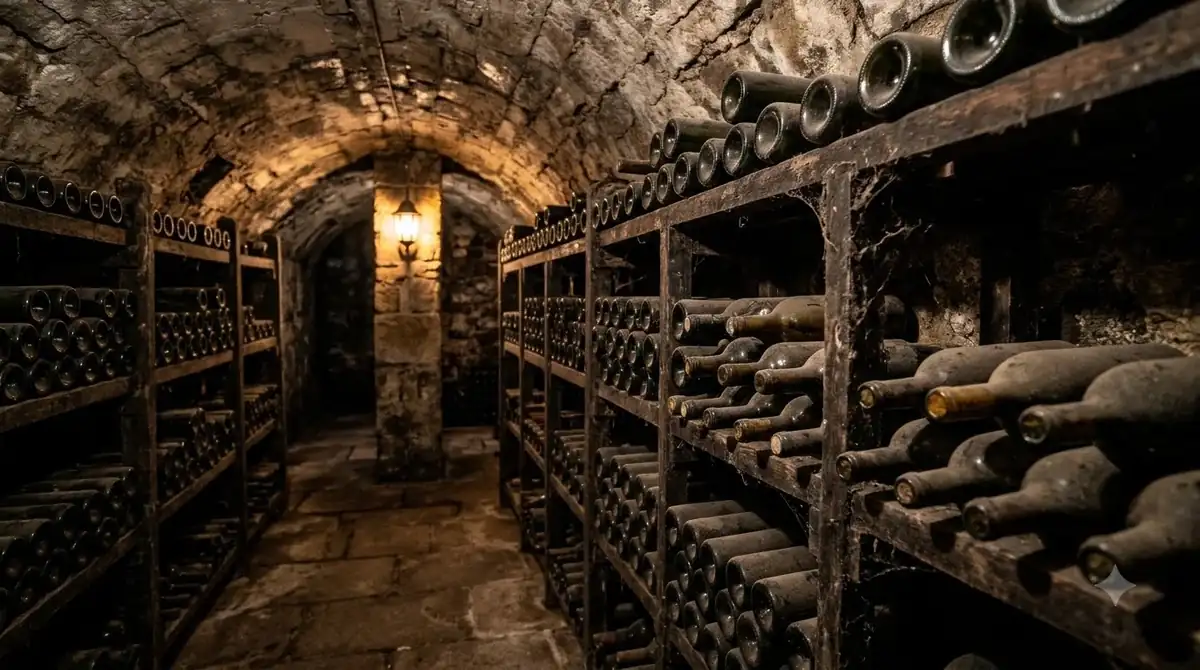
Historically, house wine carried a poor reputation. It was often the cheapest drinkable wine a restaurant could find, sold by the glass with little attention to where it came from. VinePair’s defense of house wine offered a more generous view, arguing that the house red and white are usually the wines the restaurant believes will appeal to the largest number of guests. Some house wines began as ordinary list wines that guests kept asking for, while others were chosen from the start because they are easy drinking and pair with almost anything on the menu.
The math on a house pour is simple. A standard 750-milliliter bottle pours about five glasses at five ounces each, so a restaurant that buys a case of 12 bottles has roughly 60 pours from a single purchase. Diners often walk past the house pour for exactly this reason: a low-cost glass looks like a sign of a lower-grade wine, even when the wine is perfectly good.
Where House Wine Comes From
Most house wines come from bulk wine bottled for the house, a private label built on bulk wine, or a bottle chosen from a named producer. Each arrangement offers a different level of transparency, and that difference shapes how much you can learn from the menu.
Bulk is the starting point for much of the category. VinePair’s reporting defines bulk wine as wine shipped in large containers and bottled at its destination. Major retailers including Costco, Target, and Trader Joe’s use bulk wine to fill their 750-milliliter bottles sold under house brands, and restaurants use the same logic to get a dependable pour without buying bottles one at a time. According to the World Bulk Wine Exhibition, bulk represents 38 percent of international wine exports, and the United States imported 383 million liters of bulk wine in 2020, up 62 percent over the previous decade.
The private-label version puts a restaurant’s name on bulk wine. In that model, the winery that produced the liquid usually stays anonymous. The San Francisco Chronicle described this as the older pattern for house wines: a restaurant buys a throwaway wine and lists it without naming the producer, sometimes because it came from a jug or a box.
A newer approach puts the producer front and center. At Flour + Water in San Francisco, the house wines Pasta Water and Pasta Sauce are made in collaboration with Subject to Change Wine Co. Pasta Water is a skin-fermented Malvasia, and Pasta Sauce is a Sangiovese, Zinfandel, and Merlot blend served chilled. According to the San Francisco Chronicle, all 60 cases of the first Pasta Water sold out within a month. Because you can see who made the wine, you can also ask about it.
Why House Wine Quality Varies
House wine quality can range from a plain bulk bottle to a carefully selected small-producer wine. The biggest variable is usually whether the restaurant chose the wine on purpose and knows where it came from.
Bulk wine itself is not the problem; the problem is when nobody involved takes responsibility for what ends up in the glass. Cyril Penn, editor of Wine Business Monthly, told VinePair that bulk wine comes in many flavors and quality levels but is always commercially acceptable. The same article notes that the top 50 US producers make 90 percent of the domestic branded wine sold by volume, even though the country has about 11,000 wineries. A large share of the wine on shelves and menus therefore comes from large-scale production.
Restaurant owners and sommeliers often treat the house pour as a reflection of the whole business. Robert Manners of Berry Bros & Rudd told Decanter that the quality of house wine sets the standard for the establishment and offers a good indication of the food. Some restaurants act on that idea. Pollen Street Social in London created its own house wines from small producers: an Anjou Chenin Blanc and a Cabernet Franc and Grolleau from Clos de L’Elu, both chosen for low-intervention winemaking and for their ability to stand up to the kitchen’s food.
Smaller operations can take a similar approach without commissioning a wine. Fiorella in San Francisco does not name the wineries behind its Italian house wines. Its wine director worked with an importer who gathered samples from northern Italian producers and then picked the ones he liked best. An unnamed producer is not automatically a warning sign, but in that case the restaurant’s palate is doing most of the work.
How to Judge a House Wine Before You Order
The most reliable test is to taste the house wine before you commit, and most restaurants will let you do that. Daily Meal’s interview with sommelier Doreen Winkler, owner of Orange Glou in New York City, recommends exactly that. She notes that house wines can be decent, though a better match is often available elsewhere on the list, so it helps to focus on what you enjoy and what you can afford.
Start with the aroma. Quality wines give off notes that depend on the variety, from flowers and berries to cinnamon, coffee, or tobacco. A faulty house pour often reveals itself quickly. Winkler warns that a bad wine may taste like vinegar, lack any juicy fruit, or give off unpleasant smells such as mold or sulfur. If you notice any of those, politely ask for a different wine. A reasonable restaurant will offer an alternative without fuss.
Labels and menu wording also offer clues. Staff at a well-run restaurant should be able to name the grape, the region, and whether the wine comes from a named producer. Decanter quoted Master Sommelier Ronan Sayburn, who argues that a house wine should come with a history staff are comfortable sharing. If the server can say nothing beyond “it’s the house red,” that does not prove the wine is bad, but it does suggest little thought went into the pour. On a sparkling list, the sweetness word matters too: Brut Nature, Extra Brut, Brut, Extra Dry, Dry, Demi-Sec, and Doux run from the driest style to the sweetest.
Tip: Ask for a small taste before you commit. Smell the wine first, then take a sip and check for fruit, acidity, and finish. If it tastes like vinegar, smells of mold or sulfur, or has no fruit at all, ask for a different glass.
Matching House Wine With Food
House wine works best when its acidity, tannin, and sweetness line up with the dish. A few simple rules cover most meals.
The wine should be at least as sweet as the dessert it accompanies, or the dessert will taste sour and thin. Acidic food, such as tomato sauce or a vinaigrette, needs a wine with equal or higher acidity, or the wine will taste flat beside the plate. The wine director at Flour + Water makes the same point about acidity, saying the house wines cut through the butter and fat in the restaurant’s Italian food.
Tannin brings its own rules. Salt and fat soften tannin, which is why a rich steak tames a big red. Chili heat is amplified by both alcohol and tannin, so spicy food tends to make high-tannin reds taste harsher. Oily fish clashes with tannic reds, so a lighter red or a crisp white usually works better with salmon or mackerel. Sparkling house wines are the most versatile option: Prosecco is made from the Glera grape using the tank method and usually sits between 11 and 12 percent alcohol by volume, while Champagne and Cava get their bubbles from a second fermentation in the bottle. The bubbles and acidity help with salty snacks, fried food, and creamy sauces.
Use the table below as a starting point. It shows typical acidity and tannin levels for five common house styles, along with the serving temperature that brings out each one best.
| House style | Typical acidity | Typical tannin | Serve at |
|---|---|---|---|
| Sauvignon Blanc | High | Little to none | 45 to 50 F |
| Chardonnay | Medium | Little to none | 50 to 55 F |
| Moscato | Low to medium | Little to none | 43 to 50 F |
| Pinot Noir | High | Low to medium | 55 to 60 F |
| Cabernet Sauvignon | Moderate | High | 60 to 65 F |
Serving and Storing House Wine at Home
Serving temperature, pour size, and how long an opened bottle keeps all affect how a house wine tastes at home.
Serving temperature changes how a wine tastes. Sparkling wine is best between 40 and 50 F. Light whites and rosé do well at 45 to 50 F, full whites at 50 to 55 F, and sweet whites at 43 to 50 F. Light reds taste best at 55 to 60 F, while full reds show their structure at 60 to 65 F. If a red has been sitting in a warm room, a short stay in the refrigerator can bring it into range.
Pour size matters for planning. A standard pour is 5 ounces, so a 750-milliliter bottle yields about five glasses, and a 3-liter box holds roughly 20 five-ounce pours. Young, full-bodied reds benefit from decanting for 30 to 60 minutes, which softens the tannins and lets the aromas open. Lighter reds and whites rarely need that time.
Storage is the other half of the picture. Keep unopened bottles on their sides in a cool place near 55 F. Once a bottle is open, the clock starts. Refrigerated sparkling wine is best within one to three days, and still wines, including most house reds and whites, last three to five days. Fortified wines can keep for several weeks, and a bag-in-box can last four to six weeks after opening.
| Opened wine | Refrigerated shelf life |
|---|---|
| Sparkling | 1 to 3 days |
| Still wine, including house red and white | 3 to 5 days |
| Fortified wine | Several weeks |
| Bag-in-box | 4 to 6 weeks |
Buying House Wine for Home
Buying a case of a house wine you already like is one of the simplest ways to keep reliable bottles on hand.
VinePair suggests exactly this approach: pick a red and a white you enjoy, buy a case of each, take the case discount your wine shop offers, and switch to something new when you run low. A dependable pair means you never have to scramble when a friend drops by or you need a bottle for a party.
Bulk-based wines can offer good everyday value, but the category is wide. Spain has become the largest bulk wine producer in the world, according to the World Bulk Wine Exhibition, and wine exports account for more than 50 percent of Spanish wine revenue. VinePair also notes that shipping in large containers and bottling at the destination has a much smaller carbon footprint than shipping finished bottles, which is one reason the category appeals to environmentally minded buyers. You can read more in VinePair’s bulk wine feature.
If you are buying a boxed option, look at the format and the origin rather than the packaging alone. A 3-liter box suits steady everyday drinking, and the storage window in the table above shows why it works for households that open a glass at a time. Look for a named producer or region, because a clear origin gives you something to compare from one purchase to the next. If you want to compare a specific brand, start with mud house wine. For boxed alcohol levels, our black box pinot grigio alcohol content page is a useful starting point, and you can also browse the Wine Brands section.
Frequently Asked Questions
Can bulk wine still carry a regional name?
Often, yes. VinePair reports that winemakers who top off their supply with bulk wine can, in many cases, still claim the same appellation by sourcing locally. A bulk origin does not automatically remove a regional claim from the label.
Why is house wine usually cheaper by the glass?
The restaurant buys many bottles at once and receives a discount from its distributor, and bigger purchases tend to earn bigger discounts. VinePair says the low cost per glass is usually the restaurant passing those savings on to guests.
Do house wines actually sell well?
They can. The San Francisco Chronicle reported that wine directors at Fiorella and Flour + Water say their house wines are among the best-selling glasses on their lists. That suggests guests are choosing them deliberately rather than settling for the default.
What size container counts as bulk wine?
Definitions differ depending on who you ask. VinePair reports that one importer of natural wine in 20-liter kegs said bulk would have to mean a 60-liter keg. For shoppers, what the label tells you about the wine’s origin matters more than the container.
What does a wine list usually tell you?
Often very little. Decanter has noted that many wine lists show only a wine’s title and vintage, which leaves diners with few clues. Asking the server for the producer, grape, or region is a reasonable next step.
House wine is not a single category, so the best approach is to check who made it, ask one good question, and taste before you commit. Once you find a bottle you like at a restaurant, buying a case for home keeps that same glass within easy reach.
More in Wine Brands
 Louis Latour Wine Price: Compare Bottles by Style and TierUpdated Nov 20, 2026
 Yellow Tail Moscato Price: What to Expect Before You BuyUpdated Nov 20, 2026
 Sutter Home Sweet Red Review: Find the Right Food PairingsUpdated Nov 20, 2026
 Franzia Chillable Red Review: Find the Right Serving StyleUpdated Nov 20, 2026
 Veuve Clicquot Rose Review: Flavor, Food Pairings and Buying AdviceUpdated Nov 20, 2026
 Rombauer Wine Price: Compare Bottles Before You BuyUpdated Nov 20, 2026