

We may earn a commission when you buy through links on this page, at no extra cost to you. Learn more.
How many calories in red wine? A standard 5-ounce glass has roughly 125. That estimate starts from a reference value of about 85 calories per 100 grams of red table wine, and a 5-ounce pour weighs close to 148 grams. Most of those calories come from alcohol, with a smaller share from residual sugar. Larger pours, higher alcohol, and sweeter styles push the number up.
If you want to know how many calories in red wine you are actually drinking, the answer depends on three things: how much is poured, how strong the wine is, and how much sugar is left after fermentation. This guide walks through each factor so you can estimate a glass or a bottle without guessing.
Where the Calories in Red Wine Come From
Wine gets its calories mainly from alcohol. The nutrition table for red table wine in the Wikipedia wine article lists about 10.6 grams of alcohol (ethanol) and 0.6 grams of sugar per 100 grams, with a total energy value of 85 kilocalories. Alcohol supplies most of that energy, and sugar adds only a small share in a dry red.

Alcohol yields more energy per gram than carbohydrate or protein, so the strength of the wine is the number to watch. The few calories left over after alcohol and sugar are accounted for by the other compounds in the wine, and they are small in a typical red. For most people, checking the alcohol percentage on the label gives a better estimate than trying to track sugar alone.
Calories in a Typical Glass and Bottle
Serving size drives most of the difference people notice. The table below applies the same reference figure of about 85 calories per 100 grams to common pours, using the rule that 100 milliliters of wine weighs about 100 grams. Treat these as estimates, since the real number shifts with the wine’s strength and sweetness.
| Serving | Approximate volume | Estimated calories |
|---|---|---|
| Small pour | 4 oz (about 118 ml) | about 100 |
| Standard glass | 5 oz (about 148 ml) | about 125 |
| Generous glass | 6 oz (about 177 ml) | about 150 |
| Restaurant pour | 9 oz (about 266 ml) | about 225 |
| Full bottle | 750 ml (about 25 oz) | about 640 |
A standard bottle holds roughly five 5-ounce glasses, so the total adds up quickly when pours run larger than the standard. Home pours can easily go past 5 ounces, and that gap is the most common reason a rough estimate falls short.
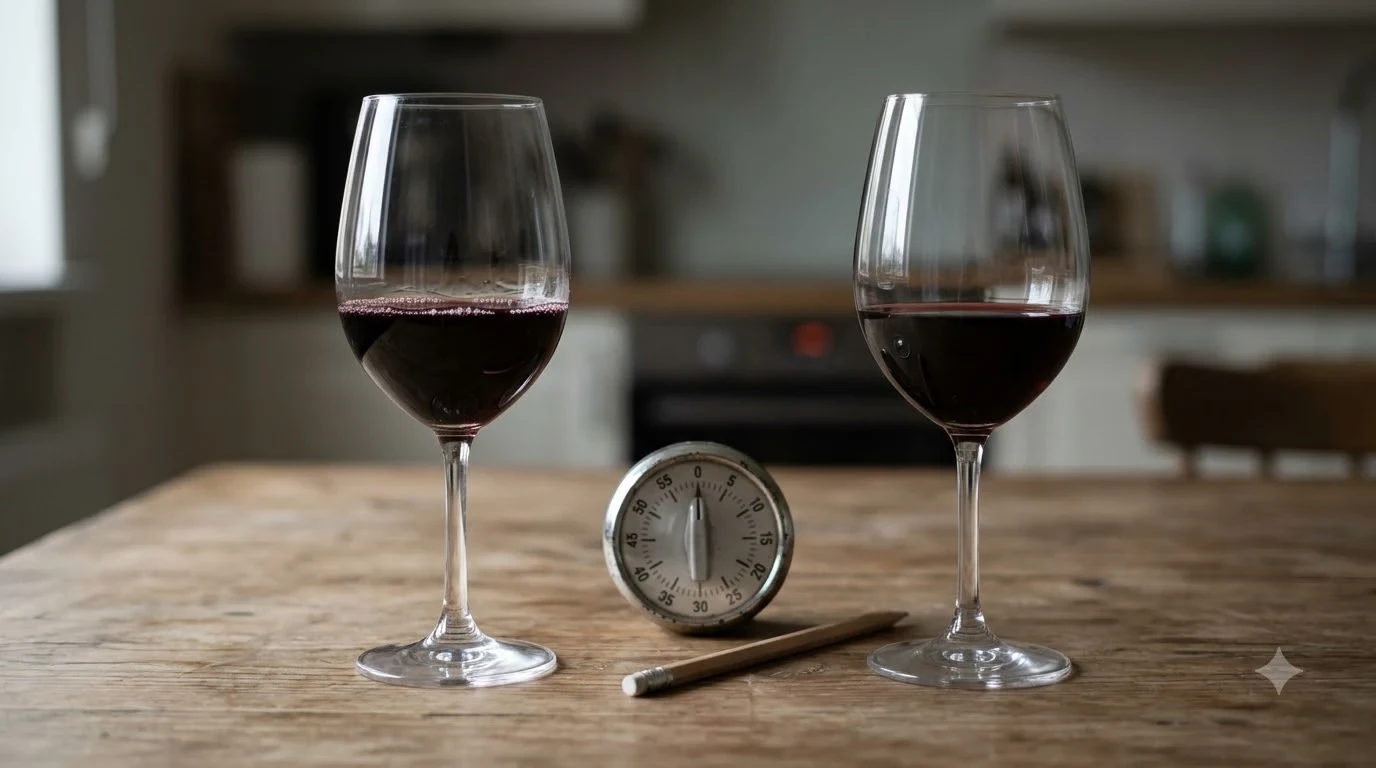
Tip: Measure once with a jigger or a marked glass, then pour the same amount for a week. Seeing the real volume makes the count far more accurate than guessing by eye.
Why Alcohol and Sugar Change the Number
Two red wines with the same volume can differ noticeably in calories. Red table wine typically falls between 12.5 and 14.5 percent alcohol by volume. A wine at the higher end carries more ethanol in every glass, and ethanol is the densest source of energy in the drink.
Consider two 5-ounce glasses, one at 13 percent and one at 14.5 percent. The stronger wine adds roughly 8 calories per 100 milliliters, which comes to about 12 extra calories across a 148-milliliter glass. The difference looks small on one pour, but it adds up across a bottle or a long dinner.
Sugar works in the other direction. Sweetness comes from residual sugar left after fermentation, and sweeter reds keep much more of it than dry wines do. A sweet red can carry more calories than a dry red of the same strength. This is why dry reds make the most useful reference point for everyday estimates.
Ripeness at harvest also matters. Grapes that ripen in warmer conditions often produce wines with higher alcohol, so a bold red from a hot vintage can sit above the typical figure even when the pour is the same.
How Red Wine Compares With Other Drinks
People often ask whether red wine is lighter than other drinks. The answer depends on what you compare it with, and on the pour size. Beer varies widely by style, so light beers usually sit below a glass of red and full-strength beers often sit above it. Spirits are served in smaller pours, so one standard shot usually carries fewer calories than a full glass of red, even though its alcohol content per ounce is much higher.
The fairest comparison is always the same measure on both sides. A 5-ounce glass of red is a different amount of drink from a 12-ounce beer, so comparing serving to serving tells a clearer story than comparing bottle to bottle.
How to Estimate the Calories in Your Own Glass
An estimate takes about a minute and needs only the label and a measuring tool. The steps below work for most still red wines sold in the United States, where the alcohol percentage is printed on the bottle.
- Read the alcohol by volume on the label. If the label says 13.5 percent, use that number.
- Measure the pour in milliliters or ounces. A 5-ounce glass is about 148 milliliters.
- Multiply the milliliters by the reference figure of about 0.85 calories per milliliter for a dry red near 13 percent alcohol.
- Adjust upward for a stronger wine and downward for a lighter one. Add a little for a clearly sweet red.
As a worked example, take a 5-ounce pour of a 14.5 percent red. Starting from the reference figure of about 85 calories per 100 milliliters, add roughly 8 for the stronger alcohol, which gives about 93 per 100 milliliters. Multiplying by 148 milliliters lands near 138 calories. The same pour of a 12.5 percent red lands closer to 120, so the label alone can shift the estimate by roughly 15 percent.
This method gives a number within a reasonable range for everyday drinking. It is not a lab measurement, so treat the result as a planning figure rather than an exact count. Keeping the pour and the label in view is usually enough to make a rough estimate useful for planning a meal or a week of drinks.
Frequently Asked Questions
How many calories are in a 5 oz glass of red wine?
A 5-ounce glass of red has about 125 calories when using the reference figure of roughly 85 calories per 100 grams. The exact number changes with the wine’s alcohol content and sweetness.
Does dry red wine have fewer calories than sweet red?
Usually, yes, because sweet reds keep more residual sugar after fermentation. Alcohol strength still matters, so a dry red at a high alcohol level can contain more calories than a lighter sweet red.
Where do most of the calories in red wine come from?
Most of the calories come from alcohol. Sugar adds a smaller share in dry reds, and the remaining energy comes from other compounds in small amounts.
How many calories are in a full bottle of red wine?
A 750-milliliter bottle contains roughly 640 calories at the reference figure. That total is about five standard 5-ounce glasses, so pouring larger glasses raises the count quickly.
Knowing the numbers makes it easier to plan a glass with dinner or keep track over a weekend. Whether you are hosting a dinner party or simply curious about a bottle on the shelf, the same steps apply: read the alcohol percentage, measure the pour, and adjust for sweetness. Small habits such as using a marked glass tend to matter more than any single figure.For background on what shapes a red’s texture, read our guide to what is tannins in wine. For the bigger picture on body weight, see does wine make you gain weight, and browse the Wine Q&A section for more basics.
More in Wine Basics
 Which Rose Is Best for Your Taste, Budget, and Food PairingsUpdated Nov 21, 2026
 Is Cheap Wine Bad? How to Find Bottles Worth DrinkingUpdated Nov 21, 2026
 What To Write On A Wine Gift Tag: Thoughtful Messages For Every OccasionUpdated Nov 21, 2026
 Which Wine Is Best For Weight Loss? Compare Lower-Calorie ChoicesUpdated Nov 21, 2026
 What Is The Best Wine For Mimosas? Choose Bubbly That Balances Orange JuiceUpdated Nov 20, 2026
 Which Prosecco Is Best for Your Taste and OccasionUpdated Nov 20, 2026