

We may earn a commission when you buy through links on this page, at no extra cost to you. Learn more.
Calories in red wine come mostly from alcohol, with a smaller contribution from sugar and carbohydrates. According to the NutritionValue red wine entry, a 30 g serving (about one fluid ounce) contains 26 calories, with 3.2 g of alcohol and 0.78 g of carbohydrate. Dry red wines have very little sugar, so alcohol drives most of the number.
This guide explains where the calories in red wine come from, how to estimate them for a glass or a bottle, and why the numbers vary between wines. If you are comparing red wine with other drinks or trying to understand what is on a nutrition label, the details below should help.
Where the Calories Come From
Wine contains three main sources of energy: alcohol, carbohydrates such as residual sugar, and a small amount of other compounds. Alcohol is the largest contributor in most dry wines. Carbohydrates add calories too, but the sugar content in a dry red is usually low, which keeps the total in a fairly narrow range.
The NutritionValue entry gives 3.2 g of alcohol and 0.78 g of carbohydrate per 30 g serving, with only 0.19 g of sugar. That is why a dry red wine tends to sit at a moderate calorie level even though its alcohol content is what most people notice. Sweeter wines contain more carbohydrate and sugar, so their calories can be higher than a dry bottle of the same strength.
It also helps to remember that wine is not a food with fixed portions. Each bottle is made by a different producer, and grape ripeness, fermentation, and the winemaker’s choices all shape the final numbers. For that reason, the serving figure is a useful starting point, and the label or a nutrition database remains the best source for a specific bottle.
Calories Per Serving
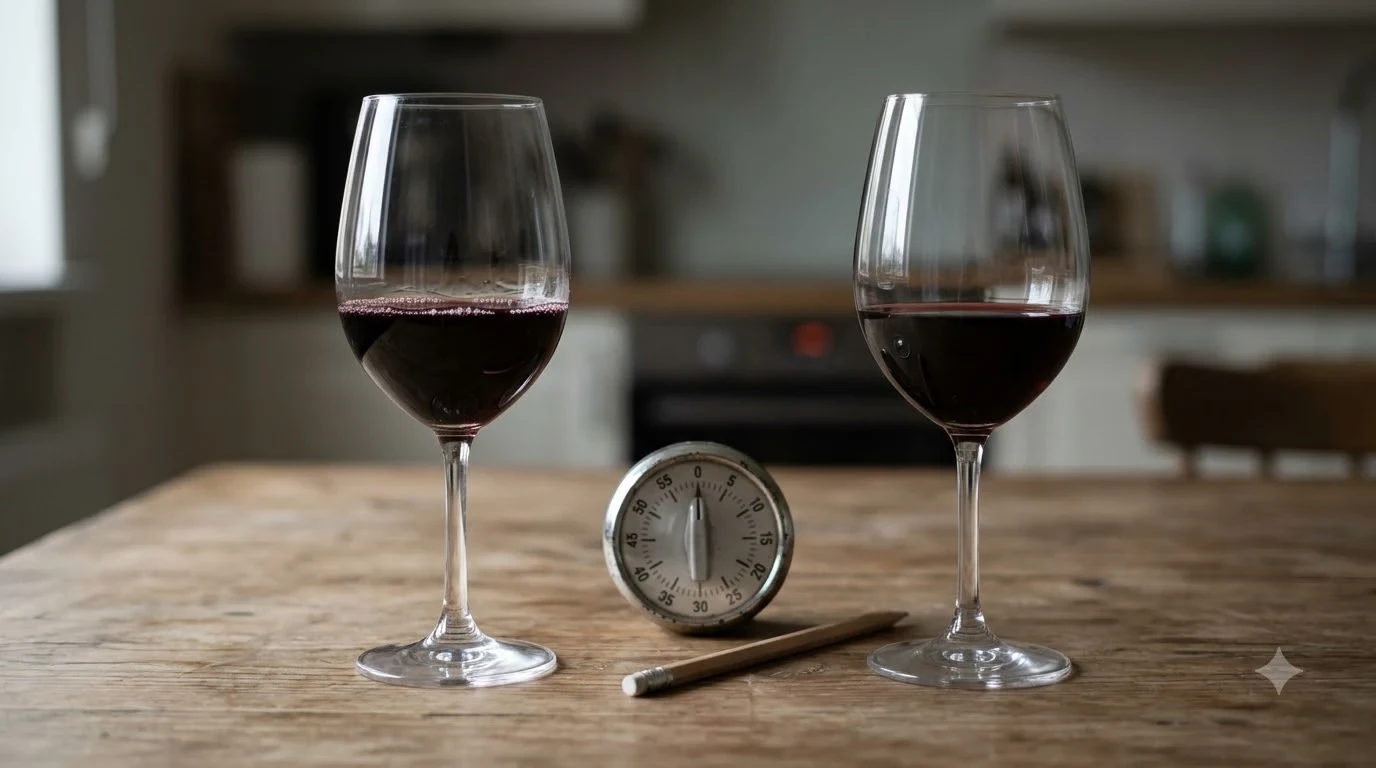
The easiest way to estimate calories is to start with a known serving and scale it. NutritionValue lists 26 calories for a 30 g serving of red wine, which is roughly one fluid ounce. A standard pour of about five fluid ounces is therefore close to five times that figure, so the calories add up quickly over a full glass.
Restaurants and home pours vary, so the actual number depends on how much wine is in the glass. A generous pour holds more calories than a small one, and that is the biggest variable most people control.
| Measure | Red wine (per 30 g serving) |
|---|---|
| Calories | 26 |
| Alcohol | 3.2 g |
| Carbohydrate | 0.78 g |
| Sugars | 0.19 g |
Why Red Wines Differ
Not every red wine has the same calorie count. The biggest difference comes from alcohol. A wine with a higher alcohol level contains more energy per glass, and the alcohol on a label is a clue. A bold red from a warm climate may land well above a light red from a cooler region.

Residual sugar is the second factor. A dry red has almost none left after fermentation, while an off-dry or sweet red holds more sugar and carbohydrate. Dry wines usually have a higher alcohol level than their sweeter cousins, so the calories can be similar even when the sugar is different. Reading the label, when available, gives the best sense of where a particular bottle falls.
How Red Wine Compares With Other Wines
Red wine is usually compared with white wine and sparkling wine. Calories follow alcohol and sugar, so the same logic applies across styles. A dry white with a moderate alcohol level can look similar to a dry red on paper, while a sweet dessert wine can be much higher in calories because of its sugar.
If you are comparing sparkling options, the calories in prosecco guide and the calories in cava guide cover the same kind of scaling for those wines. For a grape-focused comparison, the cabernet sauvignon wine page shows how a full-bodied red fits into the same picture.
Common Mistakes When Estimating
Most estimation errors come from the pour rather than the wine itself. People often guess the size of a glass by eye, and a large stemmed glass can hold far more than a single serving. Filling a glass to the widest point and then drinking it as one serving is a common way to underestimate the total.
Another mistake is assuming all red wines share the same numbers. Two bottles with the same grape can differ in alcohol and residual sugar, which changes the total. Treating every red as a single figure can work as a rough guide, but it misses the differences that matter most when you want a closer estimate.
A third mistake is forgetting the serving count across a bottle. A standard 750 ml bottle contains several glasses, so the total for the bottle is much larger than a single pour. Counting each glass as you go, or dividing the bottle into equal portions in advance, keeps the total accurate.
Tips for Tracking Calories
A simple habit makes wine easier to track. Measure your pour once with a jigger or a marked glass so you know how much you are drinking. Then use a serving-based number, such as the 26 calories per 30 g figure, and multiply by the number of servings. Keeping a rough log for a week can show you how the drinks you choose add up over time.
- Measure the pour: a standard serving is easier to count than a free pour.
- Check the label: alcohol level is the quickest clue to the calorie count.
- Pick dry styles: dry reds have very little sugar, which keeps the total lower.
Moderation also matters. Drinking wine with food and pacing your glasses can help you enjoy the wine without drinking more than you planned. Many people find it easier to plan a bottle for the table in advance, with a clear number of pours, so the evening stays within a pace that feels comfortable to them.
Frequently Asked Questions
How many calories are in a glass of red wine?
NutritionValue lists 26 calories for a 30 g serving, which is about one fluid ounce. A standard glass holds several times that amount, so the total grows with the size of the pour.
Does dry red wine have more calories than sweet wine?
Not always. Dry reds have little sugar, but they can have a high alcohol level, which adds calories. Sweet wines contain more sugar, so the balance depends on both the alcohol and the residual sugar in a specific bottle.
What makes the biggest difference in red wine calories?
Alcohol has the largest effect in most dry reds, and pour size is the variable most people control. A bigger glass of a strong red adds the most calories, while a smaller pour of a lighter red keeps the total lower.
Do all red wines have the same calories?
No. Calories vary with alcohol, residual sugar, and serving size. Two red wines can differ noticeably, so checking the alcohol level and the pour gives you the most useful estimate.
Calories in red wine are easiest to understand when you look at alcohol, sugar, and serving size together. Start with a known serving, check the alcohol level on the label, and adjust the pour to fit your plans. Once you know those three pieces, estimating a glass or a bottle becomes simple. The same approach works for comparing styles across the wine shelf, whether you are choosing a dry red for dinner or a lighter option for a relaxed evening with friends.
More in Wine Types & Grapes
 Zinfandel Sugar Content: Dry Red vs. White Zinfandel GramsUpdated Nov 21, 2026
 Best Zinfandel Substitute Options for Sipping and CookingUpdated Nov 21, 2026
 Zweigelt Food Pairing: Best Dishes, Cheeses, and Serving TipsUpdated Nov 21, 2026
 Zinfandel Tannins Explained: How Structure Shapes Every BottleUpdated Nov 21, 2026
 Zinfandel Sweetness Level: Dry Red vs. Sweet White Zin ExplainedUpdated Nov 21, 2026
 Xinomavro Food Pairing: Best Dishes, Styles, and Serving TipsUpdated Nov 21, 2026