

We may earn a commission when you buy through links on this page, at no extra cost to you. Learn more.
A pinot noir substitute is usually Gamay from Beaujolais, because it offers similarly bright acidity, gentle tannins, and lively red-fruit flavors. Frappato is another close choice if you prefer a lighter, floral red, while Cinsault offers soft texture and juicy fruit. For a more savory or structured glass, look to Mencía, Sangiovese, or a restrained Grenache.
The best replacement depends on what you value in Pinot Noir: delicacy, tart cherry, earthy aromas, refreshing acidity, or the way it works at the table. The grapes below cover those different roles, so you can choose a bottle for drinking or cooking without expecting another variety to taste exactly like Pinot.
What Makes Pinot Noir Difficult to Replace
Pinot Noir is prized for balance rather than sheer power. Its thin skins generally produce low-to-medium tannin, while its naturally lively acidity supports flavors that can range from red cherry, raspberry, and cranberry to rose, mushroom, forest floor, tea, and spice.
That combination gives Pinot Noir a light-to-medium feel in many classic styles, but the grape is not locked into one expression. A delicate red Burgundy may feel lean, savory, and finely textured; a riper Sonoma Coast or Central Coast bottling can be broader, darker-fruited, and more oak-marked. Oregon’s Willamette Valley often gives another recognizable expression, with freshness and red-fruit detail. The best stand-in for one of these wines may not suit another.
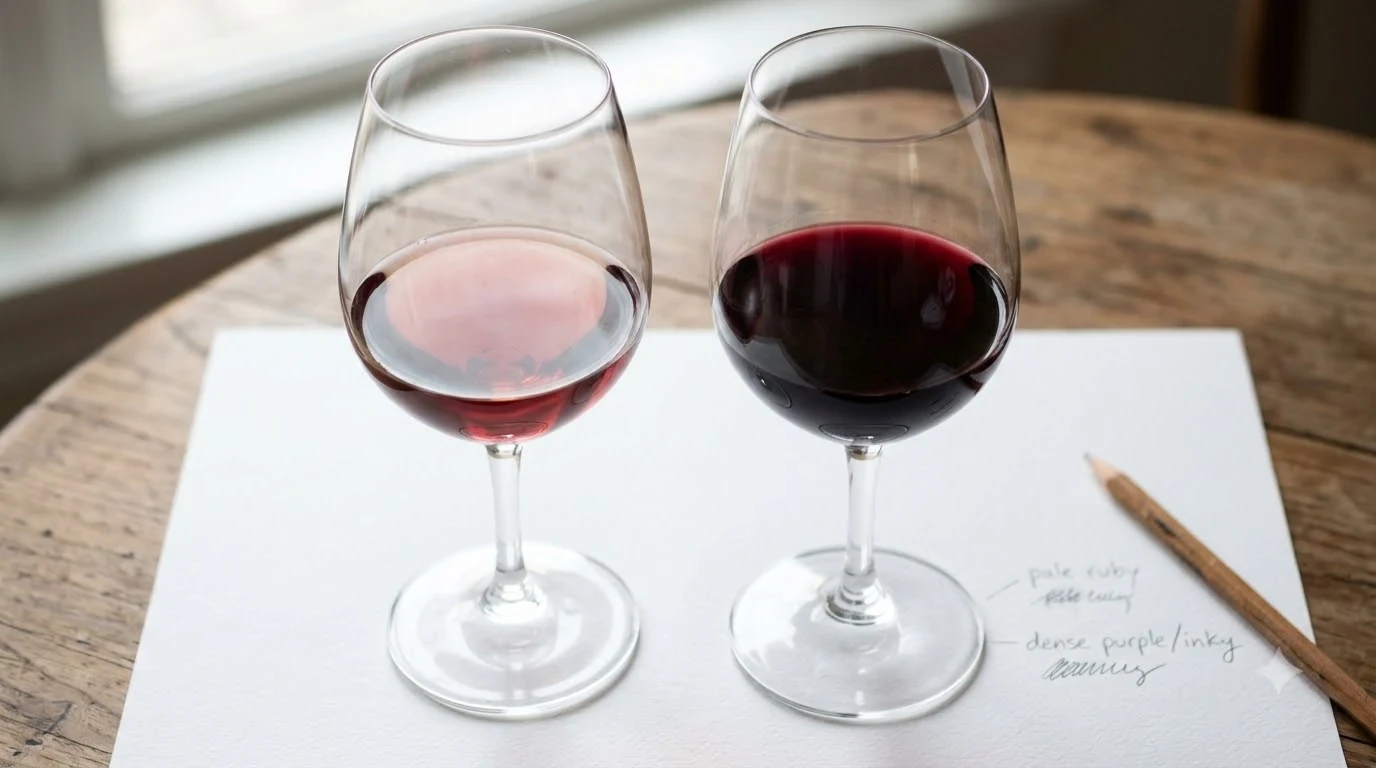
Start by deciding which part of the profile matters most. If you want gentle grip and bright cherry fruit, choose a low-tannin grape with good acidity; if you want Pinot’s savory side, look for floral, herbal, or earthy notes. Body describes a wine’s weight, tannin creates a drying sensation along the gums, and acidity gives it freshness. A substitute can match two traits without matching all three, so compare your usual bottle with this guide to whether Pinot Noir is full bodied before choosing.
Gamay and Beaujolais Are the Closest Match
Gamay is the most dependable first choice for a Pinot Noir drinker who wants bright fruit, modest tannin, and enough acidity to keep a meal lively. Its best-known home is Beaujolais, just south of Burgundy, and the grape has a close family connection to Pinot Noir.
Gamay Noir à jus blanc is a natural cross between Pinot Noir and Gouais Blanc, according to the Beaujolais wine council. The council describes aromas that can include raspberry, wild strawberry, blackberry, and black cherry, with occasional peppery or floral notes. The council’s Gamay grape profile notes that the variety is grown across all 12 Beaujolais appellations, making the region a natural place to begin.
For an easygoing comparison, look for Beaujolais or Beaujolais-Villages: these wines are commonly fruit-forward, light in tannin, and made to be enjoyed young. If you want more concentration, try a cru such as Fleurie, Morgon, or Moulin-à-Vent. Wine Enthusiast notes that cru Beaujolais can show firmer tannins, more concentration, and oak influence while retaining Gamay’s lively acidity. Such bottles are better suited to a richer Pinot drinker and to roast pork, duck, or mushrooms. Gamay often seems more overtly juicy and playful, while Pinot can lean toward subtle earth and layered aromatics.
Gamay works as a near one-for-one replacement at the dinner table. Try it with roast chicken, pork tenderloin, grilled salmon, mushroom pasta, or charcuterie, especially when the dish includes herbs or some acidity. Serve it slightly cool so its fruit stays crisp rather than seeming heavy.
Frappato, Cinsault, and Nerello Mascalese for Lighter Reds
When a Pinot Noir substitute should feel delicate, fragrant, and refreshing, consider Sicily’s Frappato, southern France’s Cinsault, or Nerello Mascalese from the slopes of Mount Etna. Each can deliver red-fruit character with freshness, but the details differ enough to make the choice worthwhile.
Frappato is a particularly close option for people who like lighter Pinot Noir. Wine Enthusiast describes it as a thin-skinned Sicilian grape whose wines can show fresh red fruit, floral aromas, lively acidity, and delicate tannins. Single-variety bottlings are available and can be especially expressive of the grape’s lighter frame; Frappato can also be served as a chillable red with grilled vegetables, tomato-based seafood pasta, or a picnic spread.
Cinsault is a better pick when soft tannin and juicy fruit matter more than a sharply defined acid line. Native to southern France, it is heat-tolerant and often appears as a blending grape in the Rhône and Provence. Wine Enthusiast points to appealing single-variety examples from old vines in Lodi, Itata in Chile, and South African districts such as Paarl and Malmesbury. Expect cherry and strawberry, sometimes with floral notes; its texture can feel gentle, though its acidity is usually more modest than Pinot Noir’s.
Nerello Mascalese is the more savory, site-sensitive choice. Associated with Sicily’s Etna DOC, it can offer red cherry, strawberry, rose, violet, and herbal-earthy notes, with lively acidity and modest alcohol in many expressions. It can have firmer tannin than delicate Pinot, depending on extraction and the producer, so choose it if you enjoy aromatic complexity more than a perfectly soft finish. These grapes can look similar in the glass, but Sicily’s Mediterranean herbal notes and Cinsault’s climate-sensitive character give each a distinct identity.
Mencía, Sangiovese, and Grenache Add Different Kinds of Structure
Not every Pinot Noir fan wants the lightest possible red. Mencía, Sangiovese, and Grenache are useful alternatives when you want some of Pinot’s red-fruit and savory character but are comfortable with a firmer frame, riper fruit, or a change in acidity.
Mencía from northwestern Spain is a strong choice for drinkers who like earthy, floral Pinot Noir. Look in Bierzo, Ribeira Sacra, or Valdeorras for tart cherry, red currant, darker fruit, spice, and a stony or mineral impression. Wine Enthusiast describes Mencía as having fine tannins and generous acidity, though its fruit can be darker and its peppery, floral character more direct than Pinot’s. Pair it with roast pork, grilled lamb, lentils, or mushrooms.
Sangiovese, Tuscany’s signature red grape, is a more savory, food-driven alternative. It often combines red cherry with dried herbs, medium body, and a firmer line of acidity and tannin than Pinot Noir. A simple Chianti or lighter Tuscan Sangiovese suits tomato-based pasta, pizza, grilled sausages, or roast chicken; its acidity is especially useful with tomato sauce, although the firmer tannin makes it a different match from delicate Pinot.
Grenache, called Garnacha in Spain, is a good direction if you like ripe strawberry, raspberry, and soft tannin but want a warmer, rounder style. It can be elegant and savory in a cooler site or when picked for freshness, but often has less acidity than Pinot and can show higher alcohol or sweeter-seeming fruit. Choose a restrained example rather than a heavily extracted, high-alcohol bottle, and try it with roast chicken, grilled vegetables, or lamb. Think of these as alternatives by mood: Mencía for mineral and floral complexity, Sangiovese for tart cherry and herbs, and Grenache for ripe fruit and roundness.
How to Replace Pinot Noir in a Recipe
For most savory recipes, Gamay is the closest practical stand-in for Pinot Noir, and a dry bottle of Frappato or Cinsault can also work. Use the same volume called for in the recipe, then adjust the seasoning after the liquid has reduced; a substitute with more fruit, less acidity, or firmer tannin can change the balance of the finished dish.
Pinot Noir often appears in coq au vin, beef or mushroom braises, pan sauces, and reductions because it contributes red-fruit flavor without the heavy tannin of a powerful red. Gamay is useful in chicken and pork dishes, Frappato suits lighter sauces, and Mencía or fresh Sangiovese can stand up to a longer-cooked tomato or mushroom sauce. Choose a dry wine rather than a sweet red, because sweetness becomes more pronounced as a sauce reduces.
Consider the recipe’s other ingredients. Mushrooms, thyme, and stock benefit from an earthy or savory wine such as Mencía or cru Beaujolais; cherries, shallots, or roasted poultry can work with Gamay or Grenache; tomato-heavy cooking pairs naturally with Sangiovese’s bright acidity. Avoid automatically reaching for Cabernet Sauvignon or heavily extracted Syrah: Cabernet is high in tannin, and Syrah can have medium-plus to high tannin, which can become more pronounced as a sauce reduces. Merlot is softer than Cabernet but rounder and plummier, so it can work in a braise without reproducing Pinot’s lightness.
Do not substitute based on color alone. A pale wine can still be tannic, and a darker wine can feel supple. Start with an equal amount of a dry Gamay or another light-bodied red, simmer as the recipe directs, and taste before adding extra salt, acid, or sweet ingredients. If the only available red is powerful, use a little less wine and add stock for the remaining liquid rather than letting its tannin dominate.
Serving Temperature, Food Pairings, and Bottle Planning
Most Pinot Noir-style substitutes taste fresher when served a little cool. For light reds such as Gamay, Frappato, and Cinsault, aim for 55–60°F; a fuller, more structured red can be served closer to 60–65°F.
Temperature changes how a wine feels: too warm, and alcohol can seem more obvious; too cold, and aroma is muted while tannin can feel firmer. A short spell in the refrigerator is usually enough to cool a light red, which can warm gradually in the glass. Match the food’s weight as well: Gamay and Frappato work with roast chicken, turkey, pork, mushrooms, and charcuterie; Cinsault suits grilled vegetables and mildly spiced sausages; Mencía and Sangiovese can handle herbs, roast meat, lentils, and savory sauces. Salt and fat soften tannin, acidic food needs a wine with equal or higher acidity, and chili heat is amplified by alcohol and tannin.
| Wine or serving detail | Useful number | How to apply it |
|---|---|---|
| Light-bodied red wine | 55–60°F | Serve Gamay, Frappato, or Cinsault slightly cool. |
| Full-bodied red wine | 60–65°F | Use this warmer range for a fuller, structured red. |
| Standard glass pour | 5 oz | A measured pour leaves room to swirl and assess aroma. |
| Standard 750 ml bottle | About 5 glasses | Plan around five standard pours per bottle. |
| Opened still wine | 3–5 days | Keep the bottle sealed and refrigerated after opening. |
For a side-by-side tasting, pour about 5 ounces per glass and compare two alternatives rather than opening several bottles at once. A 750 ml bottle provides about five standard pours; once a still wine is opened, refrigerate it and aim to finish it within 3–5 days for the best freshness. Bottle age and storage also matter, and the guide to how long Pinot Noir lasts unopened explains why a bottle’s condition matters before opening.
Tip: When shopping, choose by the style words as well as the grape. “Light-bodied,” “fresh,” “bright,” and “low tannin” point toward a closer match, while “concentrated,” “full-bodied,” or “structured” suggest a bigger departure from delicate Pinot Noir.
For a broader comparison beyond red grapes, browse the site’s guide to Wine by Type. It can help you decide whether the meal calls for another light red, a crisp white, or a rosé rather than forcing every occasion into a Pinot Noir replacement.
Frequently Asked Questions
These quick answers cover a few naming and regional details that can help when you are looking through unfamiliar bottles in a shop.
Why is Pinot Noir called Spätburgunder in Germany?
Spätburgunder is the German name used for Pinot Noir. Germany is one of the cool-climate regions where the grape has a significant identity, alongside Burgundy and Oregon’s Willamette Valley. A bottle labeled Spätburgunder is therefore Pinot Noir, not a separate substitute grape.
Does Gamay make rosé as well as red wine?
Yes. The Beaujolais wine council notes that Gamay wines are mainly red, but rosé versions are also produced in the Beaujolais and Beaujolais-Villages appellations. A Gamay rosé will not reproduce the texture of a still red Pinot Noir, but it can offer a related red-fruit profile in a lighter format.
Is Frappato always bottled as a single-variety wine?
No. Frappato is commonly blended in Sicily, including with Nero d’Avola and Nerello Mascalese. A bottle labeled as varietal Frappato is the clearest way to explore the grape on its own, while a blend may have more body or darker fruit depending on its composition.
What is the País grape called in other countries?
País is also known as Mission in California and Criolla Chica in Argentina. In Chile, the grape has a long history, and some old ungrafted vines survive there. Those names can help identify the same grape in different wine regions.
How much Nerello Mascalese is required in Etna Rosso?
Wine Enthusiast’s profile of the grape states that Etna Rosso must contain at least 80% Nerello Mascalese. The remaining share can include permitted varieties, which is one reason individual Etna Rosso wines may differ in texture and aroma while still keeping the grape at the center.
For the closest all-purpose replacement, start with Gamay from Beaujolais; choose Frappato or Cinsault for a lighter glass, and Mencía or Sangiovese for more savory structure. Taste for body, acidity, and tannin rather than chasing an identical flavor, and you will find a substitute that suits both the meal and the style of Pinot Noir you enjoy.
More in Wine Types & Grapes
 Zinfandel Sugar Content: Dry Red vs. White Zinfandel GramsUpdated Nov 21, 2026
 Best Zinfandel Substitute Options for Sipping and CookingUpdated Nov 21, 2026
 Zweigelt Food Pairing: Best Dishes, Cheeses, and Serving TipsUpdated Nov 21, 2026
 Zinfandel Tannins Explained: How Structure Shapes Every BottleUpdated Nov 21, 2026
 Zinfandel Sweetness Level: Dry Red vs. Sweet White Zin ExplainedUpdated Nov 21, 2026
 Xinomavro Food Pairing: Best Dishes, Styles, and Serving TipsUpdated Nov 21, 2026