

We may earn a commission when you buy through links on this page, at no extra cost to you. Learn more.
how to pronounce semillon: say “say-mee-YOHN,” with the strongest stress on the final syllable. The name has three syllables, and the final “ll” sounds like a “y” glide rather than a clear English “l.” In French, the ending is more nasal; in American English, “YOHN” is a practical approximation that will be understood at a wine shop or restaurant.
Semillon can look more intimidating on a wine list than it sounds out loud. Once you hear the three-part rhythm, the name becomes easy to say, and you can focus on what matters next: whether the bottle is a crisp, dry white from Australia, a Bordeaux blend, or a rich dessert wine from Sauternes.
The Three Syllables and the Main Stress
The most useful American-English guide is “say-mee-YOHN”: three syllables, with the final syllable carrying the main stress. Think of the rhythm as “say” + “mee” + “yohn,” keeping the middle syllable light and giving the ending a little more weight.
The first sound is closer to “say” than to the short “eh” in “set.” The middle syllable sounds like “mee,” not “mill,” and the last begins with a soft “y” sound. Let the final syllable flow as one unit; do not split it into a separate “yon” after pronouncing a hard L.
In phonetic notation, Collins gives the American-English form as /seɪmiˈjoʊn/. The small raised mark before “joʊn” indicates that the last syllable is stressed. That notation is a compact way to confirm the practical spelling “say-mee-YOHN,” especially if a pronunciation guide written only in ordinary letters leaves you unsure where to put the emphasis. The Collins entry for Semillon also distinguishes the American-English form from the French one, which is helpful because a phonetic rendering is more precise than guessing from the two written “l” letters.
Say the word slowly once, then at normal speaking speed: “say … mee … YOHN,” followed by “Sémillon, please.” The natural version should have three clear vowel beats, not four. Avoid adding a strong final “l” sound, and do not put the strongest emphasis on “say.”
French and American Versions Sound Close
The French pronunciation and the common American-English pronunciation share the same basic three-part pattern, but French makes the final vowel more nasal. An English speaker can use “say-mee-YOHN” without trying to imitate every French vowel sound.
Collins lists an American-English pronunciation of /seɪmiˈjoʊn/ and a French form of /seɪmiˈjɔ̃/. The tilde-like mark over the final vowel in the French transcription signals nasalization: the sound resonates through the nose, and the final “n” is not pronounced as a full, separate English consonant. For a listener unfamiliar with French phonetics, “say-mee-yohn” is still a useful approximation.
Wine writers sometimes use slightly different respellings to make the sound approachable. Wine Folly, for example, renders it as “Sem-me-yawn,” while Collins separates the American-English and French forms with IPA symbols. The respellings are teaching aids rather than competing spellings of the grape: listen for the final “y” glide and the stress near the end.
French pronunciation is not a test of wine knowledge. A clear American-English version is perfectly serviceable in a tasting room, and staff will understand the grape you are asking about. One useful listening habit is to notice the vowel at the end before worrying about the spelling: the French nasal vowel may sound unfamiliar, but it still belongs to the same final stressed syllable. Do not add an extra syllable just because the word ends in “-on.” The same approach works with other wine names: practicing how to pronounce chardonnay is another useful exercise in hearing a familiar word as a grape name rather than reading every letter literally.
Why the Name Appears With or Without an Accent
You may see the grape written as “Sémillon” or “Semillon.” Both forms refer to the same white grape variety; the accent mark is a spelling detail, not a signal that the wine is sweeter, drier, older, or made in a different way.
The acute accent over the first “e” is part of the French spelling, where “é” gives a clear vowel cue. Outside France, wine labels and regional material often drop the accent for simpler typography and keyboard entry. Decanter notes that “Semillon” is often spelled without the accent outside France, and Australian wine material commonly uses that unaccented form.
When reading a label, focus on the grape name as a whole rather than treating the accent as a separate syllable or sound. It does not add a beat to the word: the pronunciation still has three syllables. French spelling conventions also explain why an English reader should not automatically pronounce both “l” letters as a firm “l” sound.
Wine vocabulary often keeps its original spelling even after it becomes common in English. If you are learning terms beyond grape names, a guide to how to pronounce cuvee offers another example of French wine language that can look more complicated than it is to say aloud.
What the Grape Makes in the Glass
Sémillon is a white wine grape associated especially with Bordeaux and Australia, and it can produce both dry and sweet wines. The grape name therefore does not tell you whether a bottle will taste crisp and restrained or rich and honeyed.
Wine Enthusiast describes Sémillon as a plump white grape used for dry and sweet wines, with Sauternes as its best-known sweet-wine expression. Outside the Hunter Valley, it often produces wines with lower acidity and a rounder mouthfeel, which is one reason it is frequently blended with the more aromatic Sauvignon Blanc. That pairing can balance texture with brighter, more assertive aromas.
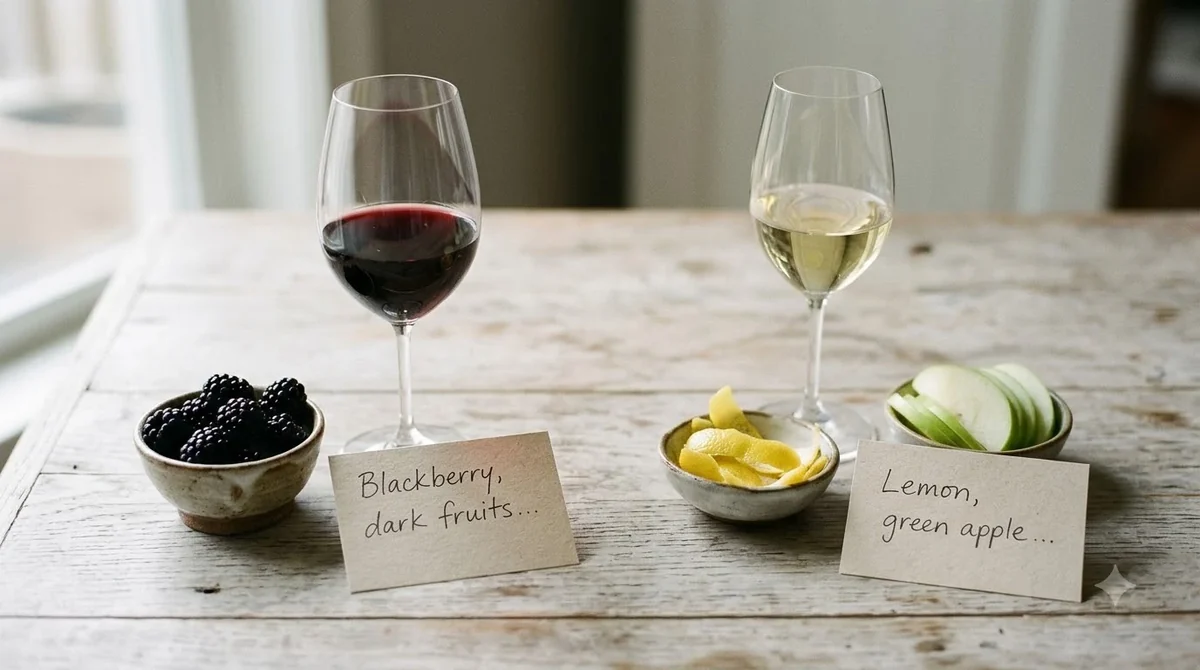
In dry wines, expect the style to vary with climate and cellar choices. A lean, early-picked wine can emphasize lemon, green apple, and freshness; a richer version that sees oak fermentation or maturation can develop a broader texture and notes that suggest toast, wax, or ripe stone fruit. The grape can carry flavor and texture without the firm tannin associated with red varieties. In a blend, Sémillon can soften the overall impression and add a rounded center, while a more aromatic partner can make the nose feel brighter. In a single-variety bottling, the region and winemaking decisions become easier to recognize because there is no second grape contributing another set of aromas.
Sweet Sémillon follows a different path. In suitable conditions, the grapes can be affected by Botrytis cinerea, commonly called noble rot. The fungus dehydrates the berries and concentrates their sugars and flavors, providing the raw material for intensely sweet wines that still need balancing acidity. Sauternes and Barsac are classic examples of this style. That range is why it helps to think of Sémillon as a grape rather than a single flavor profile: a dry Hunter Valley bottle, a barrel-influenced white from Graves, and a noble-rot Sauternes can taste markedly different while sharing the same principal variety.
How Bordeaux and Australian Regions Shape the Style
Bordeaux and Australia give Sémillon two especially recognizable identities: a partner in dry and sweet Bordeaux wines, and a distinctive single-variety white in parts of Australia. The local climate, harvest timing, and use of oak influence what ends up in the glass.
In Bordeaux, Sémillon is often blended with Sauvignon Blanc for dry white wines from areas such as Pessac-Léognan in Graves. Decanter notes that these wines are often barrel-fermented. Further south, the humid conditions of Sauternes and Barsac can encourage noble rot, producing concentrated dessert wines; Decanter describes Château d’Yquem as a blend of four-fifths Sémillon and one-fifth Sauvignon Blanc.
Australia uses the grape in several ways. Wine Australia reports that more than half of the country’s Sémillon comes from Riverina, while the Hunter Valley and Barossa Valley are known for single-variety bottlings. In Margaret River, Sémillon is commonly blended with Sauvignon Blanc. The national producer body’s Semillon regional overview describes these contrasting styles, from crisp unoaked wines to richer oak-influenced expressions.
The Hunter Valley style is often picked early and fermented dry in stainless steel. Young examples are light, lemony, and high in acidity; with bottle age, they can gain fig, toast, and honey character. Wine Australia says the more age-worthy examples may develop those traits after six to eight years and can age gracefully for 40 years or more. That is a statement about the region’s strongest examples, not a promise that every bottle needs or benefits from decades in the cellar. By contrast, Barossa Sémillon can be fuller and richer, with both oaked and unoaked versions; Decanter describes Barossa wines as more full-bodied and lemony, while Hunter Valley examples are noted for their evolution toward buttered-toast character.
| Reference point | Number or time | What it tells you |
|---|---|---|
| Australian Sémillon plantings | 4,569 hectares (2020) | Wine Australia’s reported national planting area |
| Hunter Valley bottle development | 6–8 years | Age can bring fig, toast, and honey character |
| Long-lived Hunter examples | 40 years or more | Top examples can age for several decades |
Order and Serve It With Confidence
Once you can say the name, use the region and style to make a more informed choice. A Sémillon label may signal a dry white, a Sauvignon Blanc blend, or a sweet wine, so one short question about the region or sweetness level can make the style clear.
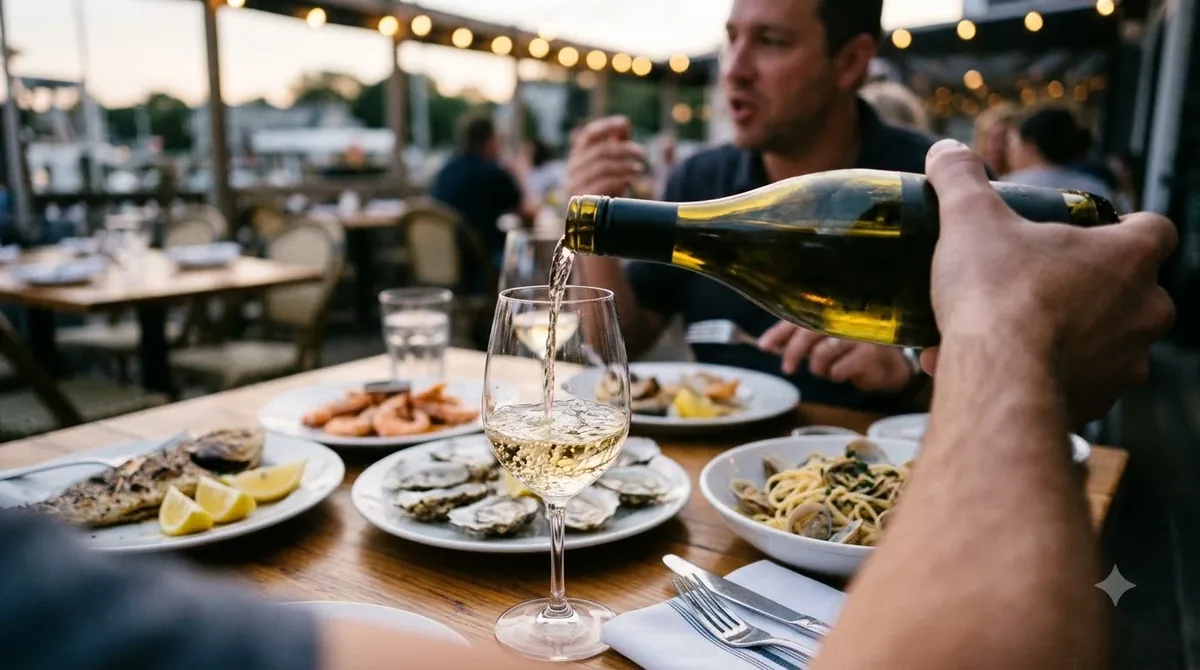
At a restaurant, you can ask for “the Hunter Valley Sémillon” or “the Sauternes with Sémillon” rather than relying on the grape name alone. If the wine list describes a white Bordeaux blend, the Sémillon may contribute body and texture while Sauvignon Blanc adds aromatic lift; if it lists Sauternes or Barsac, expect a sweet wine shaped by noble rot. Match the food to the wine’s sweetness and acidity: dry, crisp Sémillon can work with oysters, shellfish, white fish, chicken, salads, and goat cheese, while a sweeter Sauternes-style wine generally works best with food at least as sweet as the wine or with salty partners such as blue cheese. For a dish with sharp citrus or vinegar, choose a wine with enough acidity to keep the pairing balanced.
Tip: If the name catches in your throat, say “say-mee-YOHN” once before you order, then add the region: “a Hunter Valley Sémillon.” Naming the region shows the server which style you have in mind and makes the conversation more precise.
Serve lighter, unoaked Sémillon around 45–50°F, and fuller or oak-influenced white versions around 50–55°F. Sweet versions are usually best around 43–50°F. A standard white-wine glass is appropriate; a 5-ounce pour is a useful serving measure, and a 750-milliliter bottle provides about five such glasses. A wine served too cold can seem muted, while one served too warm may feel broader and less refreshing, so a small adjustment in the glass can help reveal the difference between a lean Hunter Valley style and a richer, barrel-influenced white. Let the wine warm slightly rather than leaving a white bottle on a warm table for an extended period.
After opening a still Sémillon, reseal it and keep it in the refrigerator; most still wines are best used within three to five days. Store unopened bottles on their sides in a cool place near 55°F, away from sharp temperature changes. For more context on the differences among grape varieties and wine styles, browse Wine by Type.
Frequently Asked Questions
Does Sémillon appear in sparkling wine?
Yes. Wine Enthusiast notes that Sémillon grapes are used in sparkling, white, and dessert wines, so the grape is not limited to still table wine. In a sparkling bottling, the finished style depends on the blend and the winemaking method, not on the grape name alone.
What is Sémillon Gris?
Sémillon Gris is a pink-skinned color mutation of Sémillon, rather than a different pronunciation of the same word. Wine Folly also identifies Sémillon Rose as a red-skinned mutation, showing that the variety has more than one berry-color form.
Where else is Sémillon grown beyond Bordeaux and Australia?
It is also planted in countries including South Africa, Chile, and Argentina. Decanter describes plantings across both North and South America as well as eastern Europe, so Bordeaux and Australia are central reference points rather than the grape’s only homes.
Where does the name Sémillon come from?
Collins traces the French word through an earlier form, “sémilion,” to the Gascon “semilhoun” and an older Provençal verb meaning “to sow.” The entry connects that word family with the Latin word for seed, which is a useful reminder that grape names often have long linguistic histories.
Is Sémillon the same grape as Sauvignon Blanc?
No. They are separate white-grape varieties that are often blended together, particularly in Bordeaux and Margaret River. Sémillon is generally valued for its body and texture, while Sauvignon Blanc is often chosen for its more assertive aromatic character.
Remember the sound as “say-mee-YOHN,” with the final syllable carrying the emphasis, and you will be understood in an American wine shop or restaurant. From a dry Hunter Valley white to sweet Sauternes, the name opens the door to a surprisingly broad range of wine styles.
More in Wine Types & Grapes
 Zinfandel Sugar Content: Dry Red vs. White Zinfandel GramsUpdated Nov 21, 2026
 Best Zinfandel Substitute Options for Sipping and CookingUpdated Nov 21, 2026
 Zweigelt Food Pairing: Best Dishes, Cheeses, and Serving TipsUpdated Nov 21, 2026
 Zinfandel Tannins Explained: How Structure Shapes Every BottleUpdated Nov 21, 2026
 Zinfandel Sweetness Level: Dry Red vs. Sweet White Zin ExplainedUpdated Nov 21, 2026
 Xinomavro Food Pairing: Best Dishes, Styles, and Serving TipsUpdated Nov 21, 2026