

We may earn a commission when you buy through links on this page, at no extra cost to you. Learn more.
Here is how to pronounce muscadet: say “muss-kuh-DAY,” with the stress on the final syllable. The French original sounds closer to “mews-kah-DEH,” and its stress lands on that same last syllable. Either version will be understood at an American restaurant or wine shop, so choose one and say it the same way every time. The most common mistake is stressing the first syllable, which makes an otherwise close pronunciation sound unfamiliar.
Muscadet is one of the most recognizable white wines from the Loire Valley, and it is also one that shoppers often hesitate over on a shelf or a wine list. The wine is dry, light-bodied, and high in acidity, which explains its popularity with seafood lovers. This guide covers the sounds of the word, where the name came from, and the practical details that help you order and serve it well. If you are comparing styles more broadly, the Wine by Type section places Muscadet alongside other white families.
Breaking Down the Word Muscadet Syllable by Syllable
The word has three syllables, which split naturally into mus, ca, and det. The stress falls on the final syllable in both English and French, so that is the anchor to remember. Once you place the emphasis correctly, the other two syllables are much easier to handle.
The first syllable is where most English speakers go wrong. The French u in “mus” is a rounded vowel: your tongue sits in the position for “ee,” but your lips round as if you were saying “oo.” English has no exact match, so most people settle on “muss,” as in the everyday American version, or “moos,” which is a common alternative. Both are understood, and neither will mark you as a beginner. The key is to keep that first vowel short rather than stretching it into a long “moo.”
The middle syllable is short and unstressed. The c sits before an a, so it is a hard k sound, as in “cat.” Some people soften it into an s because of the way the word looks on paper, but the k is what keeps the word crisp. Keep the middle syllable quick and relaxed, closer to “kuh” than to a full “cah,” so that the stress can carry the word forward to the end.
The final syllable, det, carries the emphasis. In English that becomes “day,” which is how Wine Folly’s guide writes it. In French the same syllable is pronounced “deh,” with a short e, and the final t is not spoken. French often writes final consonants that it does not sound, so the spelling can look longer than the word actually is when spoken aloud.
The English Version and the French Version Compared
Most English-speaking drinkers should aim for the simpler American version, but the French pronunciation is worth recognizing so you can follow a sommelier or an importer who uses it. The two versions differ mainly in their vowels, not in their rhythm.
The everyday English version
The version most people use is “muss-kuh-DAY,” which is how Wine Folly spells it out in its key facts. The same guide describes the wine as completely dry and fairly light in build, so the name sits comfortably beside that style. You will also hear “moos-kah-DAY” in some shops and restaurants, and that is perfectly acceptable. Pick one and keep it consistent, so the name sounds deliberate rather than tentative.
The French version
In French, the word sounds closer to “mews-kah-DEH.” The first vowel is the rounded u described above, the middle vowel is a light, open a, and the last syllable ends in a soft, short “eh” with the t dropped. Native speakers do not push the last syllable hard, but it still carries the weight because it is the final full syllable of the word. You do not need a perfect French accent to be understood, and the English version is the one most people will recognize at once.
A small note on the grape’s label name
The grape is also known by the shorter label name “melon B.” The Punch insider guide notes that this name is pronounced “melon bey,” an unintended nod to Beyoncé. You will not need this detail to order a bottle, but it helps when you see the grape on an import list or in a tasting note.
Why the Name Sounds Like Muscat but Is Not Related
Muscadet shares its opening sound with Muscat, and that similarity leads many people to assume the two are cousins. They are not. Muscadet is a dry white made from a single grape, while the Muscat family is known for aromatic wines that are often sweet, so the overlap in names is a coincidence rather than a shared origin.
Wine Folly draws a firm line between the two, separating Muscadet from Moscatel and Moscato as well as from Muscat. VinePair offers a likely explanation for the name itself, suggesting it refers to a musky aroma the wine had while it traveled, even though the finished wines are not especially musky. The name, in other words, is a trace of the wine’s journey rather than a description of the glass in front of you.
The grape has a more interesting path. According to Wine Folly, Melon de Bourgogne began in Burgundy before reaching the Loire, and it is a child of Pinot Noir and the nearly extinct Gouais Blanc. VinePair adds that a severe cold snap in 1709 wiped out many vineyards, and growers replanted mostly with white varieties, Melon de Bourgogne among them, because it tolerates cold well. Because the grape is related to Chardonnay, it helps to feel comfortable with how to pronounce chardonnay too, since the two names often appear side by side on wine lists.
What Muscadet Tastes Like and the Facts Behind the Label
Muscadet tastes lean and citrusy, and the appellation has four named zones that appear on bottles. Knowing both points makes it easier to choose a bottle that fits your meal.
Wine Folly’s tasting notes point to sharp acidity and a mineral, citrus-driven profile. Punch’s guide describes a slim, zesty style and compares it to Chablis sold for less. Together, these descriptions point to a wine that is bright and focused rather than fruity or heavy, which is why it works so well as an everyday white.
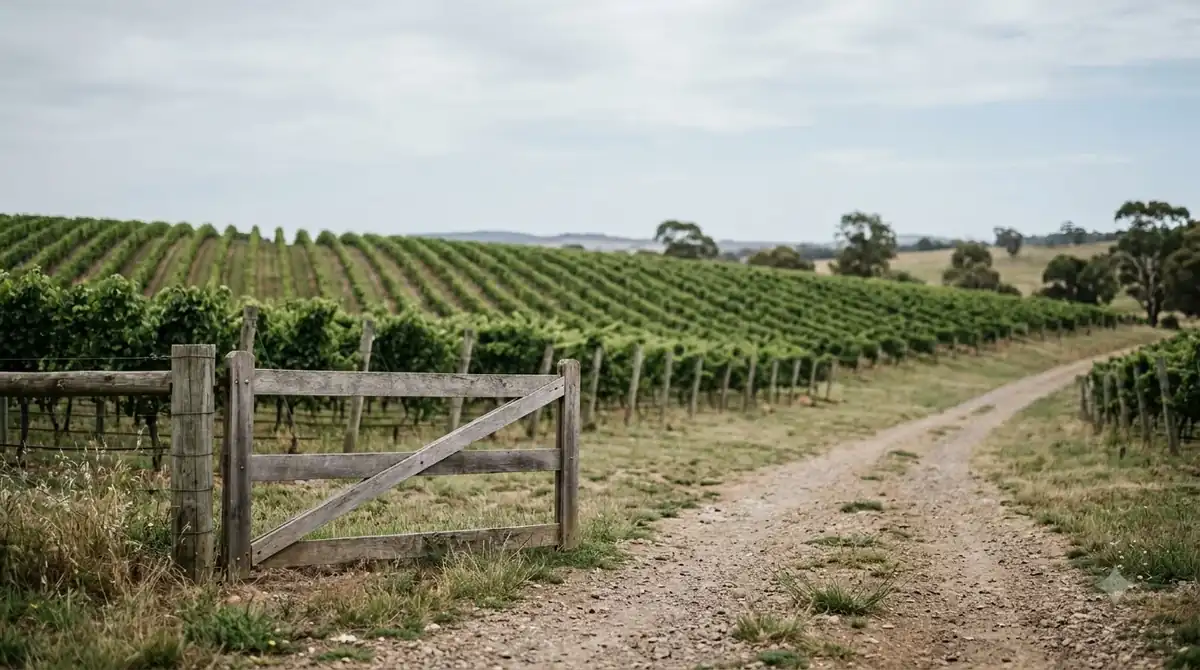
The appellation itself has a clear structure. Divineloire notes that every bottle must come from Melon de Bourgogne alone, and the zone stretches over around 9,000 hectares and about fifty communes. The same regional trade site puts the number of winegrowers at more than 400 and dates the generic appellation to 1937. Four names appear on labels within this system: the generic Muscadet, Muscadet Sèvre et Maine, Muscadet Côtes de Grandlieu, and Muscadet Coteaux de la Loire.
The table below collects the key figures in one place. Sèvre et Maine is the largest zone, and VinePair credits it with about 80 percent of the region’s wine. The same article notes that Americans are most likely to encounter this zone, which explains why it is often the first name you spot on a shelf.
| Feature | Typical figure |
|---|---|
| Grape variety | Melon de Bourgogne, 100 percent of the wine |
| Generic appellation established | 1937 |
| Vineyard area | About 9,000 hectares |
| Communes covered | About 50 |
| Winegrowers | More than 400 |
| Named appellations on labels | 4 |
| Share of output from Sèvre et Maine | About 80 percent |
| Serving temperature | 45 to 50°F |
| Opened still bottle in the fridge | 3 to 5 days |
How Sur Lie Aging Changes the Texture in Your Glass
The term sur lie tells you the wine rested on spent yeast, which gives it a rounder and creamier feel than a plain bottling. Understanding that one term helps you predict how a bottle will drink before you open it.
According to Wine Folly, sur lie means the wine stayed in contact with suspended spent yeast cells, which produces a creamy texture and a yeasty flavor. The longer that contact lasts, the richer the texture tends to become. VinePair credits that contact with building both flavor and weight, and says the trapped carbon dioxide leaves a faint sparkle on the palate. Those two effects explain why some Muscadets feel plush and others feel sharp and clean.
Aging on lees matters most for the top examples. Wine Folly also points out that top producers often keep their finest bottles on lees for two or three years. Punch’s guide links the depth of the wine to lees contact and calls some bottles plush. For everyday drinking, a younger bottling is the natural choice, while a more serious bottle rewards a bit of patience.
Tip: If you want a dependable first bottle, look for a Muscadet Sèvre et Maine labeled sur lie. That combination offers the clean acidity of the style along with the textured finish that lees aging adds, which makes it a practical choice for a seafood dinner.
Serving, Storing, and Ordering Muscadet Well
Serve Muscadet cool, at roughly 45 to 50°F, and plan to finish an opened bottle within three to five days. Those two habits do more for the glass than any special equipment.
Muscadet is a light white, so it belongs in the cooler range for still wines. If the bottle has been very cold, take it out of the fridge a few minutes before pouring, since an icy serve can mute the citrus and mineral notes that make the wine interesting. A standard pour of about five ounces gives you roughly five glasses from a 750-milliliter bottle, which is a helpful figure when you are planning dinner for a group.
Storage follows the same logic. Keep unopened bottles on their side in a cool spot near 55°F, away from heat and bright light. Once opened, reseal the bottle and refrigerate it. Still wines like Muscadet typically keep three to five days, which gives you a comfortable window to finish the bottle over a couple of meals rather than in one sitting.
Ordering is easier when you understand what the label is telling you. Many bottles carry a cuvée name, which is the producer’s name for a particular bottling, and if that word feels awkward, see how to pronounce cuvee. On a restaurant list, look for the appellation first, then the sur lie or cru terms, and say the name with the stress you have practiced. A clear, confident request will serve you better than perfect vowels.
Food Pairings That Show Off This Wine
Muscadet matches best with shellfish and other briny seafood, where its acidity and mineral edge feel natural. Richer, older bottles can stretch into heavier dishes.
Wine Folly points to seafood as the main match, with bivalves like mussels and oysters at the front of the list. It also suggests beurre blanc, zesty vinaigrettes, and a range of cheeses, herbs, and vegetables, and it names Moules Frites as a classic regional match. Punch’s guide extends the list to langoustines and shrimp, arguing that the mineral edge works with the salty liquid shellfish release.
The reason these pairings work comes down to acidity. A common guideline is that acidic food calls for a wine at least as acidic as the dish. Muscadet’s high acidity lines up with a squeeze of lemon on oysters or a sharp vinaigrette on a salad. Richer, aged bottles can handle creamy sauces on white fish because their lees-driven texture adds weight, while younger bottles stay best with simple preparations.
For an easy dinner, build the menu around the wine rather than the other way round. Serve it with a plate of raw oysters, steamed mussels in white wine, or grilled white fish finished with lemon and herbs. A lean, cold glass makes each of those dishes taste brighter and keeps the meal feeling light even when the sauce is rich.
Frequently Asked Questions
Is Muscadet a sparkling wine?
No. According to the regional trade site divineloire, the Muscadet appellation covers only dry still whites made from Melon de Bourgogne, and sparkling wines sit outside its rules. A bubbly wine from the same area would therefore carry a different designation.
Where is the Muscadet region located?
Geographically, the zone sits to the south and east of Nantes, close to the Atlantic, and VinePair places the Sèvre and Maine rivers at its center. Both rivers are tributaries of the Loire. The land is fertile and low-lying, with some rolling hills. Remembering those two rivers is a handy way to place the zone on a map.
How long can Muscadet age?
Most bottles are made for drinking young, but the top examples can last much longer. Punch’s guide says Pierre Luneau-Papin’s Excelsior can reach 15 years or more after 24 months on its lees. It also says Domaine de la Pépière’s Clos des Briords can keep for a decade or more.
What are the crus of Muscadet?
Crus are named zones that carry their own identity within the appellation system. VinePair lists seven of them, including Clisson, Gorges, and Goulaine, and notes that three were named in 2011 and four in 2019. Divineloire singles out Clisson and Gorges as communal crus that it describes as more structured, with ageing potential.
Why does Muscadet taste salty?
Wine Folly notes that vineyards closer to the sea often show a saline note from salty sea breezes. Divineloire describes the soils as metamorphic rock, specifically gneiss, schist, and granite, which sets the stage for the mineral character many drinkers notice.
Saying muscadet correctly comes down to one habit: put the stress on the final syllable and keep the middle short. Whether you choose the everyday English version or the French one, the word will sound natural after a few practice rounds. From there, you can focus on what matters most, which is picking a bottle that suits the meal in front of you.
More in Wine Types & Grapes
 Zinfandel Sugar Content: Dry Red vs. White Zinfandel GramsUpdated Nov 21, 2026
 Best Zinfandel Substitute Options for Sipping and CookingUpdated Nov 21, 2026
 Zweigelt Food Pairing: Best Dishes, Cheeses, and Serving TipsUpdated Nov 21, 2026
 Zinfandel Tannins Explained: How Structure Shapes Every BottleUpdated Nov 21, 2026
 Zinfandel Sweetness Level: Dry Red vs. Sweet White Zin ExplainedUpdated Nov 21, 2026
 Xinomavro Food Pairing: Best Dishes, Styles, and Serving TipsUpdated Nov 21, 2026