

We may earn a commission when you buy through links on this page, at no extra cost to you. Learn more.
The best ice wine food pairing balances the wine’s intense sweetness with salty, rich, spicy, or less-sweet foods that let its bright acidity show through. Try blue cheese, chicken liver pâté, foie gras, gently spicy Thai curry, or fruit desserts that are less sweet than the wine. A small, well-chilled pour can complement a savory course just as naturally as the final dessert.
Ice wine is often poured at the end of dinner, but treating it only as a dessert wine misses some of its most useful matches. Its concentrated fruit, pronounced sweetness, and refreshing acidity give it range at the table. The best pairing depends on the wine’s grape, the intensity of the food, and whether the dish leans salty, creamy, spicy, or sweet.
What Makes Ice Wine Work With Food
Ice wine pairs well when a dish offers a counterpoint to its sweetness or echoes its ripe fruit without competing with it. Salt, savory richness, gentle heat, and moderate sweetness can each create a different kind of balance.
True Icewine is made from grapes left on the vine until a hard freeze concentrates their juice. As Decanter’s Icewine explainer explains, the grapes are picked and pressed while frozen, leaving a juice rich in sugar; the main grapes include Riesling and Vidal Blanc. That concentration gives the wine a distinctly sweet profile, often with citrus, tropical fruit, honey, or marmalade notes. Its acidity is important: without freshness, concentrated sweetness could feel heavy beside food.
Think about the first impression of the dish. Salt makes fruit flavors seem more vivid, fat and creamy textures can meet the wine’s richness, and acidity keeps a bite from feeling dull. A dish that is already very sweet does the opposite: it can make the wine seem less expressive. The useful starting point is not a complicated matching chart but a simple question: what feature in the food will balance the wine?
For a broader framework that also applies to dry wines, the site’s Wine Pairing guide explains how sweetness, acidity, salt, and texture affect a match. Use those principles as a starting point, then account for Icewine’s unusual concentration and small serving size.
Savory Dishes That Balance Sweetness
Salty, savory foods are among the clearest partners for Icewine because they draw attention to its fruit while softening the perception of sweetness. Choose dishes with enough flavor and texture to stand beside the wine rather than disappear under it.

Chicken liver pâté is a practical first choice: its creamy texture and savory depth contrast with the wine’s honeyed fruit. For a richer first course, foie gras is a classic option. The combination works especially well when the plate includes a lightly toasted brioche point or an unsweetened accompaniment, rather than a sweet jam that would add another layer of sugar. Keep the portion modest so the wine remains part of the conversation rather than turning the course into a heavy tasting.
Salty snacks can be just as successful as formal appetizers. Try thin slices of prosciutto, salted nuts, or crisp crackers alongside a small pour, adding a few slices of ripe pear if the plate needs freshness. The salt gives the fruit in the wine more definition; the pear creates a bridge to stone-fruit and citrus notes. Avoid sweet glazes and sticky chutneys, which can push the pairing toward excess sweetness.
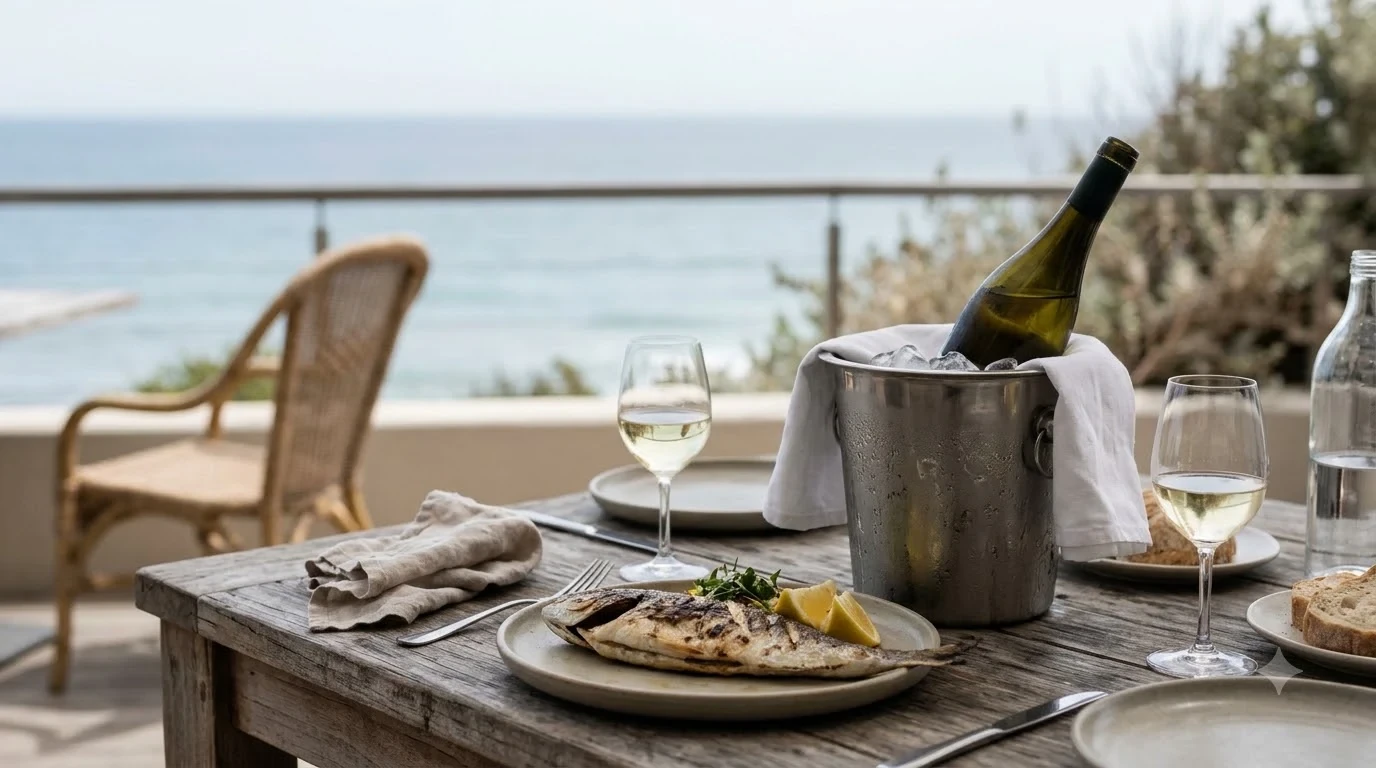
For a seafood course, choose carefully. Icewine can accompany a salty or richly seasoned bite, but it is not a universal match for delicate, briny shellfish or simply poached fish. When the main dish is a clean, dry-style seafood preparation, a high-acid white such as Albariño may be a better fit; see this Albariño food pairing guide for ideas. Save Icewine for a richer seafood appetizer, a pâté course, or a small tasting plate where its sweetness has a clear role.
Cheese and Charcuterie With Ice Wine
Blue cheese is one of the most reliable cheese matches for Icewine, especially when the cheese is salty, full flavored, and served in a small portion. The sweetness softens the cheese’s sharp edge, while acidity helps keep the rich combination lively.
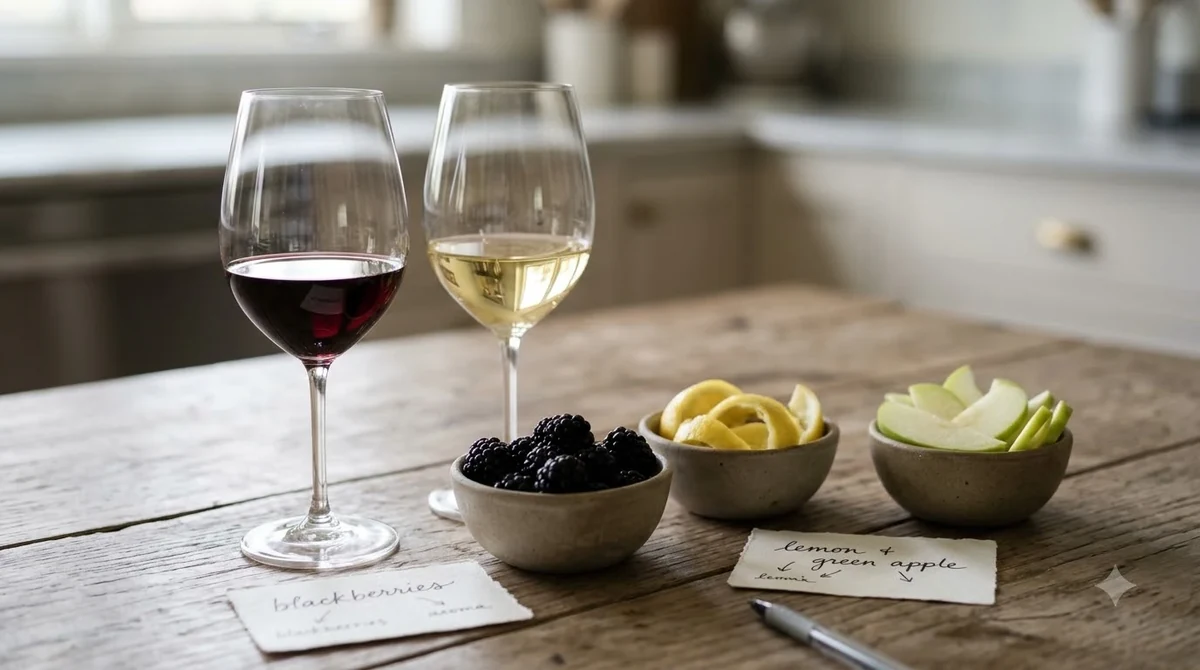
Try Stilton or Roquefort with a white Icewine made from Riesling or Vidal. A little blue cheese on a plain cracker is enough; extra honey or sweet fruit preserves are usually unnecessary. Wine Country Ontario’s Icewine pairing recommendations specifically highlight blue cheese with VQA Icewine, and Wine Enthusiast describes a Vidal Icewine alongside Castelvetrano olives stuffed with blue cheese. That pairing suggests a useful direction: salty, savory, and textured accompaniments can give the wine something to balance.
Young, soft cheeses offer a gentler route. Serve a mild fresh cheese with plain crackers, sliced apple, or a few grapes, then pour a small measure of Icewine. The mild flavor lets the wine’s aromas stay prominent, while the creaminess makes the mouthfeel feel more integrated. For a cheese board, put the blue cheese at one end and the milder cheese at the other, with separate plain crackers so the strongest cheese does not dominate every bite.
Charcuterie can work when the selection favors savory depth over smoke or aggressive spice. Chicken liver pâté and foie gras are especially suitable, while a small amount of cured ham can provide the salt needed to counter the wine’s sweetness. Keep pickles, mustard, and pepper-heavy salami in separate bites; their sharpness can distract from the wine. A simple board with one blue cheese, one soft cheese, pâté, and unsalted crackers is often more coherent than a crowded assortment.
Spicy Food and Fruit-Forward Sauces
Icewine can pair well with spicy food because its sweetness and cool serving temperature contrast with chili heat. The best results come from moderate spice and aromatic seasoning, not a dish so hot that it overwhelms every other flavor.
Wine Country Ontario recommends spicy crunchy chicken and Thai curry as savory partners. A lightly spicy Thai red curry, for example, brings fragrant herbs, coconut richness, and chili warmth; a sip of Icewine offers a sweet, fruity counterpoint. The combination is most balanced when the curry has noticeable heat but still allows ginger, lime leaf, lemongrass, or basil to come through. A very hot sauce can make the wine seem less refreshing and flatten the subtle fruit notes.
Try the same principle with glazed chicken wings, chili-lime chicken, or a mildly spicy pork dish. Keep the glaze savory, with only a restrained touch of honey or brown sugar, because the wine already supplies substantial sweetness. If the recipe includes a sharp vinegar finish, taste the food with the wine before serving; a high-acid sauce can make the overall pairing feel overly tart. A little salt and a crisp, browned surface often provide a better counterbalance than extra sugar.
Grape choice can influence the result. Riesling Icewine generally brings more acidity than Vidal, according to Wine Country Ontario, so it can feel especially refreshing with aromatic dishes that include lime or ginger. Vidal’s rounder, tropical-fruit character can suit creamy sauces and gently spiced chicken. Keep chili at a moderate level and pour the wine cold in small amounts so it remains a contrast rather than another source of intensity.
Desserts: Keep the Wine Sweeter
Fruit desserts and creamy desserts are dependable matches, provided the dessert is no sweeter than the Icewine. If the plate has more sugar than the wine, the wine can taste muted and less balanced.
Start with fruit-based desserts such as peach cobbler, an unsweetened fruit pie, poached pear, or baked apple. Their fruit flavors echo the wine without burying it under icing or syrup. A peach cobbler with a lightly sweetened biscuit topping is a natural match for a Vidal Icewine with stone-fruit character; a citrus tart with restrained sugar can work with a lively Riesling version. Keep toppings simple and avoid adding a scoop of very sweet sauce or a thick layer of frosting.
Creamy desserts can also work because their texture gives the wine a rich partner. Crème brûlée, plain cheesecake, panna cotta, and lightly sweetened vanilla custard are good places to start. A thin caramelized sugar top on crème brûlée adds a crisp contrast, but the custard beneath should remain the main flavor. For cheesecake, choose a plain or fruit-topped version rather than one covered in chocolate syrup or candy pieces.
Chocolate deserves a little thought. Wine Country Ontario suggests white chocolate with Riesling or Vidal Icewine and dark chocolate with Cabernet Franc or another red Icewine. That is a useful distinction because chocolate styles have very different levels of bitterness and richness. Serve small pieces rather than a large slice of cake, and let the wine remain the sweetest part of the pairing. If the chocolate is intensely bitter, use a red Icewine with enough fruit to meet it rather than expecting every white style to work equally well.
Choose the Bottle and Serve It Well
Choose Icewine by the grape and the food’s intensity, then serve it cold enough to feel crisp without hiding its aroma. A modest pour is usually more effective than a full glass because the wine is concentrated and sweet.
Riesling and Vidal are the two main Icewine grapes described by Decanter and Wine Country Ontario. Riesling tends to have more acidity, making it a strong choice with fruit desserts, citrus accents, or moderately spicy food. Vidal usually gives a broader, more tropical-fruit impression and can suit creamy desserts, mild cheeses, or dishes with coconut. Other grapes are also used, including Cabernet Franc, which Ontario highlights as an option for red Icewine and dark chocolate pairings.
Serve sweet Icewine at about 43–50°F. Wine Country Ontario suggests chilling the bottle in an ice bucket for 15 minutes or refrigerating it for two hours, and recommends a traditional white wine glass to show the bouquet. Its suggested serving amount is 1.5 ounces per person, a practical size for a tasting alongside a course. Pour a little at a time; a large glass can warm before the wine is finished and can make the sweetness feel tiring.
| Serving detail | Practical guideline | Why it helps |
|---|---|---|
| Serving temperature | 43–50°F | Preserves a crisp impression while allowing fruit aromas to show |
| Ice-bucket chill | 15 minutes | A quick option before a course |
| Refrigerator chill | 2 hours | A convenient planned chill |
| Pour size | 1.5 ounces per person | Leaves room for a rich wine alongside food |
Think about the whole meal, not just one bite. Icewine often works best as a small course between a savory plate and dessert, or as the final pour with cheese. If dinner includes a main course built around tomato sauce or grilled meat, choose a dry wine for that dish and save Icewine for the cheese plate or dessert. A fruit-forward red such as Barbera may be a better direction for tomato-based food; the Barbera food pairing guide can help plan that course separately.
Tip: Set out the cheese or dessert before you pour. Taste one bite first, take a small sip of Icewine, and adjust the food portion or sweetness before serving everyone.
Frequently Asked Questions
These answers cover a few practical details that can help with buying, pouring, and saving a bottle beyond the meal itself.
Is Icewine the same as late-harvest wine?
No. Icewine is made from grapes that freeze naturally on the vine and are harvested and pressed while frozen. Under Ontario VQA rules, the harvest must take place at or below minus 8°C, and the juice must average at least 35° Brix; late-harvest wines do not necessarily meet those conditions.
Why are Icewine bottles often smaller than regular wine bottles?
Frozen grapes yield very little concentrated juice. Wine Country Ontario says it takes about 3.5 kilograms of Riesling grapes or 3 kilograms of Vidal grapes to produce one 375-milliliter bottle, while the same quantity of grapes would make roughly six to seven times as much table wine.
Can Icewine be used in a cocktail?
Yes. Wine Country Ontario lists a VQA Icewine Royale made with 1 ounce of red Icewine and 3 ounces of sparkling wine, finished with a raspberry. The small Icewine measure adds sweetness and fruit while the sparkling wine keeps the drink lively.
Does Germany produce Eiswein every year?
No. The grapes must remain on the vine until a sufficiently cold freeze arrives, and that weather is not guaranteed each season. Wine Country Ontario notes that even Germany cannot produce Icewine in every vintage, which is one reason availability can vary.
How long can an opened bottle of Icewine be kept?
Wine Country Ontario says an opened bottle can keep for several weeks when it is sealed and refrigerated. Close it promptly after pouring and keep it cold between servings so the remaining wine is protected from excess air and warmth.
Icewine deserves a place beyond the dessert course: pair it with salty cheese, savory pâté, or moderate spice, then finish with a dessert that stays less sweet than the wine. Keep the pour small and the bottle well chilled, and its balance of concentrated fruit and acidity can make a memorable match from the first course to the last.
More in Food & Wine Pairing
 Risotto With White Wine Recipe: Make a Creamy Dinner at HomeUpdated Nov 20, 2026
 Wassail With Wine Recipe for a Festive Spiced Holiday DrinkUpdated Nov 20, 2026
 Spritz Veneziano Recipe: Make a Classic Venetian Aperitivo at HomeUpdated Nov 20, 2026
 Summer Wine Punch Recipe for Easy Homemade EntertainingUpdated Nov 20, 2026
 Bishop Recipe: How to Make a Bright, Citrus-Forward Red Wine CocktailUpdated Nov 20, 2026
 Wine Cupcakes Recipe: Bake Rich Chocolate Cupcakes at HomeUpdated Nov 20, 2026