
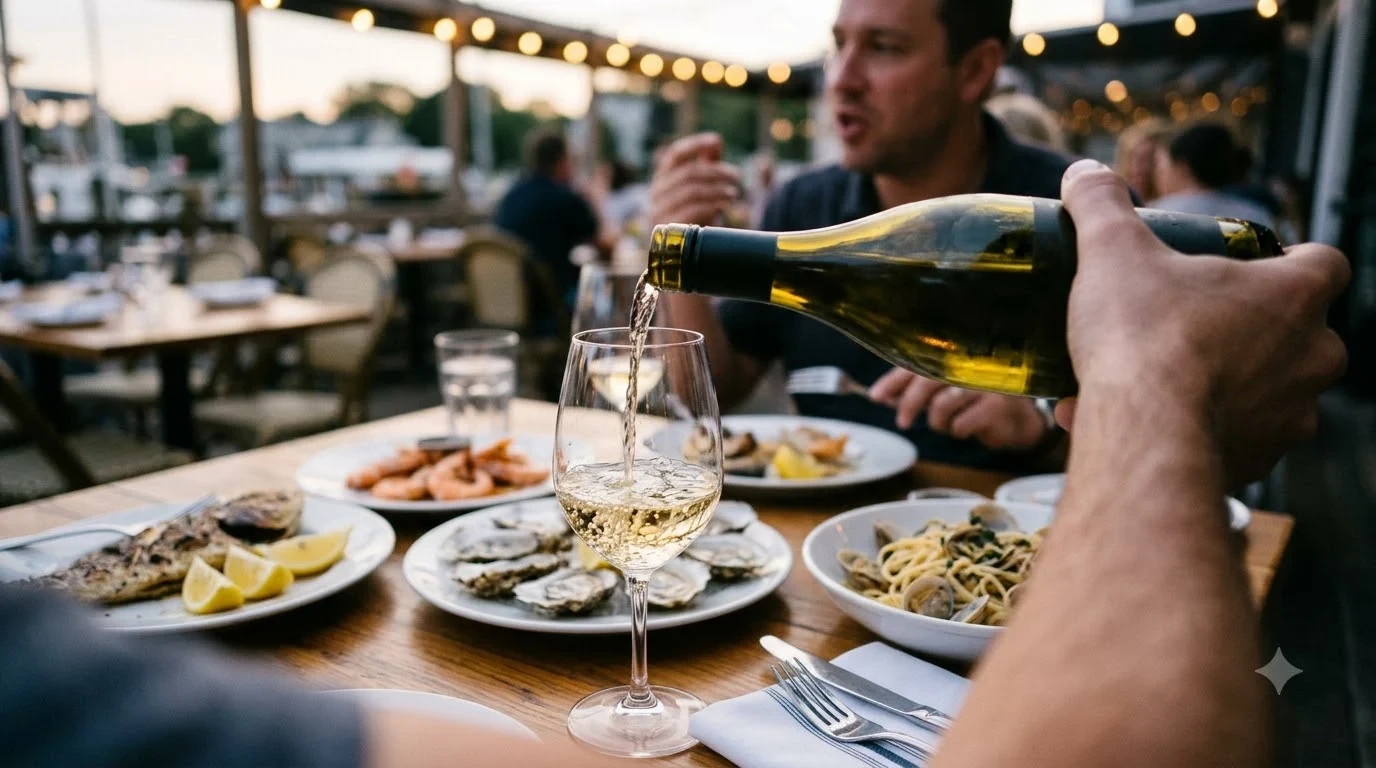

We may earn a commission when you buy through links on this page, at no extra cost to you. Learn more.
Nosiola wine is a white made from Trentino’s most distinctive native grape, and it comes in two very different styles: a light, dry white and a rare amber dessert called Vino Santo. The grape grows mainly in the Valle dei Laghi, a lake valley in northern Italy, on terraced hillsides. Dry Nosiola is light-bodied with citrus, apricot and hazelnut notes. Serve dry Nosiola at 45 to 50°F and Vino Santo at 43 to 50°F.
Nosiola wine rarely gets the attention given to Italy’s famous reds, yet it is one of the most characterful white wines in the north. Its story runs from a grape that nearly disappeared to a dessert made from air-dried clusters that takes years to reach the glass. This guide covers where it grows, what the dry style is like, how Vino Santo is made, how to serve and store bottles, and which foods suit each style. Once you see how small and specific this valley wine is, its quiet character makes more sense.
What Is Nosiola Wine?
Nosiola wine is a white made from Trentino’s most distinctive indigenous grape, and it appears in dry and sweet forms.
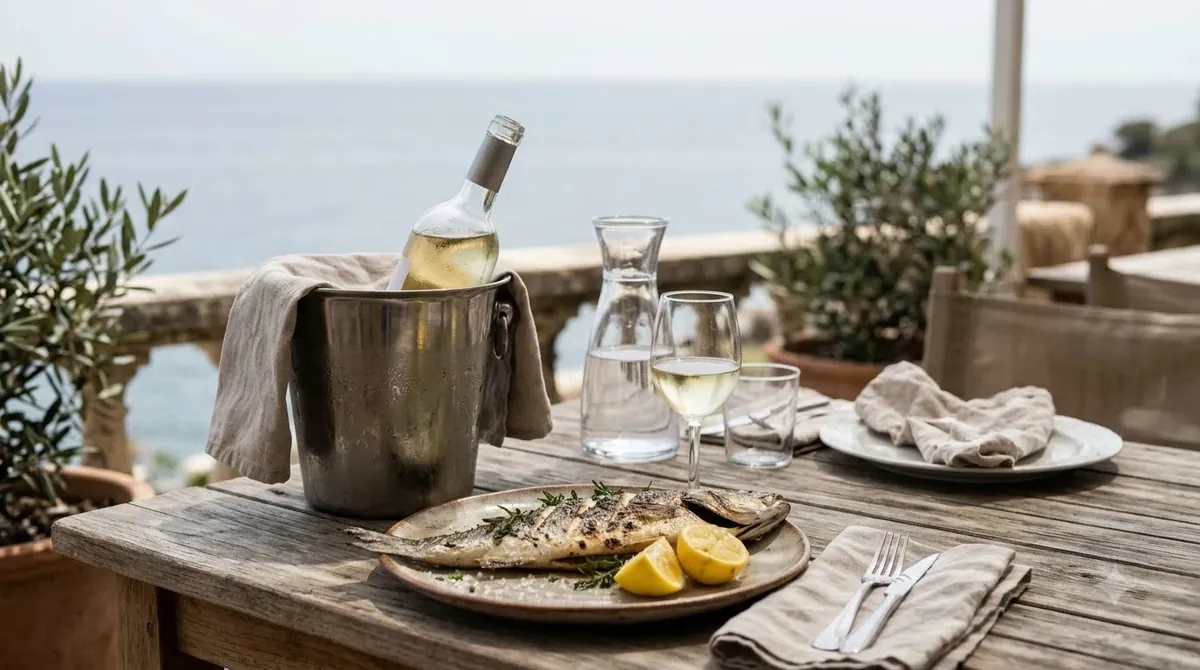
Nosiola wine comes from a single white grape closely tied to Trentino, the southern part of the Trentino-Alto Adige region in northern Italy. Wine with Seth, an online wine education site, calls it the region’s most distinctive indigenous white grape, and it is central to local identity. Producers make it as a dry varietal, as a component in blends, and as the base for Vino Santo, the dessert wine that gives the grape its best-known reputation. For a deeper look at the vine itself, read the nosiola grape profile.
The name is generally traced to the Italian word for hazelnut, nocciola. Wine with Seth links the name to that hazelnut association, and the nutty character shows up in many glasses. In a young dry Nosiola, that hazelnut note is typically a varietal trait rather than the result of oak or long bottle aging. Italy Segreta, an Italian travel and food magazine, adds that dry bottles show apple, lemon, brown butter and minerality when young, and they develop nutty notes as they age.
The grape also has deep roots. Wine with Seth notes historical references to it dating back to 1800, and DNA analysis has linked it to Rèze, an indigenous Swiss variety. That genetic link points to old alpine viticulture rather than a recent import. Despite that heritage, Nosiola faced a long decline. According to Wine with Seth, its plantings fell from 193 hectares at the turn of the millennium to roughly 65 to 79 hectares by the 2010s, largely because the vine gives low yields and ripens late.
Where Nosiola Grows in Trentino
Nosiola grows on terraced hillsides in the Valle dei Laghi and nearby zones, usually between 500 and 1,000 metres above sea level.
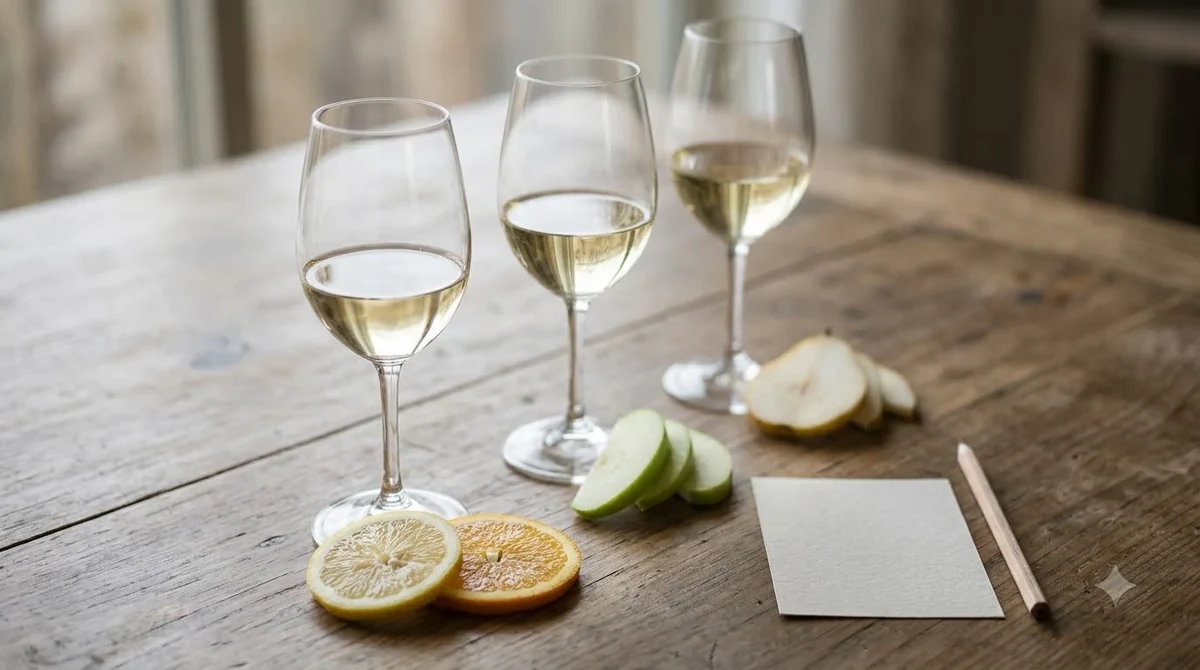
The heart of Nosiola country is the Valle dei Laghi, a valley of alpine lakes set between Trento, the Sarca valley and Lake Garda. Wine with Seth lists the core zones as Valle dei Laghi, Toblino, Lavis, Pressano and Sorni, and it places vineyards between 500 and 1,000 metres in elevation. Growers plant on terraced slopes known locally as frate, which keeps the vines on steep, sunny ground. The regional food-and-wine site Taste Trentino describes the Valle dei Laghi and the Toblino plain as the areas where Nosiola is expressed at its best.
Soil and climate shape the wine just as much as altitude does. Wine with Seth describes fluvio-glacial soils mixed with marl, chalk and porphyritic rock, and it credits breezes from Lake Garda with moderating the alpine climate. Nosiola ripens in the mid to late season, but it buds early, which leaves it open to spring frost. Humidity is its other enemy, since the vine is sensitive to damp conditions and prone to fungal disease in wet years. Growers therefore look for sites with good airflow, and a sheltered, poorly ventilated slope is usually a poor choice.
Timing also defines the grape’s identity. Taste Trentino notes that for Vino Santo, the grapes are harvested at full ripeness, dried on racks called aréle, and crushed only in the days before Easter. In the villages near Castel Toblino, a local custom marks the start of the farming season with the new white wine, which the regional site describes as a ritual welcoming the return of country life. Traditions like these explain why Nosiola stays closely tied to specific villages rather than to a wide commercial map.
Dry Nosiola: Flavor, Body and Structure
Dry Nosiola is a light-bodied white with fresh acidity, citrus and apricot fruit, and a subtle hazelnut edge.
Dry Nosiola is the style most drinkers meet first. Wine with Seth describes it as a light-bodied white with citrus, apricot, peach and hazelnut aromas. Taste Trentino describes a straw-yellow wine with greenish highlights, a fine bouquet of white flowers and unripe fruit, and a dry, pleasantly fresh palate. Those details place the wine between a crisp Italian white and a more textured, mineral-led bottle, which is why it suits both everyday meals and more considered dinners.
Italy Segreta offers a useful comparison. The magazine suggests that Nosiola from Trentino could be Italy’s answer to Burgundian Chardonnay, and it notes that the dry style often shows apple, lemon and minerality in youth before developing nutty notes with bottle age. That makes Nosiola a good choice for drinkers who like Chardonnay-style texture without a heavy oak profile. Its restraint is part of the appeal, especially for people who find warm-climate whites too fruity or too soft.
Production rules shape what reaches the glass. Wine with Seth notes that a 100% varietal Nosiola under Trentino DOC is limited to a yield of 14 tonnes per hectare and needs a minimum of 10.5% alcohol. Those limits keep the wine concentrated and help explain why bottles are modest in volume. Producers have also begun exploring other styles, and Wine with Seth notes that sparkling and skin-macerated versions exist. For another high-acid white with a mineral edge, compare it with arinto wine from Portugal.
Vino Santo: The Dried-Grape Dessert Style
Vino Santo is a rare sweet wine made from dried Nosiola grapes, and it is one of the most distinctive dessert styles in northern Italy.
Vino Santo starts with careful selection. According to Taste Trentino’s Vino Santo profile, only loose, straggly clusters are chosen, the ones with large, widely spaced berries that ripen to a high sugar level. The bunches are then laid on racks, where time, air and noble rot combine to shrink them. The change is dramatic. Grapes lose 50 to 80 percent of their weight, so 100 kilograms of fresh fruit yields only 15 to 18 litres of must. That concentration explains both the wine’s density and its scarcity.
The must then moves into small oak barrels, where natural fermentation begins and progresses very slowly because the sugar content is so high. Taste Trentino states that the wine must age for a minimum of 50 months, which gives the flavors time to settle and deepen. Wine with Seth sets the alcohol floor at 16%, which is well above the level of a typical dry white. The result is a sweet wine with enough acidity and structure to avoid feeling flat or heavy.
In the glass, Taste Trentino describes an amber-yellow wine with intense notes of raisins, dates and dried figs, finishing velvety. Italy Segreta adds notes of hazelnut, honey, caramel and dried apricot. Those flavors make Vino Santo a natural partner for almond desserts and dried fruit cakes. Italy Segreta also points out that Vin Santo is traditionally associated with Tuscany, where it is made from Trebbiano and Malvasia, and that the Trentino version can offer better value for money. That makes it an attractive way to explore the dessert family.
Dry Nosiola and Vino Santo Side by Side
The two styles share one grape and one valley, but they differ sharply in alcohol, handling and serving temperature, as the table shows.
| Feature | Dry Nosiola | Vino Santo |
|---|---|---|
| Minimum alcohol | 10.5% (varietal, Trentino DOC) | 16% |
| Grape handling | Fresh fruit, fermented dry | Grapes dried on racks, losing 50 to 80% of their weight |
| Aging | Nutty notes develop with bottle age | Minimum 50 months in small oak barrels |
| Serving temperature | 45 to 50°F | 43 to 50°F |
| Signature aromas | Citrus, apricot, hazelnut | Raisins, dates, dried figs |
| Typical pairing | Lake fish, light cured meats, fresh goat’s cheese | Almond desserts, zelten, blue cheese |
The table makes the contrast concrete. Dry Nosiola sits within the normal range for Italian whites, with a minimum of 10.5% alcohol under the varietal rules. Vino Santo reaches at least 16%, a level usually associated with richer and more concentrated wines. Both styles come from the same vineyards, yet the fermentation, the aging and the pours are completely different.
For a shopper, that means choosing by occasion. A dry bottle works for an aperitif or a light lunch, while Vino Santo is a dessert wine meant for small glasses after a meal. Because the sweet style is produced in limited quantities and takes years to reach the market, a bottle is best treated as a special purchase rather than a routine pour. Keep that in mind when planning a dinner menu, since one bottle of dessert wine can carry an entire course.
Serving and Storing Nosiola Wine
Dry Nosiola belongs in the light-white serving range, while Vino Santo sits in the sweet-white range, and both store best lying down in a cool room.
For dry Nosiola, the right serving range is 45 to 50°F, the same window used for light whites. Pull the bottle from the fridge a few minutes before pouring so the citrus and hazelnut aromas have room to open. Vino Santo belongs in the sweet-white range, 43 to 50°F, and it is usually poured in small glasses. Serving it too cold mutes the raisin and dried-fig notes that define the wine.
Store unopened bottles on their side in a cool room near 55°F, away from heat and light. A standard 750 ml bottle holds about five 5-ounce pours, which makes it easy to plan a small group. Dry Nosiola is a bottle that often gets finished in one evening, but leftovers keep reasonably well when recorked and refrigerated. Vino Santo, poured in smaller amounts, lasts through a dessert course with less pressure to finish it quickly.
Tip: Chill dry Nosiola to 45 to 50°F and recork any leftovers the same night. An opened still wine keeps about 3 to 5 days in the fridge, so finish the bottle within a few meals.
Food Pairings for Nosiola Wine
Nosiola’s freshness suits lake fish, cured meats and fresh cheese, while Vino Santo works best with almond desserts and blue cheese.
Dry Nosiola’s acidity and light body make it a natural match for delicate food. Taste Trentino recommends it as an aperitif and with breaded perch, steamed trout, unsmoked cured meats and fried courgette flowers. Wine with Seth lists freshwater fish from alpine lakes, Trentino-style polenta, fresh goat’s cheese, light cured meats and almond pastries. The general rule is that acidic food needs a wine with equal or higher acidity, so a zesty Nosiola handles lemon and crisp coatings without being overpowered.
Vino Santo follows the opposite logic. The wine should be at least as sweet as the dessert it accompanies, so almond-based desserts and dried fruit cakes work well. Taste Trentino recommends it with zelten, a local cake of dried and candied fruit, nuts and raisins, and it also pairs the wine with blue cheese. Wine with Seth mentions panettone and dried fruit cakes as partners. Avoid pairing it with a dessert that is much sweeter than the wine, because the sugar will make the Vino Santo taste thin.
For a simple dinner, match dry Nosiola with pan-seared trout and a lemon-herb polenta, then finish with a small glass of Vino Santo alongside almond cookies. If you want to build a wider list of styles, the Wine by Type guide is a practical next step.
Frequently Asked Questions
Is nosiola wine sweet or dry?
Most bottles are dry varietal wines, but the same grape also produces Vino Santo, the sweet passito style. Taste Trentino describes the dry wine as pleasantly fresh, with a slight almond aftertaste that rounds the finish. A dry bottle and a dessert bottle can look alike, so the words Vino Santo on the front are the clearest sign of the sweet version.
Why do people argue over “la Nosiola” and “il Nosiola”?
The grammatical gender of the name is a friendly local debate. Taste Trentino notes that vine-growers in the Valle dei Laghi assign the feminine form, la Nosiola, to the variety, the grape and the wine alike. In areas such as Rovereto and the hills of Lavis, people use the masculine il Nosiola instead. Both forms show how closely the name is tied to a particular valley.
How much Vino Santo is made each year?
Production of the Trentino DOC Vino Santo is small. Taste Trentino says annual output is generally not more than 50 thousand bottles. That scarcity follows from the long drying period, the slow fermentation and the years in barrel. Because so little is made, bottles can be hard to find outside the region.
Will I find nosiola in other wines?
Yes. Wine with Seth notes that Nosiola appears as a blending component in the Valdadige DOC, a denomination shared with Trentino-Alto Adige. The same source says sparkling and skin-macerated versions also exist, so the grape is more versatile than its dry style suggests. If you want a single-variety bottle, look for Nosiola named on the front label alongside the Trentino DOC name.
What does Vino Santo mean?
Vino Santo translates to “holy wine.” Taste Trentino links the name to the timing of the harvest and crush, which happens in the days before Easter during Holy Week. The name fits a wine whose production calendar follows the church calendar as closely as the vineyard calendar.
Nosiola wine rewards curiosity. Start with a dry bottle chilled to the right temperature, then move on to Vino Santo for a dessert that shows what the grape can do when given time, air and patience. Whichever style you choose, the wine tells a clear story about one valley and one native grape.
More in Wine Types & Grapes
 Zinfandel Sugar Content: Dry Red vs. White Zinfandel GramsUpdated Nov 21, 2026
 Best Zinfandel Substitute Options for Sipping and CookingUpdated Nov 21, 2026
 Zweigelt Food Pairing: Best Dishes, Cheeses, and Serving TipsUpdated Nov 21, 2026
 Zinfandel Tannins Explained: How Structure Shapes Every BottleUpdated Nov 21, 2026
 Zinfandel Sweetness Level: Dry Red vs. Sweet White Zin ExplainedUpdated Nov 21, 2026
 Xinomavro Food Pairing: Best Dishes, Styles, and Serving TipsUpdated Nov 21, 2026