

We may earn a commission when you buy through links on this page, at no extra cost to you. Learn more.
sangiovese food pairing works best with tomato-based dishes, grilled or roasted meats, savory vegetables, and aged cheeses because the wine’s naturally high acidity balances rich food and matches tomato’s tartness. The grape can produce anything from bright, easygoing Chianti to structured Brunello di Montalcino, so the bottle’s weight and tannin matter as much as the menu. Start with the sauce or main ingredient, then choose a Sangiovese style with enough body to match it without overpowering it.
Known for cherry fruit, dried herbs, lively acidity, and often firm tannins, Sangiovese is one of the most useful red grapes to keep in mind for Italian cooking. Its classic partners include pizza, lasagna, tomato-braised meat, roast chicken, sausage, mushrooms, and hard cheeses. The pairings below explain why those combinations work and how to adjust them for different bottles and meals.
Why Sangiovese Works with Food
Sangiovese is a naturally high-acid red grape with flavors that often include sour cherry, red plum, dried oregano, tomato leaf, and savory earth. That combination gives the wine enough freshness to stand beside acidic sauces and enough savory character to complement herbs, browned meat, and roasted vegetables.
Acidity is the central advantage at the table. A wine with too little acidity can seem flat beside tomato sauce or vinaigrette, while lively Sangiovese keeps its shape and refreshes the palate. That brightness also balances butter, olive oil, cheese, and slow-cooked meat. Decanter points to the grape’s acidity as a reason it can cut through béchamel and complement tomato in lasagna; its lasagna pairing advice also explains why a very oaky or tannic red can overwhelm the dish.
Tannin is the second part of the equation. Many Sangiovese wines have medium to firm tannins that pair well with protein and browned, grilled flavors. Salt and fat soften tannin, so prosciutto, Parmesan, sausage, and steak can make a structured red feel more balanced; a lean, lightly seasoned dish may make it seem stricter.
Body and oak matter, too. A young Chianti suits pizza or tomato pasta, while a concentrated Brunello can stand up to steak or rich mushrooms. The Wine Enthusiast Sangiovese overview compares Chianti Classico, Brunello, Romagna, and younger versus older styles. Acidity is the common thread; body, tannin, age, and oak determine the best plate.
Tomato Pasta, Pizza, and Lasagna
Tomato-based Italian dishes are the most dependable starting point for Sangiovese. The wine’s bright acidity meets the tang of tomato instead of tasting dull beside it, while cherry and herbal notes echo basil, oregano, and slow-cooked sauce.
For spaghetti with marinara, baked ziti, or mildly spicy penne, choose a fresh Chianti or youthful Sangiovese with clear red-fruit flavors and restrained oak. Spaghetti and meatballs can handle a firmer Chianti Classico or Rosso di Montalcino, while a long-cooked beef, pork, or sausage ragù calls for more structure than a quick tomato sauce.
Pizza is another natural match. Margherita combines tomato acidity, mozzarella fat, and basil; sausage pizza adds salt and browned meat that soften tannin. Pepperoni, mushrooms, and roasted peppers suit a medium-bodied Sangiovese. Very hot chile toppings are different: alcohol and tannin can amplify chili heat, so choose a softer, lower-alcohol red or another style.
Lasagna works especially well with tomato, ground beef or pork, pasta, and béchamel. Acidity cuts through the creamy sauce and rich meat, while tomato keeps the pairing aligned. Decanter quotes sommelier Felix Paffard recommending Chianti for its freshness. For a béchamel-heavy version, choose a juicy, balanced Chianti rather than an intensely tannic, oaky red. For meatless lasagna with tomato, eggplant, zucchini, or lentils, match the wine to the strongest ingredient; roasted eggplant and lentils add depth, but a lighter vegetable bake is better with young Sangiovese than a big, mature Brunello.
Grilled Meat, Roasts, and Hearty Main Courses
Sangiovese’s acidity and savory edge make it a strong partner for grilled and roasted meat, especially when the dish has herbs, browned surfaces, or enough fat to soften tannin. Chianti Classico suits everyday grilled food, while a more structured Brunello or Vino Nobile di Montepulciano can meet the intensity of a substantial roast or steak.
For grilled steak, consider the preparation as well as the cut. Sirloin, strip steak, or rib eye seasoned with rosemary, black pepper, and olive oil works with Chianti Classico Riserva or Brunello. The browned crust meets the wine’s tannin, while acidity refreshes the palate. A buttery pan sauce or béarnaise can suit a structured Sangiovese because its acidity cuts through richness.
Roast chicken is flexible. Lemon, garlic, sage, and thyme suit a bright Chianti or lighter Sangiovese from Romagna. Deeply browned skin, pan drippings, mushrooms, or sausage stuffing call for a richer Chianti Classico, whose herbal notes echo the seasoning.
Pork is accommodating: try fennel sausage, grilled chops, porchetta, or pork shoulder braised with tomato and herbs. Fat, salt, and aromatics suit the grape’s red fruit and tannins. A sausage-and-fennel pasta suits an everyday Chianti; braised shoulder can take a more concentrated bottle. For lamb, beef stew, or short ribs, choose a more substantial Sangiovese. Brunello and Vino Nobile di Montepulciano suit long-cooked meat with rosemary, juniper, mushrooms, or reduced cooking liquid. Keep sauces savory: a sugary barbecue glaze can make dry red wine taste bitter.
Vegetables, Beans, and Mushroom Dishes
Sangiovese is not limited to meat dishes. Its acidity, herbal notes, and firm structure make it particularly comfortable with roasted vegetables, earthy mushrooms, and hearty bean preparations, provided the plate has enough flavor and substance for a red wine.
Roasted eggplant, bell peppers, zucchini, onions, and tomatoes develop savory sweetness in the oven or on a grill. Season them with olive oil, rosemary, thyme, or oregano, and serve with medium-bodied Chianti or young Sangiovese. Charred edges echo the wine’s savory side; avoid a heavily sweet glaze.
Mushrooms are reliable partners. Porcini risotto, mushroom ragù, roasted portobellos, and wild-mushroom pasta have an earthy intensity that complements Sangiovese. Choose freshness and moderate tannin for creamy risotto, and a more structured Chianti Classico or Brunello for mushroom-and-beef ragù. Use truffle sparingly so it does not overwhelm the wine.
Beans and lentils also work. Tuscan white beans with sage, ribollita, minestrone, and lentil stew have the savory depth for a medium-bodied red, especially when tomato is included. A broth of delicate greens may be overwhelmed; add beans or roasted vegetables to give the meal more weight. For supper, combine roasted peppers, white beans, tomatoes, and herbs, then finish with olive oil and aged cheese. Beans add body, tomatoes align with the wine’s acidity, and herbs echo its savory notes. This is a better match than raw cucumber, delicate lettuce, and sharp vinegar.
Cheese, Cured Meats, and Foods to Approach Carefully
Salt and fat can make Sangiovese’s tannins feel gentler, which is why cured meat and aged cheese are dependable partners. The best matches have savory flavor and enough intensity to stand alongside the wine without introducing excessive sweetness or heat.
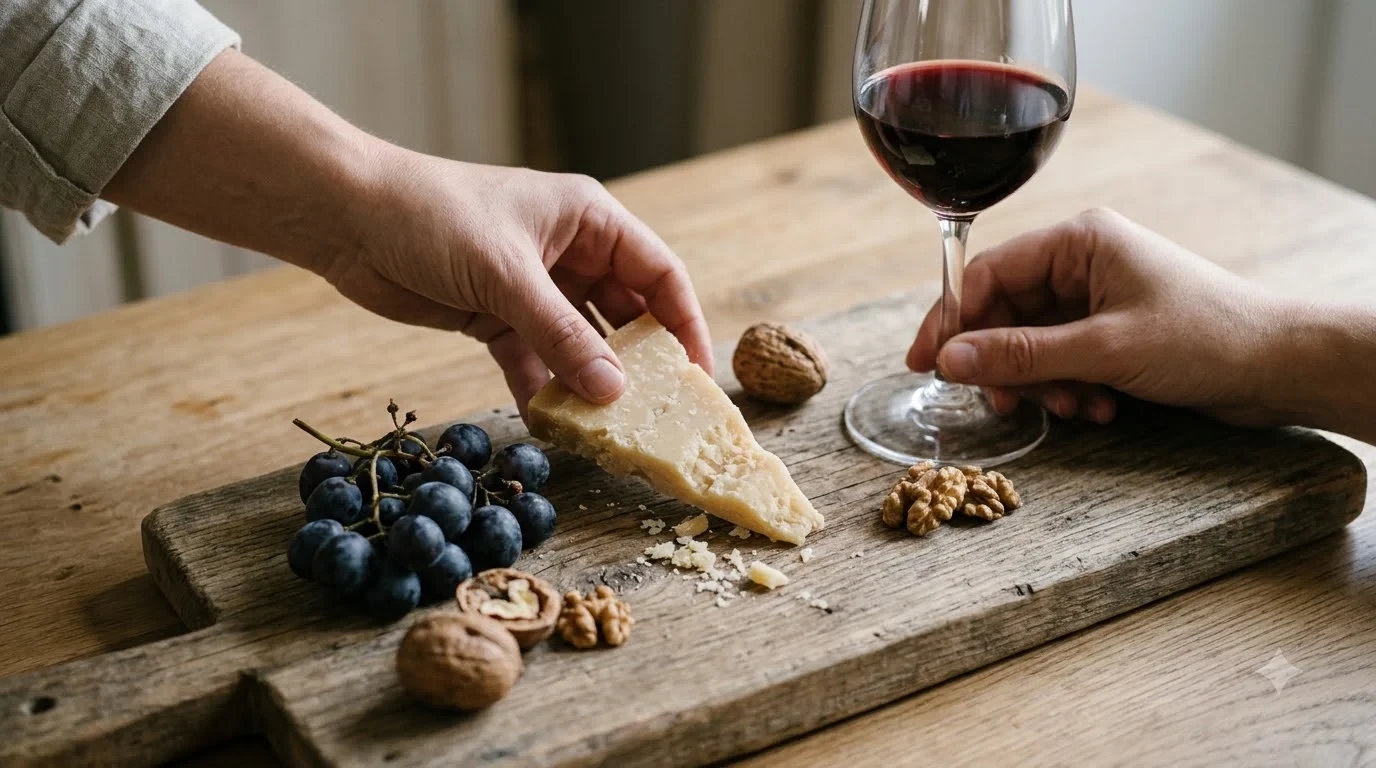
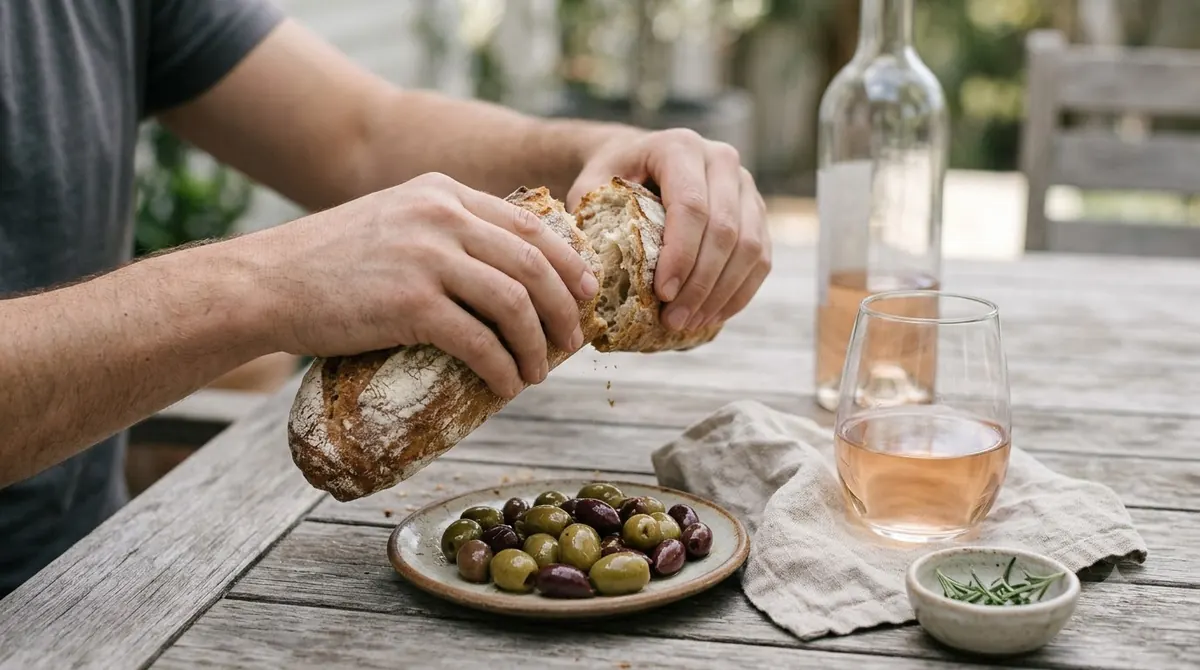
Try prosciutto, salami, finocchiona, or fennel sausage with Chianti. Salt softens the wine’s grip, and herbal notes complement fennel and pepper in the charcuterie. Parmesan, Pecorino Toscano, and aged Asiago also work, especially with bread, olives, or roasted peppers. Choose younger Chianti for milder cheeses and more concentrated Sangiovese for hard, aged varieties.
For a cheese board, favor aged sheep’s milk cheese, nutty hard cheese, or a mild blue over honey, jam, or very creamy triple-cream cheese. Serve fruit preserves separately so the wine can be tasted without the sweet element. Oily fish such as salmon, sardines, or mackerel can clash with a firm, tannic red, especially without a strongly flavored sauce. Delicate shellfish and mild white fish usually suit a high-acid white. Tuna or swordfish can work with lighter Sangiovese when prepared with tomato, olives, herbs, or grill marks.
Very spicy food is challenging because alcohol and tannin amplify chili heat. Reduce the chile, add fat or dairy, and choose a softer, lower-alcohol red if you want to keep Sangiovese. For delicate seafood or citrus-heavy salads, a crisp white may be more comfortable; an albarino food pairing suits bright, seafood-focused meals.
Choose the Right Sangiovese Style for the Dish
Read the wine style as a guide to weight and tannin, not simply as a hierarchy of quality. Young Chianti, Chianti Classico, Sangiovese di Romagna, Rosso di Montalcino, and Brunello can all be good choices, but they do not belong with exactly the same food.
Young Chianti and Rosso di Montalcino emphasize juicy cherry, red berries, and fresh herbs, making them good with pizza, tomato pasta, meatballs, chicken, and casual grilled food. A lighter Romagna style can suit pork, poultry, and vegetables because it often has rounder tannins and less acidity than Tuscan examples. For another lively Italian red with softer tannins, see barbera food pairing.
Chianti Classico offers more structure and savory detail, making it a middle ground for lasagna, sausage, roasted vegetables, steak, and aged cheese. Its rules allow at least 80% Sangiovese, while Brunello di Montalcino must be 100% Sangiovese. Wine Enthusiast notes that Brunello generally has greater tannic structure and longevity.
Brunello suits intense dishes such as bistecca alla Fiorentina, slow-roasted beef, lamb, mushroom ragù, and aged hard cheese. Wine Enthusiast reports that Brunello is released at least five years after harvest and Brunello Riserva after six years; both require at least two years in oak. That structure calls for a substantial main course, not delicate salad or white fish. Australian Sangiovese is another option: Wine Australia’s education guide describes plum, cherry, herbs, and firm tannins, with tomato dishes plus roasted, grilled, and barbecued meat and vegetables as classic matches. It identifies McLaren Vale, King Valley, and Beechworth as growing regions.
| Sangiovese style | Typical character | Good food matches | Useful benchmark |
|---|---|---|---|
| Young Chianti | Bright cherry, fresh herbs, lively acidity | Pizza, marinara, meatballs, roast chicken | Serve around 55–60°F |
| Chianti Classico | More structure, savory notes, firmer tannin | Lasagna, sausage, grilled steak, aged cheese | At least 80% Sangiovese |
| Sangiovese di Romagna | Rounder tannins, chewy fruit, softer acidity | Pork, poultry, roasted vegetables | At least 85% Sangiovese |
| Brunello di Montalcino | Concentrated fruit, firm tannin, long aging | Steak, lamb, rich mushroom dishes, hard cheese | 100% Sangiovese; 5 years before release (6 for Riserva) |
| Australian Sangiovese | Cherry, plum, herbs, firm tannic frame | Tomato pasta, grilled vegetables, barbecue | Trialled in Australia in the late 1960s |
The table is a starting point, not a rigid rule. A Chianti can be richer than expected, and Brunello can vary in weight. Give particularly oaky or powerful wines dishes with more fat, protein, and flavor; keep fresher, lighter bottles with simpler food.
Tip: Match the sauce before the protein. Tomato sauce points toward Sangiovese; a creamy mushroom sauce calls for a softer, less tannic bottle; and a chile-heavy sauce may call for a lower-alcohol wine or a different grape.
Serving Temperature and a Simple Pairing Plan
Serve most Sangiovese slightly cool rather than warm. A range of 60–65°F suits full-bodied reds, while lighter Sangiovese can be pleasant closer to 55–60°F; modest chilling keeps alcohol from feeling too prominent and helps preserve the wine’s freshness.
If stored at room temperature, chill the bottle for about 15–20 minutes, then let it warm gradually in the glass. A standard red-wine glass is fine for Chianti; a larger bowl can help Brunello show its aromas.
Decanting depends on the bottle. A young, firmly structured red may benefit from 30–60 minutes of air. Older Brunello may contain sediment and can be delicate, so handle it gently rather than assuming a long decant will help.
Identify the dominant flavor—tomato, roast meat, mushroom, cured meat, or chile—then choose the wine’s weight: young Chianti for lighter food, Chianti Classico for a fuller meal, and Brunello for a roast or steak. For a meal with several dishes, choose a flexible Chianti Classico that can bridge pasta, roast chicken, sausage, vegetables, and hard cheese. The site’s Wine Pairing overview explains how to balance acidity, tannin, sweetness, and weight. For a richer, softer, fruit-forward Italian red, compare an amarone food pairing, keeping in mind its fuller body.
Frequently Asked Questions
These answers cover a few common questions about serving and less obvious food matches, including Thanksgiving turkey and pesto pasta. Start with the dominant flavors on the plate, then adjust for the bottle’s weight and tannin.
Is Sangiovese always a dry red wine?
Most Sangiovese table wines are dry reds, but the grape is not limited to that format. It can also appear in rosato and sparkling wines, and Sangiovese is permitted in some sweet Vin Santo wines from Tuscany. The style depends on the wine category and producer rather than the grape name alone.
Can Sangiovese be served with Thanksgiving turkey?
Yes. Roasted turkey with herbs, gravy, and savory stuffing is a good match for a medium-bodied Chianti or Sangiovese di Romagna. Cranberry sauce is the part to watch: its sweetness and sharp acidity can make a dry red seem more tart, so keep sweet condiments in a separate portion.
Does Sangiovese pair with pesto?
It can work with a sturdy pesto pasta, especially if the dish includes roasted tomatoes, sausage, or grilled vegetables. A basil-heavy pesto with lots of raw garlic and no other substantial ingredients may be better with a crisp white such as Vermentino. Keep Parmesan and olive oil in the pesto, since their savory richness helps bridge the red wine.
Should Sangiovese be chilled before serving?
An ice-water bath cools a bottle faster than the refrigerator alone; rotate it once or twice so the temperature drops evenly. Remove it when the glass feels cool rather than letting the wine become icy.
How long can an opened bottle of Sangiovese keep?
Re-cork the bottle and store it in the refrigerator; most opened still wines remain in good condition for about 3–5 days, although freshness declines over time. Bring the remaining wine toward serving temperature before pouring. A wine with noticeable oxidation or dull fruit is better used in cooking than served as the main pairing.
For a reliable match, start with tomato pasta, pizza, roast chicken, grilled pork, or aged cheese and choose a Sangiovese with enough body for the dish. Keep the wine’s acidity in mind, pay attention to tannin and spice, and let the meal’s strongest flavors set the direction. With those simple choices, Sangiovese can move comfortably from a casual weeknight pizza to a slow Sunday roast.
More in Food & Wine Pairing
 Risotto With White Wine Recipe: Make a Creamy Dinner at HomeUpdated Nov 20, 2026
 Wassail With Wine Recipe for a Festive Spiced Holiday DrinkUpdated Nov 20, 2026
 Spritz Veneziano Recipe: Make a Classic Venetian Aperitivo at HomeUpdated Nov 20, 2026
 Summer Wine Punch Recipe for Easy Homemade EntertainingUpdated Nov 20, 2026
 Bishop Recipe: How to Make a Bright, Citrus-Forward Red Wine CocktailUpdated Nov 20, 2026
 Wine Cupcakes Recipe: Bake Rich Chocolate Cupcakes at HomeUpdated Nov 20, 2026