

We may earn a commission when you buy through links on this page, at no extra cost to you. Learn more.
Sangiovese wine is a red made mainly from the Sangiovese grape in Tuscany, Italy, and it forms the backbone of Chianti and Brunello di Montalcino. It is known for sour cherry, dried herbs, and bright acidity, and it pairs naturally with tomato-based food. This guide covers the main styles, how long they age, and how to serve them.
If you have ever ordered a Tuscan red at an Italian restaurant, there is a good chance it was Sangiovese. The grape is Italy’s most planted red, yet it appears in many different forms, from light everyday bottles to some of the most serious wines in the country. Learning the style names makes Italian labels much easier to read.
Where Sangiovese wine grows
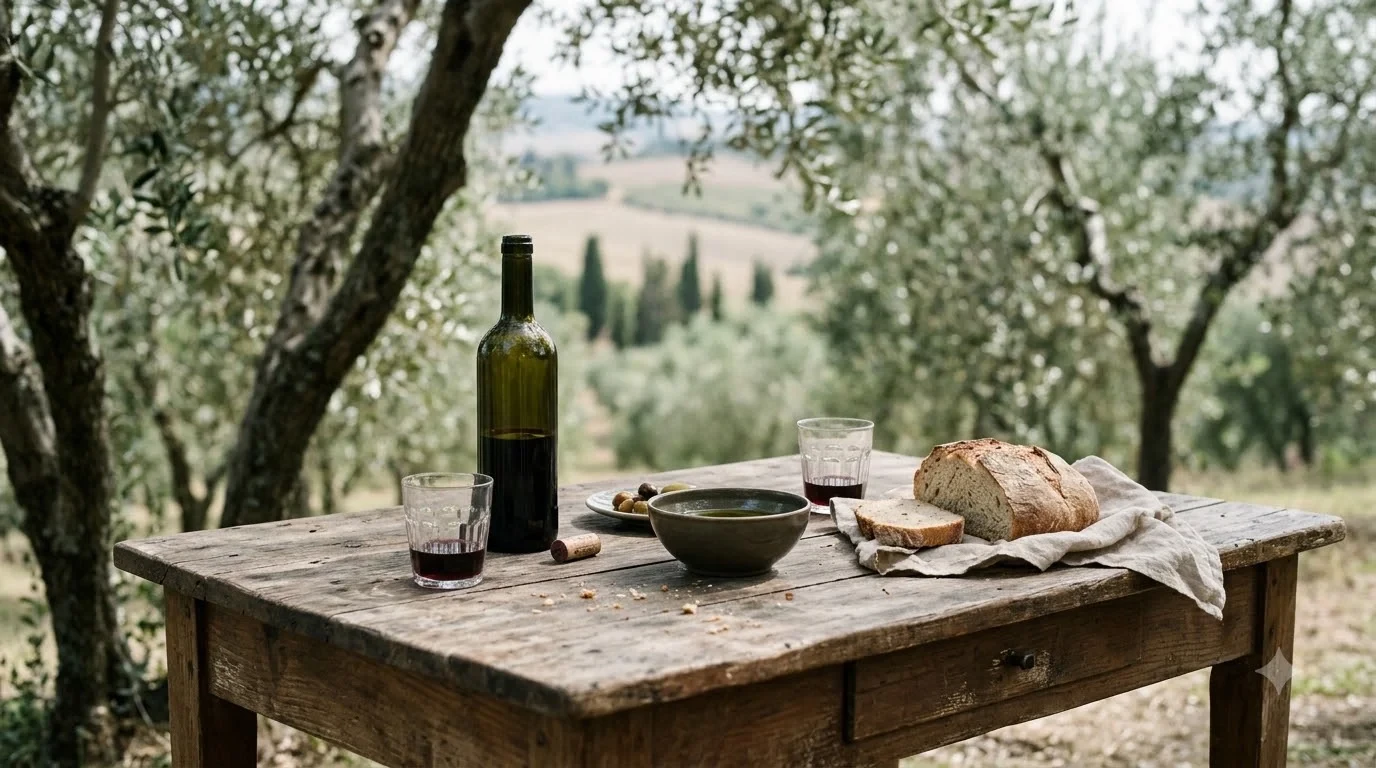
Sangiovese wine comes from Tuscany, where the grape is described as Italy’s most planted red variety. Its heartland is the hilly interior of the region. Most of the famous wines come from the area between Florence and Siena, which includes the Chianti Classico zone, and from the hill town of Montalcino farther south.
The grape is flexible enough to make very different wines in different places. Maremma, the coastal part of Tuscany, produces riper and plusher versions. In Romagna, farther east, producers focus on bright, fruit-driven wines at friendly prices. The Wine Insiders guide to Sangiovese gives a useful overview of these regions and how their wines differ.
Tuscany also produces Super Tuscan blends, which add grapes such as Cabernet Sauvignon or Merlot to Sangiovese. Those wines sit under the IGT Toscana label rather than a traditional Chianti name, so the label tells you more about the style than the grape list alone.
Italians tend to pair Sangiovese with the food of its own region, and that local logic is a good guide for home cooking. A Tuscan red usually matches the dishes that appear on a Tuscan table, from grilled meats to tomato-based pastas.
Flavor, body, and acidity in Sangiovese wine
The core flavors are sour cherry, tart plum, and dried herbs such as oregano and thyme. Younger wines often show tomato leaf and fresh basil. Oak-aged versions add leather, cedar, tobacco, and balsamic notes, and older bottles can develop earthy, truffle-like complexity.
Sangiovese has medium body, high acidity, and moderate to high tannins. Alcohol usually falls between 12 and 14 percent by volume. The acidity drives the whole experience, because it keeps the cherry fruit fresh and makes the wine a useful partner for food.
| Characteristic | Typical Sangiovese |
|---|---|
| Body | Medium |
| Acidity | High |
| Tannins | Moderate to high |
| Alcohol | 12 to 14% ABV |
| Main flavors | Sour cherry, tart plum, dried herbs |
If you usually drink a cabernet sauvignon wine, Sangiovese can feel like a different animal. It usually tastes brighter and more herbal, with less of the dark, cassis-like fruit that many Cabernets show. That difference is a good reason to try it side by side with a familiar bottle.
Chianti, Chianti Classico, and Brunello
Chianti is the best-known Sangiovese wine, and the rules allow a blend. The general Chianti appellation can contain 75 to 100 percent Sangiovese, with other grapes filling the rest. These wines are usually fresh and approachable, with bright cherry fruit and a light, lively finish.
Chianti Classico is a stricter DOCG zone between Florence and Siena, and it must contain at least 80 percent Sangiovese. Styles range from fresh wines aged in stainless steel to oak-aged Riserva and Gran Selezione bottles. Brunello di Montalcino is 100 percent Sangiovese, made from the local Sangiovese Grosso clone. It must age at least four years before release, and it was the first DOCG awarded in Italy, in 1980.
Vino Nobile di Montepulciano is another DOCG that relies on Sangiovese, here under the local name Prugnolo Gentile. The style is a useful middle ground for drinkers who want more depth than a basic Chianti without the price and age demands of Brunello.
Within Chianti Classico, single-vineyard and producer-specific bottles often show more individual character than a basic blend. In this category, the name of the estate can be as useful as the appellation when you are choosing a bottle.
How long Sangiovese wine ages
Aging potential depends on the style. Young Sangiovese and basic Chianti are best within a few years, while Chianti Classico Riserva and Brunello can hold for a decade or more. The table below is a general guide, not a rule, because vintage and storage conditions also matter.
| Style | Suggested aging window |
|---|---|
| Young Sangiovese or basic Chianti | 2 to 3 years |
| Chianti Classico | 3 to 7 years |
| Riserva | 5 to 15 years |
| Brunello di Montalcino | 10 to 25 years or more |
Vintage matters a great deal with Sangiovese. A warm year tends to give riper fruit and softer acidity, while a cooler year can produce leaner, sharper wines that need more time to round out. Checking the vintage on the label helps you decide whether a bottle is ready to drink or needs more patience.
Store bottles you plan to age on their side at about 13°C (55°F), away from light and temperature swings. Once a bottle is opened, a proper stopper and the refrigerator can keep it fresh for two to three days, so you do not need to finish it the same night.
How to serve Sangiovese wine
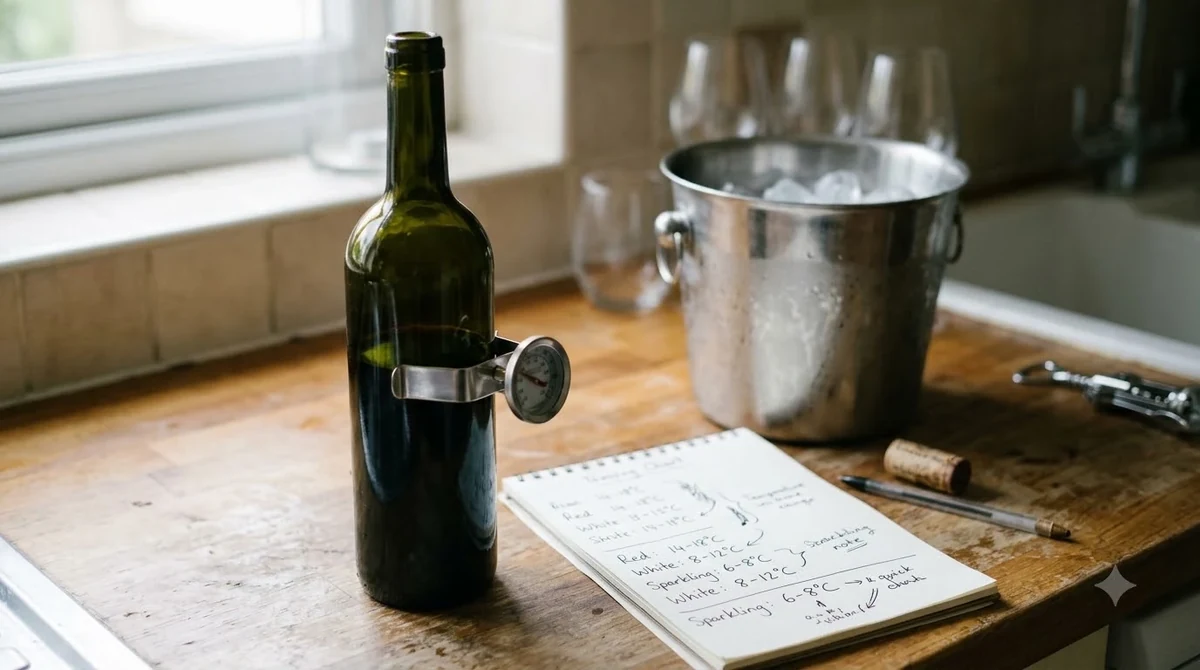
Serve Sangiovese slightly below room temperature, around 16 to 18°C (60 to 64°F). That range keeps the acidity lively and stops the alcohol from feeling hot. Young bottles benefit from 15 to 30 minutes of decanting, while structured bottles such as Chianti Classico Riserva or Brunello can use one to two hours.
A wide glass helps the cherry and herb aromas open. If a bottle tastes sharp when it is first poured, give it a few minutes in the glass before you judge it, since the acidity often softens as the wine opens.
Food pairings for Sangiovese wine
Tomato is the easiest guide. Young Sangiovese and Chianti pair with pizza, red-sauce pasta, roasted chicken, grilled vegetables, and charcuterie. The acidity cuts through tomato and olive oil in a way that heavier reds cannot match.
Riserva and single-vineyard bottles suit braised short ribs, herb-crusted lamb, bistecca alla fiorentina, and wild boar ragù. Brunello works well with truffle dishes, aged steak, game, and intensely flavored hard cheeses. Aged Pecorino Romano and Parmigiano-Reggiano are reliable matches across most styles.
Rich cream sauces are the main warning sign. They can make Sangiovese taste sharp, and delicate fish can be overpowered by the wine. When in doubt, pick a dish built on tomato, herbs, or grilled meat.
Sangiovese also suits vegetarian dishes built on tomato, eggplant, or mushrooms. The wine’s acidity matches the brightness of those vegetables, and its herbal notes pick up the flavors of basil and oregano.
Tip: Chill a basic Chianti for about 15 minutes before a summer lunch. The cooler temperature sharpens the cherry fruit and makes the wine easier to drink with pizza.
Frequently Asked Questions
Is Sangiovese the same as Chianti?
No. Sangiovese is the grape, and Chianti is a wine style from Tuscany that is usually made mostly from Sangiovese. Chianti can contain 75 to 100 percent Sangiovese, with other grapes filling the rest.
What is the difference between Chianti and Chianti Classico?
Chianti Classico comes from the historic core zone between Florence and Siena and must contain at least 80 percent Sangiovese. It is a stricter DOCG designation, with more demanding production rules than general Chianti.
How long can you age Sangiovese wine?
Young Sangiovese is best within two to three years. Chianti Classico Riserva can hold for five to fifteen years, and Brunello di Montalcino can age ten to twenty-five years or more when stored well.
What food goes best with Sangiovese wine?
Tomato-based dishes are the safest choice, including pizza and red-sauce pasta. Grilled meats, herbal vegetable dishes, and aged Italian cheeses such as Pecorino Romano also work well with most styles.
Sangiovese rewards a patient approach. Start with a basic Chianti for weeknight meals, move to a Chianti Classico when you want more depth, and save a Brunello for a special dinner. If you want a sweeter, lighter red for a different mood, a moscato wine offers a very different style. For more Italian and international types, browse the Wine by Type guide.
More in Wine Types & Grapes
 Zinfandel Sugar Content: Dry Red vs. White Zinfandel GramsUpdated Nov 21, 2026
 Best Zinfandel Substitute Options for Sipping and CookingUpdated Nov 21, 2026
 Zweigelt Food Pairing: Best Dishes, Cheeses, and Serving TipsUpdated Nov 21, 2026
 Zinfandel Tannins Explained: How Structure Shapes Every BottleUpdated Nov 21, 2026
 Zinfandel Sweetness Level: Dry Red vs. Sweet White Zin ExplainedUpdated Nov 21, 2026
 Xinomavro Food Pairing: Best Dishes, Styles, and Serving TipsUpdated Nov 21, 2026