

We may earn a commission when you buy through links on this page, at no extra cost to you. Learn more.
where is port from? Port comes from Portugal’s Douro Valley, a protected wine region in the country’s northeast, along the Douro River. The grapes are grown in the Douro Demarcated Region, where steep slopes, hot summers, and a long history of fortified-wine production shape the style. The wine takes its name from Porto, the historic Atlantic export city, but its vineyard origin is inland.
That distinction explains why Port is more than a sweet wine with a familiar name. Its origin is protected, its production follows specific regional rules, and its different styles reflect decisions made in the vineyard, during fermentation, and in the cellar. Here is how the Douro landscape, grape varieties, and aging methods connect to the bottle.
The Douro Valley Is the Home of Port
Port comes from the Douro Demarcated Region in northeastern Portugal, a broad vineyard area following the Douro River and its tributaries. The region covers approximately 250,000 hectares and is divided into three subregions: Baixo Corgo, Cima Corgo, and Douro Superior, according to the Instituto dos Vinhos do Douro e do Porto (IVDP).
The name can be confusing because Porto is a city on Portugal’s Atlantic coast, while the vineyards are well inland. The Douro River runs west toward Porto, linking the wine-growing interior with the historic port and trading center. The city became closely associated with the wine through shipping and commerce, and the name followed the wine into international markets. The appellation, however, points to the vineyards and production area in the Douro, not to a city vineyard district.
The IVDP explains that Port is a fortified wine made under specific natural and human conditions in the Demarcated Region. That designation matters: the grapes used for genuine Port must come from the defined region and the wine must follow the rules for the Port denomination. A sweet fortified wine made elsewhere in Portugal—or in another country—may resemble Port in style, but it does not share the same protected origin. For a broader overview of wine categories, start with Wine by Type, then use the region on the label to understand what kind of wine you are buying.
Three Subregions Shape the Douro Landscape
The Douro is not one uniform vineyard zone: Baixo Corgo, Cima Corgo, and Douro Superior differ in rainfall, temperature, and the share of land planted to vines. Those local conditions influence grape ripeness, harvest choices, and the character of the wines made within the larger Port appellation.
Baixo Corgo lies toward the western end of the demarcated area, closer to the Atlantic influence, and has the greatest concentration of vineyard land. Cima Corgo extends farther upriver toward the Cachão da Valeira gorge and contains a large share of the region’s vineyards. Douro Superior continues east toward the Spanish border; it is the largest of the three subregions by total area but has a lower proportion of land under vine. The IVDP describes the wider region as approximately 250,000 hectares, with vines covering about 18 percent of it.
Mountains help shelter the valley from humid Atlantic weather, and the climate becomes hotter and drier farther east. The IVDP reports that annual rainfall declines from around 1,200 millimeters in parts of Baixo Corgo to about 380 millimeters near Barca d’Alva in Douro Superior. Average annual temperatures across the region range from roughly 11.8 to 16.5 degrees Celsius. These contrasts help explain why a Port made from grapes grown in different parts of the valley can show varied ripeness, structure, and concentration, even though every bottle shares the same broad geographic origin.
Port’s History Is Tied to a Protected Origin
The Douro has a long record of grape growing, but the modern identity of Port is inseparable from the formal protection of the region in 1756. That date marks an early system for defining where the wine could come from and controlling the quality and trade of a famous agricultural product.
According to the IVDP’s historical account, the Companhia Geral da Agricultura das Vinhas do Alto Douro was created on September 10, 1756. The company was given responsibilities that included setting the region’s boundaries, registering vineyard parcels, and protecting the reputation and provenance of Douro wine. This followed a period in which wines from different places could be sold through Porto under the same commercial name, making it harder for buyers to know what they were receiving. Formal demarcation was intended to distinguish the wine of the Douro from imitations and wines of other origins.
The historical link between Porto and the inland vineyards remains visible in the way Port is discussed today. Porto served as the trading gateway, while production depended on the vineyards and wineries upriver. The modern IVDP continues to certify, supervise, and defend the Port and Douro designations. This is why the answer to where the wine is from should be given as the Douro region, even though Porto is the city that gave the wine its internationally recognized name.
Grapes and Fortification Give Port Its Signature
Port is made from a blend of grape varieties rather than from one required grape. Red examples commonly use varieties such as Touriga Nacional, Touriga Franca, Tinta Barroca, Tinto Cão, and Tinta Roriz, while white Port is made from white grapes selected for aromatic character and acidity.
Blending several grapes allows winemakers to combine different contributions: color, tannin, aroma, freshness, and body. Touriga Nacional is widely associated with concentrated color and structure; Touriga Franca is an important blending partner; and Tinta Roriz adds another component to red blends. These varieties are not interchangeable with the wine’s place-name. A bottle of Port is identified by its Douro origin and production method, not by a single grape printed as the headline on the label. This is different from a varietal wine, where the grape name is the main clue to the wine’s identity; for example, where is Merlot from is a question about a grape variety’s origins rather than a protected fortified-wine appellation.
The defining winemaking step is fortification. The IVDP’s Port wine introduction describes the traditional sequence: halt fermentation with grape spirit, blend lots, and age the wine. Harvest in the Douro generally begins between late August and mid-October, with red grapes picked at a level of ripeness suited to the intended style. During fermentation, yeasts convert grape sugar into alcohol. Before all the sugar is consumed, the winemaker adds grape spirit, halting fermentation and leaving natural grape sugar in the wine. The institute describes one commonly used proportion as one part grape spirit to four parts fermenting must; the finished wine usually reaches 19 to 22 percent alcohol by volume. Traditional production can involve treading grapes by foot in large stone tanks called lagares, while modern wineries may use mechanical crushers, temperature-controlled stainless-steel tanks, and robotic treading systems. Both approaches extract color, flavor, and tannin from the skins before fermentation is stopped. The IVDP notes that red grapes are generally allowed to reach greater ripeness, while white grapes are often harvested earlier to retain aromatic compounds and acidity. For more on the flavor and origin of a different red grape, see where is Syrah from.
Ruby, Tawny, White, and Vintage Port Have Different Aging Paths
Port’s main styles are distinguished by grape color, blending, and especially by how long and where the wine ages. Ruby styles preserve dark fruit and color, tawny styles develop through longer wood aging, and Vintage Port is selected from a single outstanding harvest for extended bottle maturation.
Ruby Port is usually a blend of wines from more than one harvest and is aged in bulk for up to three years before bottling, according to Decanter’s guide to Port styles. The aim is to retain a deep ruby color and fresh fruit character. Ruby Reserve is a richer selection, while Late Bottled Vintage (LBV) comes from one harvest and is bottled four to six years after that vintage. Filtered LBV is generally ready to pour without decanting; unfiltered LBV can leave sediment and may continue to develop in bottle. Tawny Port spends more time in wood, where gradual oxygen exposure changes its color and flavor. It can move from red fruit toward dried fruit, nuts, spice, and caramel-like notes. Age-indicated tawnies are blends, and the number on the label—10, 20, 30, 40, or 50 years—describes an approximate age category rather than the exact age of every wine in the blend. If you are comparing the styles in more depth, the article on where is tawny Port from explains how the tawny name relates to the same Douro origin but a different maturation path.
Vintage Port is made from a single harvest judged outstanding by the shipper and approved by the IVDP. It is bottled relatively young, after a short period in wood, and then develops in the bottle for many years; Decanter says approval can take place in the second year after harvest. Vintage declarations are not made on a fixed annual schedule, while white Port offers another branch of the category, with styles that range from extra dry and dry to semi-sweet, sweet, and very sweet. The table below compares the main timing differences, from ruby’s short bulk aging to the long wood maturation of colheita.
| Style | Typical aging or timing | What to expect |
|---|---|---|
| Ruby | Up to 3 years in bulk | Deep color and fresh red or black fruit |
| Late Bottled Vintage | Bottled 4–6 years after harvest | One vintage; richer fruit, filtered or unfiltered |
| Vintage | Approved and bottled in the second year after harvest | Single exceptional harvest; built for bottle aging |
| Aged Tawny | Age indications of 10, 20, 30, 40, or 50 years | Wood-aged blend with dried-fruit and nut notes |
| Colheita | At least 7 years in wood | Single-harvest tawny style |
| White | Varies by style and maturation | Ranges from extra dry to very sweet |
Serving Port and Pairing It with Food
Port is often served after dinner, but its range of styles makes it useful before and during a meal as well. The main guide is to match the wine’s sweetness and weight to the food, and to account for its higher alcohol level when choosing the serving temperature and portion.
Most Port is best served slightly cool rather than warm. Wine Enthusiast gives a serving range of 57 to 60 degrees Fahrenheit for Port, while Decanter recommends gently chilling aged tawny and notes that white Port works in a summer drink with tonic, lemon, and mint. A cooler serving temperature can keep the alcohol from dominating the aroma. White Port can be served chilled as an aperitif; aged tawny is also appealing lightly chilled, while ruby and Vintage Port can be served a little warmer than those lighter styles.
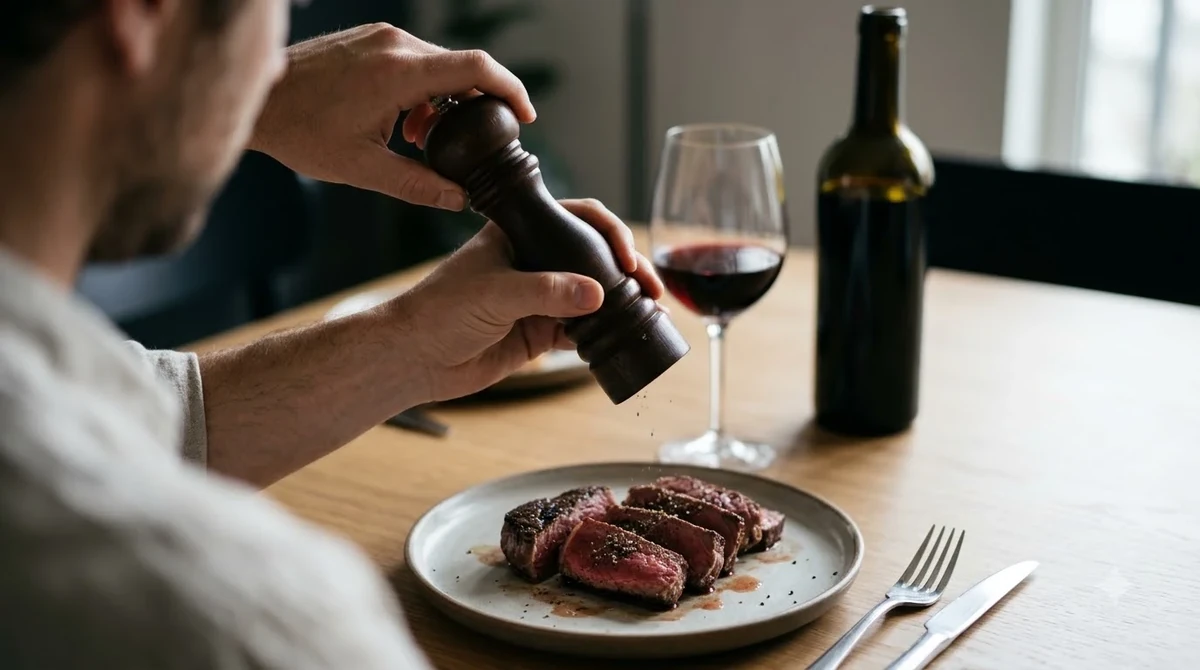
For food, think about sweetness first. A sweet Port generally works best with a dessert at least as sweet as the wine, such as dark chocolate, chocolate tart, or a fruit-based dessert with concentrated sweetness. Ruby Port often suits chocolate and berry flavors, while aged tawny works well with toasted nuts, dried fruit, caramel, and desserts featuring pecans or walnuts. Blue cheese is a classic contrast because its salt and richness soften the impression of the wine’s tannin and sweetness. White Port gives you a different set of options: a dry or extra-dry version can be served with salted almonds, olives, smoked fish, or a simple appetizer, while a sweeter white version can accompany fruit and lightly sweet desserts. Port tonic is another straightforward serve: combine chilled white Port with tonic water over ice and add a slice of lemon or a sprig of mint. Avoid pairing a high-alcohol, tannic red Port with very hot chili dishes, since alcohol and tannin can make the sensation of heat more pronounced.
Tip: Open a bottle of Vintage Port for a meal where you can share it soon after opening, and pour aged tawny when you want a wood-aged style that can be served lightly chilled. With any Port, use a smaller pour than you would for a table wine because the alcohol level is usually 19 to 22 percent.
Frequently Asked Questions
These answers cover a few details that help decode Port labels and understand why the wine is treated differently from an ordinary still wine.
Is Vintage Port declared every year?
No. A producer decides whether a harvest merits a Vintage declaration, and the IVDP must approve the wine for that designation. Decanter reports that major producers commonly declare around three or four vintages per decade, although the pattern is not fixed.
What does colheita mean on a Port label?
Colheita is Portuguese for “harvest.” It identifies a tawny-style Port from one harvest year that has aged in wood for at least seven years before bottling. The label shows both the harvest year and the bottling year, so two dates matter when comparing bottles.
What is a single-quinta Vintage Port?
“Quinta” means an estate or wine property, and a single-quinta Vintage Port comes from one estate rather than a blend of parcels from several properties. It follows the Vintage Port model, but the single-estate origin can make it a useful way to follow one vineyard property across different harvests.
Why can Vintage Port develop sediment?
Traditional Vintage Port is bottled without filtration so that it can retain the material and structure that support long bottle aging. As it matures, natural deposits can collect in the bottle. Decanting carefully helps separate the clear wine from that sediment.
Is Port the same thing as regular Douro wine?
No. Port and Douro are separate designations within the same broad demarcated region. Douro table wines complete fermentation, while Port is fortified during fermentation and retains residual grape sugar; the two categories can draw on grapes grown in the same valley.
Port’s true home is the Douro Valley, where geography, grape blending, and fortification come together under a protected regional name. Once that origin is clear, the label’s style and aging terms make it much easier to choose between a fresh ruby, an old tawny, a white aperitif, or a bottle built for decades in the cellar.
More in Wine Types & Grapes
 Zinfandel Sugar Content: Dry Red vs. White Zinfandel GramsUpdated Nov 21, 2026
 Best Zinfandel Substitute Options for Sipping and CookingUpdated Nov 21, 2026
 Zweigelt Food Pairing: Best Dishes, Cheeses, and Serving TipsUpdated Nov 21, 2026
 Zinfandel Tannins Explained: How Structure Shapes Every BottleUpdated Nov 21, 2026
 Zinfandel Sweetness Level: Dry Red vs. Sweet White Zin ExplainedUpdated Nov 21, 2026
 Xinomavro Food Pairing: Best Dishes, Styles, and Serving TipsUpdated Nov 21, 2026