

We may earn a commission when you buy through links on this page, at no extra cost to you. Learn more.
The nahe wine region is one of Germany’s 13 official quality wine-growing areas, located along the Nahe River between the Mosel and Rheinhessen valleys in southwestern Germany. Covering 4,166 hectares (roughly 10,294 acres) of vineyards, it is celebrated for extraordinary geological diversity that includes volcanic porphyry, slate, red sandstone, loess, and loam. White grapes account for 77 percent of plantings—led by Riesling—producing wines that bridge the racy, slate-driven elegance of the Mosel with the riper fruit structure of Rheinhessen.
Despite a winemaking history stretching back two millennia to Roman times, the Nahe remained a quiet secret outside Germany until the late twentieth century. Today, wine lovers exploring Wine Regions around the globe recognize this compact valley as a benchmark source for precise, terroir-expressive dry and off-dry Rieslings alongside increasingly compelling Pinot Blanc, Pinot Gris, and Pinot Noir.
Overview of the Nahe Wine Region
Positioned in the shelter of the Hunsrück Hills in Rhineland-Palatinate, the Nahe wine region follows the meandering Nahe River from Martinstein northeast to its confluence with the Rhine at Bingen. Its balanced, mild climate and remarkable variety of rock formations allow winemakers to craft distinct wines from village to village.
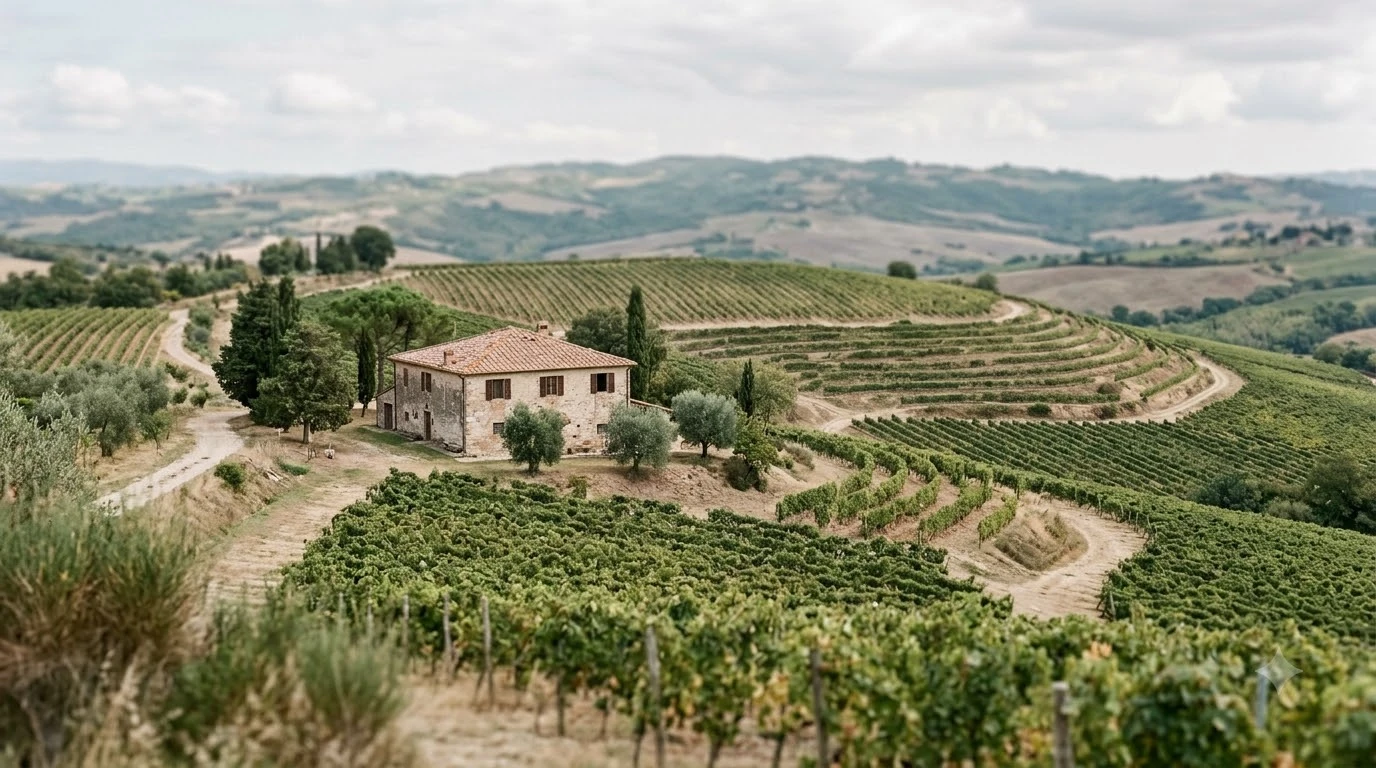
Geographically, the Nahe occupies an enviable middle ground among Germany’s classic wine territories. The Hunsrück mountains shield the valley from harsh northern winds and heavy rainfall, creating a temperate microclimate with relatively low frost risk and generous sunshine. Vineyards climb steep, south-facing slopes at elevations between 100 and 300 meters (330 to 980 feet) not only along the main Nahe River, but also along tributaries such as the Glan, Alsenz, Ellerbach, Guldenbach, and Gräfenbach.
What truly sets the Nahe growing area apart from every other German wine region is its geological patchwork. According to the German Wine Institute, the valley contains the entire rock cycle within a relatively small footprint: igneous volcanic rocks like porphyry and melaphyre, sedimentary formations such as red sandstone, clay, and limestone, and metamorphic slate. Even within a single hillside, soil composition can shift dramatically every few dozen yards, giving neighboring parcels contrasting mineral signatures.
Administratively, the entire region comprises one official district (Bereich Nahetal), seven collective vineyard sites (Grosslagen), and more than 300 individual registered vineyard sites (Einzellagen). Unlike larger German regions dominated by massive cooperatives, the Nahe relies heavily on independent, family-run wine estates that bottle and market their own harvests directly.
Sub-Regions and Terroir Zones
Although legally unified under a single district, winemakers and critics divide the valley into three informal geographic zones: the Upper Nahe, the central hub around Bad Kreuznach, and the Lower Nahe. Each zone reflects a shift in river width, elevation, and dominant bedrock.
The Upper Nahe stretches downstream from Martinstein through historic wine villages such as Monzingen, Meddersheim, Schlossböckelheim, Oberhausen, Niederhausen, Norheim, and Traisen. Here, the valley narrows into dramatic cliffs and steep, terraced vineyards dominated by volcanic porphyry, melaphyre, and weathered stone. Because temperatures run slightly cooler and ripening happens later in the season, the Upper Nahe is prime territory for razor-sharp, age-worthy Rieslings marked by smoky, flinty, and herbal aromatics.
Around the spa town of Bad Kreuznach, the valley widens and the terrain softens into rolling hills covered with fertile loess, loam, clay, and weathered sandstone. This central zone enjoys warmer daytime temperatures that encourage fuller ripeness. Wines grown on these deeper soils generally display rounder mid-palate texture, lush stone-fruit character, and approachable generosity early in life.
North of Bad Kreuznach toward the Rhine at Bingen lies the Lower Nahe, encompassing villages like Dorsheim, Münster-Sarmsheim, Langenlonsheim, Laubenheim, and Windesheim. Quartzite and Devonian slate reappear on the slopes here, lending crisp minerality and floral lift to Riesling while also providing warm, well-drained sites suited to Pinot Blanc, Pinot Gris, and red varieties.
Key Grapes and Wine Styles
White grape varieties account for 77 percent of the Nahe’s vineyard acreage, while red varieties occupy the remaining 23 percent. Riesling is the undisputed flagship, covering roughly 29 percent of all vines, followed by Müller-Thurgau, Pinot Gris, Dornfelder, Pinot Blanc, and Pinot Noir.
Nahe Riesling is prized for striking a middle path between its famous neighbors. While Mosel Rieslings tend toward feather-light delicacy and Rheinhessen examples lean broader and more opulent, Nahe versions combine vibrant citrus and green-apple acidity with ripe white peach, apricot, and savory crushed-rock minerality. Producers craft Riesling across the full German sweetness spectrum—from bone-dry Trocken and off-dry Feinherb bottlings (typically 11 to 13 percent ABV for dry styles) to lower-alcohol Kabinett, Spätlese, and botrytis-affected Auslese, Beerenauslese, and Trockenbeerenauslese dessert wines.
Beyond Riesling, the Burgundy family plays a major role on the region’s loess and limestone parcels. Grauburgunder (Pinot Gris) and Weissburgunder (Pinot Blanc) yield dry, creamy, food-friendly whites with pear, quince, and subtle nutty notes. Silvaner and aromatic crosses such as Scheurebe and Müller-Thurgau add fresh, everyday drinking options across local wine taverns.
On the red side, Spätburgunder (Pinot Noir) has gained serious momentum as warmer vintages and careful oak aging allow growers to bottle silky, cherry-scented reds with earthy forest-floor nuance. Dornfelder remains widely planted for deeply colored, fruit-forward reds with soft tannins and herbal spice.
| Grape Variety | Share of Plantings | Primary Soils | Typical Wine Style |
|---|---|---|---|
| Riesling | ~29% | Volcanic porphyry, slate, quartzite, sandstone | Dry to sweet; high acidity, citrus, stone fruit, smoky minerality |
| Müller-Thurgau | ~11% | Loess, loam, sandy clay | Light, dry to off-dry; floral, ripe peach, gentle acidity |
| Pinot Gris (Grauburgunder) | ~9% | Loess, limestone, clay | Dry, medium-to-full-bodied; pear, yellow apple, creamy texture |
| Dornfelder | ~9% | Loam, sandstone, loess | Dry red; deep color, dark berries, soft tannins, herbal finish |
| Pinot Blanc (Weissburgunder) | ~8% | Limestone, quartzite, loess | Dry, crisp white; green apple, white blossom, clean mineral finish |
| Pinot Noir (Spätburgunder) | ~7% | Limestone, slate, red sandstone | Dry red; red cherry, raspberry, subtle spice, earthy structure |
Notable Producers and Vineyard Sites
The Nahe’s modern reputation rests on a tight-knit group of quality-obsessed family estates, nine of which belong to the prestigious VDP (Verband Deutscher Prädikatsweingüter) association. Together, these VDP.Nahe estates farm 550 hectares of classified top vineyard sites.
Among the region’s most celebrated names is Weingut Dönnhoff in Oberhausen, widely regarded by international critics as one of Germany’s premier white-wine estates. Working steep parcels such as Niederhäuser Hermannshöhle—ranked as the Nahe’s top site in a 1901 Prussian vineyard classification—and Oberhäuser Brücke, Dönnhoff produces both benchmark dry Grosses Gewächs bottlings and ethereal sweet Prädikat wines.
Nearby in Monzingen, Emrich-Schönleber has earned acclaim for crystalline dry Rieslings from the slate and quartzite slopes of Halenberg and Frühlingsplätzchen. In Bockenau, Schäfer-Fröhlich draws intense, reductive, volcanic character from steep porphyry sites like Bockenauer Felseneck. Other leading VDP members include Gut Hermannsberg in Niederhausen—originally founded as a Prussian state wine domain on the famed Kupfergrube vineyard—along with Schlossgut Diel, Dr. Crusius, Kruger-Rumpf, Prinz Salm, and Joh. Bapt. Schäfer.
Visiting Tips for Wine Travelers
Located roughly an hour southwest of Frankfurt by car or regional train, the Nahe offers a peaceful, uncrowded alternative to Germany’s busier tourist corridors. Visitors can explore the valley along three well-marked routes: the Nahe-Weinstrasse driving route, the Weinwanderweg Nahe hiking trail, and the Radweg Nahe cycling path.
Much like travelers discovering authentic cellar doors in Spain’s bierzo wine region or the jumilla wine region, visitors to the Nahe will find that small family estates handle most tastings personally. Because tasting rooms rarely keep fixed drop-in hours like large commercial wineries, scheduling an appointment a few days ahead by email or phone is essential, especially at top VDP estates.
Base yourself in Bad Kreuznach or Bad Münster am Stein-Ebernburg to enjoy historic thermal spas, dramatic red-rock cliffs like the Rotenfels, and easy access to both the Upper and Lower Nahe. Make time to walk up to the medieval monastery ruins of Disibodenberg—where Saint Hildegard of Bingen lived and where some of the valley’s oldest vines still grow—or visit the Bad Sobernheim Open Air Museum to see historic Rhineland wine presses and half-timbered farmhouses.
Tip: Serve dry Nahe Riesling and Pinot Blanc chilled between 46°F and 50°F (8°C to 10°C) in a tulip-shaped white wine glass to highlight their aromatic lift and crisp volcanic minerality.
How to Buy Nahe Wines
Finding Nahe bottles in the United States requires looking at independent fine-wine shops and German wine specialists, as modest production volumes keep most estates out of mass-market supermarkets. Learning a few German label terms makes selecting the right sweetness and quality tier straightforward.
As explained in Wine Folly’s guide to German wine labels, the word Trocken signals a fully dry wine, while Feinherb indicates a balanced off-dry style with noticeable residual sugar cushioned by brisk acidity. If a label carries the VDP eagle logo, look for Gutswein (regional entry-level), Ortswein (village-level), Erste Lage (premier vineyard), or Grosse Lage / GG (dry grand cru equivalent).
Check the alcohol percentage on the front label as a quick sweetness clue: dry Nahe Rieslings typically sit around 11.5 to 13 percent ABV, whereas traditional fruity-sweet Kabinett and Spätlese bottlings often register between 7.5 and 9.5 percent ABV. Much like stocking versatile coastal whites from Italy’s marche wine region, keeping a mix of dry Nahe Riesling and Pinot Blanc on hand gives you reliable food-pairing options for everything from roast pork and freshwater fish to spicy Southeast Asian dishes.
Frequently Asked Questions
Where is the Nahe wine region located?
The Nahe wine region is located in southwestern Germany in the state of Rhineland-Palatinate, tucked between the Mosel Valley to the northwest and Rheinhessen to the east. Its vineyards follow the Nahe River and its tributaries from Martinstein northeast until the Nahe flows into the Rhine at Bingen.
How does Nahe Riesling compare to Mosel and Rheinhessen Riesling?
Nahe Riesling is widely described as a stylistic bridge between its two famous neighbors. It captures the racy acidity, floral lift, and stony minerality of the Mosel while offering the riper stone-fruit generosity and fuller mid-palate body characteristic of Rheinhessen.
Are all wines from the Nahe region sweet?
No—in fact, dry wines make up the largest share of modern Nahe production. Look for the word “Trocken” or the letters “GG” (Grosses Gewächs) on the label for bone-dry styles, while terms like “Feinherb,” “Kabinett,” and “Spätlese” indicate varying levels of off-dry to sweet balance.
What foods pair best with Nahe wines?
Dry Nahe Riesling and Pinot Blanc pair effortlessly with steamed freshwater fish, roast pork, schnitzel, herbed poultry, and fresh goat or sheep’s milk cheeses. Off-dry Nahe Rieslings are classic matches for spicy Thai, Vietnamese, and Sichuan dishes because their subtle sweetness tames chili heat while high acidity refreshes the palate.
From volcanic cliffside vineyards in the Upper Nahe to gentle loess slopes near the Rhine, the Nahe wine region packs remarkable geological and stylistic range into one compact valley. Whether you reach for a crisp dry Riesling, a creamy Pinot Blanc, or a nuanced Spätburgunder, these bottles reward anyone curious about terroir-driven German wine.
More in Wine Regions
 Willcox Wine Trail: Discover Arizona’s High-Elevation Wine CountryUpdated Nov 20, 2026
 Yakima Valley Wine Region: Find the Best Styles to TryUpdated Nov 20, 2026
 Vosne Romanee Wine Tasting: Identify Aromas and Choose Better PairingsUpdated Nov 20, 2026
 Yakima Valley Wine Festival: Find the Best Seasonal Wine EventsUpdated Nov 20, 2026
 Wales Vineyards: Discover Cool-Climate Wines and Where to VisitUpdated Nov 20, 2026
 Yountville Wine Festival: Discover Napa Wines and Local FoodUpdated Nov 20, 2026