

We may earn a commission when you buy through links on this page, at no extra cost to you. Learn more.
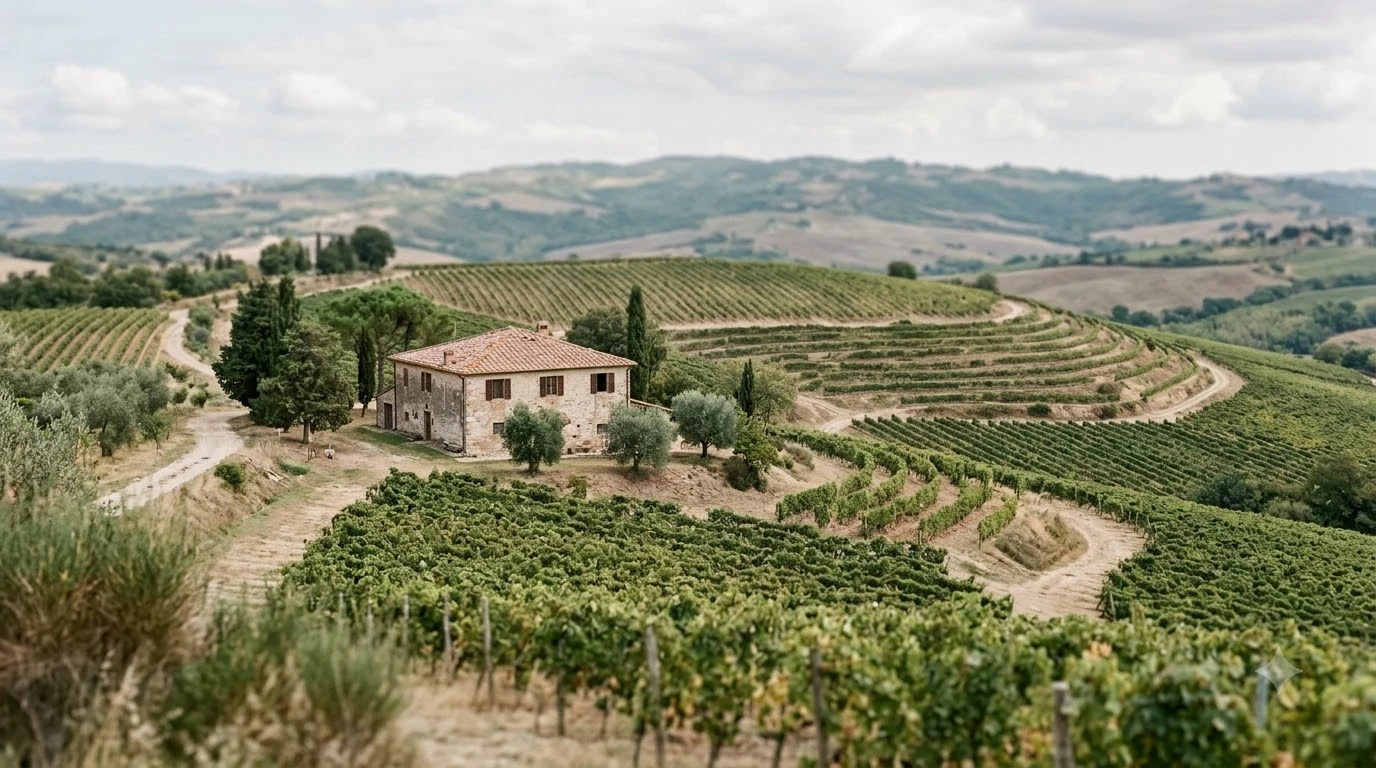
The hill country wine trail is a scenic network of more than 60 member wineries and tasting rooms stretching across Central Texas between Austin, Fredericksburg, Lampasas, and New Braunfels. Located inside the 9-million-acre Texas Hill Country American Viticultural Area, the trail centers on U.S. Highway 290 and surrounding ranch roads, where limestone and granite soils produce Mediterranean-style reds and aromatic whites. Visitors typically plan multi-stop itineraries around Fredericksburg, Stonewall, Hye, Johnson City, and Driftwood, tasting signature grapes like Tempranillo, Mourvèdre, Tannat, and Viognier.
Unlike compact vineyard corridors where dozens of estates sit a few minutes apart, this Central Texas route spans rolling plateaus, spring-fed river valleys, and historic German-settled towns. Driving from one sub-district to the next reveals distinct shifts in elevation, soil composition, and winemaking philosophy, rewarding travelers who plan their stops by geography rather than trying to cover the entire region in a single afternoon.
Overview of the Texas Hill Country AVA
Officially established in 1991, the Texas Hill Country AVA covers more than 9 million acres, making it the largest appellation in Texas and the third-largest AVA in the United States. Despite that vast geographic footprint, only around 2,220 acres are currently planted to grapevines, leaving wide stretches of live oak savanna, ranchland, and limestone canyons between vineyard blocks.

Geologically, the region sits where the granite-rich Llano Uplift meets the sedimentary limestone of the Edwards Plateau, bounded to the east and south by the Balcones Fault. Elevations range from roughly 800 feet in the lower valleys to 2,200 feet on exposed ridges, while annual rainfall averages 15 to 34 inches. Well-drained rocky soils naturally restrict vine vigor, pushing roots deep and concentrating flavor in the fruit.
Although Spanish missionaries planted the first vines in Texas during the 1650s, modern commercial wine tourism along the trail accelerated after the founding of the Texas Hill Country Wineries trade association in 1999. Starting with just eight founding estates, the non-profit collective has expanded to more than 60 member wineries and over 100 licensed tasting rooms across the appellation, drawing roughly one million visitors annually.
Major Corridors and Sub-Regions Along the Trail
Because driving from the eastern edge near Austin to the western hubs around Fredericksburg takes well over an hour, travelers divide the trail into four geographic sub-regions. Each corridor offers its own concentration of tasting rooms, terrain, and sub-appellations, including two historic nested AVAs designated in the late 1980s.
| Trail Corridor | Key Towns & Hubs | Elevation & Soil Highlights | Signature Wine Styles |
|---|---|---|---|
| Fredericksburg & Wine Road 290 West | Fredericksburg, Bell Mountain | 1,200–2,000 ft; alluvial flint, clay loam, and gravelly granite | Tempranillo, Cabernet Sauvignon, Viognier, sparkling wines |
| Wine Road 290 East | Stonewall, Hye, Johnson City | Rolling limestone hills and oak groves along the Pedernales River | Mourvèdre, Rhône blends, Sangiovese, estate Tempranillo |
| Eastern Trail | Dripping Springs, Driftwood | Balcones Fault transition zone; thin limestone over karst | Estate Bordeaux and Italian reds, dry rosés, crisp whites |
| Northern Trail | Burnet, Lampasas, San Saba | Granite uplifts near Lake Buchanan and Inks Lake | Tannat, Petite Sirah, Syrah, aromatic white blends |
Fredericksburg in the Texas Hill Country AVA, established in 1988 across 70,400 acres in Gillespie County, serves as the trail’s busiest hospitality hub. Sitting between 1,200 and 1,900 feet with alluvial flint and clay loam soils, it pairs slightly cooler nights with dense clusters of tasting rooms along U.S. Highway 290 and Main Street. Just northeast of town lies the Bell Mountain AVA, designated in 1986 as the first appellation located entirely within Texas; its 3,200 acres of shallow, gravelly granite at 1,600 to 2,000 feet promote steady airflow and low disease pressure.
Moving east along Highway 290 through Stonewall, Hye, and Johnson City brings visitors past working estate vineyards, lavender fields, and olive orchards along the Pedernales River. Further east toward Dripping Springs and Driftwood—roughly a one-hour drive from downtown Austin—wineries sit closer to spring-fed creeks and live music venues, while the Northern Trail around Burnet, Lampasas, and San Saba rewards longer drives with dramatic hilltop views overlooking the Colorado River basin.
Key Grapes and Wine Styles
Early Texas growers experimented widely with French varieties before discovering that warm-climate Mediterranean grapes thrive best in the region’s intense summer sun and alkaline limestone soils. Today, red wines account for roughly 87 percent of local vineyard production and whites make up about 13 percent, with warm afternoons building ripe fruit and cool night breezes preserving natural acidity.
Tempranillo stands as the most widely planted variety and the unofficial flagship red of the trail, delivering savory notes of black cherry, plum, leather, and dried tobacco backed by firm tannins and American or French oak aging. Alongside Tempranillo, Rhône and southwestern French grapes have earned widespread acclaim among critics. Wine Enthusiast reviewers frequently highlight Hill Country Mourvèdre, Syrah, Petite Sirah, and Tannat for their deep color, black-pepper spice, and dark-chocolate structure, while Sangiovese and Aglianico bring bright cherry acidity and herbal grip.
On the white and rosé side, Viognier leads the region with lush aromas of peach, apricot, and honeysuckle, crafted in both crisp stainless-steel versions and richer barrel-fermented styles. Winemakers also bottle expressive varietal wines and blends from Marsanne, Roussanne, Picpoul Blanc, Albariño, and Chenin Blanc, alongside heritage Texas plantings of Black Spanish (Lenoir), a Pierce’s-disease-resistant hybrid used for deeply pigmented dry reds, rosés, and fortified dessert wines.
Notable Wineries on the Trail
A handful of pioneering estates and modern viticultural leaders anchor the visitor experience across the different corridors. When planning a hill country wine tasting itinerary, matching specific producers to their home sub-regions helps minimize driving time between appointments.
Along the Fredericksburg and Highway 290 corridor, Becker Vineyards and Grape Creek Vineyards stand among the earliest large-scale pioneers, while Pedernales Cellars in Stonewall helped establish the benchmark for Texas Tempranillo and Viognier. In Hye, William Chris Vineyards, Lewis Wines, Ab Astris Winery, and Calais Winery focus heavily on 100 percent Texas-grown fruit and minimal-intervention cellar work, while Heath Sparkling Wines specializes in traditional-method sparkling cuvées.
Further south and east, Bending Branch Winery in Comfort has drawn national attention for Tannat and thermo-vinification techniques, and Duchman Family Winery, Fall Creek Vineyards, and Driftwood Estate Winery anchor the Driftwood and Dripping Springs corridor. Up north near Burnet and Lake Buchanan, Perissos Vineyard and Winery and Torr Na Lochs Vineyard & Winery showcase estate-grown Rhône and Iberian varieties planted on granite-rich slopes, while Wedding Oak Winery operates tasting rooms in San Saba, Burnet, and Fredericksburg.
Practical Tips for Planning Your Route
Because distances between towns are considerable, visitors who attempt five or six stops in a single day often spend more time in the car than at the tasting bar. Capping an itinerary at two or three wineries per day allows enough time for seated flights, vineyard walks, and unhurried lunches without rushing.
Most estates strongly recommend advance reservations, particularly on Saturdays, during spring wildflower season, and throughout October’s Texas Wine Month. Standard seated tastings typically include four to six pours, while reserve cellar flights, barrel tastings, and paired culinary experiences require earlier booking windows.
Tip: Check bottle labels for a “Texas Hill Country” or “Texas” AVA designation if you want wine made from locally harvested fruit, as some tasting rooms also pour bottles produced from High Plains or out-of-state grapes.
Transportation planning is equally essential along rural two-lane ranch roads where rideshare coverage is sparse outside central Fredericksburg. Visitors frequently book private drivers, join small-group guided excursions, or use hop-on, hop-off shuttles operating along Wine Road 290 between Fredericksburg and Stonewall. For seasonal travelers, Texas Hill Country Wineries also hosts annual self-guided passport events—such as the Wine Lovers Celebration, Summer Season Pass, Texas Wine Month Passport, and Christmas Wine Affair—that bundle tastings across participating member estates.
How to Buy and Bring Hill Country Bottles Home
Because boutique estate production in Central Texas remains relatively small—averaging roughly 2.4 tons per bearing acre across the appellation—many single-vineyard bottlings never reach national retail shelves outside Texas. Purchasing directly at the cellar door or joining a winery’s allocation club remains the most reliable way to secure limited-release Tannat, Mourvèdre, and estate white blends.
If you are planning a dedicated texas hill country wine tasting trip by air, check airline policies before packing your suitcase; several carriers serving Austin-Bergstrom and San Antonio International Airports allow travelers to check a properly sealed wine box as standard luggage. Most member wineries also ship direct-to-consumer to dozens of U.S. states during cooler spring and fall weather windows, and comparing Central Texas bottles alongside those from other emerging Wine Regions—or even regional routes like the indiana wine trail—highlights how strongly climate and soil shape regional American winemaking.
Frequently Asked Questions
How many wineries are on the Texas Hill Country wine trail?
The official Texas Hill Country Wineries association represents more than 60 member wineries across the region. Within the broader 9-million-acre Texas Hill Country AVA, over 100 licensed wineries and tasting rooms operate from the outskirts of Austin to Fredericksburg and north toward Lampasas.
What is the best time of year to visit the Hill Country wine trail?
Spring (March through May) and fall (October through November) offer the most comfortable weather, pairing mild daytime temperatures with blooming bluebonnets or autumn harvest activity. Summer brings intense afternoon heat, making morning reservations and shaded patio tastings the smartest approach between June and September.
What wines is Texas Hill Country best known for?
The region is best known for warm-climate Mediterranean and Iberian varieties rather than cool-climate coastal grapes. Tempranillo is the signature red, joined by Mourvèdre, Tannat, Syrah, and Sangiovese, while aromatic Viognier leads the region’s white wines.
Do you need reservations for Hill Country wineries?
Reservations are strongly recommended at almost all member wineries, especially on weekends and for groups of four or more. While a few urban tasting rooms on Fredericksburg’s Main Street accommodate walk-ins, estate vineyards along Highway 290 and surrounding ranch roads frequently sell out their seated tasting slots days in advance.
Whether you spend a weekend exploring historic tasting rooms around Fredericksburg or venture north to granite-hilltop vineyards near Lake Buchanan, the hill country wine trail offers one of the most distinctive wine-travel experiences in the United States. Focusing on Mediterranean varietals, booking two or three unhurried appointments per day, and exploring different sub-corridors will give you an authentic taste of Central Texas terroir.
More in Wine Regions
 Willcox Wine Trail: Discover Arizona’s High-Elevation Wine CountryUpdated Nov 20, 2026
 Yakima Valley Wine Region: Find the Best Styles to TryUpdated Nov 20, 2026
 Vosne Romanee Wine Tasting: Identify Aromas and Choose Better PairingsUpdated Nov 20, 2026
 Yakima Valley Wine Festival: Find the Best Seasonal Wine EventsUpdated Nov 20, 2026
 Wales Vineyards: Discover Cool-Climate Wines and Where to VisitUpdated Nov 20, 2026
 Yountville Wine Festival: Discover Napa Wines and Local FoodUpdated Nov 20, 2026