

We may earn a commission when you buy through links on this page, at no extra cost to you. Learn more.
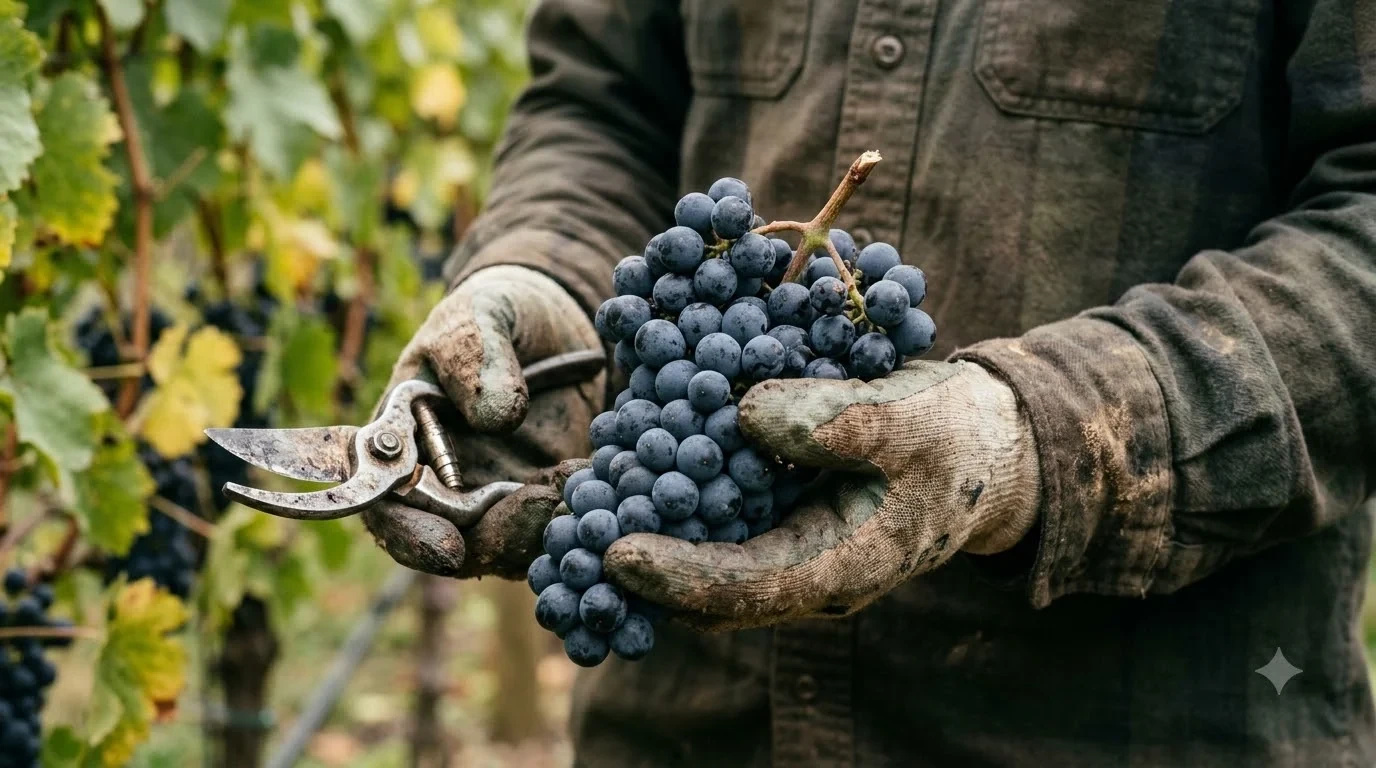
Zweigelt grape is a red Austrian variety created in 1922 by crossing Blaufränkisch and St. Laurent, and it is the most widely planted red grape in Austria. It typically gives a dry, juicy red with red cherry and pepper notes, medium-high acidity, and alcohol around 11.5–13.5%. Styles range from light, chillable bottlings to concentrated, oak-aged wines from Burgenland and Carnuntum.
Zweigelt is one of the wine world’s most useful red grapes for everyday drinking, but it is also capable of serious quality when yields are controlled. Learning its history, its flavor range, and the regional differences makes it easier to choose the right bottle and serve it at its best.
What the Zweigelt Grape Is and How It Became Austria’s Main Red
Zweigelt is a relatively young variety with an outsized role in Austrian wine. It was bred at Klosterneuburg in 1922 and later spread across the country by Lenz Moser’s high vine training system.
Dr. Fritz Zweigelt created the variety at the Teaching and Research Centre for Viticulture and Horticulture in Klosterneuburg by crossing Blaufränkisch and St. Laurent, according to Austrian Wine. The cross only gained real recognition after the Second World War, but it now accounts for 5,940.28 hectares, or 13.4% of Austria’s total vineyard area. It is the country’s most widespread red wine variety and appears in every Austrian wine-producing region.
Niederösterreich holds the largest share at 3,397 hectares, or 57.19% of the total, followed by Burgenland at 2,239 hectares and 37.69%. Steiermark has 257 hectares, Wien 33 hectares, and Bergland 14 hectares. The variety ripens early to middle and is not demanding about soil, but its high fertility means growers must prune carefully and control yields to make serious wine.
Lenz Moser was the key figure in its expansion, recommending the variety and planting it widely with his high vine training system. The grape was originally called Rotburger after Klosterneuburg, but the name caused confusion with the distinct Rotberger variety from Geisenheim, Germany. In the 1970s, Moser renamed it Zweigelt, and the new name stuck.
Zweigelt Grape Flavor Profile: Cherry, Pepper, and a Range of Body
Zweigelt typically smells of red cherry, raspberry, and black pepper, with a juicy, refreshing palate. Its body and tannin depend heavily on yield and winemaking, so the category runs from light and chillable to full and structured.
Wine Folly lists red cherry, raspberry, black pepper, licorice, and chocolate as the grape’s primary flavors. It describes the typical style as dry, medium-light in body, low in tannin, medium-high in acidity, and 11.5–13.5% ABV. That combination makes the wine taste bright and juicy rather than heavy, and it explains why the grape works so well with food.
Austrian Wine notes that fully ripe fruit can produce full-bodied wines with aromas of morello cherry and strong tannins, with good longevity. The color is often a concentrated, dark violet. The apparent contradiction with the lighter description is a matter of style: entry-level Zweigelt from high-yielding vineyards is light and fruity, while low-yield, fully ripe fruit from serious sites can give denser, more tannic wines.
The grape’s acidity is one of its defining features. Medium-high acidity keeps the wine fresh even in warm vintages and gives it a clean finish. That acidity is also why Zweigelt can handle fatty foods and why it remains drinkable when served slightly cool. If you enjoy other bright, high-acidity reds, the baga grape from Portugal offers a useful comparison in weight and freshness.
How Winemaking Shapes Zweigelt: Oak, Blends, and Sweet Styles
Zweigelt is flexible in the cellar: it can be made in stainless steel for freshness, aged in barrique for weight, blended with other grapes, or used for sweet wines. The winemaker’s choices matter as much as the vintage.
Austrian Wine says the spectrum ranges from young to mature wines, produced with élevage in barriques or with no wood at all. A stainless-steel Zweigelt is typically juicy and aromatic, with the red cherry and pepper notes at the front. A barrique-aged version adds vanilla, spice, and a rounder texture, and it can handle darker fruit and firmer tannin. The grape is also a common blending component. Wine-Searcher notes that it is blended with Cabernet and Merlot for an Austrian take on a Bordeaux blend, and with its parent Blaufränkisch for a distinctly Austrian red.
Weingut Bründlmayer in the Kamptal region offers a useful example of the middle path. Its Zweigelt shows blackberry, red currant, and black pepper at 12.5% ABV, and the estate harvests at 3,500 liters per hectare, keeps the fruit about 2 weeks on the skins, and matures the wine for 12–24 months in large 2400-liter Austrian oak casks. That combination gives a silky texture and fine-grained tannin without the vanilla weight of a new-barrique style.
Zweigelt is not only a dry red. Wine-Searcher reports that it is used for sweet Strohwein made from dried grapes and for ice wine, including an ice wine produced in Canada’s Okanagan Valley. Those sweet styles are niche, but they show how adaptable the variety is. For dry wines, the key quality factor is yield: the grape is naturally productive, and high yields dilute flavor. Growers who limit yields get more concentration, color, and tannin.
Regional Styles: Burgenland, Carnuntum, and Weinviertel
Region changes Zweigelt noticeably. Burgenland gives the richest and most concentrated examples, Carnuntum produces premium wines with more structure, and the Weinviertel is associated with lighter, fresher styles.
Wine-Searcher states that the finest Zweigelt examples come from Burgenland, particularly Neusiedlersee. Austrian Wine adds that Carnuntum and the area around Lake Neusiedl frequently yield premium wines. The Weinviertel, meanwhile, has the highest number of Zweigelt vines, according to Weinfurore, and is a source of lighter, more affordable bottlings. The Kamptal, north of the Wachau, gives a cooler, more peppery expression, as Bründlmayer’s bottling shows.
The regional planting data shows how concentrated the variety is. Niederösterreich, which includes the Weinviertel, Kamptal, and Carnuntum, accounts for 57.19% of the Austrian total, while Burgenland accounts for 37.69%. Steiermark, Wien, and Bergland together make up less than 5.2%. That means most Zweigelt comes from two federal states, and the style differences between them are the main axis of the category.
| Region | Zweigelt hectares | Share of Austrian total | Typical style |
|---|---|---|---|
| Niederösterreich | 3,397 ha | 57.19% | Fresh, juicy, lighter styles; Carnuntum and Kamptal add structure and pepper |
| Burgenland | 2,239 ha | 37.69% | Richer, denser; Neusiedlersee is a benchmark |
| Steiermark | 257 ha | 4.33% | Smaller plantings; fresh, aromatic reds |
| Wien | 33 ha | 0.55% | Urban-edge vineyards; light, approachable wines |
| Bergland | 14 ha | 0.23% | Marginal plantings; cool-climate freshness |
| Austria total | 5,940.28 ha | 100% | Range from light to full-bodied |
For drinkers, the practical rule is simple: choose Burgenland for richness and Carnuntum or Kamptal for structure and spice, and choose a generic Niederösterreich or Weinviertel bottling for a lighter, more casual bottle. The grape’s high acidity keeps even the richer versions fresh.
Serving Temperature, Glassware, and Aging Zweigelt
Serve lighter Zweigelt at 55–60°F and fuller examples at 16–18°C, which is about 61–64°F. Decant young bottles for about 30 minutes, and plan to drink most bottles within a few years.
Wine Folly recommends 55–60°F, a 30-minute decant, and a cellar window of 3–5 years. Weinfurore lists 16–18°C for Zweigelt, which suits fuller, riper styles. Sonnenmulde, a Burgenland producer, lists 18°C, 12.5% alcohol, 4.9 grams per liter of acidity, and 2.1 grams per liter of sugar for its Zweigelt, and notes the wine reaches its optimum about a year after harvest and can be kept for 3 or more years. The difference in recommended temperatures is stylistic rather than contradictory: a light, juicy bottle tastes fresher at the lower end, while a barrique-aged wine needs a little more warmth to show its texture. A standard 750 ml bottle pours about five 5-ounce glasses.
Aging potential is modest for most bottlings. Wine-Searcher notes that the finest examples can cellar for a decade or so, but the majority are best consumed within a few years of release. That makes Zweigelt a drinker’s wine rather than a long-term cellar candidate. Once opened, a still red holds for about 3–5 days in the refrigerator with a stopper; let it warm slightly before serving the second glass. Store unopened bottles on their side near 55°F.
Tip: If a Zweigelt tastes flat or smells muted, it is probably too cold. Let it sit for 10–15 minutes, or cup the glass in your hands, and the cherry and pepper notes should return. Avoid serving it above 64°F, where the alcohol can start to dominate.
Food Pairing for Zweigelt Grape Wines
Zweigelt’s medium-high acidity and juicy fruit make it a versatile food red. It works with grilled meat, sausages, poultry, pasta, and cheese, and it handles spice better than tannic reds.
Wine Folly pairs Zweigelt with barbecue chicken, grilled sausages, macaroni salad, and backyard gatherings. Weinfurore recommends spicy meat, game, pheasant, partridge, pasta, and cheese. Bründlmayer suggests pasta, pork, poultry, and curries or woks that are not too sweet and hot. The common thread is fat, salt, and moderate spice: salt and fat soften tannin, and the wine’s acidity cuts through richness. A paprika-rubbed chicken, a pork schnitzel, or a plate of stuffed pasta with a meat sauce are all natural fits.
Spicy food is a better match than it would be with a high-tannin red because Zweigelt’s tannin is usually low to medium. Chili heat is amplified by alcohol and tannin, so a lighter, lower-alcohol Zweigelt at 11.5–12.5% ABV is a safer choice with a spicy dish than a 14.5% blockbuster. Oily fish is a harder match for any red with noticeable tannin, so keep Zweigelt for meat, pasta, and cheese. For a white alternative with equally high acidity, the carricante grape from Sicily is a useful comparison.
Buying Zweigelt: What to Look For
Most Zweigelt is sold for early drinking, so vintage and style matter more than long aging. Look for a recent vintage, a modest alcohol level for lighter styles, and a named region for more serious bottles.
Entry-level Zweigelt is typically 11.5–13.5% ABV, fresh, and fruity, and it is best within 3–5 years of the vintage. Reserve or barrique-aged bottlings can reach the higher end of that alcohol range and may benefit from a few years in bottle, but even the finest examples are generally at their best within a decade. A Burgenland or Carnuntum bottling is the step up in concentration; a Weinviertel or generic Niederösterreich bottling is the value choice.
If you are exploring other grapes with a similar light-to-medium red profile, the godello grape shows how a white can deliver comparable freshness, while the site’s Wine by Type section helps place Zweigelt alongside other red varieties. For a dinner with four people, plan on two bottles unless other drinks are on the table; one bottle is about five glasses.
Frequently Asked Questions
Does Zweigelt have another name?
Yes. It is often sold as Blauer Zweigelt, and “Blauer” refers to the blue-black color of the grape skin. The original name was Rotburger, after Klosterneuburg, but it was dropped because of confusion with the separate Rotberger variety from Geisenheim, Germany.
Is Zweigelt planted outside Austria?
Plantings outside Austria are small. Weinfurore notes experimental or limited sites in Germany, England, the Finger Lakes region of the United States, and Ontario and British Columbia in Canada. The grape remains overwhelmingly Austrian in identity and acreage.
Is Zweigelt resistant to disease?
Weinfurore describes the vine as hardy and resistant to dryness, frost, and various diseases. It is not fond of chalky soils, but it adapts to most other soil types. Its main viticultural weakness is high fertility, which requires yield control.
Which region has the most Zweigelt vines by count?
The Weinviertel has the highest number of Zweigelt vines, according to Weinfurore. That does not make it the region with the most hectares, since Niederösterreich as a whole accounts for 57.19% of the Austrian total. The Weinviertel is best known for lighter, fresher styles.
Why was the name Rotburger changed to Zweigelt?
The original name Rotburger was too close to Rotberger, a different variety created around the same time in Geisenheim, Germany. Wine-Searcher explains that the duplication was resolved in the 1970s, when Lenz Moser renamed Dr. Zweigelt’s variety after its creator. The change helped clarify labels for growers and drinkers.
Zweigelt is a rare combination of everyday drinkability and real regional character. Start with a fresh Niederösterreich or Weinviertel bottling to understand the grape’s cherry-and-pepper core, then move to Burgenland or Carnuntum for density and structure. Serve it cool, decant it briefly, and pair it with grilled meat, pasta, or a spicy chicken dinner.
More in Wine Types & Grapes
 Zinfandel Sugar Content: Dry Red vs. White Zinfandel GramsUpdated Nov 21, 2026
 Best Zinfandel Substitute Options for Sipping and CookingUpdated Nov 21, 2026
 Zweigelt Food Pairing: Best Dishes, Cheeses, and Serving TipsUpdated Nov 21, 2026
 Zinfandel Tannins Explained: How Structure Shapes Every BottleUpdated Nov 21, 2026
 Zinfandel Sweetness Level: Dry Red vs. Sweet White Zin ExplainedUpdated Nov 21, 2026
 Xinomavro Food Pairing: Best Dishes, Styles, and Serving TipsUpdated Nov 21, 2026