

We may earn a commission when you buy through links on this page, at no extra cost to you. Learn more.
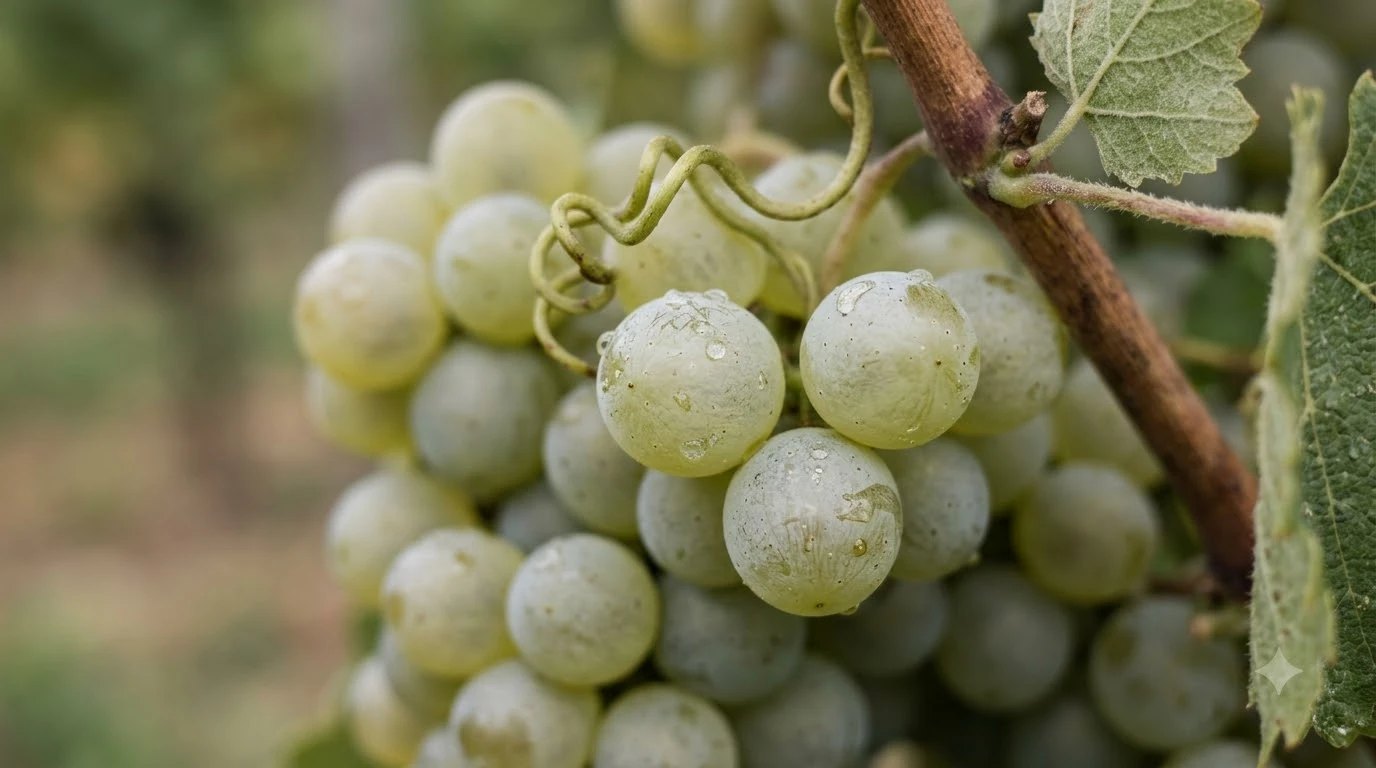
The carricante grape is an ancient, high-acid white wine variety native to Sicily, grown almost exclusively on the volcanic slopes of Mount Etna. Pronounced “car-ree-KAAN-tey,” it produces bone-dry, mineral-driven white wines with citrus, green apple, and saline notes that age similarly to dry Riesling or Chablis. Under Etna Bianco DOC regulations, wines must contain at least 60% Carricante, while Etna Bianco Superiore from the eastern commune of Milo requires at least 80%.
Long overlooked in favor of higher-yielding Sicilian varieties, Carricante has earned global recognition among sommeliers and collectors for its razor-sharp acidity, volcanic tension, and remarkable longevity. Whether bottled as a crisp, stainless-steel-aged village white or a structured single-vineyard expression from old bush vines, this variety captures the dramatic high-elevation terroir of Europe’s tallest active volcano.
What It Is
Carricante is an indigenous white Vitis vinifera grape that has grown on the eastern side of Sicily for centuries, taking its name from the Italian word carica (“load”) because of its naturally abundant harvests when left unpruned. Today, quality-focused growers deliberately restrict yields so the fruit concentrates its signature floral aromatics and stony minerality.
In the glass, the grape bridges the gap between electric freshness and savory depth. Critics and educators frequently compare young bottlings to premier cru Chablis or dry Austrian Riesling, noting how its brisk natural acidity provides structure without relying on heavy oak influence. For shoppers exploring Wine by Type, Carricante sits firmly in the light-to-medium-bodied, crisp, mineral white category, offering far more tension and salinity than standard warm-climate Mediterranean whites.
While Carricante shines as a single-varietal wine, traditional Etna winemakers often blend it with small proportions of Catarratto—Sicily’s most widely planted white grape—and the rare local variety Minnella Bianca. These blending partners soften Carricante’s piercing acidity and add mid-palate roundness, creating balanced wines that are approachable in their youth while retaining the backbone needed for cellaring.
Flavor and Styles
Young Carricante wines deliver vibrant aromatics of Meyer lemon, lime zest, crunchy green apple, white peach, and orange blossom layered over a distinct crushed-rock and sea-spray minerality. On the palate, the wine is bone-dry, linear, and mouthwatering, finishing with a lingering, salty tang that reflects its volcanic origins.
As bottles mature for five to ten years or longer, Carricante undergoes a dramatic transformation. The bright citrus and blossom notes soften into richer flavors of yellow apple, baked pear, wild Mediterranean herbs, beeswax, and toasted hazelnut. According to Wine Folly’s guide to Carricante, aged examples also develop a subtle petrol or kerosene aroma caused by TDN (1,1,6-trimethyl-1,2-dihydronaphthalene), the same naturally occurring compound that gives mature Riesling its signature complexity.
Winemakers produce Carricante in several distinct styles depending on elevation, vine age, and cellar choices. Entry-level Etna Bianco bottlings are typically fermented and aged in stainless steel or concrete tanks with several months on the fine lees (sur lie) to preserve pure citrus fruit and crispness. Single-vineyard (contrada) and Etna Bianco Superiore wines often incorporate partial aging in large neutral oak casks or French tonneaux, yielding a creamier texture and broader savory profile without masking the grape’s natural vibrancy.
| Wine Style | Minimum Carricante | Typical Aging Vessel | Key Tasting Profile |
|---|---|---|---|
| Etna Bianco DOC | 60% | Stainless steel or concrete on fine lees | Zesty lemon, green apple, white flowers, crisp saline finish |
| Etna Bianco Superiore DOC | 80% (Milo only) | Stainless steel, concrete, or large neutral oak | Structured orchard fruit, crushed volcanic rock, strong aging potential |
| Single-Contrada Bottling | 80%–100% | Neutral oak tonneaux or concrete eggs | Layered yellow apple, wild herbs, beeswax, hazelnut, deep minerality |
| Metodo Classico Sparkling | 60%–100% | Bottle-aged on lees (traditional method) | Green citrus, brioche, chalky texture, persistent fine bubbles |
Where It Grows
Although historical records suggest Carricante once grew across much of Sicily, the grape is now concentrated almost exclusively on the slopes of Mount Etna in the island’s northeast. Vineyards climb from roughly 1,300 feet to over 3,200 feet above sea level, making Etna one of Europe’s highest-elevation wine regions.
The volcano’s eastern and southeastern flanks—particularly around the commune of Milo—are widely considered the premier territory for Carricante. Because the eastern side faces the Ionian Sea, vineyards receive cool coastal breezes, higher annual rainfall, and dramatic diurnal temperature swings between sunny afternoons and chilly mountain nights. These conditions allow the grapes to ripen slowly over a long growing season, preserving high malic acid levels while developing complex aromatics.
Etna’s soils are equally crucial to the grape’s identity. Centuries of volcanic eruptions have created a patchwork of dark, sandy lava soils rich in iron, potassium, and pumice, interspersed with decomposed volcanic ash. Vines struggle through these free-draining, nutrient-poor layers, sending roots deep underground and producing small clusters with concentrated flavor. Because phylloxera cannot easily survive in fine volcanic sand, many plots still feature ungrafted, pre-phylloxera bush vines (alberello) that are over 80 to 100 years old.
How to Serve
Serve young, stainless-steel Carricante chilled to 45–50°F (7–10°C) to highlight its crisp citrus acidity and refreshing salinity. For barrel-aged single-vineyard expressions or bottles with five or more years of age, allow the wine to warm slightly to 50–55°F (10–13°C) so its nuanced herbal, waxy, and mineral aromatics can open up.
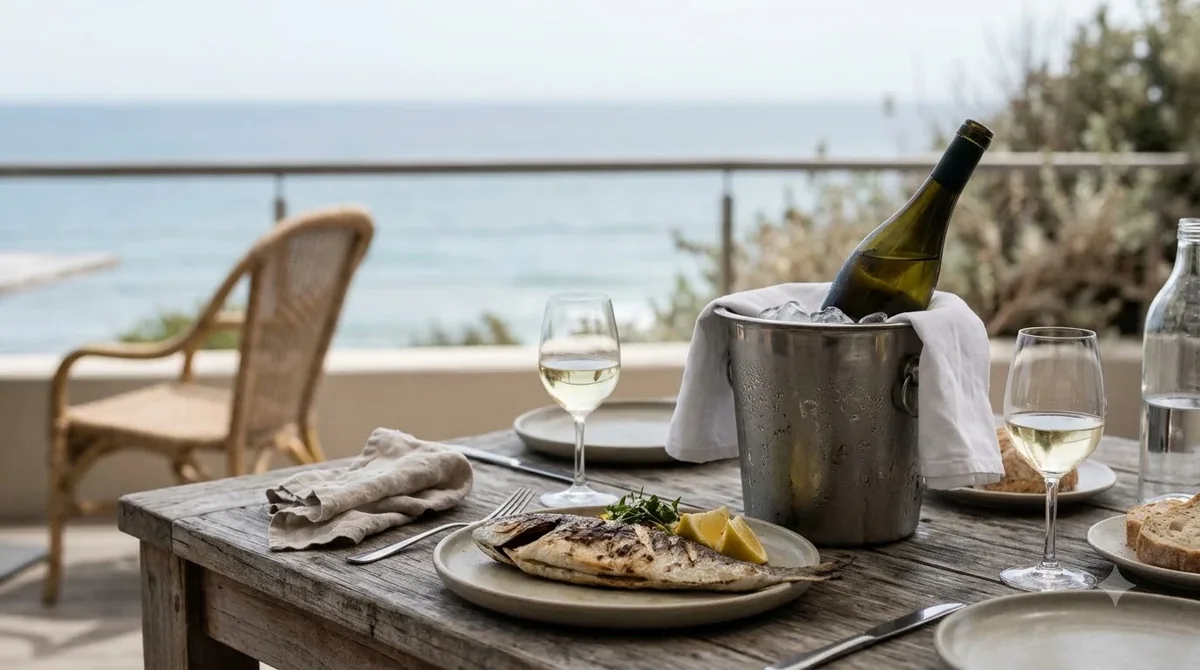
Glassware makes a noticeable difference with this aromatic, high-acid white. A medium-sized tulip-shaped white wine glass—such as a standard Riesling or Sauvignon Blanc glass—concentrates delicate floral and citrus top notes while directing the wine toward the center of the palate. Young bottles do not require decanting and can be poured straight from the refrigerator, though giving an older Etna Bianco Superiore 15 to 20 minutes of air in the glass or a small carafe helps unwind any tight reductive or smoky volcanic notes.
Thanks to its high natural acidity and low residual sugar, an opened bottle of Carricante holds up remarkably well compared to softer white wines. Re-corked and stored upright in the refrigerator, most bottles remain bright, expressive, and enjoyable for three to five days after opening.
Tip: Avoid serving Carricante ice-cold straight out of a 38°F refrigerator; letting the bottle sit on the counter for 15 minutes brings out its signature crushed-stone minerality and white peach aromatics.
Food Pairing
Carricante’s combination of brisk acidity, moderate alcohol (typically 12.5% to 13% ABV), and natural salinity makes it an exceptionally versatile partner at the dinner table. Its crisp structure cuts cleanly through rich, fried, or creamy dishes while echoing the briny flavors of coastal cuisine.
In its native Sicily, local traditions provide the most natural blueprint for pairing. Classic regional matches include grilled swordfish with lemon and oregano, linguine with sea urchin or clams, breaded and baked sardines (sarde a beccafico), and crispy fried seafood platters (fritto misto). The wine’s sharp acidity refreshes the palate between bites of golden-fried street foods like cheese-stuffed rice balls (arancini) and pan-fried eggplant cutlets.
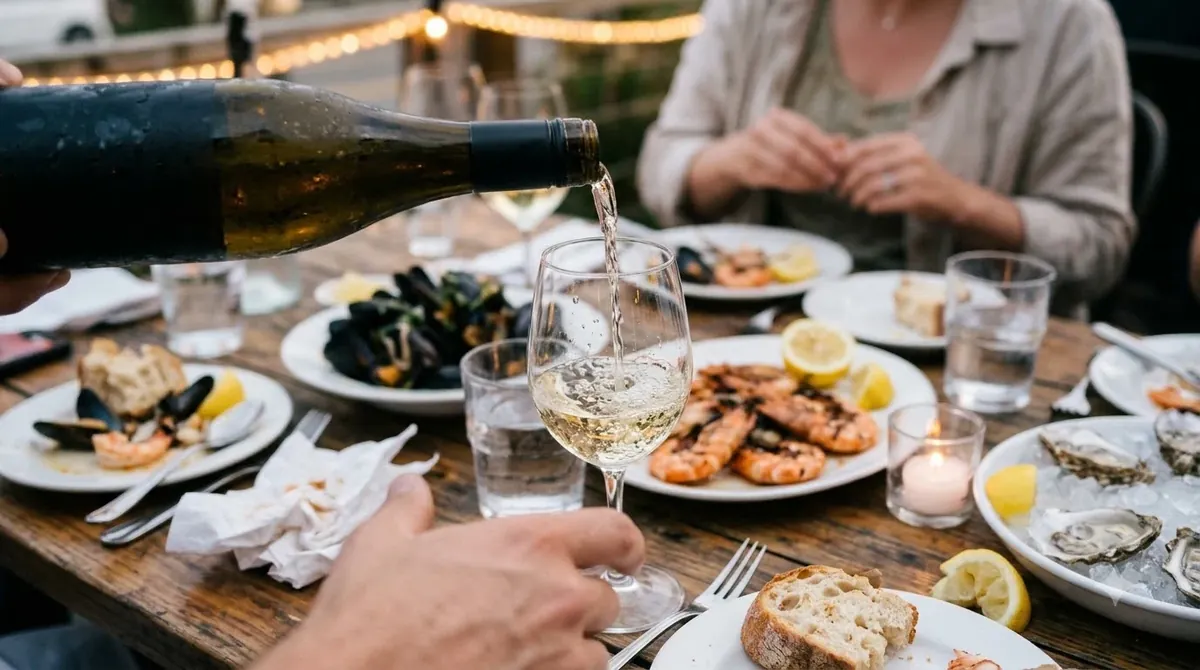
Beyond Italian cooking, Carricante excels alongside dishes that challenge heavier, oak-aged whites. Raw shellfish—such as East Coast oysters, ceviche, and scallop crudo—pairs smoothly with the wine’s sea-salt finish. Its citrus-and-herb profile also handles aromatic, mildly spicy Southeast Asian dishes like Thai green papaya salad, Vietnamese spring rolls, and lemongrass-steamed fish, as well as fresh goat cheese, aged sheep’s milk pecorino, and roasted spring vegetables.
How to Choose a Bottle
When shopping for Carricante, start by checking the appellation on the label to match the style to your occasion. Bottles labeled Etna Bianco DOC represent the classic regional blend (at least 60% Carricante, often rounded out with Catarratto) and offer bright, immediate drinkability for weeknight dinners or aperitifs. If you want maximum purity, structure, and cellar potential, look for Etna Bianco Superiore DOC, which can only be produced in the eastern village of Milo and mandates at least 80% Carricante.
Pay close attention to vineyard designations and producer cues on the front and back labels. Respected Etna estates—including Tenuta delle Terre Nere, Planeta, Benanti, Tornatore, Barone di Villagrande, and Tenuta Tascante—frequently list specific vineyard districts, known as contrade (such as Calderara Sottana, Santo Spirito, or Pietrarizzo), along with whether the wine was aged in stainless steel or neutral oak. Reviewing tasting notes from Wine Enthusiast’s guide to Sicilian white wines can also help identify producers whose house style leans leaner and more mineral versus richer and more textural.
For immediate enjoyment, look for recent vintages within one to three years of harvest to experience Carricante at its zestiest. If you enjoy complex, savory whites—similar to how enthusiasts approach godello grape wines from northwestern Spain or aromatic malvasia grape bottlings from Mediterranean islands—consider buying two bottles of a single-contrada Etna Bianco: open one young and cellar the second for five to eight years to experience its honeyed, petrol-tinged evolution firsthand.
Frequently Asked Questions
What does Carricante taste like?
Carricante tastes bone-dry, crisp, and intensely mineral, featuring prominent flavors of Meyer lemon, green apple, white peach, and orange blossom. Its high natural acidity gives it a zesty, mouthwatering finish accompanied by a distinct salty or crushed-rock note from Mount Etna’s volcanic soils.
Is Carricante similar to Sauvignon Blanc or Riesling?
Carricante is most often compared to dry Riesling and unoaked Chablis rather than Sauvignon Blanc. While it shares Sauvignon Blanc’s refreshing citrus drive, it lacks grassy or tropical aromatics, offering instead the linear acidity, stony minerality, and age-worthy petrol nuances of dry German or Austrian Riesling.
What is the difference between Etna Bianco and Etna Bianco Superiore?
Under Italian DOC regulations, standard Etna Bianco can be made across the wider Etna zone and must contain at least 60% Carricante. Etna Bianco Superiore must come exclusively from the high-rainfall eastern commune of Milo, requires a minimum of 80% Carricante, and is known for greater concentration and aging capacity.
How long can you age Carricante wine?
Entry-level Etna Bianco bottlings are delicious within two to four years of the vintage date while their citrus fruit is brightest. Top single-vineyard and Etna Bianco Superiore wines can easily cellar for eight to twelve years or longer, developing rich notes of yellow apple, wild herbs, beeswax, and toasted hazelnut.
Whether you are pouring a crisp, stainless-steel bottle alongside fresh oysters or opening a cellared single-vineyard release from Milo, the carricante grape offers one of Italy’s most distinctive expressions of volcanic terroir. Exploring different contrade and vintages is an easy way to see how elevation, sea breezes, and lava soils shape a single native variety into a world-class white wine.
More in Wine Types & Grapes
 Zinfandel Sugar Content: Dry Red vs. White Zinfandel GramsUpdated Nov 21, 2026
 Best Zinfandel Substitute Options for Sipping and CookingUpdated Nov 21, 2026
 Zweigelt Food Pairing: Best Dishes, Cheeses, and Serving TipsUpdated Nov 21, 2026
 Zinfandel Tannins Explained: How Structure Shapes Every BottleUpdated Nov 21, 2026
 Zinfandel Sweetness Level: Dry Red vs. Sweet White Zin ExplainedUpdated Nov 21, 2026
 Xinomavro Food Pairing: Best Dishes, Styles, and Serving TipsUpdated Nov 21, 2026