

We may earn a commission when you buy through links on this page, at no extra cost to you. Learn more.
Fairview wine spans South African styles from Paarl Pinotage and Shiraz to crisp Sauvignon Blanc grown in Darling. The producer farms vineyards in four regions, so its bottles can differ in grape, climate, body, and oak influence. Start with the meal and the style you enjoy, then use the grape and region to narrow your choice.
Fairview is a South African wine and cheese producer with roots in Paarl, where the Back family began bottling wine under its own name in 1974. Its range draws on vineyards in Paarl, Darling, Swartland, and Stellenbosch. That regional breadth matters: a dry white from a cooler maritime site is a different proposition from a structured red grown in a warmer inland setting. The guide below explains how to read the range, compare grapes, pair the wines with food, and serve them at a useful temperature.
Fairview’s family history and wine identity
Fairview’s story is tied to generations of the Back family and a willingness to work with more than familiar Cape varieties. The estate connects its Paarl home with a wider set of vineyards and a range that includes red, white, and rosé styles.

Charles Back I, an immigrant from Lithuania, arrived in South Africa in 1902 and built a wine export business. After he died in 1955, his son Cyril received Fairview. Cyril and his wife, Beryl, bottled their own wine there for the first time in 1974, and they began a public wine auction to market their young wines. Their son Charles Back II joined his father on the farm in 1978 after oenology training at Elsenburg; he took full responsibility for Fairview in 1995.
Charles Back II pursued grapes that were less established in the Cape, including Viognier, Tempranillo, Sangiovese, and Petite Sirah. That history helps explain why Fairview’s portfolio is not limited to the most familiar international grapes. Pinotage, Shiraz, Grenache, Chenin Blanc, and Sauvignon Blanc are also part of the regionally varied picture. A useful introduction to the broader category is this guide to wine brands, which can help put one producer’s range in context.
The name can refer to a producer rather than a single flavor profile. One Fairview bottle may be a dry, lightly oaked white; another may be a ripe, savory red. Fairview also makes cheese, so visitors and diners may encounter wine and cheese together, but the wines are best chosen by style and food match rather than by assuming every bottle tastes alike.
Four growing areas shape the range
Fairview’s vineyard geography includes Paarl, Darling, Swartland, and Stellenbosch. Each site offers a different combination of climate, soil, and planting choices, which gives the producer more options than a range sourced from one valley alone.
Paarl is the home base, and Fairview lists 350 hectares of vineyards there. Its vines grow on decomposed granite on the southwestern slopes of Paarl Mountain, below Paarl Rock. Fairview reports an average summer temperature of 24°C in Paarl and associates the warmer conditions with grapes such as Shiraz, Pinotage, Petite Sirah, Viognier, and Grenache. The estate says most of its Paarl vines are trellised, with supplementary drip irrigation during warm summer months.
Darling has a maritime influence from the Atlantic. Fairview lists 60 hectares of Sauvignon Blanc there, alongside Semillon, Chenin Blanc, and Riesling. Swartland contributes 155 hectares of bush-vine vineyards, mostly untrellised and without irrigation, with grapes including Shiraz, Carignan, Grenache, Tannat, Mourvèdre, Petite Sirah, Viognier, and Chenin Blanc. Stellenbosch adds 35 hectares on the Houmoed farm, where Fairview grows Bordeaux varieties including Cabernet Sauvignon, Merlot, Cabernet Franc, and Petit Verdot.
The Fairview vineyard overview describes the regions and planting choices. For a drinker, the practical takeaway is that the place named on a bottle can help set expectations, but grape and winemaking details matter too. Paarl Pinotage and Stellenbosch Cabernet do not offer the same structure, while Darling Sauvignon Blanc tends to point toward a different kind of freshness than a fuller Chenin Blanc.
Grapes and styles to look for
Fairview’s grape choices cover aromatic whites, crisp whites, and reds with a range of tannin and body. When comparing two bottles, start by identifying the grape, then consider whether you want freshness, fruit, oak, or a firmer structure.
Pinotage is a signature South African red grape and a natural place to begin with Fairview. Decanter’s listing for Fairview Pinotage 2020 describes cedar, hedgerow berries, cocoa, and soft spice, with a juicy, ripe, supple character. Pinotage can be an appealing option when you want a red with dark fruit and savory detail, but individual bottles still vary by vintage and winemaking approach.
Shiraz and Grenache provide other routes into red wine. Shiraz often brings more weight and tannin; Grenache generally gives a softer impression, with red-fruit flavors and spice. Fairview also grows Cabernet Sauvignon and Merlot in Stellenbosch. Cabernet is typically the firmer, more tannic choice, while Merlot is usually softer and medium in tannin. These differences help match a bottle to a dish: choose more structure for rich grilled meat, or softer tannin for a meal where you do not want the wine to dominate.
For whites, Sauvignon Blanc is the crisp, high-acid choice, particularly associated with Fairview’s Darling vineyards. Chenin Blanc can span a broad range of textures and styles, so look for the specific bottling details rather than assuming one profile. Viognier is a useful option when a fragrant, fuller white sounds more appealing than a sharp, citrusy one. If comparing local bottles with international reds, the discussion of Antinori red wine offers a separate reference point for how Italian grape and regional traditions can shape a red-wine choice.
Fairview also bottles wines with specific names that give more clues than the producer name alone. Decanter identifies Beryl Back 2022 as a dry, medium-bodied Paarl white with light oak and 13.69% alcohol. Fairview Malbec 2021, in Decanter’s entry, spent six months in French and US oak. Those are details for the cited bottlings, not rules for every Fairview wine.
Food pairings that suit the grapes
Pair by balancing weight, acidity, tannin, sweetness, and heat. Fairview’s variety across four growing areas makes it possible to find a bottle for both bright, lightly seasoned food and richer dishes.
Darling Sauvignon Blanc’s high acidity makes it a strong partner for goat cheese, herbs, salads, and seafood with citrus or vinaigrette. Acidity in the wine helps it stay lively beside acidic food, so a tart dressing usually calls for a wine with equal or higher acidity. Chenin Blanc can suit roast chicken, pork, or a cheese board, especially when the wine has enough body to stand alongside the dish. A dry Viognier can work with aromatic spices and roasted vegetables; avoid overpowering delicate white wines with very hot chile.
For reds, Pinotage and Shiraz can accompany grilled lamb, beef, and smoky vegetables. Salt and fat soften the perception of tannin, so a structured red often feels more integrated with a fatty cut of meat or a salty accompaniment than with a lean, unsalted dish. A softer Merlot can be more adaptable with tomato-based pasta or roast poultry. Tannic red wine is usually a poor match for oily fish, where the texture and wine can clash.
Sweetness deserves special care. Pair a sweet wine with a dessert that is equally sweet or less sweet, otherwise the wine can seem thin or sour. Chile heat also amplifies alcohol and tannin, so a high-alcohol, structured red can make spicy food feel hotter. For a spicy meal, consider a fresher white with good acidity or a softer red rather than a firm, tannic choice.
Tip: If the dish has a sharp dressing or tomato sauce, choose a wine with enough acidity to keep its flavor lively. If the dish is rich and salty, a more tannic red may feel softer beside it.
Fairview’s wine-and-cheese identity can make a cheese board a natural setting for tasting more than one style. Match a creamy, tangy cheese with a white that has enough acidity, and try a firm aged cheese with a red whose fruit can meet the savory intensity. Cheese varies widely in salt and richness, so taste the combination rather than relying on a fixed pairing rule. The same principle applies if you compare South African bottles with Portuguese choices such as Aveleda wine: match the acidity and weight to the food, not just the country on the label.
Serving, storing, and comparing bottles
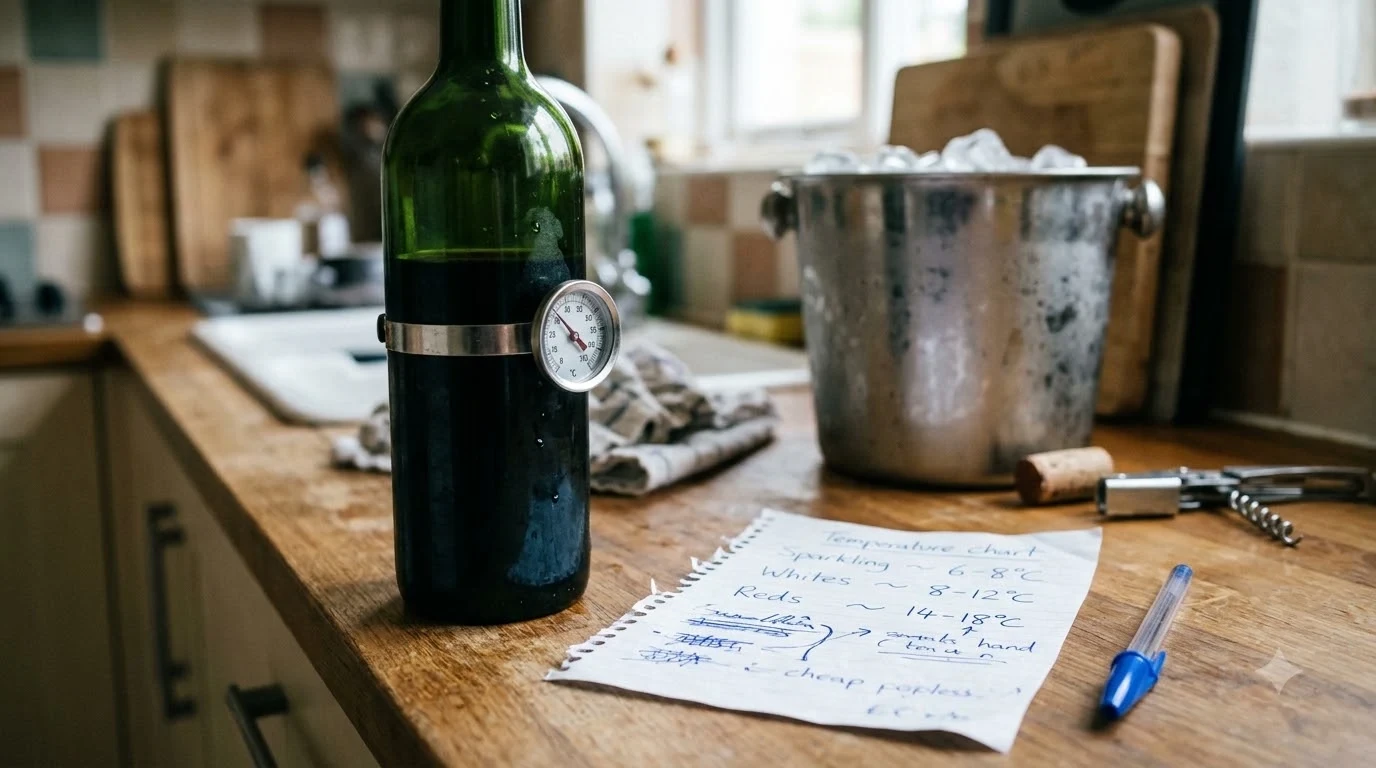
Serving temperature affects how aromas and texture come across. Chill whites and rosé, and serve red wines slightly cooler than a warm room so alcohol does not overwhelm their fruit.
Use these practical temperature ranges: light whites and rosé at 45–50°F, full-bodied whites at 50–55°F, light reds at 55–60°F, and full-bodied reds at 60–65°F. Sparkling wines are best at 40–50°F, while sweet whites are served at 43–50°F. If a bottle feels too cold, give it a few minutes in the glass; if a red feels warm, a short spell in the refrigerator can bring it closer to the target.
| Style | Serving temperature | Useful meal direction |
|---|---|---|
| Light white, including Sauvignon Blanc | 45–50°F | Seafood, goat cheese, salads |
| Full-bodied white | 50–55°F | Roast poultry, creamy dishes |
| Light red | 55–60°F | Roast poultry, lighter grilled food |
| Full-bodied red, including structured Shiraz | 60–65°F | Grilled meat, rich savory dishes |
| Sparkling | 40–50°F | Salty snacks, celebrations, appetizers |
For storage, keep unopened bottles on their side in a cool, stable place near 55°F, away from direct light and repeated temperature swings. Once opened, put still wine in the refrigerator and aim to finish it within three to five days. The cooler temperature slows oxidation even for red wine; bring a glass toward its serving range before drinking. A 750-milliliter bottle gives about five standard 5-ounce pours, which can help estimate how much to open for a meal.
Young, full-bodied reds may benefit from 30 to 60 minutes of decanting. That interval is a starting point, not a requirement; lighter reds and fresh whites generally do not need the same treatment. When comparing Fairview bottles, taste them at similar temperatures and with similar foods. Changing both the wine and the pairing at once makes it harder to tell whether the difference came from grape, regional source, oak, or the dish.
How to choose a Fairview bottle for the occasion
Choose a bottle by the meal and the style you want, then use grape and region as filters. A simple sequence avoids guessing based only on the producer’s name.
For a crisp aperitif or seafood dinner, begin with Sauvignon Blanc, especially a bottling associated with Darling. For roast chicken, consider Chenin Blanc or a lighter Pinotage. For grilled lamb or beef, look at Shiraz, Pinotage, or a Stellenbosch Cabernet Sauvignon if you prefer firmer tannin. For a cheese board, put one white and one red side by side and notice which one complements the cheese’s salt, creaminess, and intensity.
Compare the wine’s named grape and any description of body, sweetness, or oak. A dry, medium-bodied white with light oak, like the Decanter-listed Beryl Back 2022, is a different prospect from a fuller red matured in oak. Decanter reports six months in French and US oak for Fairview Malbec 2021; oak maturation may add spice or a rounder impression, but the wine’s fruit and structure still matter.
Use the meal as a final check. Choose higher acidity when the food is tart, a softer red when the dish is only lightly seasoned, and more tannin when a rich, fatty dish can balance it. If you are serving several courses, start with sparkling or a light white, move to fuller whites or reds, and finish with a sweet wine only if the dessert is no sweeter than the wine. These are reliable starting points, not rigid rules: personal preference and the exact bottling remain important.
Frequently Asked Questions
Where is Fairview Wine and Cheese located?
Fairview’s home vineyards are in Paarl, in South Africa’s Western Cape. Its wine-growing properties also include Darling, Swartland, and Stellenbosch, so a Fairview wine can draw on grapes from outside Paarl.
Does Fairview only make wine from Paarl grapes?
No. Fairview lists vineyards in four areas: Paarl, Darling, Swartland, and Stellenbosch. The distinct sites support different grape choices, including Darling Sauvignon Blanc and Stellenbosch Bordeaux varieties.
What does “bush vine” mean on a wine description?
A bush vine is grown without the conventional trellising system that supports many vineyard rows. Fairview says its Swartland vineyards are mostly untrellised bush vines, and that this area is not irrigated.
Is Fairview Pinotage a dry wine?
Decanter classifies its Fairview Pinotage 2020 entry as a dry red from Paarl. The tasting description mentions cedar, hedgerow berries, cocoa, and soft spice, though another vintage or bottling may differ.
What does “Koffieklip” mean in Fairview’s vineyard description?
Fairview describes Koffieklip as ferricrete, a clay- and iron-rich soil with a characteristic color. The name translates literally as “coffee stone,” referring to its appearance.
Fairview’s range is easiest to understand as a collection of wines shaped by grape and growing area, rather than as one house style. Start with the food, select a grape and body that suit it, and serve the wine at the right temperature to make the most of the bottle.
More in Wine Brands
 Underwood Wine Price: Compare Bottles, Cans, and Pack SizesUpdated Nov 21, 2026
 Zenato Wine Price: Compare Styles and Choose the Right BottleUpdated Nov 21, 2026
 Zuccardi Wine Price: Compare Bottles and Find the Right RangeUpdated Nov 21, 2026
 Yellow Tail Moscato Review: Taste, Sweetness and Serving TipsUpdated Nov 21, 2026
 Wolf Blass Yellow Label Review: Choose Your Best StyleUpdated Nov 21, 2026
 Wolffer Estate Rose Review: Choose the Right Bottle for Your TableUpdated Nov 21, 2026