

We may earn a commission when you buy through links on this page, at no extra cost to you. Learn more.
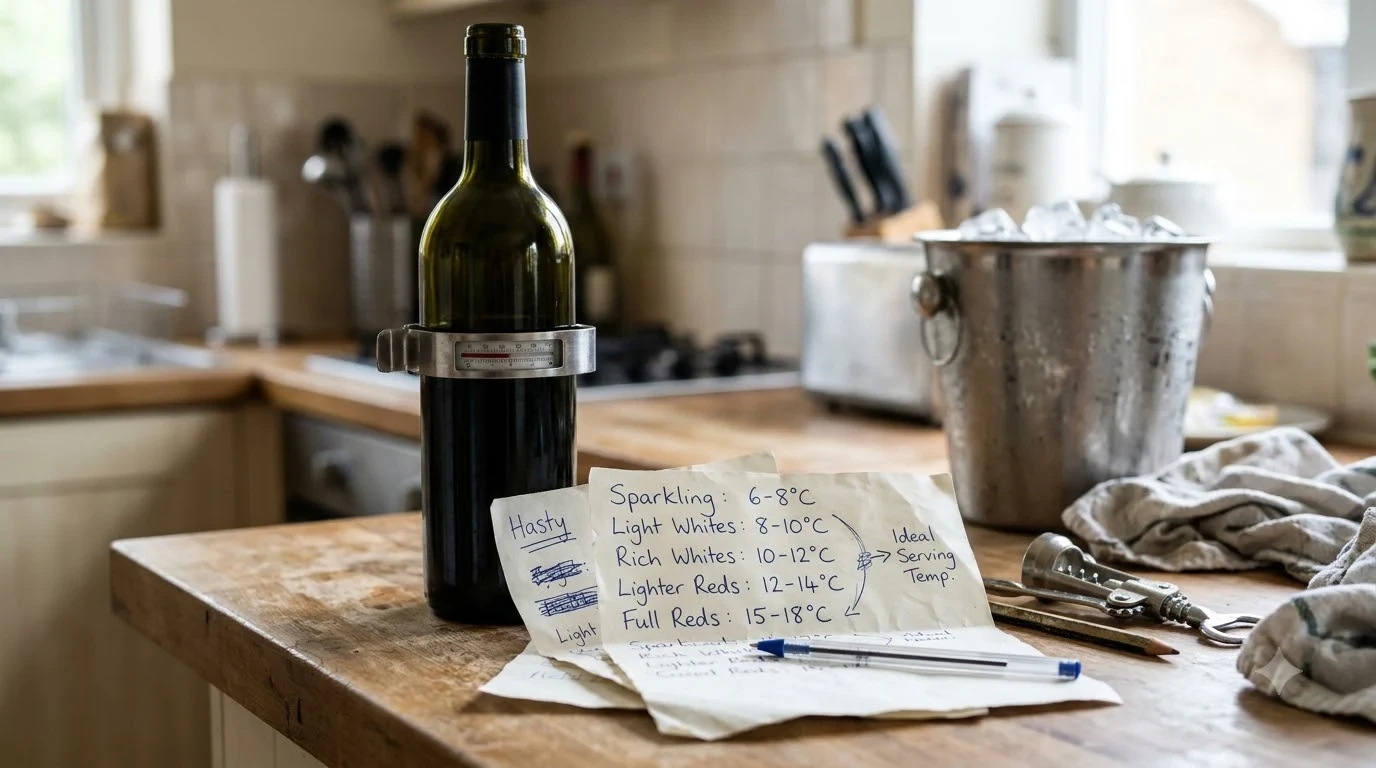
To learn how to serve red wine, match the temperature to the body of the wine: light and medium reds at 55–60°F (12–15°C), and full-bodied reds at 60–68°F (15–20°C). Wine Folly’s temperature guide uses the same three ranges. Most red wine service problems come from serving too warm, so a short time in the fridge before pouring often makes the biggest difference.
Red wine is often served at room temperature, but “room temperature” usually means a warm living room rather than a cool cellar. That gap can make a fresh red taste heavy, sharp, or muted. This guide explains the serving ranges, the signs that a red is too warm or too cold, and simple steps you can use at home or at a restaurant.
Serving temperature by body
The body of a red wine describes how heavy it feels in the mouth, and it is the simplest way to choose a serving temperature. According to Wine Folly’s serving temperature guide, light-bodied reds are best at 55–60°F (12–15°C), and medium-bodied reds fall in the same range. Full-bodied reds are served a little warmer, at 60–68°F (15–20°C).
The table below shows the three ranges side by side so you can check them quickly before opening a bottle.
| Red wine style | Serving range | Guide label |
|---|---|---|
| Light-bodied | 55–60°F (12–15°C) | Cool |
| Medium-bodied | 55–60°F (12–15°C) | Cool |
| Full-bodied | 60–68°F (15–20°C) | Slightly Cool |
Wine Folly uses the phrase “Bold Red Wines” for the full-bodied group. Those are the wines with more tannin, more alcohol, and deeper flavors, such as many Cabernet Sauvignon and Syrah bottles. Lighter reds such as Beaujolais and many Pinot Noirs sit in the cooler band.

Signs your red wine is too warm
A red that is served too warm gives clear signals. The most common one is a sharp smell of alcohol that seems to rise above the fruit. Wine Folly puts it simply: “If the wine burns your nose with the smell of alcohol, it might be too warm. Try cooling it down.”
Other signs include a soft or jammy taste, a heavy mouthfeel, and fruit that seems muted. When you notice these, the fix is usually simple. Place the glass or bottle in the fridge for ten to fifteen minutes, then taste again. A short chill often brings back the bright fruit and makes the wine feel lighter on the palate.
Signs your red wine is too cold
Serving a red too cold has the opposite effect. The aromas tend to fade, and the wine can taste flat or closed. Wine Folly notes that reds stored in the fridge may taste flat, and gives the guidance: “If the wine doesn’t have any flavor, try warming it up.”
The simplest fix is patience. Take the bottle out of the fridge about 20 to 30 minutes before pouring, or hold the glass in your hand for a few minutes. The wine will warm gradually, and the flavors will open as the temperature rises toward the right range.
How to bring red wine to the right temperature
A fridge is the most reliable tool for cooling a warm red. Place the bottle in the fridge for 15 to 20 minutes before serving, and check it with your hand. A bottle that feels cool to the touch is usually close to the light and medium range. Full-bodied reds need less chilling, so a short stop in a cool room may be enough.
For a warm room, an ice bucket with cool water can bring the wine down quickly, though it should be used briefly. Avoid leaving the bottle in direct sun, next to a stove, or on top of a warm appliance. Heat changes the balance of the wine and can make it taste heavier than it is.
Tip: Plan ahead for a full-bodied red. Set it out of the fridge about 30 minutes before the meal, and it will reach the upper end of its range without tasting warm.
Serving red wine at home
At home, the goal is to have each red at the right temperature when it reaches the table. Take the bottles you plan to serve out of the cellar or rack early, group the lighter reds for chilling, and leave the fuller reds closer to room temperature. This small planning step avoids rushing a bottle in the freezer or letting a full-bodied red sit too warm.
Once the bottle is poured, the wine continues to change in the glass. A red that starts at a good temperature will warm slowly as the meal goes on, so pouring smaller amounts often keeps each glass at its best. Replace the cork or use a stopper if the bottle will sit for a while.
Serving red wine at a restaurant
Restaurants usually store reds at cellar temperature, which can be cooler than a warm dining room. If a red arrives too cool, you can ask the server to let it sit for a few minutes before the first pour. If it arrives too warm, a short time in an ice bucket is a polite request that most staff can handle without fuss.
Ordering by body helps as well. A light red works well when the room is warm, and a full-bodied red suits a cooler room or a hearty meal. Asking the server for a light or bold red is an easy way to get a bottle that matches the setting.
Pairing service with the right glass
Glass shape also affects how a red wine tastes. A wide bowl lets the aromas gather, which makes the fruit and spice easier to notice. Full-bodied reds usually show well in a larger glass, while lighter reds often feel more lively in a slightly smaller bowl. The temperature and glass work together, so the wine reaches the nose and palate in the best condition.
For a specific style, you may want to read the guides on how to serve pinot noir or how to serve port, since each has its own temperature and glass advice.
Frequently Asked Questions
Should red wine be served at room temperature?
Room temperature is a traditional phrase, but it often means a warm room. Wine Folly gives a more precise range: 55–60°F (12–15°C) for light and medium reds, and 60–68°F (15–20°C) for full-bodied reds. Those ranges are usually cooler than a typical living room.
How long should red wine sit in the fridge before serving?
About 15 to 20 minutes is a practical window for a bottle that is slightly warm. Check the bottle by touch, and taste a small amount before pouring a full glass. Leaving a red in the fridge too long can make it taste flat.
What does it mean if red wine tastes like alcohol?
A sharp smell or taste of alcohol often means the wine is too warm. Wine Folly suggests cooling the wine down, which usually brings the fruit forward and softens the burn on the nose.
Which red wines should be served cooler?
Light-bodied and medium-bodied reds are best at 55–60°F (12–15°C), according to Wine Folly. Full-bodied reds are served a bit warmer, at 60–68°F (15–20°C), so they keep their structure without tasting hot.
For a broader view of how styles line up with serving advice, the Wine by Type section groups bottles by body and flavor. If you plan a menu with several reds, the how to serve sangria guide covers a red-based drink that follows its own service rules, which can be useful for summer gatherings.
More in Wine Types & Grapes
 Zinfandel Sugar Content: Dry Red vs. White Zinfandel GramsUpdated Nov 21, 2026
 Best Zinfandel Substitute Options for Sipping and CookingUpdated Nov 21, 2026
 Zweigelt Food Pairing: Best Dishes, Cheeses, and Serving TipsUpdated Nov 21, 2026
 Zinfandel Tannins Explained: How Structure Shapes Every BottleUpdated Nov 21, 2026
 Zinfandel Sweetness Level: Dry Red vs. Sweet White Zin ExplainedUpdated Nov 21, 2026
 Xinomavro Food Pairing: Best Dishes, Styles, and Serving TipsUpdated Nov 21, 2026