

We may earn a commission when you buy through links on this page, at no extra cost to you. Learn more.
The jumilla wine region is a high-altitude Spanish Denominación de Origen Protegida (DOP) located in southeastern Spain, spanning northern Murcia and southeastern Albacete, best known for full-bodied, dry red wines made from the Monastrell grape. Established as an official appellation in 1966, the region covers nearly 20,000 hectares of limestone-rich, semi-arid vineyards sitting between 400 and 800 meters above sea level. Intense sunshine combined with cool nighttime mountain breezes allows thick-skinned, often ungrafted old vines to produce concentrated reds alongside crisp whites, vibrant rosés, and traditional sweet wines.
For decades, bulk wine production obscured the fine-wine potential of southeastern Spain, but modern viticulture and renewed attention to ancient bush-trained vineyards have changed that reputation. Today, bottles bearing the Jumilla DOP label stand among the most distinctive and value-driven expressions on the global market.
Overview and Geography of the Jumilla Wine Region
Positioned as a geographic transition zone between the warm Mediterranean coast and the high central plateau of Castile-La Mancha, the jumilla wine region blends intense solar radiation with continental temperature swings. This unique meeting of mountain air and arid plains defines the rhythm of every harvest.
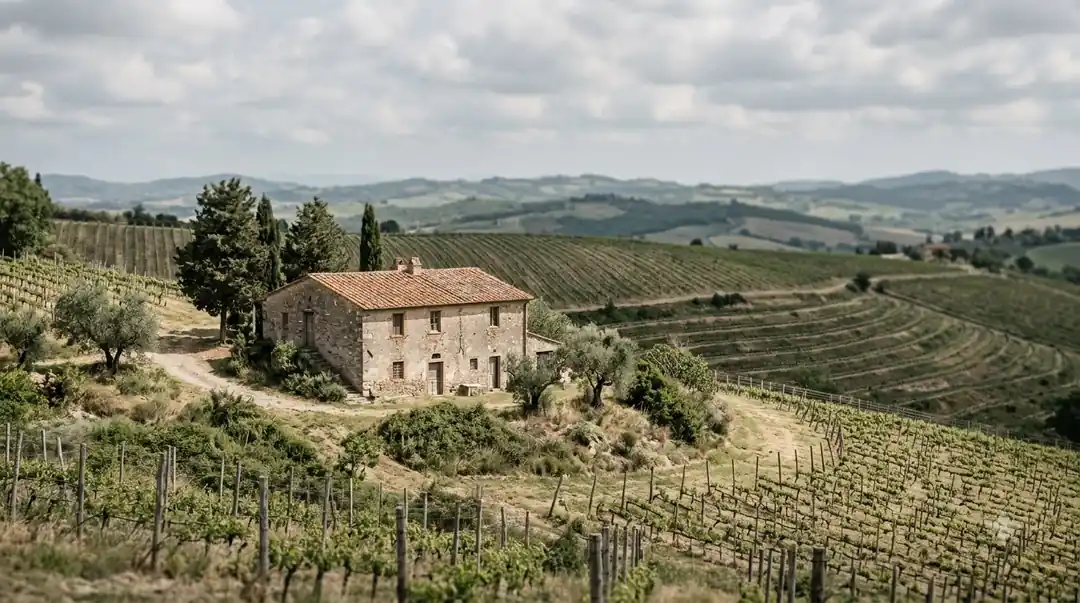
According to the Jumilla Wine Council (DOP), the appellation spans seven municipalities: Jumilla itself in the northern Region of Murcia, which accounts for roughly 40 percent of the vineyard area, and six neighboring towns across the southeastern corner of Albacete province—Fuente-Álamo, Montealegre del Castillo, Tobarra, Hellín, Ontur, and Albatana—making up the remaining 60 percent. Wide valleys framed by rugged limestone sierras create natural corridors that channel cooling winds across the vines.
Rainfall averages roughly 300 millimeters per year, while annual sunshine exceeds 3,000 hours. Summer afternoon highs regularly climb above 30°C (86°F) and can reach 40°C (104°F), yet high elevations ranging from 400 to 800 meters (1,300 to 2,600 feet) trigger sharp drops in temperature after sundown. That diurnal shift preserves natural acidity in the grapes while allowing skins and tannins to ripen completely, a climatic dynamic shared with several of the Wine Regions across inland Spain.
Soils, Climate, and Ungrafted Old Vines
Sandy, chalky limestone soils with high levels of active calcium carbonate make Jumilla one of the rare European appellations where ungrafted vines survived the phylloxera louse. These nutrient-poor, well-draining soils naturally restrict yields and concentrate flavor inside every berry.
Because the phylloxera pest struggles to survive in sandy, high-carbonate earth, growers in Jumilla were able to preserve hundreds of hectares of original European rootstock. Research highlighted by the Old Vine Conference notes that over 800 hectares of ungrafted vines remain in the appellation, widely considered the largest concentration in Europe. Beneath the topsoil, compacted calcium-carbonate layers known as petro-calcic horizons trap scarce winter moisture deep underground, allowing dry-farmed, goblet-trained bush vines to endure scorching summers without irrigation.
Low organic matter and high active carbonate also influence the chemistry of the finished wine. When roots encounter alkaline limestone, certain micronutrients become harder to absorb, leading to smaller berries with a higher skin-to-juice ratio and lower pH. Many local growers also farm organically—arid winds keep fungal pressure minimal, making Jumilla one of Spain’s leading zones for certified organic viticulture.
Key Grapes and Wine Styles
While Monastrell accounts for the vast majority of plantings and defines Jumilla’s identity, permitted international and native varieties add nuance to both single-varietal bottlings and blends. Winemakers craft everything from unoaked, fruit-forward reds to age-worthy reserves, refreshing whites, and fortified sweet wines.
Monastrell—known in France as Mourvèdre and in Australia and California as Mataro—is a late-ripening red grape with thick, dark skins that thrive in dry heat. In youth, unoaked Joven bottlings burst with crushed blackberry, black cherry, violet, and wild mountain herbs like thyme and rosemary. With oak aging under Spain’s Crianza, Reserva, and Gran Reserva classifications, the wines gain savory layers of cocoa, leather, licorice, tobacco, and roasted meat.
Beyond dry reds, the regulatory board authorizes red blending partners such as Syrah, Cabernet Sauvignon, Garnacha, Petit Verdot, and Tempranillo (locally called Cencibel). White wines—made primarily from Airén, Macabeo, Sauvignon Blanc, Chardonnay, and Moscatel de Grano Menudo—offer bright citrus and stone-fruit character, while dry rosés show vibrant raspberry and floral aromatics. Traditionally, the region also produces Monastrell Dulce, a naturally sweet or fortified red wine prized alongside dark chocolate and aged blue cheeses.
| Wine Style | Primary Grapes | Aging & Winemaking | Typical Tasting Profile |
|---|---|---|---|
| Joven Red | Monastrell (solo or blended) | Unoaked or brief neutral vessel aging | Juicy blackberry, black cherry, violet, wild herbs, medium-plus tannins |
| Crianza & Reserva Red | Monastrell, Syrah, Cabernet Sauvignon | 6 to 12+ months in oak barrels plus bottle rest | Dark plum, licorice, cocoa, leather, black pepper, firm structure |
| Jumilla Rosado | Monastrell, Garnacha | Short skin contact, cool stainless steel fermentation | Fresh raspberry, strawberry, rose petal, crisp mineral finish |
| Jumilla Blanco | Airén, Macabeo, Sauvignon Blanc | Temperature-controlled stainless steel | Green apple, white peach, lemon zest, bright acidity |
| Monastrell Dulce | Late-harvest Monastrell | Stopped fermentation or fortification | Fig, raisin, dark chocolate, balanced by natural tannin |
Sub-Regions and Vineyard Zones
Rather than dividing into formal sub-appellations on the label, the jumilla wine region is defined by distinct valleys, plateaus, and mountain slopes that shift in elevation and soil composition from south to north. Understanding these micro-zones helps explain why two bottles from the same vintage can taste remarkably different.
In the southern and central sectors around the town of Jumilla, broad valleys like El Carche, Las Encebras, and La Raja sit beneath limestone peaks rising past 1,300 meters. Vineyards planted on the northern slopes of Sierra del Carche benefit from extra shade and cooler breezes, yielding reds with pronounced floral lift and fine-grained tannins. Closer to the valley floor, warmer gravelly soils produce broader, riper expressions of Monastrell.
Moving northward into the Albacete municipalities of Ontur, Albatana, Tobarra, Fuente-Álamo, and Montealegre del Castillo, the landscape opens onto higher plains reaching up to 800 meters. Here, cooler nights delay harvest by up to two weeks compared with lower elevations, giving white varieties like Macabeo and high-altitude red parcels crisp acidity and aromatic precision comparable in freshness to cooler northwestern appellations like the bierzo wine region.
Notable Producers to Know
A mix of multi-generational family estates and ambitious modern projects has pushed Jumilla onto international wine lists over the past three decades. Several benchmark wineries illustrate the range of styles emerging from the appellation.
Casa Castillo is widely recognized as a pioneer of single-parcel, terroir-driven Monastrell, best known for its Pie Franco bottling sourced from ungrafted vines planted in 1941 on gravelly limestone slopes. Bodegas El Nido, a partnership involving the Gil family and Australian winemaker Chris Ringland, helped bring global critical attention to the region with its concentrated, oak-aged Clio and El Nido cuvées blending old-vine Monastrell with Cabernet Sauvignon.
Other respected names frequently highlighted by international critics include Bodegas Juan Gil, whose portfolio spans accessible organic Monastrells to single-vineyard releases; Bodegas Viña Elena, noted for parcel-specific bottlings under its Bruma del Estrecho de Marín project; Bodegas Olivares, celebrated for both high-altitude dry reds and traditional Monastrell Dulce; and Bodegas Carchelo, Bodegas Bleda, and Bodega Cerrón, each championing organic farming and expressive old-vine parcels.
How to Serve, Store, and Pair Jumilla Wines
Serving Jumilla red wines at the proper temperature and giving structured bottles time to breathe unlocks their aromatic complexity while softening youthful tannins. Because Monastrell can occasionally show reductive, savory notes upon opening, decanting makes a noticeable difference.
Pour structured dry reds slightly below room temperature, ideally around 60°F to 65°F (16°C to 18°C), and decant aged or old-vine bottles for 30 to 60 minutes before serving. Unoaked Joven reds can take an even lighter chill, around 58°F (14°C), while Jumilla whites and rosés shine at 45°F to 50°F (7°C to 10°C). Store bottles horizontally in a dark, cool spot away from temperature fluctuations; entry-level reds drink well within three to five years of vintage, whereas top old-vine reserves evolve gracefully for a decade or longer.
Tip: If a newly opened bottle of Jumilla Monastrell smells slightly smoky, earthy, or closed at first pour, swirl it vigorously in a wide-bowled glass or decant it for 30 minutes—oxygen quickly blows off reduction and reveals sweet blackberry and violet aromas.
At the table, Monastrell’s bold fruit, peppery spice, and firm tannins pair naturally with grilled meats, slow-braised dishes, and smoky flavors. Regional specialties such as roast lamb, pork ribs, charcoal-grilled chorizo, and gazpacho jumillano (a traditional savory flatbread stew with rabbit and snails) match the wine’s richness effortlessly. For plant-based meals, pair Jumilla reds with charred portobello mushrooms, roasted eggplant, black lentils, or aged sheep’s-milk cheeses like Manchego—much as you would pair structured reds from coastal Italian appellations like the marche wine region or classic blends from the margaux wine region.
Frequently Asked Questions
Where is the Jumilla wine region located?
The Jumilla wine region is located in southeastern Spain, straddling the northern part of the Region of Murcia and the southeastern corner of Albacete province in Castile-La Mancha. It sits inland from the Mediterranean coast on high plateaus and mountain valleys between 400 and 800 meters above sea level.
What grape is Jumilla wine known for?
Jumilla is best known for Monastrell, a thick-skinned, late-ripening red grape also known as Mourvèdre in France and Mataro in Australia and California. Monastrell accounts for the majority of vineyard plantings in the appellation and produces deeply colored, full-bodied red wines with dark berry, herbal, and savory spice notes.
Does Jumilla wine need to be decanted?
Yes, most dry red wines from Jumilla benefit from 30 to 60 minutes in a decanter before serving. Monastrell naturally carries firm tannins and can display closed, reductive aromas right after uncorking, so aeration helps soften the palate and release fruit and floral aromatics.
Are Jumilla wines dry or sweet?
The vast majority of wines produced in Jumilla are completely dry, especially the flagship single-varietal Monastrell reds, crisp whites, and dry rosés. However, the region also maintains a respected tradition of producing Monastrell Dulce, a rich, naturally sweet or fortified red wine made from late-harvest grapes.
Combining ancient ungrafted vineyards, high-altitude limestone terroir, and a new generation of precision-minded winemakers, the jumilla wine region offers far more than everyday value reds. Whether you reach for a bright, unoaked Joven or a structured single-vineyard Monastrell, exploring these bottles reveals one of Spain’s most compelling and authentic wine landscapes.
More in Wine Regions
 Willcox Wine Trail: Discover Arizona’s High-Elevation Wine CountryUpdated Nov 20, 2026
 Yakima Valley Wine Region: Find the Best Styles to TryUpdated Nov 20, 2026
 Vosne Romanee Wine Tasting: Identify Aromas and Choose Better PairingsUpdated Nov 20, 2026
 Yakima Valley Wine Festival: Find the Best Seasonal Wine EventsUpdated Nov 20, 2026
 Wales Vineyards: Discover Cool-Climate Wines and Where to VisitUpdated Nov 20, 2026
 Yountville Wine Festival: Discover Napa Wines and Local FoodUpdated Nov 20, 2026