

We may earn a commission when you buy through links on this page, at no extra cost to you. Learn more.
Chateau ste michelle red wine refers to a portfolio of Washington State red wines produced by the state’s founding winery, best known for its Columbia Valley Cabernet Sauvignon, Merlot, Syrah, and red blends. Sourced primarily from warm, sunny vineyards east of the Cascade Mountains and crafted at facilities across Washington, these reds span approachable everyday bottles to single-vineyard and limited-release cellar selections. Reviewers consistently note their balance of ripe dark fruit, structured tannins, and bright natural acidity.
While many American wine drinkers first encounter the label through its widely distributed Riesling, red varieties form a central pillar of the estate’s winemaking identity. From the inaugural 1967 vintage made with consulting legend André Tchelistcheff to contemporary reserve blends, the winery has helped define how Washington State red grapes express both New World fruit generosity and Old World structure.
Who Makes Chateau Ste. Michelle Red Wine
Chateau Ste. Michelle is Washington State’s oldest and most influential winery, tracing its corporate roots back to the repeal of Prohibition in 1933 and launching its modern premium label in 1967. Based in Woodinville just outside Seattle while sourcing fruit from estate and partner vineyards across eastern Washington’s Columbia Valley, the winery helped establish the Pacific Northwest as a serious region for classic European grape varieties.
The company’s origins begin on December 5, 1933, with the founding of the National Wine Company (NAWICO) in Seattle, which later merged with the Pomerelle Wine Company in 1954 to form American Wine Growers. According to Chateau Ste. Michelle’s official heritage timeline, the winery planted some of Washington’s earliest Vitis vinifera vines in the Columbia Valley in 1951 before bringing in renowned Napa Valley winemaker André Tchelistcheff in 1967 to launch the Ste. Michelle Vineyards brand. That debut lineup included a Yakima Valley Cabernet Sauvignon that proved eastern Washington’s desert climate could ripen Bordeaux varieties to high standards.
In 1973, the company purchased the historic Stimson estate in Woodinville, opening its French-style chateau in 1976 and adopting the name Chateau Ste. Michelle. Over the following decades, the winery became a training ground for dozens of future Washington winemakers and attracted international joint ventures with prominent European vintners, including Tuscany’s Piero Antinori on Col Solare and Rhône specialists Michel Gassier and Philippe Cambie on Tenet. As Wine Enthusiast notes in its Woodinville wine guide, the chateau’s arrival in 1976 sparked the transformation of the surrounding town into a major tasting destination.
The Core Red Wine Lineup and Tiers
The red wine portfolio is organized into distinct tiers that reflect vineyard sourcing, oak aging regimens, and stylistic goals, ranging from broad Columbia Valley appellations to specific single-vineyard bottlings. Understanding these tiers helps drinkers match the right bottle to a casual weeknight dinner or a long-term cellar collection.
At the heart of national retail availability is the Columbia Valley tier, which blends fruit from multiple eastern Washington sites to achieve consistency across vintages. The Columbia Valley Cabernet Sauvignon typically anchors the lineup—for example, the 2022 bottling blends 86 percent Cabernet Sauvignon with small proportions of Syrah, Merlot, and complementary varieties—offering an approachable, medium-to-full-bodied profile. Alongside it sits the Columbia Valley Merlot, which blends Merlot with touches of Syrah, Mourvèdre, Grenache, Cabernet Sauvignon, and Malbec, aging for 22 months in a combination of neutral oak, new American and French barrels, and stainless steel.
One step up in richness is the Indian Wells tier, which the producer describes as its warm-climate, New World expression. Sourced from warmer sites across the Columbia Valley such as the Wahluke Slope, Indian Wells Cabernet Sauvignon (typically around 14.5 percent ABV and aged 18 months in oak) and Indian Wells Red Blend emphasize plush texture, concentrated black fruit, and sweet baking spice. For drinkers seeking single-vineyard precision, the winery also bottles vineyard-designated reds from landmark sites like Cold Creek Vineyard (planted in 1972) and Canoe Ridge Estate in the Horse Heaven Hills, as well as the pinnacle Ethos Reserve and Artist Series red blends.
| Lineup Tier | Key Red Bottlings | Primary Appellation | House Style and Oak Approach |
|---|---|---|---|
| Columbia Valley | Cabernet Sauvignon, Merlot, Syrah | Columbia Valley AVA | Balanced, fruit-forward, and structured; aged in a mix of neutral and new French or American oak |
| Indian Wells | Cabernet Sauvignon, Red Blend | Columbia Valley AVA (warm sites) | Lush, plush, and full-bodied New World style; aged 18 months in neutral, American, and French oak |
| Single Vineyard | Cold Creek Cabernet, Canoe Ridge Merlot, Red Mountain Cabernet | Columbia Valley, Horse Heaven Hills, Red Mountain | Site-specific concentration and firm tannins reflecting old vines or warm microclimates |
| Reserve and Prestige | Ethos Reserve Cabernet, Artist Series Red Blend, Impetus | Columbia Valley AVA | Small-lot, age-worthy Bordeaux-style blends built for extended cellaring |
Taste Profile and Regional Terroir
Chateau Ste. Michelle red wines are defined by the rain-shadow geography of eastern Washington, where warm, arid summer days build ripe dark-fruit concentration while sharp nighttime cooling preserves crisp natural acidity. This combination allows the winery’s reds to feel rich and flavorful without becoming heavy or jammy.
Across the core Cabernet Sauvignon and Merlot bottlings, tasters typically encounter aromas and flavors of black cherry, blackberry, cassis, mocha, bittersweet dark chocolate, and cedar. Reviewers at Wine Enthusiast have noted that the flagship Columbia Valley Cabernet Sauvignon often pairs dark berry fruit with espresso and cocoa notes over an airy, approachable frame rather than overwhelming tannin. In contrast, the warm-site Indian Wells wines lean deeper into boysenberry, ripe plum, vanilla, and toasted oak spice, delivering a rounder, more opulent mouthfeel.
The upper-tier bottlings showcase how dramatically microclimates shift within the broader Columbia Valley. Fruit from the 40-plus-year-old vines at Cold Creek Vineyard produces smaller berries with broad-shouldered structure and dense blueberry and blackberry character, while Red Mountain bottlings bring focused intensity and firm, mineral-edged tannins. Meanwhile, the Artist Series—a Meritage-style blend anchored by Merlot, Cabernet Sauvignon, and Cabernet Franc—layers red currant and cassis with dried herbs, graphite, and cedar, echoing classic Left Bank and Right Bank Bordeaux proportions.
How to Serve and Pair Chateau Ste. Michelle Reds
Serving these red wines slightly below room temperature and pairing them with savory, protein-rich dishes highlights their natural acidity and keeps oak spice in balance. Simple adjustments to temperature and aeration make a noticeable difference across both entry-level and reserve bottlings.
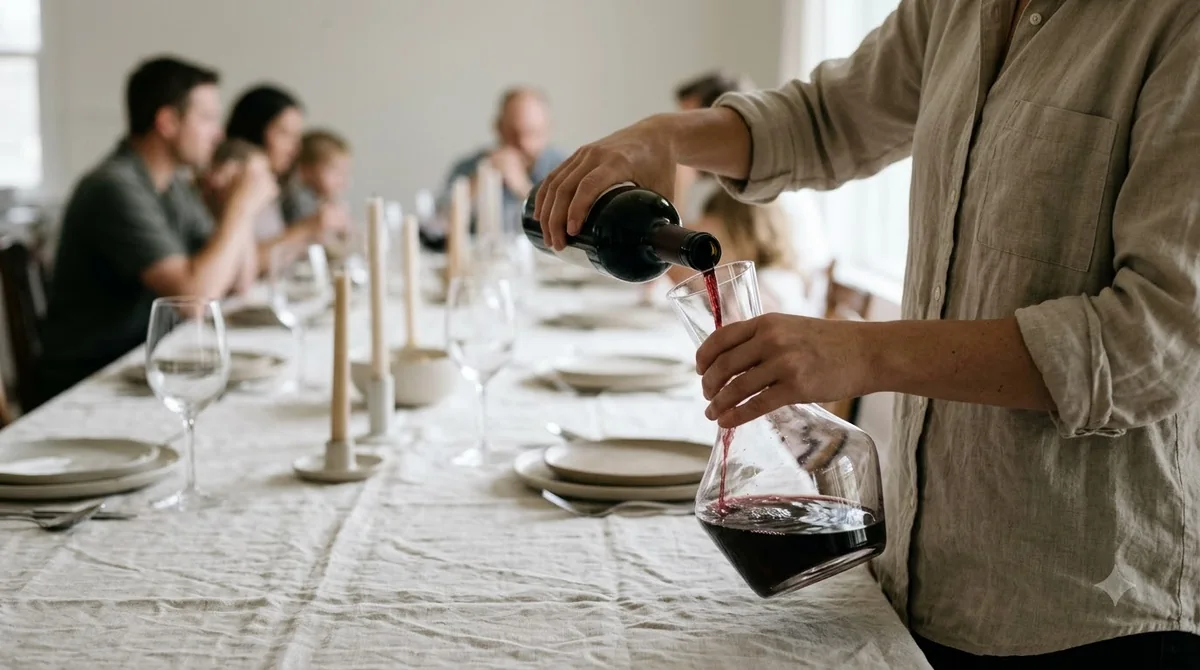
Aim to serve the Columbia Valley Merlot and Cabernet Sauvignon at 60 to 65°F (15 to 18°C), which translates to roughly 15 to 20 minutes in the refrigerator before pouring if the bottle has been stored at warm room temperature. Cooler service keeps the 13.5 to 14.5 percent alcohol feeling integrated and accentuates bright cherry and currant aromatics. While everyday Columbia Valley bottlings are crafted to be smooth right upon opening, decanting a Cold Creek Vineyard, Red Mountain, or Artist Series bottle for 45 to 60 minutes softens firm tannins and opens up savory tobacco and herb nuances.
At the table, the medium-to-full body and brisk acidity of Washington reds make them versatile partners for grilled and roasted meats. Columbia Valley Cabernet Sauvignon pairs reliably with pan-seared ribeye, herb-crusted rack of lamb, or a sharp aged cheddar board, where the fat and salt tame the wine’s tannins. The softer, mocha-inflected Columbia Valley Merlot works well alongside roasted pork tenderloin, mushroom risotto, or grilled salmon, while the bolder, spice-driven Indian Wells Red Blend stands up effortlessly to smoked brisket, barbecue ribs, and gourmet burgers.
Tip: If you are opening a bottle of Indian Wells Cabernet Sauvignon or Red Blend on a warm evening, give it a brief 15-minute chill in the fridge so its plush dark fruit stays vibrant rather than overly sweet on the finish.
Who Chateau Ste. Michelle Red Wine Suits
Because the winery produces everything from weekday crowd-pleasers to collectible Meritage blends, its red portfolio appeals to a wide spectrum of wine drinkers—from newcomers exploring varietal labels to seasoned collectors tracking Washington vintages. If you already enjoy Chateau Ste. Michelle white wine, stepping into the red lineup offers the same emphasis on clean varietal character and regional balance.
For everyday wine drinkers, the Columbia Valley Cabernet Sauvignon and Merlot serve as dependable, consistent introductions to Pacific Northwest reds that do not require years of cellaring. Fans of lush, fruit-forward California red blends will likely gravitate toward the Indian Wells tier, which delivers generous dark berry fruit and toasted oak without excessive weight. At the same time, collectors who appreciate classic European structure—similar to fans of structured Bordeaux estates like Chateau Talbot wine or rich northern Italian reds such as Zenato wine—can explore the Ethos Reserve and Artist Series bottlings, which are built to evolve over 10 to 15 years in a cool cellar. For broader context on how major producers organize their portfolios, see our overview of leading Wine Brands.
Frequently Asked Questions
Is Chateau Ste. Michelle red wine dry or sweet?
Chateau Ste. Michelle red wines are fermented dry, meaning virtually all grape sugar is converted into alcohol during winemaking. Warm-climate bottlings like the Indian Wells Cabernet Sauvignon or Red Blend can taste noticeably fruity due to ripe boysenberry and vanilla oak notes, which sometimes gives a perception of sweetness despite being technically dry.
Where are the grapes for Chateau Ste. Michelle red wine grown?
Although the winery’s iconic visitor chateau is located in Woodinville near Seattle, the grapes for its red wines grow across the Cascade Mountains in eastern Washington. Key sourcing regions include the broader Columbia Valley AVA as well as warmer sub-appellations such as Horse Heaven Hills, Wahluke Slope, and Red Mountain.
How long can you age Chateau Ste. Michelle red wine?
Entry-level Columbia Valley Cabernet Sauvignon, Merlot, and Indian Wells bottlings are crafted for immediate enjoyment and generally drink best within three to five years of the vintage date. Single-vineyard selections like Cold Creek Vineyard Cabernet Sauvignon, Ethos Reserve, and the Artist Series Red Blend are structured to age gracefully for 10 to 15 years or longer under proper cellar conditions.
What is the difference between Columbia Valley and Indian Wells red wines?
The Columbia Valley tier blends grapes from a mix of cooler and warmer eastern Washington vineyards to achieve a classic, balanced style with moderate oak influence. The Indian Wells tier sources specifically from warmer vineyards and uses richer oak aging to create a fuller-bodied, plush, and more fruit-driven New World profile.
Whether you are pouring a glass of Columbia Valley Merlot with a weeknight pasta dish or decanting an Artist Series blend for a special occasion, Chateau Ste. Michelle red wine provides a clear window into Washington State viticulture. By matching the tier to your palate and menu, you can experience how eastern Washington’s sunny days and cool nights translate into balanced, expressive red wines.
More in Wine Brands
 Underwood Wine Price: Compare Bottles, Cans, and Pack SizesUpdated Nov 21, 2026
 Zenato Wine Price: Compare Styles and Choose the Right BottleUpdated Nov 21, 2026
 Zuccardi Wine Price: Compare Bottles and Find the Right RangeUpdated Nov 21, 2026
 Yellow Tail Moscato Review: Taste, Sweetness and Serving TipsUpdated Nov 21, 2026
 Wolf Blass Yellow Label Review: Choose Your Best StyleUpdated Nov 21, 2026
 Wolffer Estate Rose Review: Choose the Right Bottle for Your TableUpdated Nov 21, 2026