
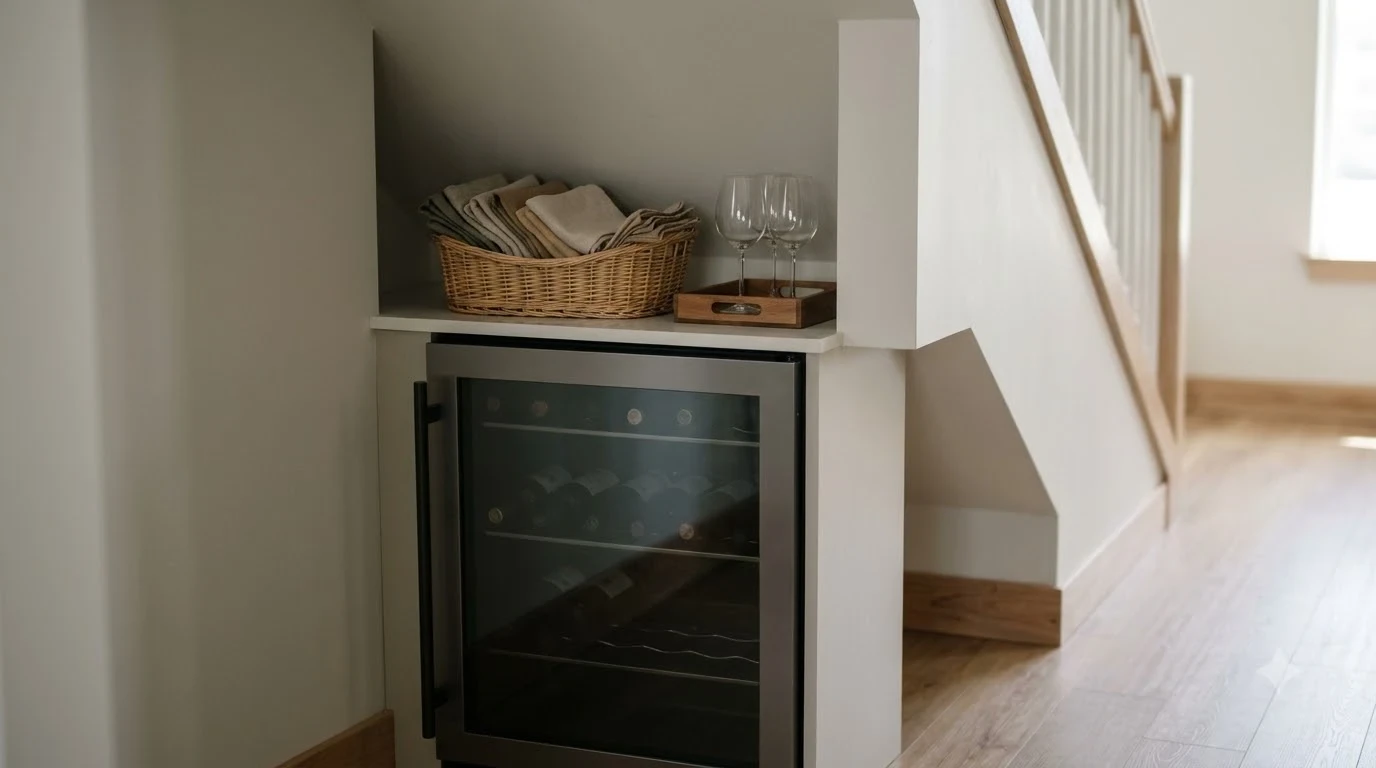

We may earn a commission when you buy through links on this page, at no extra cost to you. Learn more.
Finding the best wine and beer fridge comes down to choosing a dual-zone compressor unit that separates colder beverage storage from warmer cellar temperatures. Standard single-zone coolers force a compromise that either freezes delicate reds or leaves lagers lukewarm, whereas side-by-side and upper-lower combo fridges keep cans around 36°F to 40°F while holding wine between 45°F and 65°F. Built-in front-venting models work best for kitchen remodels, while freestanding units fit easily into home bars, dining rooms, and apartments.
Storing craft beer alongside Pinot Noir or Champagne in a standard kitchen refrigerator creates two problems: crowded shelves and ruined flavor profiles. Kitchen refrigerators run too cold and dry for long-term wine storage, while traditional wine cellars lack the chilly lower range and flat shelving needed for 12-ounce cans and tallboy bottles. A dedicated combo unit bridges that gap with independent thermostats, UV-tinted glass, and adaptable racks.
Quick Comparison
Different household layouts, entertaining habits, and drink ratios call for distinct cooling architectures and ventilation designs.
| Fridge Type | Ventilation | Temp Zones | Best Drink Split | Ideal Placement |
|---|---|---|---|---|
| 24-Inch Built-In Dual-Zone Combo | Front-venting | 2 independent zones | 50% wine / 50% beer | Under kitchen or bar counters |
| Side-by-Side French Door Cooler | Front-venting | 2 separate compartments | 60% wine / 40% beer | Home bars and open kitchens |
| Compact Undercounter 15-Inch Unit | Front-venting | Single or dual zone | 30% wine / 70% beer | Small kitchens and islands |
| Freestanding Convertible Cooler | Rear/side clearance | Single or dual zone | Flexible modular racks | Dining rooms and apartments |
| Outdoor-Rated Stainless Beverage Center | Front-venting | 1 or 2 sealed zones | 20% wine / 80% beer | Patios and outdoor kitchens |
Best for Built-In Kitchen Remodels
A 24-inch undercounter dual-zone combo fridge slides flush into standard cabinetry, using front-facing exhaust vents to prevent overheating while keeping both wine bottles and beer cans at their respective serving temperatures.
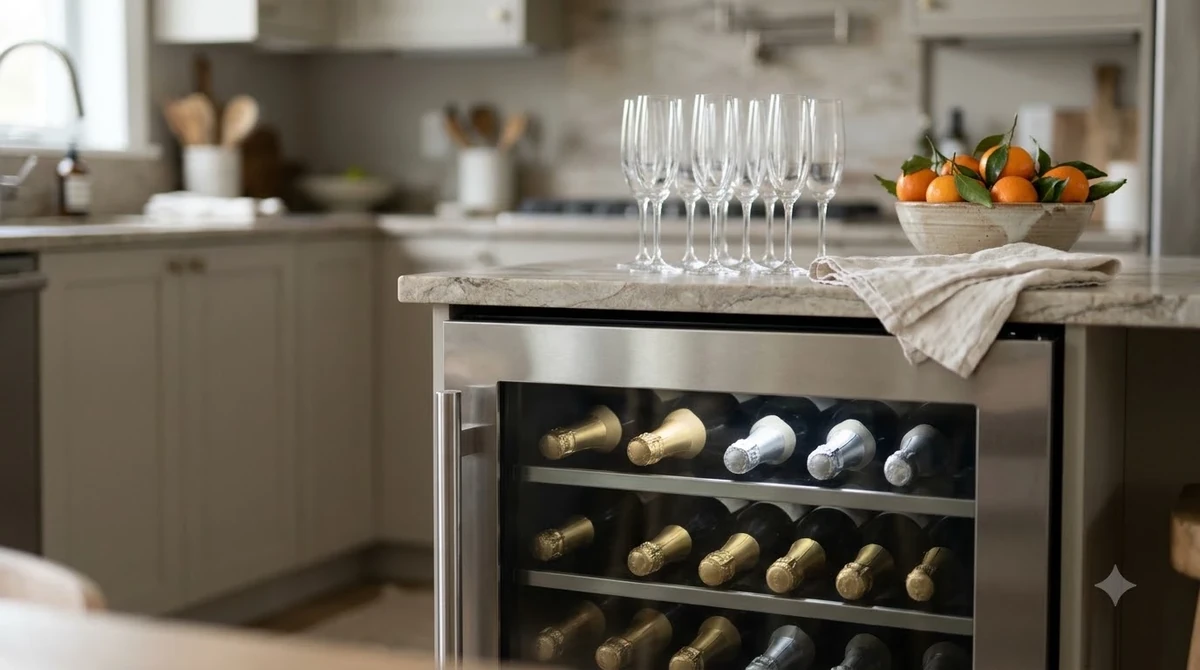
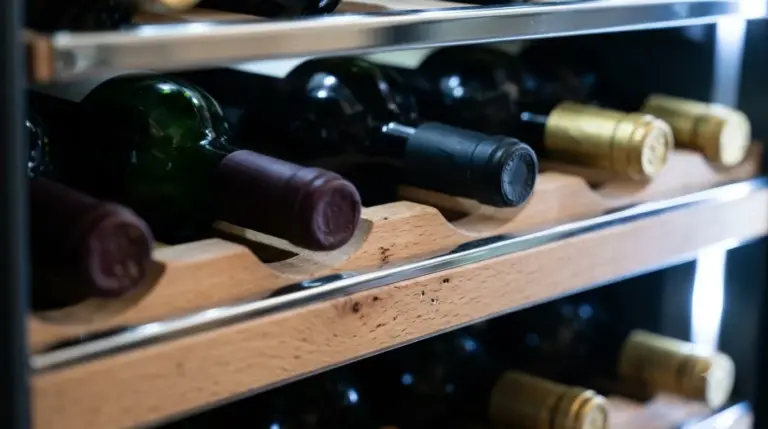
Why it stands out: According to appliance guides from Wine Enthusiast, front-venting built-in units are engineered specifically for tight cabinetry where rear airflow is blocked. In a 24-inch combo layout, the upper or left zone typically holds 18 to 30 standard 750 mL wine bottles on gliding beechwood slats at 45°F to 65°F, while the lower or right zone uses flat wire or tempered glass shelves to chill 60 to 100 cans down to 34°F or 38°F. Triple-pane UV-resistant glass doors and activated charcoal filters protect corks and beer hops from light damage and kitchen odors.
Keep in mind and best for: Built-in models require accurate rough-in measurements, especially accounting for door swing clearance and handle depth next to adjacent cabinets. Ensure the interior shelf spacing accommodates wider Burgundy or Champagne bottles without scraping labels, and check the Specs & Features checklist before finalizing cabinet cutouts. This category is best for homeowners remodeling a kitchen island, butler’s pantry, or wet bar who want an integrated, permanent beverage station.

- Cooling
- Compressor, under 40 dB
- Zones
- Dual zone, 35-50°F
- Cabinet Fit
- 23.4" x 23.6" x 34.2"
- Install
- Built-in or freestanding
Remodels that call for a clean, flush look get a 24-inch undercounter unit here, sized for standard cabinet openings of about 23.4 by 23.6 by 34.2 inches. Front ventilation allows built-in or freestanding use, while a compressor runs below 40 dB with a frost-free design. Dual cooling zones from 35 to 50°F hold beer, soda and sparkling water alongside wine, and a key lock secures the door.
Pros & ConsView
- Front ventilation allows built-in installation
- Compressor runs below 40 dB
- Dual zones cover beer, soda and wine
- Temperature range tops out at 50°F
- Needs a 24-inch cabinet opening
Best for Serious Entertainers and Balanced Collections
Side-by-side French door wine and beer refrigerators physically divide the cabinet down the center with two independently sealed doors, preventing cold air loss in one section when guests reach for drinks in the other.
Why it stands out: Single-door dual-zone units rely on an internal divider, meaning every time someone opens the door for a cold IPA, warm room air rushes across your red wines. French door models eliminate that overlap entirely. One side operates as a dedicated wine cellar with scalloped wooden cradles, while the opposite side functions as a high-capacity beverage center with adjustable flat shelves for cans, bombers, and mixers. Because each side has its own evaporator and door gasket, humidity and temperature stability remain steady even during heavy weekend hosting.
Keep in mind and best for: Most side-by-side combo units measure 24 to 30 inches wide, so verify that both doors can open at least 90 degrees so the wooden wine racks slide out smoothly. Reviewers note that independent compressor fans can produce a gentle hum around 39 to 42 decibels, which is quieter than a standard dishwasher. This style is best for frequent hosts who keep an equal split of reds, whites, sparkling wines, and craft beers on hand at all times.

- Capacity
- 3.2 cu ft, 126 cans
- Temp Range
- 34°F to 64°F
- Cooling
- Compressor, 36 dB
- Door
- Glass, reversible
Entertainers who stock more cans than bottles will appreciate the 126-can capacity of this 3.2 cubic foot compressor cooler. Four adjustable shelves can be rearranged for beer, soda, wine or water, and digital controls cover 34°F to 64°F. Circulating airflow aims for even cooling, the glass door shows what is inside, and operation stays near 36 dB for bedrooms, dorms or offices.
Pros & ConsView
- Holds up to 126 cans or multiple bottles
- Wide 34°F to 64°F temperature range
- Quiet 36 dB compressor
- Needs about 18.9 inches of depth
- No dual-zone setting listed
Best for Apartments and Tight Spaces
Slim 15-inch undercounter or freestanding combo coolers maximize vertical storage in narrow gaps, offering dedicated wine racking on top and a compact beverage compartment below without dominating floor space.
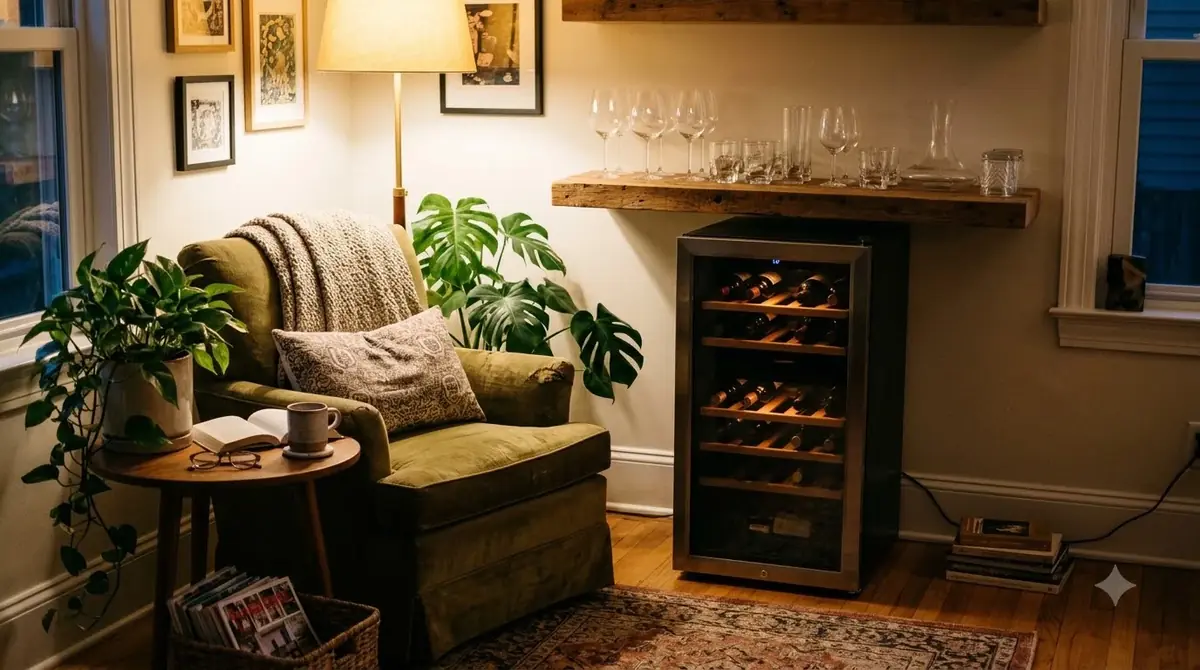
Why it stands out: When square footage is limited, a 15-inch wide footprint easily replaces an unused trash compactor slot or tucks beside a freestanding bar cart. Despite their narrow profile, quality slimline units still incorporate vibration-dampening inverter compressors and reversible glass doors so you can match the hinge direction to your room layout. Many models also feature convertible shelving, allowing you to swap out a wire can shelf for a scalloped wine rack depending on what you buy for the week.
Keep in mind and best for: Narrow cabinets sacrifice horizontal width, meaning a single row holds fewer bottles and bulky craft beer crowlers may require removing a shelf. If your footprint is even tighter than 15 inches, exploring a small wine fridge or a countertop mini wine fridge might make more sense for short-term chilling. A 15-inch combo unit is best for apartment dwellers, condo owners, and home office setups where every inch of width counts.

- Capacity
- 3.2 cu ft, 130 cans
- Size
- 17.8"W x 18.5"D x 30.9"H
- Temp Range
- 37°F to 61°F
- Cooling
- Compressor with fan
A width of just 17.8 inches makes this 3.2 cubic foot beverage fridge workable in apartments, bedrooms and tight corners. It holds up to 130 standard cans across five shelves, with a smart touchscreen setting 37°F to 61°F. A compressor with circulation fan spreads cold evenly, and the reversible door, built-in handle and adjustable feet help it fit awkward layouts.
Pros & ConsView
- Compact 17.8-inch width suits apartments
- Reversible door and adjustable feet
- Touchscreen controls from 37°F to 61°F
- Must stand upright 24 hours before first use
- Weighs 51.8 pounds, heavy to move
Best for Renters and Flexible Layouts
Freestanding convertible wine and beer coolers provide plug-and-play convenience with rear or side heat dissipation, letting you place them in dining rooms, dens, or basements without modifying cabinetry.
Why it stands out: Freestanding units cost less to install because they require zero carpentry, and their modular interiors give you total control over the wine-to-beer ratio. Unlike fixed dual-zone dividers, many convertible freestanding models use removable wire and wood racks across a wide temperature span—often 37°F to 65°F. If you are hosting a backyard cookout, you can remove two wine racks to stack 120 cans; during the holidays, you can reinstall the cradles to store three dozen bottles of Cabernet and Prosecco.
Keep in mind and best for: Because freestanding coolers vent heat through the back and sides, you must leave two to four inches of breathing room around the cabinet and avoid pushing it flush against a wall or inside an enclosed nook. Also avoid placing indoor-rated freestanding units in uninsulated garages where ambient temperatures drop below 50°F or climb past 80°F, as extreme swings strain the compressor. This type is best for renters and budget-conscious buyers who want versatility across future moves.
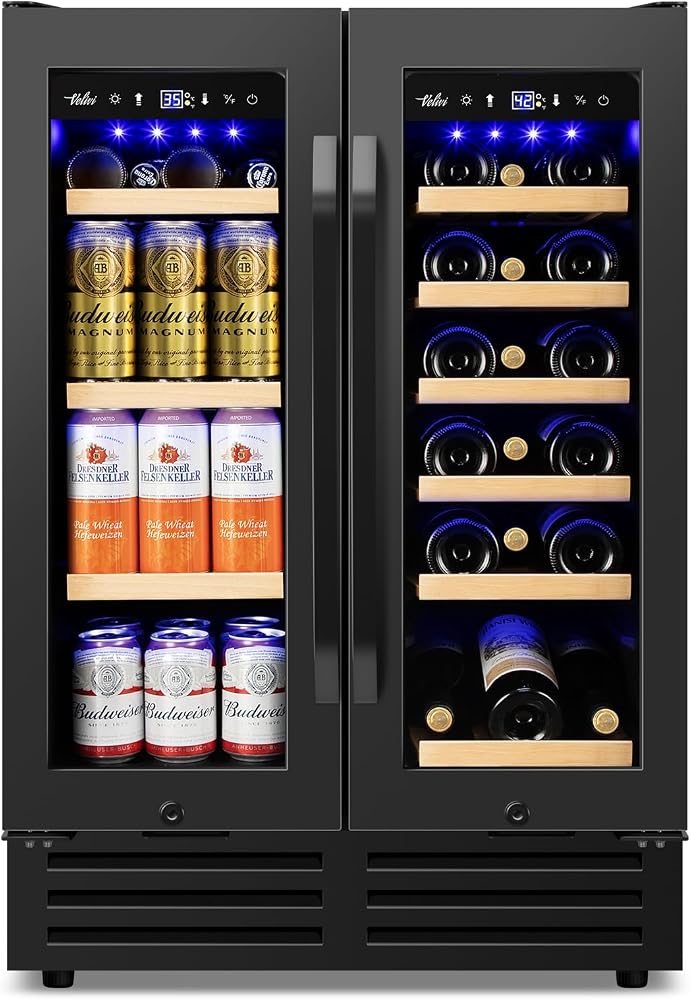
- Capacity
- 18 bottles, 68 cans
- Zones
- Dual, independent controls
- Cooling
- Compressor
- Install
- Built-in or freestanding
Renters can use this 24-inch unit as a freestanding cooler now and tuck it into cabinetry later, since it is designed for both placements at 23.4 by 23.6 by 34.2 inches. Two independently controlled zones separate wine from soft drinks, and the left beverage zone covers 35°F to 50°F. Seven shelves of metal and wood sit behind a black stainless steel door.
Pros & ConsView
- Two independent cooling zones
- Fits built-in or freestanding placement
- Holds 18 bottles and 68 cans
- Door hinges on the left only
- About 34 inches tall, so needs clear space
Best for Patios and Outdoor Kitchens
Outdoor-rated stainless steel beverage and wine refrigerators feature weatherproofed exteriors, heavy-duty insulation, and high-output compressors engineered to hold steady internal temperatures in hot, humid environments.
Why it stands out: Standard indoor coolers fail outdoors because their glass doors sweat in high humidity and their compressors burn out trying to fight 95°F summer afternoons. Outdoor-certified combo units are constructed with 304-grade stainless steel cabinets, sealed electrical components, and thicker thermal insulation. Many outdoor models use solid stainless doors or UV-blocking Low-E glass to keep direct sunlight from skunking bottled beer and prematurely aging wine, while front ventilation lets them integrate smoothly into stone or stucco grill islands.
Keep in mind and best for: Outdoor units prioritize rapid cooling and ice-cold beer temperatures—often reaching 34°F—so if you store red wine outside, choose a dual-zone outdoor model rather than a single-zone beverage center. You will also need a dedicated GFCI-protected outdoor electrical outlet and a level masonry base. This style is best for homeowners building a covered patio bar, poolside cabana, or backyard grilling station.
How to Choose
Selecting the right wine and beer cooler starts with matching the appliance’s engineering to your drinking habits and installation spot.
- Cooling technology: Choose a compressor-driven cooler over a thermoelectric unit. Thermoelectric coolers rely on ambient room temperature and struggle to chill beer cans below 48°F, whereas compressors easily hold beer at 36°F and wine at 55°F even in warm kitchens.
- Single-zone vs. dual-zone control: As sommeliers explained to VinePair, red and white wines can safely age together in a single-zone fridge around 55°F, yet beer requires much colder storage for crisp refreshment. If you want grab-and-go lagers alongside ready-to-pour reds, a true dual-zone fridge is non-negotiable.
- Shelving geometry: Look for smooth-gliding wooden racks for wine—which dampen micro-vibrations that disturb sediment—paired with flat wire or tempered glass shelves for cans so bottles do not tip over.
- Door protection and noise: Double- or triple-pane tinted glass blocks UV rays that degrade both wine aromatics and beer hops. For open-concept living spaces, look for inverter compressors rated near or below 40 decibels.
Tip: Manufacturers calculate maximum capacity using slim 750 mL Bordeaux bottles and standard 12-ounce cans. If you buy wide-shouldered Pinot Noir, Champagne, or 16-ounce craft tallboys, plan on fitting roughly 20 percent fewer drinks than the advertised maximum.
Frequently Asked Questions
What temperature should I set a wine and beer fridge to?
In a dual-zone unit, set the beer and beverage zone between 36°F and 40°F so lagers, IPAs, and sodas stay crisp and refreshing. Set the wine zone to 55°F for mixed storage, or adjust it to 45°F–50°F for whites and sparkling wines and 58°F–65°F for ready-to-serve reds. If you own a single-zone combo fridge, 45°F to 48°F is the best middle ground for white wine and craft beer, though reds will need 20 minutes on the counter before pouring.
Can you put a freestanding wine and beer fridge under a counter?
No, you should never enclose a freestanding cooler under a counter unless the manufacturer explicitly certifies it for built-in installation. Freestanding models dissipate heat through coils on the back and sides, so trapping them inside cabinetry causes the compressor to overheat, spike your electric bill, and fail prematurely. Always choose a front-venting built-in model for undercounter spaces.
How many cans and bottles do I actually need space for?
Start by tallying your weekly entertaining habits rather than just your current pantry stash. Knowing how many glasses in a bottle of wine—typically five 5-ounce pours—helps you estimate that a dinner party of six requires two to three bottles of wine alongside a twelve-pack of beer or seltzer. Buying a unit with at least 25 percent extra capacity prevents overcrowding and ensures proper internal airflow.
Do wine and beer refrigerators need a water line or drain?
Standard residential wine and beer coolers do not require plumbing, water lines, or floor drains. They operate as self-contained closed-loop systems that plug into a standard 115-volt household outlet and automatically evaporate internal condensation through a built-in drip tray near the compressor. Only commercial undercounter units or combination fridges with built-in ice makers require water supply hookups.
Whether you are outfitting a custom kitchen island or tucking a slim cooler beside a living room bar cart, separating your beer and wine zones protects every pour from temperature shock and light damage. Measure your cutout clearance carefully, prioritize front ventilation for enclosed spaces, and leave extra shelf room for odd-shaped bottles and tall cans.
More in Wine Fridge Features
 Best Wine Fridge Bar Cabinet Setups for a Better Home BarUpdated Nov 20, 2026
 Wine Fridge for Champagne Bottles: Sizes and Storage GuideUpdated Nov 18, 2026
 Best Wine Fridge for Champagne Bottles: Shelf and Bottle FitUpdated Nov 18, 2026
 Best Wine Fridge with Display Shelf: Glass Doors and Open RacksUpdated Nov 18, 2026
 Best Wine Fridge With Drawers for Easy Access to Every BottleUpdated Nov 18, 2026
 Best Wine Fridge With Freezer: Combo Styles for Kitchens and BasementsUpdated Nov 18, 2026