

We may earn a commission when you buy through links on this page, at no extra cost to you. Learn more.
The best small wine fridge depends on how many bottles you keep on hand and where the unit will sit, with a 12-to-28-bottle single-zone compressor cooler offering the most reliable temperature stability for everyday collectors. If you only chill six to eight bottles on a countertop in a quiet studio, a solid-state thermoelectric model runs nearly silent without vibrating. Homeowners remodeling a kitchen island should look for a front-venting undercounter unit, while households that drink both crisp whites and full-bodied reds on the same evening benefit most from a compact dual-zone cabinet.
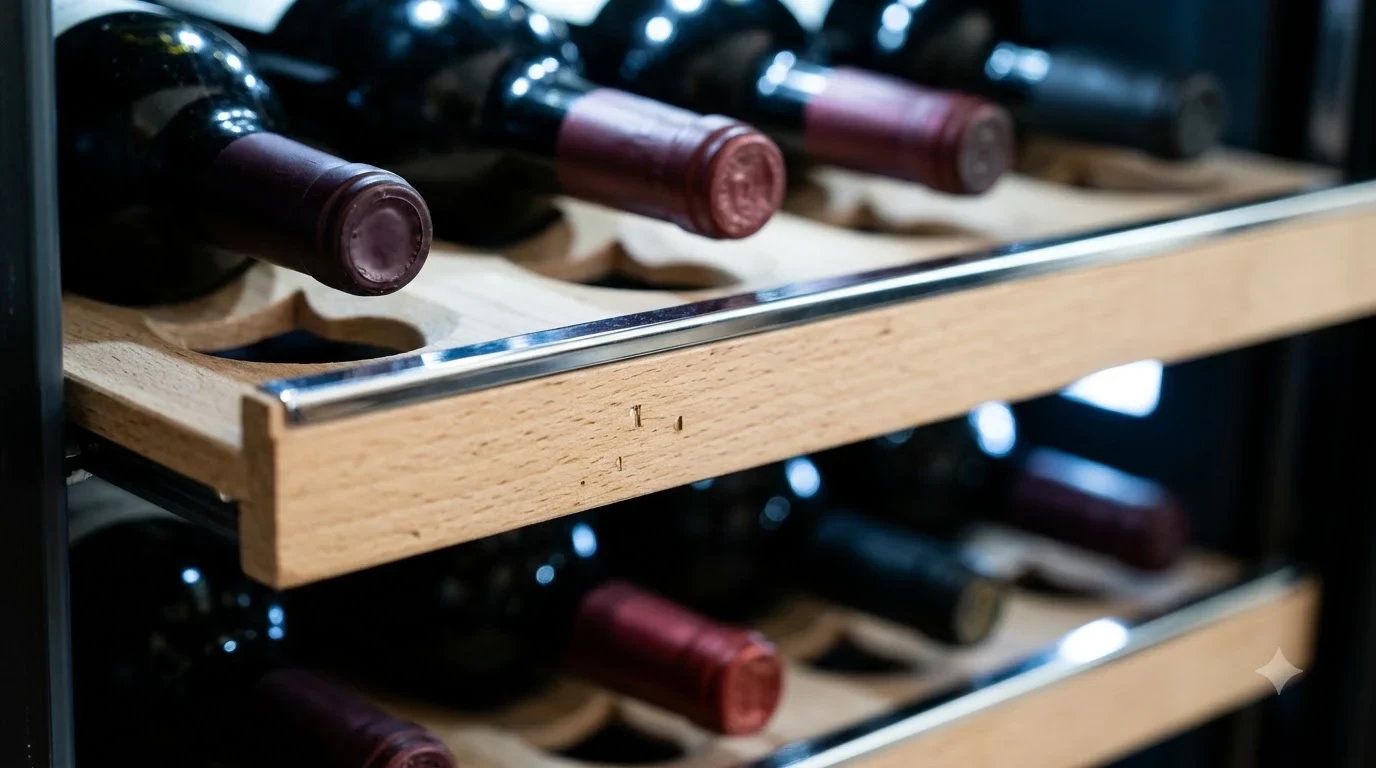
Standard kitchen refrigerators sit around 37°F, which is far too cold for serving wine and dry enough to shrink natural corks over time. On the flip side, a warm pantry or bedroom closet accelerates chemical aging—research cited by Wine Folly shows that wine stored at typical room temperature ages up to four times faster than bottles kept in proper cellar conditions. Stepping up to one of the best rated wine cooler designs built for compact spaces protects your bottles from light, heat, and vibration without giving up half your kitchen floor plan.
Quick Comparison
Compact wine refrigerators break down into five distinct designs based on cooling mechanics, ventilation placement, and temperature zones.
| Fridge Type | Typical Capacity | Cooling System | Ventilation | Best Placement |
|---|---|---|---|---|
| Countertop Thermoelectric | 6–12 bottles | Solid-state Peltier | Rear and side clearance | Kitchen counters, bar carts, offices |
| Slim Freestanding Single-Zone | 12–28 bottles | Compressor | Rear and side clearance | Dining rooms, apartments, corners |
| Compact Dual-Zone | 18–32 bottles | Compressor | Rear or front (varies) | Entertaining spaces, mixed-wine homes |
| Built-In Undercounter (15-Inch) | 24–34 bottles | Compressor | Front kickplate | Base cabinetry, kitchen islands |
| Upright Open-Bottle Hybrid | 10–33 bottles | Thermoelectric or compressor | Rear clearance | Counters, casual weeknight kitchens |
Best for Countertops and Tiny Apartments
Ultra-compact thermoelectric coolers hold six to twelve standard Bordeaux bottles and slip onto a kitchen counter, sideboard, or bar cart with minimal footprint. Because they rely on solid-state Peltier heat pumps rather than mechanical compressors, they operate without vibration and produce almost no audible hum.
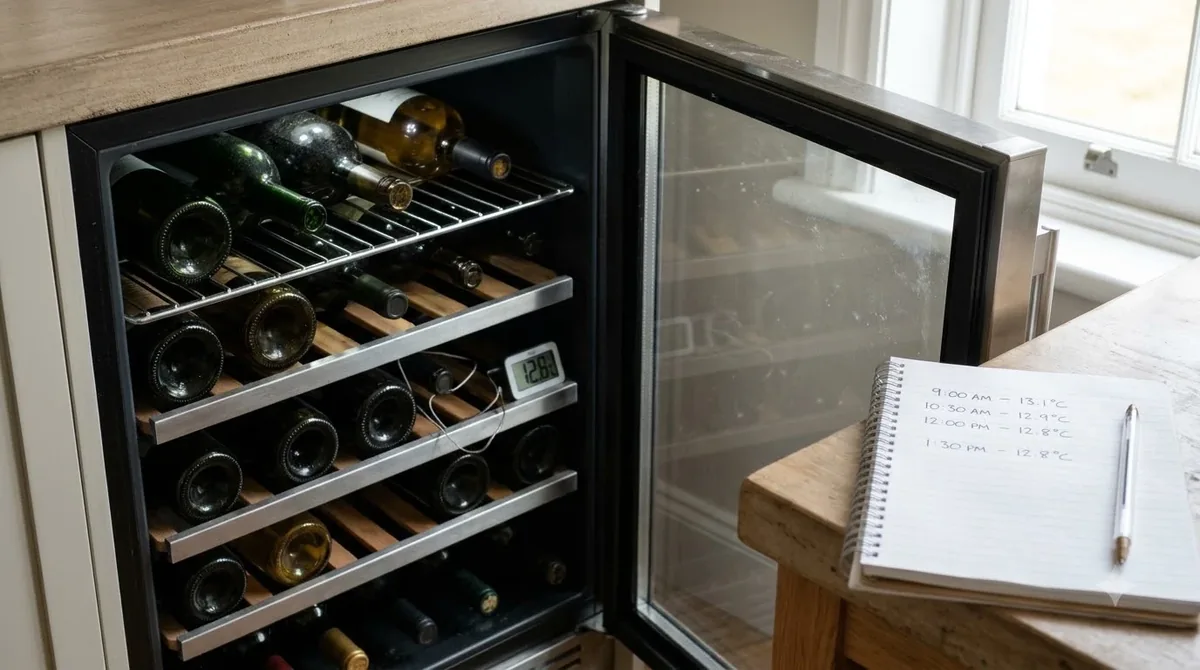
Why it stands out: Reviewers at Wine Enthusiast point out that vibration and noise are two of the biggest headaches when placing a cooler in a bedroom, home office, or open-concept studio. Thermoelectric units eliminate moving refrigerant parts entirely, keeping sediment undisturbed while maintaining a steady chill for a weeknight rotation of six to eight bottles. Many narrow 10-inch-wide silhouettes fit neatly under upper kitchen cabinets where taller appliances cannot go.
Keep in mind: Solid-state cooling chips have limited thermal pull-down power, meaning they struggle if your apartment regularly climbs above 77°F in summer. They also require three to five inches of open air around the back and sides so heat can dissipate properly. If you are shopping strictly for desktop-scale footprints, browsing a dedicated mini wine fridge lineup makes it easier to compare exact exterior height clearances.

- Capacity
- 6 Bordeaux bottles
- Cooling
- Solid-state thermoelectric
- Size
- 9.75"W x 19.87"D x 14.87"H
- Install
- Freestanding only
A compact six-bottle cooler for kitchens, bedrooms or offices, measuring 9.75 inches wide, 19.87 deep and 14.87 tall. Solid-state cooling runs quietly, and a digital touchscreen with LED display sets the temperature. Three shelves hold Bordeaux-style bottles. Warm rooms need some planning, since it needs 2 inches of clearance at the sides and 4 inches at the back and top for airflow.
Pros & ConsView
- Slim 9.75-inch width fits narrow counters
- Digital touchscreen and LED display
- Three shelves hold six Bordeaux bottles
- Needs 2 inches side and 4 inches rear clearance
- Freestanding use only; no built-in installation
Best for Everyday Red or White Drinkers
A slim freestanding single-zone compressor fridge holds roughly 12 to 28 bottles in a footprint around 15 to 18 inches wide, maintaining one rock-solid temperature across the entire interior. It is the workhorse category for drinkers who primarily buy either reds or whites, or who simply want reliable long-term cellar storage at 55°F.
Why it stands out: Unlike thermoelectric models, a compressor-driven cabinet holds its set point even when ambient kitchen temperatures spike during summer cooking. According to Wine Enthusiast, storing all wine styles—red, white, and sparkling alike—at a single consistent 55°F preserves aroma and structure without needing split compartments. Smooth-gliding beechwood shelves cushion the glass and help absorb any faint mechanical hum from the compressor.
Keep in mind: Because the whole interior shares one thermostat, whites stored at cellar temperature will still need 15 minutes in an ice bucket before serving, while full-bodied reds benefit from warming slightly in the glass. You also cannot slide a rear-venting freestanding unit flush inside tight cabinetry without risking compressor overheating.

- Capacity
- 1.3 cu ft
- Storage
- Wine bottles or cans
- Door
- Reversible, glass
- Defrost
- Manual
Reds and whites can share this 1.3 cubic foot cooler, which stores either type on horizontal racking, and it also takes canned beer and beverages. The reinforced glass door has an airtight seal, the door swing is reversible, and two front legs level the cabinet. At 35.8 pounds and about 16.5 inches deep, it fits a counter or sideboard.
Pros & ConsView
- Stores red, white or canned drinks
- Reversible glass door with airtight seal
- Two front legs level the cabinet
- Manual defrost needs periodic attention
- A single shelf limits stacking layouts
Best for Serving Reds and Whites Together
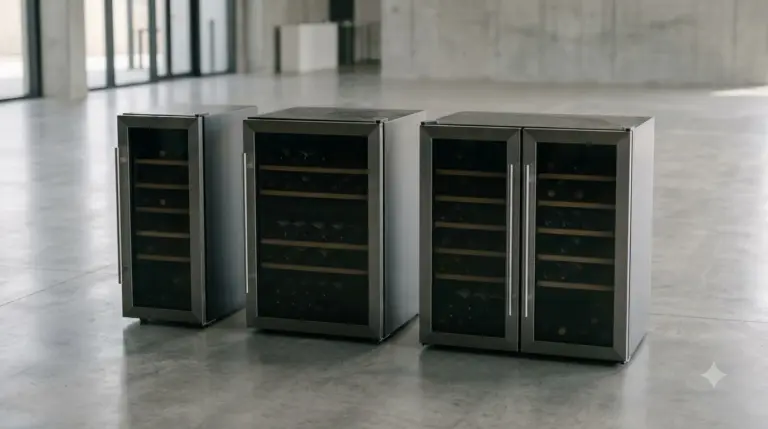
Compact dual-zone wine coolers divide an 18-to-32-bottle cabinet into two independently controlled compartments separated by an insulated baffle. This setup lets you keep crisp whites and sparkling wines chilled around 45°F to 50°F in one section while holding Pinot Noir or Cabernet at 58°F to 65°F in the other.
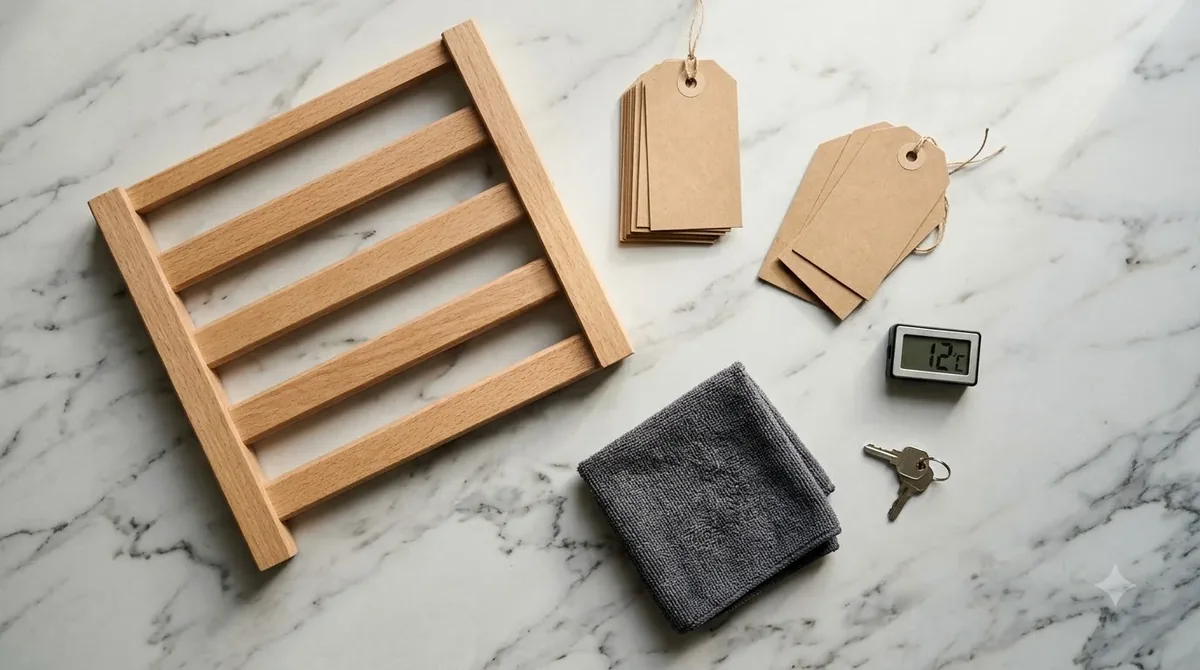
Why it stands out: Households with split preferences no longer have to juggle bottles between the main kitchen refrigerator and the countertop before dinner guests arrive. Many modern compact dual-zone cabinets allow each compartment to span roughly 41°F to 64°F, giving you the flexibility to sync both zones to 55°F if your buying habits shift toward aging a single style. Double- or triple-pane UV-tinted glass doors prevent kitchen sunlight from dulling delicate aromatics.
Keep in mind: The internal divider and second temperature sensor eat into usable shelf space, so a dual-zone cabinet typically holds four to six fewer bottles than a single-zone fridge of identical exterior dimensions. Wide-shouldered Burgundy, Pinot Noir, and Champagne bottles also reduce real-world capacity by 15 to 25 percent compared to rated Bordeaux counts.

- Capacity
- 28 bottles (750 ml)
- Cooling
- Compressor
- Temp Range
- 41°F to 64°F
- Dimensions
- 17.72"W x 17.72"D x 33.07"H
Gives a household that drinks both reds and whites room to keep a full rotation on hand, plus champagne or beer. Compressor cooling runs from 41°F to 64°F, and the double-layer glass door has an external touchpad so you can change settings without opening it. A removable chrome shelf lets you adjust the interior space as the collection changes.
Pros & ConsView
- Holds up to 28 standard 750 ml bottles
- External touchpad adjusts temperature without opening door
- Compressor cooling with 41°F to 64°F range
- Tall 33-inch cabinet needs dedicated floor space
- No separate temperature zones listed
Best for Built-In Kitchen Remodels
A 15-inch built-in undercounter wine fridge swaps out a standard trash-compactor or narrow base cabinet slot for sleek, flush-mounted storage holding 24 to 34 bottles. Front-facing intake and exhaust vents along the bottom kickplate allow zero-clearance installation right between cabinetry panels.
Why it stands out: Standard freestanding coolers pull air from the back and will burn out prematurely if boxed into millwork. Front-venting undercounter units solve that engineering bottleneck while matching standard 34-inch countertop heights and 24-inch cabinet depths. Reversible door hinges let installers align the handle swing with adjacent dishwashers or islands without awkward collisions.
Keep in mind: Built-in models carry heavier-duty compressors and finished stainless or panel-ready trim, and they require level flooring and accurate rough-opening measurements before delivery. If you are weighing installation styles across different room layouts, exploring coolers by type clarifies the exact clearance rules between freestanding, built-in, and integrated designs.

- Capacity
- 33 bottles (3 cu.ft)
- Temp Range
- 40–65°F, 1°F control
- Cooling
- Compressor, 360° air circulation
- Size
- 14.8 in. W x 22.4 in. D x 34 in. H
Wet bars and compact kitchens often leave little more than 15 inches for a cooler, and this one is built to that width. Six wood shelves hold up to 33 Bordeaux bottles, while a power-failure memory restores the set temperature after an outage. The double-layer glass door blocks over 90% of UV rays, and the front grille keeps children away from vents.
Pros & ConsView
- Six wood shelves reduce vibration and friction
- Power-failure memory restores the set temperature
- Insulating glass layer blocks over 90% of UV
- Capacity tops out at 33 bottles
- Door orientation is listed as right-hinged only
Best for Open Bottles and Casual Sipping
Upright-storage hybrid coolers combine horizontal wire or wood racks with a dedicated vertical shelf tall enough to hold three or four recorked bottles standing straight up. Available in both 12-bottle slim countertop sizes and 33-bottle freestanding cabinets, they target drinkers who pour a single glass on Tuesday and finish the bottle on Friday.
Why it stands out: Laying an opened bottle flat on a standard scalloped rack invites leaks past a reinserted cork or vacuum stopper, which quickly stains wood slats and leaves sticky residue inside the cabinet. Dedicated upright slots keep the neck vertical while holding opened reds or whites at optimal fridge temperatures, slowing oxidation far better than leaving a bottle on the counter. Understanding how long does wine last after opening makes clear why cold, upright storage buys you several extra days of fresh flavor.
Keep in mind: Giving vertical headroom to standing 750 mL bottles sacrifices horizontal row count, so an upright hybrid holds fewer total bottles than a standard rack layout of the same height. Taller Champagne bottles or tall-necked Rieslings may still exceed the vertical clearance on smaller countertop versions.

- Capacity
- 12 bottles
- Cooling
- Compressor with fan
- Zones
- Single zone
- Install
- Freestanding
Cabinetry builds need clearance planning, and this unit is sold as freestanding, so treat it as a standalone piece beside the cabinets. Inside, six removable racks hold 12 bottles, with a compressor and fan keeping the temperature steady regardless of room heat. Touch controls, soft LED lighting and a UV-resistant double-paned glass door round out a single-zone cooler.
Pros & ConsView
- Compressor cooling is unaffected by outside heat
- Six removable racks flex for bottle sizes
- UV-resistant double-paned glass door
- Freestanding design, not made for cabinet installation
- Single zone only
How to Choose
Matching a compact cooler to your home comes down to five practical measurements and hardware checks rather than maximum bottle count alone.
- Measure real bottle diameter, not just Bordeaux specs: Manufacturers calculate capacity using slim 750 mL Bordeaux bottles roughly 3 inches wide. If you regularly buy Pinot Noir, Chardonnay, or sparkling wine, look for removable shelves or at least 3.5 inches of vertical spacing between racks so labels do not tear when sliding bottles out.
- Match cooling tech to room temperature: Choose thermoelectric cooling only for climate-controlled rooms that stay below 75°F and where absolute silence is mandatory. Pick compressor cooling for warm kitchens, sunlit dining rooms, or any unit holding more than 12 bottles.
- Check decibel ratings for living spaces: A quiet compressor wine cooler rates around 38 to 42 dBA—roughly equivalent to a hushed library or whisper. Anything louder than 45 dBA becomes noticeable in a quiet dining room or studio apartment.
- Verify ventilation clearance before measuring: Freestanding units need 3 to 5 inches of breathing room behind the rear coils and 1 to 2 inches on each side. Only front-venting built-in models can sit flush against cabinets and walls.
- Look for UV-blocking glass and digital controls: Double-pane tinted or low-E glass blocks ultraviolet rays that trigger light-struck off-flavors, while exterior touch controls let you check and adjust temperatures without letting warm kitchen air rush inside.
Tip: Always buy one size larger than your current weekly rotation—a 12-bottle cooler fills up almost immediately once you add a few sparkling bottles or receive wine as a gift, whereas an 18-to-24-bottle footprint takes up nearly the same floor space.
Frequently Asked Questions
How many bottles does a small wine fridge actually hold?
Most small wine fridges are rated between 6 and 32 standard 750 mL Bordeaux bottles. In everyday use with wider Burgundy, Pinot Noir, or Champagne bottles mixed in, expect real-world capacity to sit about 15 to 25 percent lower than the advertised number unless you remove a shelf.
Is a thermoelectric or compressor small wine fridge better?
Thermoelectric coolers are quieter and completely vibration-free, making them ideal for 6-to-12-bottle countertop units in cool rooms. Compressor coolers cost more to run slightly louder at around 38 to 42 dBA, but they cool faster, hold steady temperatures in warm kitchens, and last longer for capacities above 12 bottles.
Can I put a freestanding small wine fridge under my kitchen counter?
No, standard freestanding wine fridges vent heat from the back and sides, so enclosing them under a counter traps hot air and causes the compressor to overheat and fail. If you want an undercounter installation, choose a front-venting built-in model engineered for zero-clearance cabinetry.
What temperature should I set my small wine fridge to?
If you own a single-zone cooler for storing both reds and whites, set it to 55°F, which is the universal cellar benchmark for preserving wine integrity. On a dual-zone model, set the white wine compartment between 45°F and 50°F and the red wine compartment between 58°F and 65°F so bottles are ready to pour.
Choosing the right compact wine cooler comes down to pairing your typical bottle count with the temperature and ventilation realities of the room where it will live. Whether you need a whisper-quiet countertop unit for six weeknight favorites or a front-venting undercounter cabinet for a kitchen remodel, steady cooling and UV protection keep every pour tasting the way the winemaker intended.
More in Wine Fridges by Type
 Best White Wine Fridge for Reliable Chilling and StorageUpdated Nov 20, 2026
 Best Smart Wine Fridge for Steady Temperatures and Remote ChecksUpdated Nov 18, 2026
 Best Black Under Counter Wine Fridge Options for Kitchens and IslandsUpdated Nov 18, 2026
 Best Black Slim Wine Fridge for Narrow Gaps and Dark KitchensUpdated Nov 18, 2026
 Best Built In Dual Zone Wine Fridge Options by Kitchen LayoutUpdated Nov 18, 2026
 Best Slim Built in Wine Cooler: 5 Space-Saving Styles for Tight KitchensUpdated Nov 18, 2026