

We may earn a commission when you buy through links on this page, at no extra cost to you. Learn more.
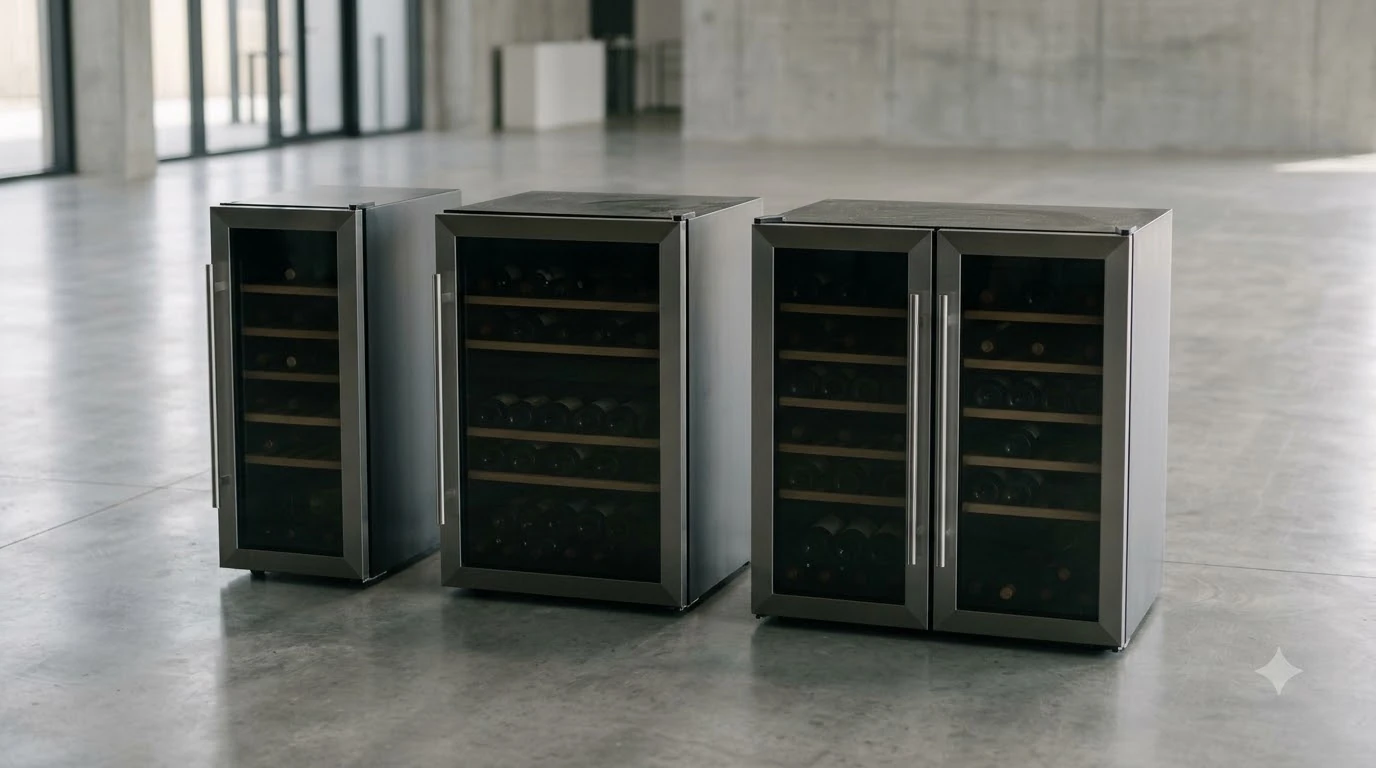
The best white wine fridge is a temperature-controlled compressor or thermoelectric refrigerator with enough bottle capacity, stable cooling, and adjustable settings to keep Sauvignon Blanc, Chardonnay, Riesling, and other whites ready to serve. For most households, a single-zone refrigerator is the simplest choice because it provides consistent cooling for an exclusively white wine collection. Choose a dual-zone model if you also store reds or want separate storage and serving temperatures. The right option depends on your collection size, available space, room temperature, and how long you intend to keep your bottles.
White wine benefits from controlled storage, but the ideal refrigerator depends on more than its advertised bottle count. A compact countertop-style cooler may work for someone who regularly buys a few bottles of Pinot Grigio, while a larger compressor refrigerator makes more sense for someone collecting Burgundy, Riesling, and premium Chardonnay. This roundup compares five practical refrigerator types, explains their strengths, and identifies the features that matter most before purchasing. It also distinguishes everyday chilling from the more demanding requirements of longer-term wine storage.
Quick Comparison: Five White Wine Refrigerator Types
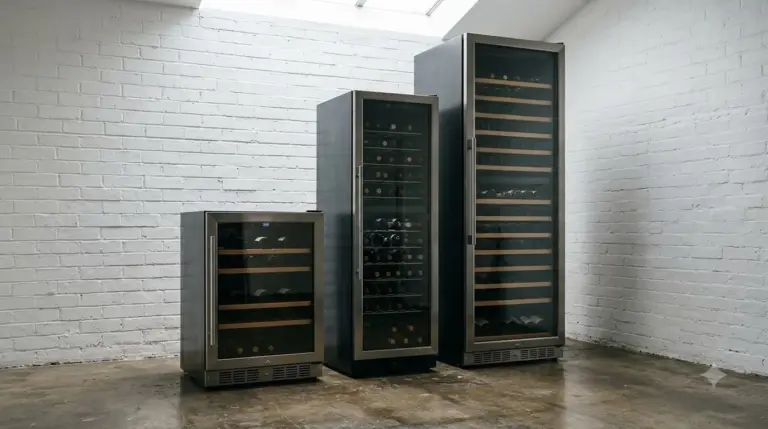
The right refrigerator type depends primarily on collection size, available installation space, and storage priorities. A compact 12-bottle cabinet serves a different purpose from a 50-bottle freestanding refrigerator or a dual-zone appliance designed for mixed collections.
| Refrigerator type | Typical capacity target | Cooling approach | Best suited for |
|---|---|---|---|
| Compact thermoelectric | 6–12 bottles | Thermoelectric | Quiet, limited-space storage |
| Small compressor | 12–24 bottles | Compressor | Everyday white wine collections |
| Single-zone cabinet | 24–50 bottles | Usually compressor | Consistent white wine storage |
| Dual-zone refrigerator | 30–50 bottles | Usually compressor | Mixed white and red collections |
| Built-in wine refrigerator | 24–50 bottles | Usually compressor | Integrated kitchen installations |
These are useful capacity targets for comparing refrigerator categories, not manufacturer specifications or guarantees. Actual bottle counts depend on bottle shape, shelf spacing, and the number of larger sparkling wine bottles stored. Standard Bordeaux-style bottles are generally easier to accommodate than wider Burgundy bottles or unusually shaped Riesling bottles.
Another distinction is the difference between a wine cooler and a wine refrigerator. Wine Enthusiast explains that the terms are frequently used interchangeably in retail listings, although simpler coolers generally emphasize immediate chilling while more sophisticated wine refrigerators offer additional storage protections. Its explanation of wine refrigerators and coolers is useful background when comparing appliances that appear similar on the surface.
Best for Quiet Spaces: Compact Thermoelectric Refrigerators
A compact thermoelectric refrigerator is a practical choice for someone who wants a small white wine cooler in a home office, apartment, or quiet dining area. Its main advantage is reduced operating noise, while its limitations include cooling power and sensitivity to surrounding temperatures.
Unlike conventional compressor refrigerators, thermoelectric units use electrical components to transfer heat rather than relying on a traditional compressor refrigeration cycle. Wine Enthusiast identifies quiet operation as one of their main advantages. That can make a difference when the appliance sits in a room where a constantly cycling compressor would become distracting.
These refrigerators are particularly suitable for collections of approximately 6–12 bottles. A small assortment might include Sauvignon Blanc for seafood dinners, Pinot Grigio for casual lunches, and Riesling for spicy dishes. A compact cabinet can keep these bottles organized without taking up the floor space required by a full-size appliance.
However, cooling performance deserves careful consideration. Thermoelectric refrigerators generally have less cooling power than compressor models, so a warm room can make it difficult to maintain the desired internal temperature. A sunny apartment, an upstairs room without air conditioning, or a kitchen next to an oven may create conditions that exceed the unit’s practical cooling capabilities.
What to look for
Check the advertised temperature range and the manufacturer’s recommended ambient operating conditions. A refrigerator that can only cool a limited number of degrees below room temperature may not deliver sufficiently cold white wine during hot weather.
Also examine the shelving arrangement. Six conventional bottles may fit comfortably, but a collection containing wider Chardonnay bottles or sparkling wine can reduce usable capacity. Adjustable shelves and removable racks make a compact refrigerator more flexible.
Thermoelectric cooling is not automatically the best option simply because it is quiet. If the refrigerator must operate in a warm environment or maintain a reliably low temperature throughout the year, a compressor appliance is usually the more practical investment.
For buyers who value quiet operation above large capacity, this category is a sensible starting point. Those who expect their collection to grow should consider a slightly larger appliance rather than filling a small cabinet beyond its intended capacity.
Best for Everyday Collections: Small Compressor Wine Refrigerators
A small compressor wine refrigerator offers a useful balance of cooling power, manageable dimensions, and practical bottle capacity. It is particularly appropriate for households that regularly keep 12–24 bottles of white wine available.
Compressor refrigeration is familiar from standard household refrigerators, although wine appliances are designed around different storage requirements. Wine Enthusiast notes that compressor coolers can achieve cooler temperatures in warmer surroundings, including environments above 80°F. This makes them attractive for homes where ambient conditions vary significantly.
A 12-bottle cabinet can serve someone who buys wine for weekly meals, while a 24-bottle refrigerator provides additional room for entertaining and occasional collecting. The larger capacity also makes it easier to separate everyday bottles from special purchases without immediately needing another appliance.
For an exclusively white wine collection, a single temperature setting is generally sufficient. Sauvignon Blanc, Albariño, Pinot Grigio, and Chardonnay can share the same storage environment. They do not need separate long-term storage temperatures simply because their preferred serving temperatures differ.
Compressor performance and everyday convenience
The most important consideration is consistent cooling rather than the lowest advertised temperature. A refrigerator that maintains a steady environment around 55°F is more useful for general wine storage than one that becomes extremely cold but experiences large temperature fluctuations.
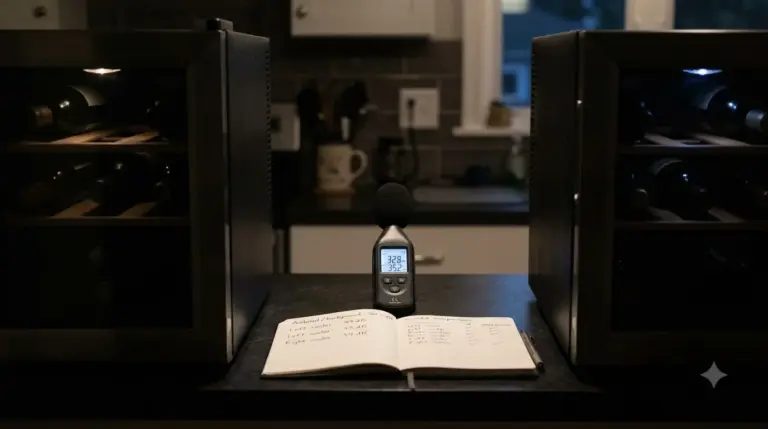
Noise is the principal compromise. Compressor refrigerators may produce more operating sound and vibration than thermoelectric alternatives. Check the manufacturer’s noise specifications when the refrigerator will sit beside a living room, dining table, or bedroom.
Door construction also matters. An insulated door helps maintain internal conditions, while UV-resistant glass can reduce exposure to harmful light. Interior LED lighting is useful for finding bottles without relying on bright external illumination.
Look for removable or sliding shelves that accommodate different bottle dimensions. A cabinet designed around narrow Bordeaux bottles may advertise an impressive capacity but hold substantially fewer bottles if the collection includes wider Burgundy-style glass.
Tip: Buy for the collection you expect to maintain over the next couple of years, not just the bottles currently in your kitchen. Wine Enthusiast specifically warns that overfilling a refrigerator can interfere with consistent temperature control. Allow enough room for bottles to fit comfortably without forcing shelves or blocking internal airflow.
A small compressor refrigerator is often the most balanced category for regular white wine drinkers. It provides more cooling flexibility than many compact thermoelectric alternatives without requiring the floor space of a large cabinet.
For shoppers comparing dimensions and compact storage options, the small wine fridge category is a useful next step. It helps narrow the search to appliances intended for more limited household spaces.
Best for Larger White Wine Collections: Single-Zone Refrigerators
A single-zone wine refrigerator is the strongest general-purpose choice for households storing mostly white wines. Its defining feature is one consistent temperature throughout the cabinet rather than separate compartments with independently controlled settings.
This arrangement makes sense because wine storage temperature and wine serving temperature are different considerations. A bottle of Sauvignon Blanc might be served at 45–50°F, while a fuller Chardonnay is generally more enjoyable around 50–55°F. However, both can be stored together at approximately 55°F until they are ready to drink.
Wine Enthusiast recommends 53–57°F for longer-term storage and identifies single-zone appliances as a straightforward option for keeping different wine styles under consistent conditions. Liebherr similarly recommends a stable storage environment around 10–12°C, approximately 50–54°F.
A single-zone cabinet with a capacity target of 24–50 bottles can accommodate a more developed collection. For example, a household might maintain several bottles of French Chardonnay, New Zealand Sauvignon Blanc, German Riesling, Spanish Albariño, and Italian Pinot Grigio without needing separate temperature compartments.
Why temperature stability matters
White wine is often purchased for its freshness, aromatic character, and acidity. Sauvignon Blanc can display citrus, green fruit, and herbal notes, while Chardonnay can range from crisp apple and lemon to richer tropical fruit and oak-derived characteristics.
Storage does not need to mimic each wine’s eventual serving temperature. Instead, the refrigerator should maintain a stable environment that protects bottles from excessive warmth and repeated temperature changes.
Temperature fluctuations can accelerate unwanted aging and affect the condition of cork closures. A wine refrigerator is useful because it separates bottles from the repeated door openings, food odors, and temperature changes associated with an everyday kitchen refrigerator.
Features worth prioritizing
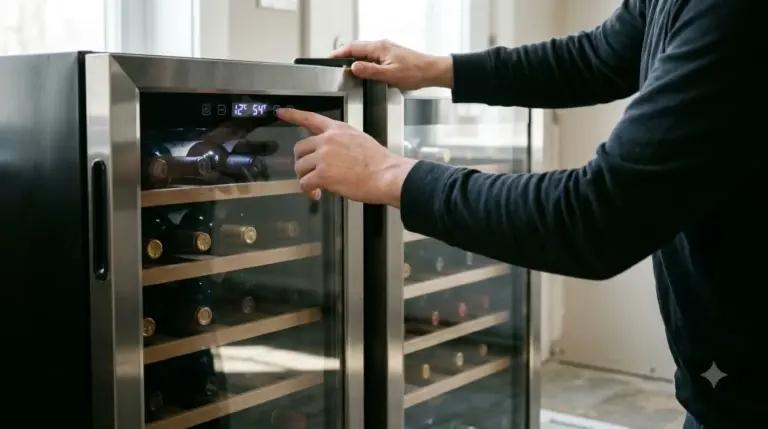
Start with a dependable temperature control system and a cabinet that distributes cool air effectively. Digital controls are convenient, but an attractive display does not automatically indicate better temperature stability.
Next, consider shelving. Sliding shelves make it easier to retrieve bottles without disturbing neighboring bottles. Adjustable spacing is valuable for larger Chardonnay and sparkling wine bottles, which can be difficult to fit into tightly arranged racks.
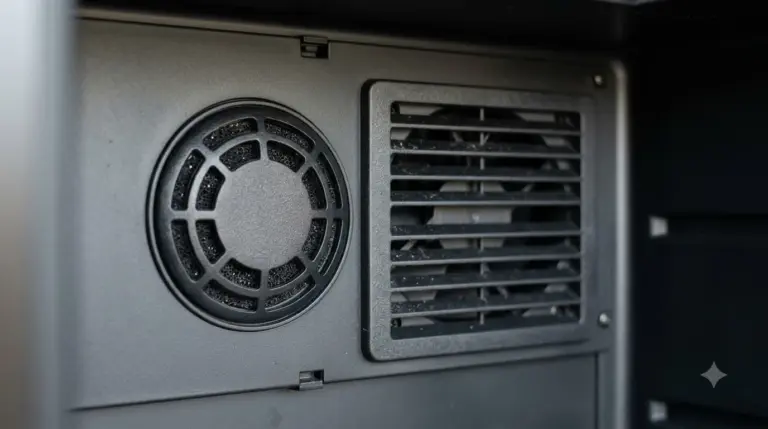
UV-resistant doors, appropriate insulation, and low-vibration operation are additional advantages. If the appliance will store bottles for several years, humidity control and odor management also become more relevant.
A single-zone refrigerator is generally preferable to a dual-zone appliance when almost every bottle belongs to the same broad storage category. There is little reason to pay for two independently controlled compartments if one stable environment satisfies the collection’s needs.
Buyers with larger collections should also explore the By type selection to compare cabinet configurations and installation styles before settling on a particular capacity.
Best for Mixed Collections: Dual-Zone Wine Refrigerators
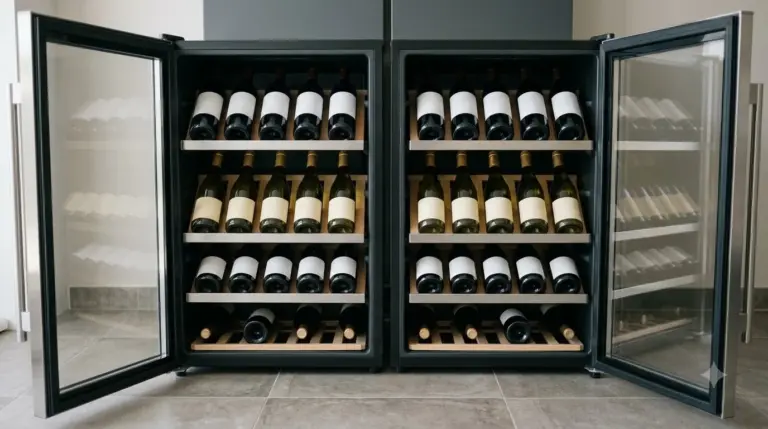
A dual-zone refrigerator is the better option for households that store white and red wines together and want different temperatures available at the same time. Its two independently adjustable compartments provide more flexibility than a conventional single-zone cabinet.
White wine drinkers can use one section for bottles intended for relatively cool service, while the second section accommodates red wines or bottles being stored at a different temperature. This is especially useful for households that entertain frequently and serve several wine styles during the same meal.
For example, the white wine section might be configured around 45–50°F for light whites and rosé intended for relatively immediate consumption. A second compartment could be maintained around 55°F for longer-term storage or adjusted toward 60–65°F for fuller reds approaching service.
These figures are illustrative targets, not universal requirements for every dual-zone appliance. The actual settings depend on the refrigerator’s configuration and the purpose of each compartment.
Understanding the two compartments
Some refrigerators place the warmer compartment above the cooler compartment, while others use a side-by-side layout. The design affects how much space is available for each wine category and how conveniently bottles can be accessed.
Check the temperature ranges of both sections before purchasing. Some appliances offer relatively narrow adjustment ranges, and their two zones may not support every combination of storage and serving temperatures.
Also examine the capacity of each compartment separately. An appliance advertised for 40 bottles might divide its usable space unevenly, leaving less room for whites than expected. That can become frustrating if white wine represents most of the household’s purchases.
When dual-zone cooling is unnecessary
If a household only drinks white wine, dual-zone functionality may add complexity without delivering a meaningful advantage. A single-zone appliance can store Sauvignon Blanc, Riesling, Chardonnay, and Pinot Grigio together at a stable temperature.
There is also a difference between maintaining two storage temperatures and maintaining two serving temperatures. A collector who wants to age both red and white wines may prefer a consistent storage environment instead of keeping every bottle ready for immediate consumption.
Before purchasing, consider the proportions of the collection. A 30-bottle appliance with 15 bottles allocated to each zone may not be ideal for someone who regularly maintains 25 white wines and only five reds.
Dual-zone refrigerators are therefore most attractive when variety and convenience are genuine priorities. Buyers can compare the available configurations in the dual zone wine fridge category to determine whether the additional compartment is worth the space.
Best for Kitchen Integration: Built-In Wine Refrigerators
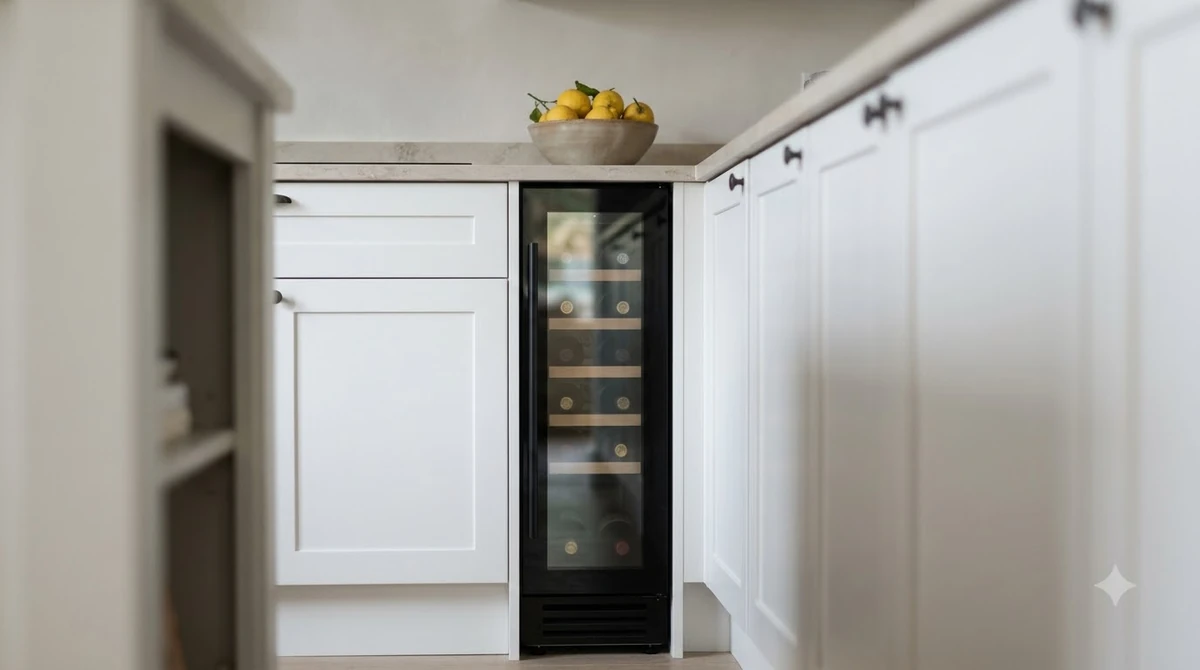
A built-in wine refrigerator is intended for installation within a kitchen cabinet arrangement or another appropriately designed enclosure. It is a practical choice for homeowners who want dedicated white wine storage without adding a separate freestanding appliance to the room.
These appliances can work particularly well in renovated kitchens, kitchen islands, and dedicated beverage areas. A refrigerator installed below a counter keeps bottles accessible while leaving the main refrigerator available for groceries and everyday food storage.
Built-in installation requires more attention to ventilation and dimensions than simply placing an appliance against a wall. Front-venting models are generally designed to release heat through the front grille, allowing installation within suitable cabinetry. Freestanding models may require additional clearance around the rear and sides to dissipate heat.
Measure the installation area first
Begin with the width, height, and depth of the available opening. Account for the appliance door, handle, ventilation grille, electrical connection, and any surrounding cabinet trim.
For example, an opening measuring 24 inches wide should not automatically be assumed to accommodate every refrigerator marketed as a 24-inch appliance. Actual cabinet dimensions and installation tolerances vary by manufacturer.
Also check whether the door opens sufficiently to allow shelves to slide out. An appliance that fits the opening but cannot release its shelves because of adjacent cabinetry is an inconvenient installation.
Consider heat and kitchen conditions
Kitchen placement exposes refrigerators to environmental changes that may affect their operation. Ovens, dishwashers, direct sunlight, and inadequate ventilation can make the surrounding area warmer than expected.
Wine Enthusiast advises against placing wine refrigerators in particularly hot environments, including non-air-conditioned garages and patios. The same general concern applies to kitchen locations where heat builds up around an appliance.
Look for a model with a suitable ambient operating range and follow its installation instructions carefully. A built-in refrigerator should not be enclosed in a way that prevents its cooling system from releasing heat.
Door glass is another important consideration. UV-resistant glass helps protect wine from light exposure, while an insulated construction helps maintain more stable internal conditions.
Built-in refrigerators can offer an attractive and convenient solution, but installation suitability should take priority over appearance. A correctly installed appliance with appropriate ventilation is a better choice than a visually appealing cabinet that operates outside its intended conditions.
How to Choose the Right Capacity, Temperature, and Features
The best white wine refrigerator should match the actual collection, room conditions, and intended storage period. A few straightforward checks can eliminate many unsuitable choices before comparing individual appliances.
1. Estimate your bottle capacity
Start by counting the bottles normally kept at home, then consider how many you expect to purchase during the next year or two. Someone who keeps six bottles for immediate consumption may not need a 50-bottle refrigerator.
However, a household that regularly purchases cases or saves bottles for special occasions should allow additional capacity. A refrigerator that is almost completely full can be less convenient and may not provide the flexibility required for larger bottles.
Remember that advertised capacity usually assumes a standardized bottle shape. Wider Burgundy bottles, Champagne bottles, and certain specialty formats may occupy more shelf space.
2. Choose a suitable temperature range
For general storage, approximately 55°F is a useful target for a collection of white wines. Wine Enthusiast identifies 53–57°F as a suitable range for longer-term storage, while Liebherr recommends approximately 50–54°F.
Serving temperatures are different. Use these practical guidelines when preparing bottles for a meal:
- Light whites, including Sauvignon Blanc and Pinot Grigio: 45–50°F.
- Fuller-bodied whites, including richer Chardonnay: 50–55°F.
- Sweet whites, including many Moscato styles: 43–50°F.
- Sparkling wines: 40–50°F.
- Rosé: 45–50°F.
These serving ranges explain why some buyers prefer dual-zone appliances, but they do not mean that each style requires a different long-term storage temperature.
3. Compare compressor and thermoelectric cooling
Choose compressor cooling if the appliance will operate in a relatively warm room or needs to achieve lower temperatures reliably. This is generally the more versatile choice for larger collections and households that experience substantial seasonal temperature changes.
Thermoelectric cooling is attractive when quiet operation is important and the room remains reasonably cool. Its reduced cooling capacity can become a disadvantage during hot weather.
Neither technology should be judged by its label alone. Internal temperature consistency, insulation, ambient operating limits, and ventilation all influence real-world performance.
4. Examine the door and interior
A UV-resistant glass door is a useful feature because prolonged ultraviolet exposure can negatively affect wine quality. An opaque door provides another way to reduce light exposure, although it removes the ability to see the collection without opening the refrigerator.
Interior lighting should make bottle labels visible without producing excessive heat. LED lighting is a practical choice for this purpose.
Look for shelves that slide smoothly and remain securely in place. Adjustable racks can accommodate different bottle formats, while sturdy construction helps prevent accidental movement when retrieving bottles.
5. Consider humidity and vibration
For longer-term storage, humidity is another important factor. Wine Enthusiast identifies 50–70% relative humidity as a useful range, while Liebherr recommends 50–80% for corked bottles.
Excessively dry conditions can contribute to cork shrinkage, while excessive moisture can damage labels and encourage mold. Not every compact wine cooler actively controls humidity, so buyers should distinguish between basic chilling appliances and storage-oriented refrigerators.
Vibration is another consideration. A low-vibration compressor, secure shelving, and stable installation help keep bottles undisturbed. This matters more for bottles being stored for extended periods than for wines that will be opened within a few weeks.
6. Review energy use, noise, and placement
A wine refrigerator operates continuously, so energy consumption deserves attention. Compare the manufacturer’s published consumption figures where available rather than assuming that a smaller-looking appliance necessarily uses less electricity.
Noise specifications matter when the refrigerator will sit in an open-plan kitchen or living area. Compressor models generally produce more operating sound than thermoelectric alternatives, although individual appliance designs differ.
Finally, measure the installation area and verify the manufacturer’s clearance requirements. An appliance that fits physically but cannot ventilate correctly is unlikely to deliver satisfactory long-term performance.
7. Decide whether you need storage or immediate chilling
Someone who buys Sauvignon Blanc on Friday and drinks it over the weekend may prioritize convenient chilling. A collector who keeps bottles of white Burgundy or Riesling for several years should prioritize temperature stability, UV protection, humidity, and vibration management.
Wine Enthusiast distinguishes these purposes in its discussion of coolers and refrigerators. A basic cooler may be sufficient for ready-to-drink bottles, while a more sophisticated wine refrigerator is more appropriate for collections requiring consistent storage conditions.
The most suitable appliance is the one that addresses the actual storage requirement without adding unnecessary features. For many white wine households, that means a dependable single-zone compressor refrigerator with sufficient space and adjustable shelving.
Frequently Asked Questions
Can white wine be stored at 55°F?
Yes. Approximately 55°F is a suitable general storage temperature for white wine, including Chardonnay, Sauvignon Blanc, and Riesling. The wine can be chilled further shortly before serving, depending on its style. This avoids maintaining separate storage temperatures for every white grape variety.
Can Champagne and sparkling wine go in a white wine refrigerator?
Yes, provided the refrigerator has enough shelf space for wider sparkling wine bottles. Champagne and many traditional-method sparkling wines use thicker glass and wider bases than standard still-wine bottles. Check the shelf dimensions rather than relying exclusively on the advertised bottle capacity.
Does a white wine refrigerator need a charcoal filter?
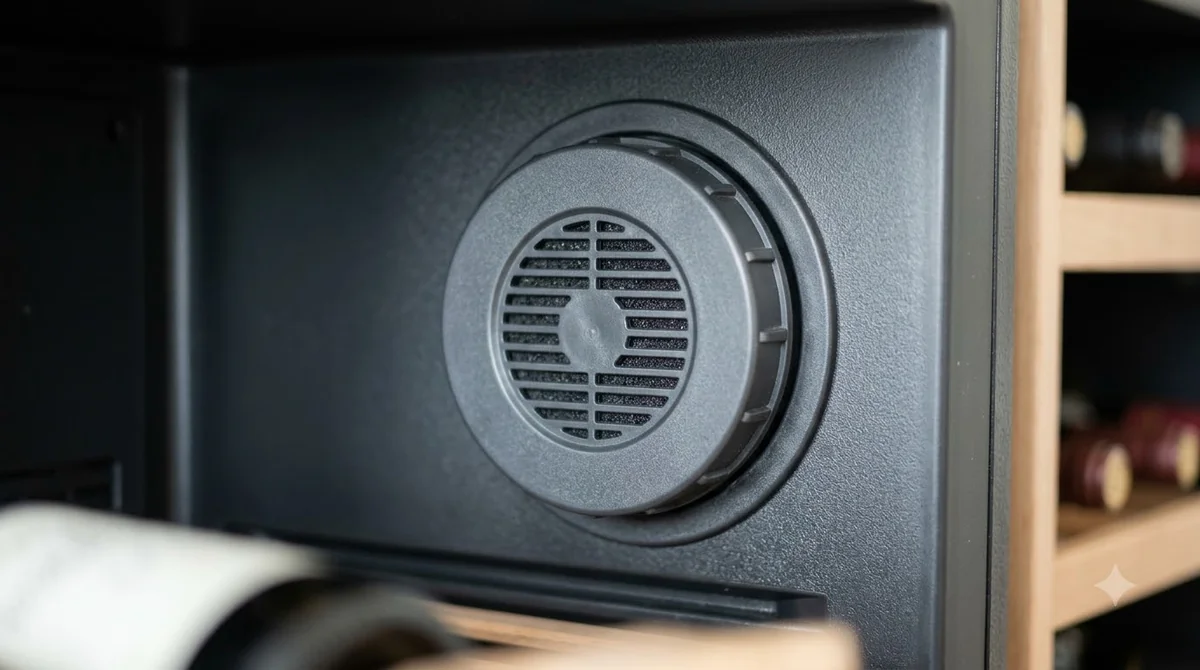
A charcoal filter can help reduce unwanted odors inside a wine refrigerator. Liebherr describes activated charcoal filtration as part of its approach to maintaining clean air around stored bottles. Filter replacement intervals depend on the appliance manufacturer’s maintenance instructions and the surrounding environment.
Should screw-cap white wines be stored horizontally?
No, horizontal storage is not essential for screw-cap bottles because they do not depend on a natural cork remaining moist against the wine. Upright storage can therefore be convenient for wines that will be consumed relatively soon. Horizontal shelving remains useful for maximizing capacity in many wine refrigerators.
Can a wine refrigerator develop frost or condensation?
Yes. Condensation can occur when warm, humid air enters a colder refrigerator, particularly during frequent door openings. Some appliances may also develop frost under certain operating conditions. Keep the door closed when possible and follow the manufacturer’s defrosting and drainage instructions.
The best white wine fridge is ultimately the one that keeps your collection at a stable temperature while fitting comfortably into your home. A compact thermoelectric cabinet suits quiet, small spaces; a compressor refrigerator offers greater cooling flexibility; and a single-zone cabinet is an excellent choice for larger white wine collections. Prioritize temperature consistency, usable bottle capacity, appropriate ventilation, and UV protection before choosing decorative extras. With the right configuration, Sauvignon Blanc, Chardonnay, Riesling, and other favorite whites can remain properly stored and ready for the table.
More in Wine Fridges by Type
 Best Smart Wine Fridge for Steady Temperatures and Remote ChecksUpdated Nov 18, 2026
 Best Black Under Counter Wine Fridge Options for Kitchens and IslandsUpdated Nov 18, 2026
 Best Black Slim Wine Fridge for Narrow Gaps and Dark KitchensUpdated Nov 18, 2026
 Best Built In Dual Zone Wine Fridge Options by Kitchen LayoutUpdated Nov 18, 2026
 Best Slim Built in Wine Cooler: 5 Space-Saving Styles for Tight KitchensUpdated Nov 18, 2026
 Best Quiet Dual Zone Wine Cooler Options for Peaceful HomesUpdated Nov 18, 2026