

We may earn a commission when you buy through links on this page, at no extra cost to you. Learn more.
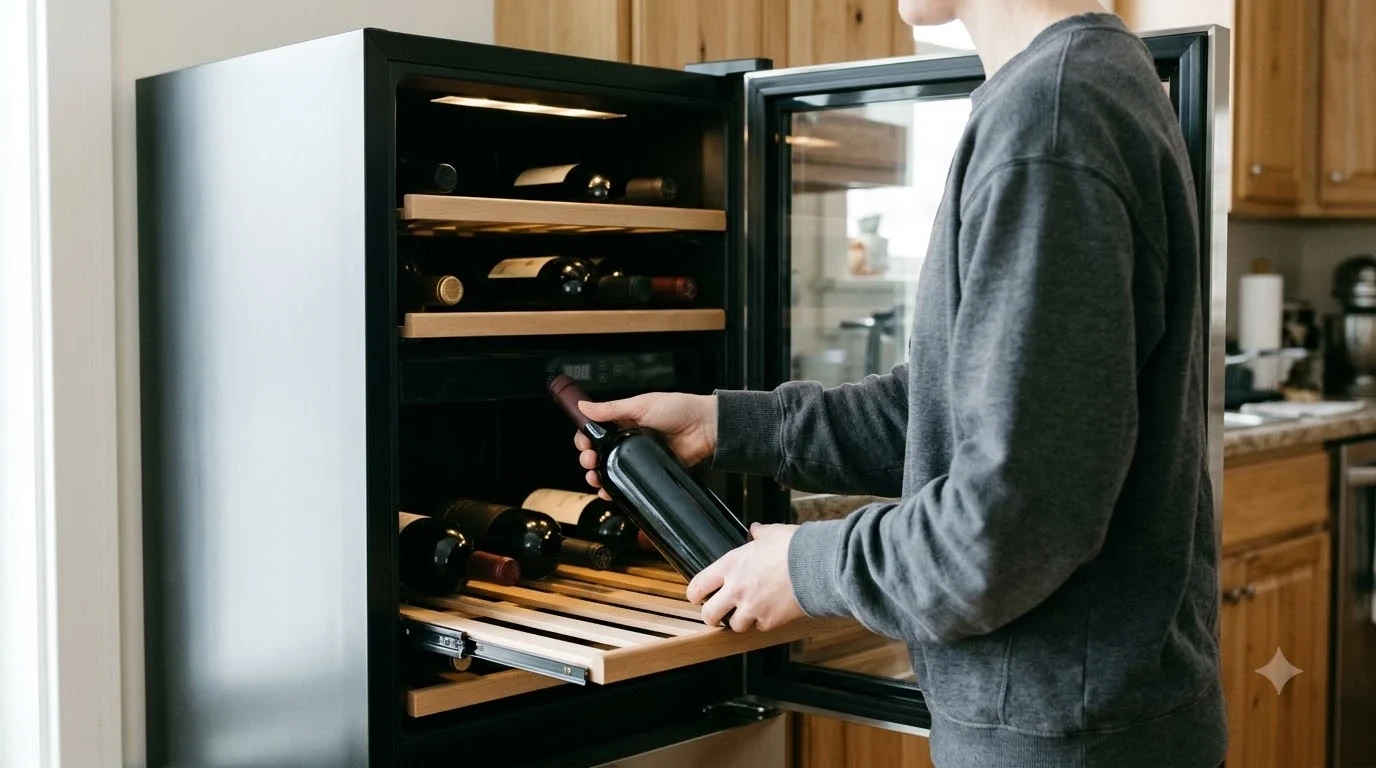
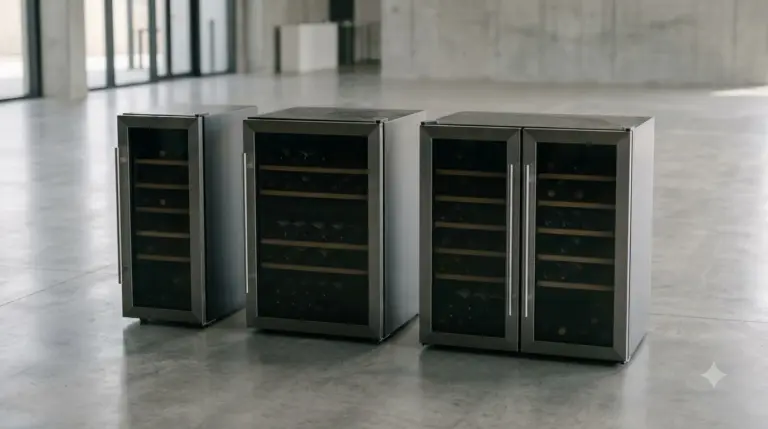
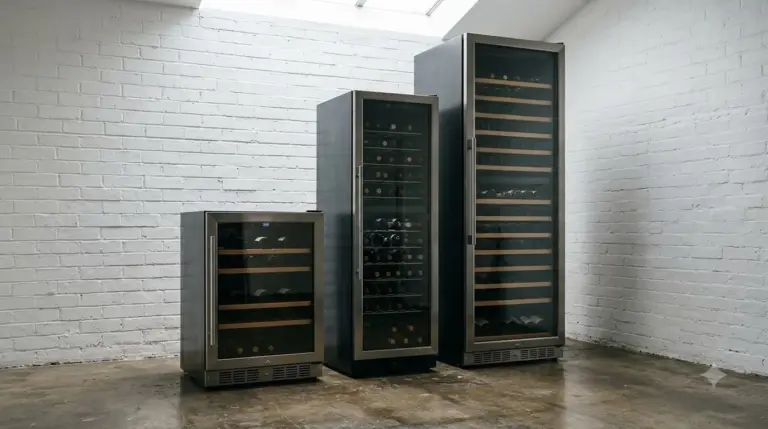
The best dual zone wine fridge for most households is a front-venting undercounter compressor unit that holds 24 to 46 bottles and splits cooling cleanly between crisp white wine service and cellar-ready reds. Buyers with tight floor plans do better with a slimline freestanding tower, while serious collectors need a tall multi-shelf cabinet with independent thermal chambers and low-vibration wood racking. If you host frequently and mix wine with canned drinks, a hybrid dual-zone beverage center solves both problems inside a single standard cabinet cutout.
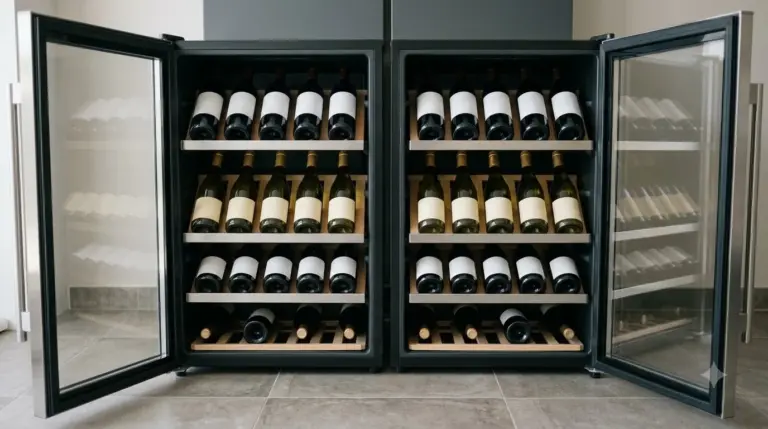
Unlike a standard kitchen refrigerator that runs too cold and dry for corks and delicate aromatics, a dual-zone wine cooler creates two separate climates behind one door. As Wine Enthusiast notes in its single- versus dual-zone buying guide, all wines age happily around 53 to 57 degrees Fahrenheit, yet whites taste brightest served cold while reds open up at slightly warmer cellar temperatures. Splitting the cabinet lets you pull a chilled Pinot Grigio and a dinner-ready Cabernet at the exact same moment without juggling ice buckets or counter space.
Quick Comparison
The table below compares the five primary dual-zone wine refrigerator formats by placement, cooling method, typical capacity, and ideal household fit.
| Wine Fridge Type | Installation Style | Cooling System | Typical Capacity | Best Household Fit |
|---|---|---|---|---|
| 24-Inch Undercounter Compressor | Built-in or freestanding (front-venting) | Fan-forced compressor | 36 to 54 bottles | Kitchen remodels and daily entertainers |
| Slimline Narrow-Width Tower | Built-in or freestanding | Compressor or solid-state | 15 to 28 bottles | Apartments, tight gaps, and wet bars |
| High-Capacity Freestanding Cabinet | Freestanding (rear/side clearance) | Heavy-duty compressor | 70 to 160+ bottles | Growing collections and long-term aging |
| Dual-Zone Wine & Beverage Center | Built-in or freestanding | Compressor | 15 to 24 bottles + cans | Mixed-drink households and game rooms |
| Compact Countertop Thermoelectric | Freestanding countertop | Thermoelectric (Peltier) | 8 to 18 bottles | Quiet bedrooms, offices, and small starter stashes |
Best for Built-In Kitchens and Everyday Entertaining: 24-Inch Undercounter Compressor Units
A 24-inch front-venting undercounter compressor model is the gold standard for kitchen islands and cabinetry runs, offering generous capacity and rapid temperature recovery after repeated door openings. These units slide cleanly beneath standard 34- to 35-inch countertops and split upper and lower compartments so whites chill around 45 degrees while reds rest near 60 degrees.
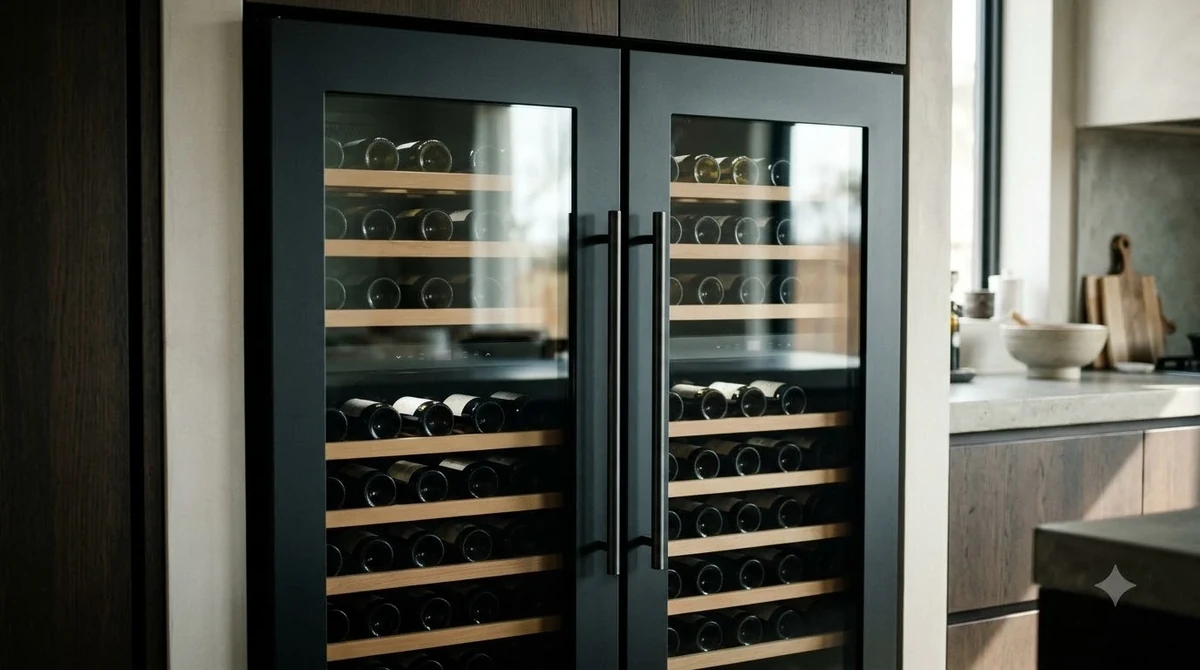
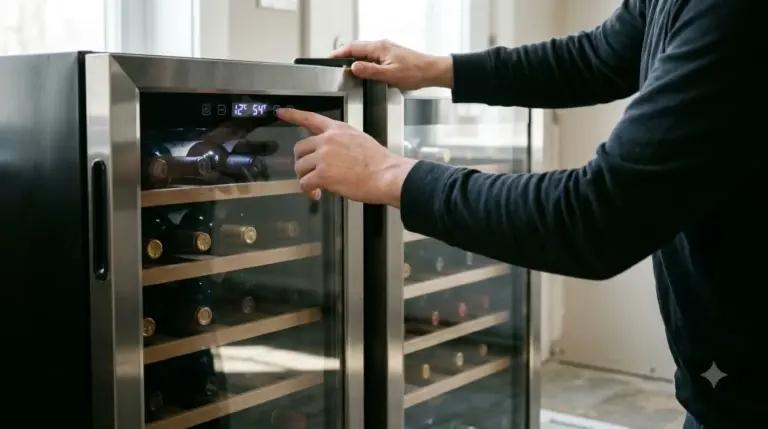
Why it stands out: Front-facing exhaust grilles allow zero-clearance installation flush against surrounding cabinets without overheating the compressor. Fan-forced air circulation keeps temperatures steady from the front glass to the rear wall, even when the kitchen heats up during dinner prep. Most models in this category feature UV-tinted double-pane glass, beechwood or wire-trimmed glide-out racks, and digital touch controls positioned right on the thermal divider.
Keep in mind and best for: Stated bottle counts always assume standard 750 mL Bordeaux bottles, so wide-shouldered Burgundy, Pinot Noir, and Champagne bottles will trim real-world capacity by roughly 15 to 25 percent unless the racks are removable. Choose this format if you are renovating a kitchen, replacing a dated trash compactor, or drinking both red and white wines throughout the week and want a permanent appliance that blends into existing millwork.

- Capacity
- 18 bottles, 88 cans
- Zones
- Wine 41-64°F, drinks 35-50°F
- Cooling
- Compressor, fan circulation
- Install
- Built-in or freestanding
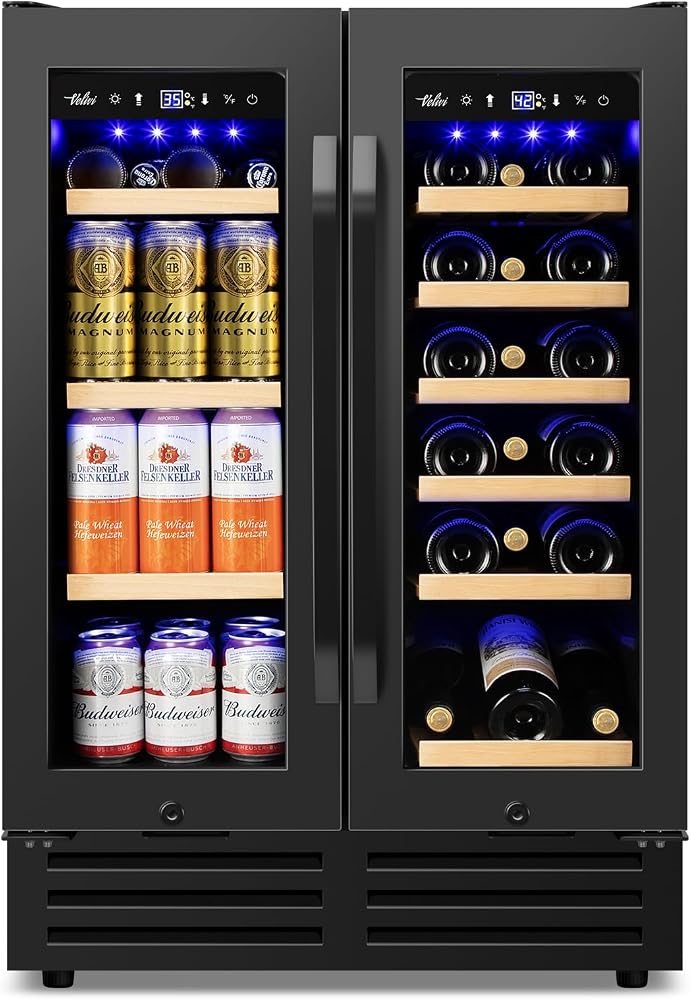
Anyone with a mixed collection of wine and canned drinks can run two independent zones: wine from 41°F to 64°F on the right and beverages from 35°F to 50°F on the left. Capacity is listed at 18 bottles plus 88 cans. A front vent allows built-in or freestanding use, and a lockable glass door, touch controls, and blue LED lighting come standard.
Pros & ConsView
- Two zones with separate temperature control
- Front vent allows built-in or freestanding use
- Lockable glass door and fan-assisted compressor cooling
- Only 18 bottles fit alongside the cans
- Wire shelves look plainer than wood shelving
Best for Tight Spaces and Narrow Gaps: Slimline 12- to 15-Inch Dual-Zone Coolers
Slimline dual-zone coolers pack two independent climate zones into cabinets measuring just 10 to 15 inches wide, making them ideal for narrow kitchen cutouts, butler pantries, and apartment dining corners. Despite their trim footprint, quality compressor versions deliver the same 40-to-65-degree temperature split found in full-width appliances.
Why it stands out: Narrow towers reclaim awkward dead spaces next to islands or at the end of a counter run where a standard 24-inch appliance will never fit. Many slimline designs also include vertical or angled display cradles that hold three or four uncorked bottles upright without leaking, which helps preserve leftovers if you track how long wine lasts after opening during the workweek. Reversible door hinges on better units let you match the swing to adjacent walls.
Keep in mind and best for: Because the interior width holds only two or three bottles per shelf, stacking wider sparkling or Alsace bottles can feel cramped, and tall vertical dividers slightly reduce total bottle count compared with a single-zone small wine fridge. Pick a slimline dual-zone cooler if floor square footage is tight, you live in a condo or townhouse, or you want dedicated wine storage tucked neatly beside a coffee bar.
Best for Serious Collectors and Aging: Tall High-Capacity Dual-Zone Cabinets
Tall freestanding dual-zone wine cabinets hold anywhere from 70 to more than 160 bottles, pairing a long-term cellar compartment with a dedicated serving zone so collectors can age prized vintages while keeping weeknight pours ready. These furniture-grade units stand roughly four to six feet tall and rely on commercial-style compressors and vibration-dampening wooden shelves.
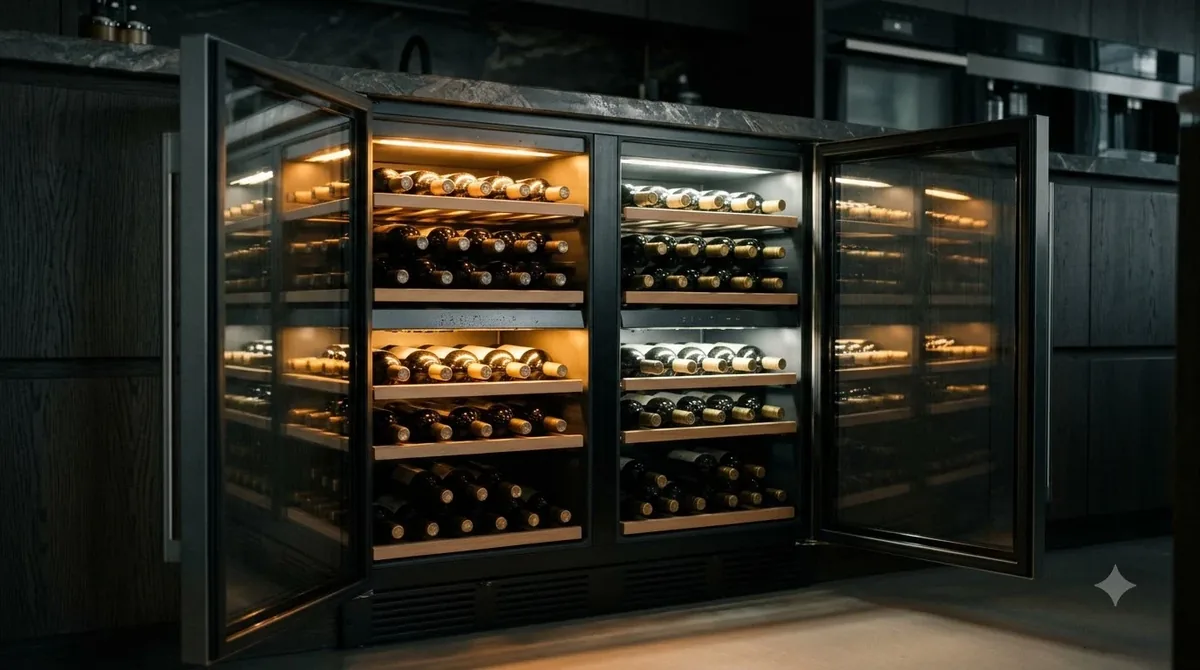
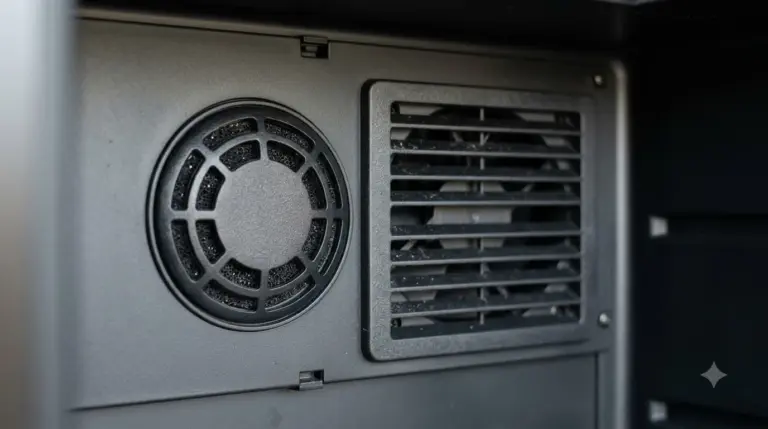
Why it stands out: Instead of forcing you to choose between aging and immediate service, a tall dual-zone cabinet lets you hold one large chamber steady at 55 degrees for multi-year maturation while chilling the smaller chamber to 45 degrees for crisp whites and sparkling bottles. Premium versions incorporate activated charcoal air filters to block musty odors, humidity management to keep natural corks supple, and door-ajar alarms that protect valuable bottles from accidental temperature spikes.
Keep in mind and best for: Most tall cabinets exhaust heat through the back or sides, meaning they need two to four inches of breathing room and cannot be boxed tightly inside enclosed cabinetry unless specifically rated for built-in installation. They also weigh well over 150 pounds empty and require a dedicated grounded outlet. This type fits avid buyers who purchase wine by the case, collect age-worthy reds and whites, and want a single statement cabinet in a dining room or basement.

- Capacity
- 92 bottles
- Zones
- Dual zone
- Shelves
- 12 removable wood slide-outs
- Lock
- Key cylinder lock
Built for collectors who want room to grow and keep bottles undisturbed. Two temperature zones sit behind a UV-resistant double-pane glass door, and fan-forced cooling spreads cold air evenly while an activated carbon filter draws out odors. Twelve beechwood shelves slide out, and a showcase shelf tilts selected labels forward for display. A cylinder lock and touchscreen control are included.
Pros & ConsView
- Holds 92 bottles across two zones
- Beechwood slide-out shelves with showcase shelf
- Carbon filter and fan keep air fresh
- Full-size cabinet needs a dedicated spot
- Touchscreen control only, no manual dial
Best for Mixed Entertaining: Dual-Zone Wine and Beverage Centers
Dual-zone wine and beverage centers pair a temperature-controlled wine compartment with an extra-cold soda and beer zone that drops down to 37 or 39 degrees, giving hosts a single undercounter hub for every guest. Rather than forcing canned drinks onto wine racks or warm reds into a standard beverage cooler, each side maintains its own independent thermostat.
Why it stands out: Standard wine coolers rarely cool below 40 or 41 degrees, which leaves craft beers, seltzers, and sodas slightly warmer than most people prefer. Hybrid French-door or split-chamber beverage centers solve that gap with tempered glass shelves on the beverage side for cans and mixers alongside scalloped wood or wire racks on the wine side for 750 mL bottles. Opening only one French door at a time also prevents cold air from spilling out of the wine chamber during parties.
Keep in mind and best for: Wine capacity is naturally smaller than in a dedicated wine refrigerator—usually topping out between 15 and 24 bottles—and both compartments must be stocked thoughtfully so tall growlers or Champagne magnums do not block interior circulation fans. Choose a hybrid wine and beverage center if your household splits evenly between wine drinkers and beer or sparkling water fans, or if you are outfitting a basement bar or patio kitchen.
- Capacity
- 18 bottles, 68 cans
- Zones
- Dual, independent controls
- Cooling
- Compressor
- Install
- Built-in or freestanding
Renters can use this 24-inch unit as a freestanding cooler now and tuck it into cabinetry later, since it is designed for both placements at 23.4 by 23.6 by 34.2 inches. Two independently controlled zones separate wine from soft drinks, and the left beverage zone covers 35°F to 50°F. Seven shelves of metal and wood sit behind a black stainless steel door.
Pros & ConsView
- Two independent cooling zones
- Fits built-in or freestanding placement
- Holds 18 bottles and 68 cans
- Door hinges on the left only
- About 34 inches tall, so needs clear space
Best for Quiet Offices and Small Stashes: Compact Countertop Thermoelectric Coolers
Compact countertop thermoelectric coolers use solid-state Peltier heat pumps instead of mechanical compressors, creating a nearly silent, vibration-free dual-zone unit for 8 to 18 bottles on a counter, sideboard, or home office credenza. With no refrigerant coils or moving compressor pistons, they disturb neither sleeping spaces nor delicate bottle sediment.
Why it stands out: Acoustic comfort is the primary advantage here, as the only moving parts are small internal circulation fans that emit a gentle whisper. Their compact footprints weigh under 35 pounds, plug into any standard wall outlet, and let apartment dwellers or casual drinkers keep four to six bottles of white chilled on top and a half-dozen reds tempered below without dedicating floor space. If you only need a single temperature on a desk, a mini wine fridge takes up even less room.
Keep in mind and best for: Thermoelectric modules can only cool roughly 15 to 20 degrees below the surrounding room temperature, meaning a warm 78-degree kitchen or sunroom will prevent the white-wine zone from ever reaching a crisp 45 degrees. They also need generous rear clearance and struggle in humid climates. Buy a thermoelectric dual-zone unit only if you keep your home air-conditioned below 72 degrees and store a modest rotation of everyday bottles.

- Capacity
- 26 bottles, 2.8 cu ft
- Width
- 15 inches
- Zones
- Dual, 41-64°F
- Cooling
- Compressor, 360° airflow
Meant for tight kitchens where only a slim gap remains beside the cabinets. At 15 inches wide with front venting, it fits below a standard counter, yet still offers two zones set anywhere from 41 to 64°F. Touch controls, removable beech wood shelves and a double-layer tempered glass door keep the interior organized and shielded from light.
Pros & ConsView
- Only 15 inches wide with front venting
- Two zones with touch control
- Removable beech wood shelves
- Capacity tops out at 26 bottles
- Listed installation type is freestanding
How to Choose
Comparing wine coolers by type is the fastest way to narrow your shortlist, but five technical details separate reliable appliances from frustrating ones:
- Verify the exact temperature band for each zone: Some dual-zone units let you set either chamber anywhere between 40 and 65 degrees Fahrenheit, while others lock the upper zone to 40–50 degrees and the lower zone to 50–65 degrees. Check VinePair’s wine serving temperature guide against the specs so your preferred varietals actually fit the cooler’s bands.
- Match ventilation to installation: Built-in and undercounter models must vent through a front toe-kick grille. Freestanding units vent through the back or sides and will overheat rapidly if pushed flush into a cabinet alcove.
- Look at shelf spacing and glide rails: Wire racks bend under heavy bottles and snag labels. Look for smooth-gliding hardwood shelves with at least 3.5 inches of vertical clearance—or removable racks—if you buy Pinot Noir, Syrah, or sparkling wine.
- Prioritize UV-blocking glass and steady humidity: Double- or triple-pane tinted Low-E glass blocks ultraviolet light that causes premature aging, while compressor systems paired with a moisture tray help maintain 50 to 70 percent relative humidity.
- Check noise ratings in decibels: For open-concept kitchens and living areas, look for compressor ratings at or below 38 to 41 dB so cycling hum never intrudes on conversation.
Tip: Before choosing a bottle count, multiply the number of bottles you currently keep on hand by 1.5 and subtract 20 percent for wider Burgundy or sparkling shapes—buying slightly larger prevents overcrowding that blocks airflow and strains the cooling system.
Frequently Asked Questions
Do I really need a dual-zone wine fridge instead of a single-zone model?
If you regularly drink both white or sparkling wines and full-bodied reds, a dual-zone fridge eliminates the hassle of chilling whites in your kitchen refrigerator or warming cold reds on the counter. However, if you collect wine strictly for multi-year aging—or only drink one style—a single-zone unit set to 55 degrees Fahrenheit gives you more usable shelf space without an interior thermal divider.
Which zone should be colder in a dual-zone wine refrigerator?
In most upright dual-zone coolers, the upper compartment serves as the colder zone (typically 40 to 50 degrees Fahrenheit) for sparkling, rosé, and white wines, while the lower compartment stays warmer (55 to 65 degrees Fahrenheit) for reds. Always confirm the manufacturer’s layout before loading, as a handful of models place the colder evaporator at the bottom.
Can I put a freestanding dual-zone wine fridge under my kitchen counter?
No, placing a freestanding-only wine cooler inside an enclosed undercounter cutout traps exhaust heat around the condenser coils, causing poor cooling and early compressor failure. Only slide a unit under cabinetry if the specification sheet explicitly lists built-in or undercounter installation with front-venting exhaust.
How many bottles actually fit inside a 30- or 46-bottle dual-zone cooler?
Manufacturers calculate capacity using slender, uniform 750 mL Bordeaux bottles placed neck-to-base with every rack installed. Once you mix in wider Burgundy, Rhône, or Champagne bottles—or remove a shelf to fit larger formats—expect real-world capacity to land roughly 15 to 25 percent lower than the advertised number.
Selecting the right dual-zone wine cooler starts with measuring your available cutout or floor footprint, then matching the cooling system to your indoor climate and drinking habits. Whether you choose a front-venting undercounter workhorse or a tall collector cabinet, keeping reds and whites at their true serving temperatures makes every bottle taste the way the winemaker intended.
More in Wine Fridges by Type
 Best White Wine Fridge for Reliable Chilling and StorageUpdated Nov 20, 2026
 Best Smart Wine Fridge for Steady Temperatures and Remote ChecksUpdated Nov 18, 2026
 Best Black Under Counter Wine Fridge Options for Kitchens and IslandsUpdated Nov 18, 2026
 Best Black Slim Wine Fridge for Narrow Gaps and Dark KitchensUpdated Nov 18, 2026
 Best Built In Dual Zone Wine Fridge Options by Kitchen LayoutUpdated Nov 18, 2026
 Best Slim Built in Wine Cooler: 5 Space-Saving Styles for Tight KitchensUpdated Nov 18, 2026