

We may earn a commission when you buy through links on this page, at no extra cost to you. Learn more.
The best waiters corkscrew for most wine drinkers is a double-hinged wine key fitted with a five-turn nonstick worm and a serrated foil blade. Its two-step fulcrum pulls long natural and tight synthetic corks straight out of the neck without bending or snapping them. If you value fast one-handed operation, spring-loaded auto-retracting levers speed up table service, while single-hinge heirloom keys offer classic pocket-knife craftsmanship for collectors and gift buyers. Slim all-metal designs tuck neatly into an apron or picnic bag, and heavy-duty ergonomic models add comfort when opening dozens of bottles in a row.
Known throughout the hospitality industry as a wine key or sommelier knife, the hinged corkscrew remains the most reliable corkscrew you can keep in a kitchen drawer or bar apron. Unlike bulky countertop lever contraptions or battery-powered tubes that run out of charge mid-dinner, a well-built folding key relies on simple mechanical leverage that fits in the palm of your hand. Understanding how hinge geometry, spiral construction, and handle materials affect daily performance makes it easy to pick the right style for your home bar.
Quick Comparison
Each waiter’s corkscrew design balances leverage, speed, pocket portability, and tactile build quality differently depending on how and where you open bottles.
| Corkscrew Type | Hinge Mechanism | Best Suited For | Foil Cutter Style | Handle Profile |
|---|---|---|---|---|
| Double-Hinged Two-Step Key | Two-stage articulated boot lever | Everyday home use and tight or long corks | Fold-out serrated blade | Contoured metal, wood, or composite |
| Spring-Loaded Auto-Two-Step Key | Spring-assisted second-step lever | High-volume restaurant and bar service | Serrated blade or quick-deploy tab | Weighted stainless steel or resin |
| Single-Hinge Heirloom Sommelier Knife | One-piece curved fulcrum lever | Gifting, collectors, and traditionalists | Curved smooth or micro-serrated knife | Hand-finished wood, horn, or bone |
| Slim All-Metal Pocket Key | Low-profile double hinge | Travel, picnics, and apron pockets | Compact folding blade | Flat stamped or cast stainless steel |
| Ergonomic Wide-Grip Wine Key | Reinforced double hinge | Large hands and frequent entertaining | Oversized thumb-notch blade | Thick sculpted wood or soft-touch grip |
Best for Everyday Home Use: Double-Hinged Two-Step Corkscrews
A standard double-hinged waiter’s corkscrew is the most versatile wine opener for regular weeknight dinners and casual hosting, combining effortless vertical lift with compact storage. Its articulated boot lever breaks cork extraction into two controlled stages so the stopper never tilts sideways against the glass.
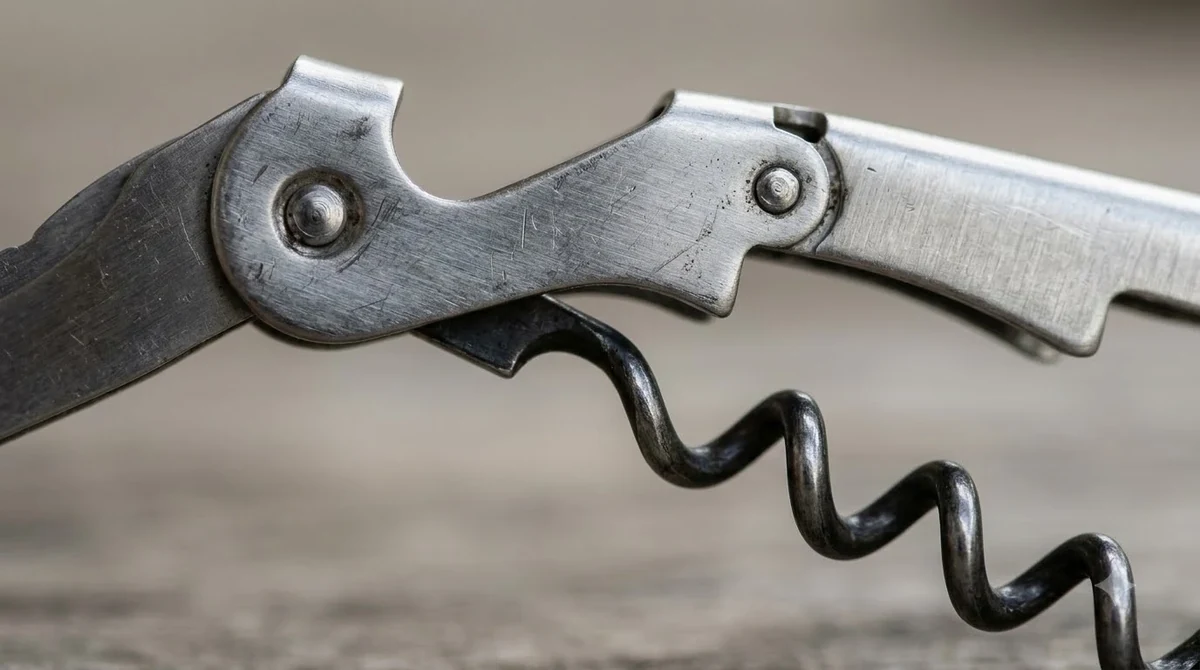
Why it stands out: Reviewers at Wine Enthusiast point out that a two-step lever lets you pull the cork halfway using the upper notch, then drop to the lower notch to finish extracting even extra-long estate corks straight up. Most versions in this category pair that hinged fulcrum with a five-turn grooved worm coated in a nonstick finish, which reduces friction as the spiral bores into dense natural bark or stubborn synthetic stoppers. Many also integrate a bottle-cap lifter directly into the top of the boot lever, turning one compact folding tool into an all-purpose beverage opener.
Keep in mind and best for: Because the two-stage boot relies on a small rivet connecting the upper and lower steps, cheaply stamped versions can develop side-to-side wobble over time. Look for solid stainless-steel pivot pins and a crisp detent that holds the lever steady while you seat the first notch on the bottle lip. This style is best for everyday wine drinkers who want a single dependable tool that handles young bottles, tight synthetic closures, and standard aged corks without requiring much wrist strength.

- Type
- Double-hinged waiter's key
- Material
- Stainless steel and plastic
- Extras
- Foil cutter, bottle opener
- Weight
- 2.24 oz
A practical pick for home bars and weekend hosting, this double-hinged corkscrew gives two-step leverage without much effort. The flat-blade foil cutter and built-in bottle opener keep the essentials in one slim tool. Stainless steel and plastic construction keeps it light at 2.24 ounces, so it fits easily in a kitchen drawer or on a bar cart.
Pros & ConsView
- Double-hinged arm for two-step leverage
- Built-in foil cutter and bottle opener
- Light at 2.24 ounces
- Plastic parts in the body
- Compact 4.75-inch size leaves little grip room
Best for Fast Table Service: Spring-Loaded Two-Step Corkscrews
Spring-loaded waiter’s keys build an internal tension mechanism into the double-hinged boot so the second lever step snaps into position automatically as you lift. Sommeliers and busy bartenders favor this design when opening dozens of bottles per shift because it eliminates manual readjustment mid-pull.
Why it stands out: On a traditional two-step opener, you pause halfway through extraction to push the hinged boot inward so the lower notch catches the bottle rim. A spring-assisted boot does that transition on its own—as soon as the first stage lifts the cork clear of the initial resistance, the spring clicks the second step onto the lip without interrupting your upward motion. Paired with a thumb-stud or easy-open serrated blade, the entire foil-cutting and uncorking sequence takes only seconds.
Keep in mind and best for: The added spring hardware inside the lever makes the head slightly thicker than a minimalist pocket key, and the mechanism benefits from an occasional rinse and dry if sweet dessert wine splashes onto the hinge. Still, for hospitality workers, wine-bar hosts, and anyone throwing large dinner parties, nothing matches the fluid rhythm of an auto-engaging two-step lever.

- Type
- Two-step waiter's key
- Material
- Stainless steel
- Spiral
- Teflon nonstick
- Extras
- Cap lifter in boot lever
Built for quick, repeated service, this streamlined two-step key uses a double power extraction system to lift corks in two motions. A nonstick Teflon spiral helps the screw bite cleanly, and the soft-touch underside of the handle stays comfortable through a full dinner service. A cap lifter is built into the boot lever for beer or soda.
Pros & ConsView
- Double power two-step extraction
- Nonstick Teflon spiral
- Soft-touch handle underside
- Listing does not mention a foil cutter
- Short 4.62-inch height gives a shorter lever
Best for Gifting and Collectors: Single-Hinge Heirloom Sommelier Knives
Crafted in the tradition of classic French cutlery, single-hinge heirloom sommelier knives trade mechanical multi-step linkages for hand-fitted natural handles, heavy forged bolsters, and precision-milled spirals. They feel closer to a fine pocket knife than a mass-produced kitchen gadget, aging gracefully over thousands of bottles.
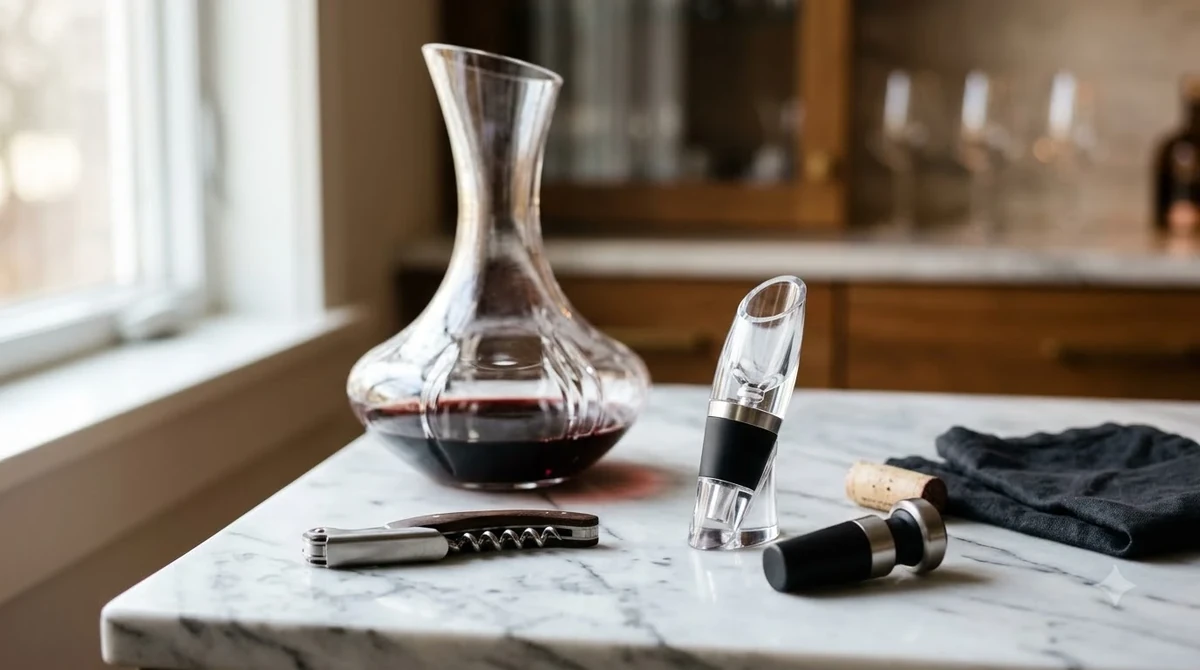
Why it stands out: Writers at Wine Enthusiast highlight natural handle materials such as olive wood, juniper, and polished horn for delivering both durability and an unmistakable feel in the hand. Instead of stamped sheet metal, these knives use thick cast steel frames, smoothed spines that never dig into your palm, and long tapered worms engineered to grip cork fibers cleanly without tearing out the center. Many artisans also file decorative guilloché patterns along the backspring, making each piece subtly distinct.
Keep in mind and best for: Because a single-hinge boot has only one fulcrum point, extracting very long reserve corks requires an angled wrist roll or a gentle final tug by hand once the cork is three-quarters out. These keys also usually feature a sharp, smooth-edged pocket blade rather than a serrated foil saw, which slices cleanly once you master how to open a wine bottle properly. Choose this category for milestone gifts, serious wine collectors, and drinkers who appreciate heirloom craftsmanship.

- Set Size
- 4 pieces
- Material
- Stainless steel
- Extras
- Foil cutter, beer opener
- Weight
- 90 g
Sold as a set of four, these corkscrews suit gift giving or equipping a small team, with one key for each person. Thickened hinges and a reinforced screw are meant to hold up over many bottles, and each key folds down small enough for a pocket. A foil cutter and beer opener are included on every piece, and the finish is rust resistant.
Pros & ConsView
- Set of four keys for sharing or gifting
- Thickened hinges and reinforced screw
- Rust-resistant stainless steel
- Four identical keys may be more than one home needs
- Listing shows no gift box or case
Best for Travel and Picnics: Slim All-Metal Pocket Keys
Slim all-metal waiter’s corkscrews strip away thick wood scales and contoured bolsters in favor of a flat, narrow stainless-steel chassis that disappears into a jeans pocket, picnic tote, or travel bag. Despite their featherweight footprint, well-made models retain full double-hinged leverage.
Why it stands out: Hospitality staff who carry a wine key for eight-hour shifts often prefer a slim all-metal profile because it adds almost no bulk to an apron or trouser pocket. A monochromatic steel or enamel-coated frame is also effortless to sanitize after outdoor picnics, beach trips, or camping weekends where wooden handles might swell or stain. Even with a narrow spine, a properly angled double hinge still generates plenty of mechanical advantage to pull tight corks cleanly.
Keep in mind and best for: Thin metal edges can press into the heel of your palm if you pull rapidly on stubborn, dry corks. Look for models with rounded, tumbled frame edges rather than sharp stamped corners, and keep in mind that corkscrews with folding blades must go in checked luggage rather than carry-on bags when flying. This type is ideal for travelers, picnickers, and servers who prioritize pocket comfort.

- Length
- 5 in
- Material
- Stainless steel
- Care
- Top-rack dishwasher safe
- Weight
- 2.4 oz
A straightforward two-step key that slips into a picnic basket or bag without adding bulk. At 5 inches long and 2.4 ounces, it carries the foil cutter and bottle opener you want outdoors, and the sharp screw cuts easily through cork. Back home, it can go on the top rack of the dishwasher for cleanup.
Pros & ConsView
- Pocket-friendly 5-inch length
- Foil cutter and bottle opener built in
- Top-rack dishwasher safe
- Dishwasher use limited to the top rack
- Basic design with no extra grip features
Best for Leverage and Grip Comfort: Ergonomic Wide-Grip Wine Keys
Ergonomic wide-grip waiter’s corkscrews expand the handle width and contour the spine so your palm distributes downward and upward force evenly across the entire frame. They keep the familiar folding silhouette of a traditional wine key while solving the hand fatigue associated with skinny handles.
Why it stands out: Whether finished in sculpted pakkawood, thick brushed steel, or textured non-slip composite, a wider handle gives your fingers a secure anchor when twisting the worm into dense corks. That extra girth prevents the frame from rolling in your grip as you apply steady upward pressure on the boot lever. Many wide-grip designs also feature a larger nail nick or extended lip on the foil knife, making the blade easier to deploy without pinching.
Keep in mind and best for: A thicker, heavier handle feels noticeably more substantial in a narrow pocket than a flat steel key, so these shine brightest at a home bar counter or kitchen drawer rather than tucked into fitted dress trousers. They are the smartest choice for people with larger hands, anyone who dislikes thin metal handles digging into their palm, and hosts opening several bottles at once.

- Type
- Wing corkscrew
- Material
- Zinc alloy body
- Handle
- Ergonomic, non-slip
- Weight
- 7.84 oz
Choose this wing-style opener if grip comfort matters more than pocket size. The ergonomic non-slip handle reduces the downward pressure needed to pull a cork, while the sharp-edged screw glides into the cork cleanly. A heavy-duty zinc alloy body adds durability, and the tool also lifts bottle caps when you need to open a beer.
Pros & ConsView
- Ergonomic non-slip handle
- Sharp-edged screw enters cork cleanly
- Heavy-duty zinc alloy body
- Heavy at 7.84 ounces for travel
- Bulkier 7.75-inch body takes more storage room
How to Choose
Evaluating four small mechanical details separates a lifetime Openers & Corkscrews staple from a flimsy key that bends after a dozen bottles.
- Worm length and construction: Choose a five-turn open spiral (grooved helix) rather than a solid auger-style screw with a thick central shaft. An open spiral wraps around a hollow core, gripping cork fibers securely without boring out the center or shredding fragile stoppers, while a nonstick coating lets the metal glide smoothly through tight synthetic plugs.
- Hinge geometry and pivot tightness: Open the boot lever and wiggle it side to side before buying. Quality double-hinged models snap firmly into place with tight steel rivets and zero lateral play, ensuring the lever stays planted on the glass rim under heavy upward load.
- Foil knife edge and deployment: Serrated blades bite immediately into thick plastic or metal capsules without slipping, while smooth honed blades make cleaner cuts once you have steady technique. Make sure the blade opens smoothly with one fingernail and folds flush inside the handle.
- Handle material and balance: Stainless steel and resin composites shrug off moisture and dish-towel wipe-downs, whereas stabilized wood and horn offer warm, balanced ergonomics that feel custom-fitted in the hand.
Tip: Cut the foil capsule just below the lower glass lip on the bottle neck rather than across the very top rim. As VinePair and Wine Enthusiast educators explain, keeping the foil edge below the pouring lip prevents wine droplets from picking up metallic residue or dripping down the neck.
Frequently Asked Questions
What is the difference between a single-hinge and double-hinged waiters corkscrew?
A single-hinge waiter’s corkscrew uses one solid curved lever arm to lift the cork in a single pull, which works well on standard-length corks but requires a steeper wrist angle near the top. A double-hinged model adds an articulated two-step boot that lifts the cork halfway on the upper notch and finishes straight up on the lower notch, reducing effort and preventing long corks from snapping.
Why do professional sommeliers prefer a waiters corkscrew over lever or electric openers?
Hospitality professionals rely on waiter’s keys because they combine a foil cutter, spiral worm, and bottle-cap opener in a pocket-sized tool that never needs charging or tabletop space. They also give direct tactile feedback as the worm enters the cork, letting you feel if an older stopper is dry or fragile so you can adjust angle and speed immediately.
How far should I twist the worm into the cork before pulling?
Insert the tip slightly off-center so the spiral tracks straight down the middle axis, then turn until roughly four and a half of the five coils are buried—leaving about half a turn visible above the cork. Stopping short risks tearing the top half off a tight cork, while screwing all the way through can push cork dust into the wine.
Are waiters corkscrews good for older, fragile wine corks?
A double-hinged key with a long, thin nonstick spiral handles moderately aged bottles well when inserted gently all the way to the bottom of the cork. However, for bottles older than fifteen or twenty years with spongy, crumbling corks, pairing your wine key with a two-prong Ah-So puller protects the stopper from splitting.
Choosing the right waiter’s corkscrew comes down to matching the hinge mechanism and handle shape to how often you open bottles. Whether you reach for a nimble double-hinged pocket key for Tuesday night pasta or an heirloom wood-handled sommelier knife for weekend cellar bottles, a well-balanced wine key makes uncorking effortless for years to come.
More in Openers & Corkscrews
 Best Two Step Corkscrew Options for Home, Travel, and Old CorksUpdated Nov 18, 2026
 Best Foil Cutter for Clean Cuts at Home, on the Road and in Your KitUpdated Nov 18, 2026
 Best Cordless Wine Opener Styles for Easy Uncorking AnywhereUpdated Nov 18, 2026
 Best Champagne Opener for Sabrage, Everyday Use and GiftsUpdated Nov 18, 2026Best Air Pressure Wine Opener Styles for Easy, Cork-Safe OpeningUpdated Nov 18, 2026
 Best Wine Opener Set for Home Use, Hosting, and Hands-Free OpeningUpdated Nov 18, 2026