

We may earn a commission when you buy through links on this page, at no extra cost to you. Learn more.
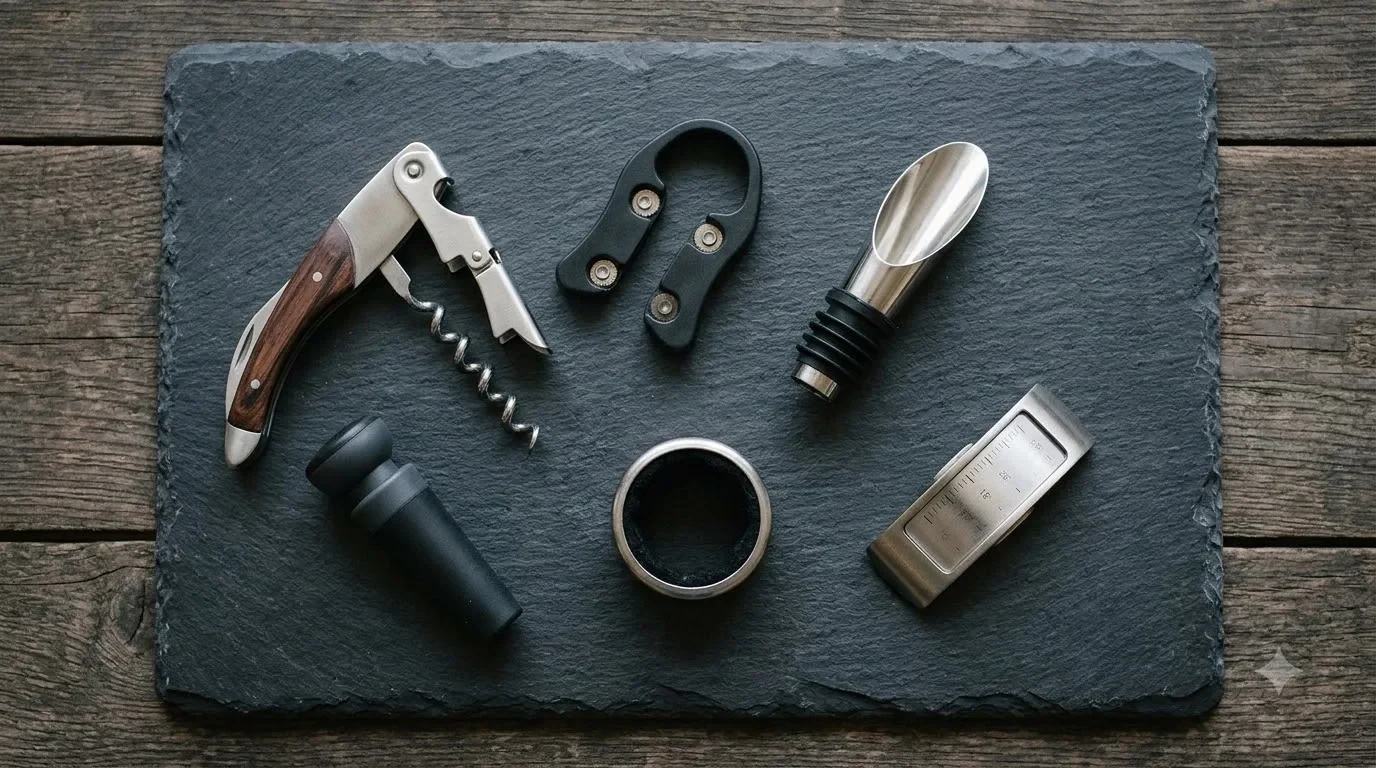
The best foil cutter is a small, sharp tool with a guard that cuts the capsule cleanly just below the lip of the bottle, so the cork and the neck stay tidy. Many people get a foil cutter as part of a sommelier knife, but a dedicated cutter is quicker for regular use. Choose by how often you open bottles, whether the foil is tin, plastic or aluminum, and how much room you have in the drawer.
The foil or capsule over a wine bottle’s neck is there for a reason. It protects the cork from pests, catches drips, and adds a finished look to the bottle. Most people remove it with a knife, a cutter or a tear tab before the corkscrew goes in. Because the job is simple, a foil cutter can be a small, inexpensive tool, but the details still matter for a clean result.
Quick Comparison of Foil Cutter Types
Foil cutters come in a few formats: a blade built into a sommelier knife, a stand-alone cutter with a fixed blade, a rotating wheel style, and a foil cutter attached to another opener. Each has a different balance of speed, safety and tidiness at the top of the bottle.
| Cutter type | How it removes foil | Speed | Tidiness at the lip | Best fit |
|---|---|---|---|---|
| Sommelier knife with foil blade | Blade cuts a ring around the neck | Fast | Good with practice | Waiters and frequent wine drinkers |
| Stand-alone fixed blade cutter | Guarded blade rotates around the neck | Fast | Very good | Home use |
| Rotating wheel cutter | Wheel scores the foil as you turn | Moderate | Good | Thick or stiff foils |
| Foil cutter on a combined opener | Small blade built into the tool | Fast | Good | Travel and minimal kits |
The table is about the cut itself, not the brand. The most important factor is whether the cutter gives you a clean ring at the lip, since a ragged edge is what people notice first on a served bottle.
Best for Regular Home Use
If you open a bottle most evenings, a stand-alone fixed blade cutter is the most convenient choice. It sits in a drawer, cuts in one motion, and does not need the rest of a knife set.

Why it stands out: A dedicated cutter is simple. It removes the capsule quickly and keeps the blade at the right depth, which avoids cutting into the glass or leaving a rough edge. A guarded blade is also safer around children and guests.
Keep in mind: Blades dull over time, so replace or sharpen them when the cut starts to tear instead of slicing. Store the cutter where a blade edge will not catch on other tools.
Best for: households that open wine several times a week and want a fast, clean cut.
Best for Sommelier Knife Users
A sommelier knife, also called a waiter’s friend, folds like a pocket knife and includes a foil cutter, a corkscrew arm and sometimes a bottle opener. The foil blade is built in, so you do not need a second tool.
Why it stands out: A sommelier knife covers the whole opening process in one tool. The Wikipedia entry on corkscrews notes that this design often includes a foil cutter, and it is the classic choice for restaurant staff and enthusiasts who want one object for everything.
Keep in mind: The foil blade on a combined knife can be less precise than a dedicated cutter. Practice on a bottle you do not mind opening, and always cut away from your hand.
Best for: frequent wine drinkers who want one tool, and anyone who already uses a sommelier knife for corks.
Best for Sparkling Wine and Thick Capsules
Sparkling wine bottles often have a thicker capsule, and some are sealed with heat-shrink tin or aluminum. A rotating wheel cutter can score a tough capsule evenly, which makes the removal easier than dragging a blade around the neck.
Why it stands out: A wheel cutter follows the shape of the neck and gives a consistent line. It suits the heavier foils found on some sparkling and premium bottles, where a thin blade may skip or tear.
Keep in mind: Sparkling bottles also have a wire cage that must be removed separately, so the foil cutter is only the first step. Hold the cork firmly after you remove the foil and the cage, since the pressure is high.
Best for: hosts who serve sparkling wine and want a cutter that handles thicker foil.
Best for Gifts and Wine Accessories
A foil cutter is a practical present for anyone who opens wine often. Pair it with a corkscrew or a set of stoppers for a complete kit, or give a single well-made cutter for a housewarming.
Why it stands out: A simple tool is easy to use and does not need explaining. It fits in a gift box, and the recipient will reach for it every time they open a bottle.
Keep in mind: Check that the cutter has a guard and a secure handle before giving it, since the blade is the most important part. A gift set with a basic corkscrew is often a better value than a fancy cutter alone.
Best for: hosts, wine lovers and anyone building a home bar kit.
Best for Travel and Compact Kits
A small foil cutter that fits in a pocket or a wine bag helps when you bring a bottle to a picnic, a campsite or a friend’s home. A compact design keeps the cutter from rattling around in a bag.
Why it stands out: A compact cutter removes the foil without taking up much room, and it works well in a minimal kit with a corkscrew. Many travelers prefer a folding or sheathed blade for safety.
Keep in mind: Small handles can be harder to grip, and a very small blade may take longer to score a thick capsule. Check that the cover locks shut before you pack it.
Best for: picnics, camping trips, hotel stays and anyone who carries a small wine kit.
How to Choose a Foil Cutter
Start with how you open bottles and what kind of capsule you usually see. A cutter that works on thin plastic may struggle with thick tin or aluminum, so match the tool to your bottles.
Tip: Cut just below the lip, not at the top of the neck, so the cork and any leftover foil come off in one piece. Wipe the rim before you pour, since a bit of foil residue can drip down the bottle.
- Blade: a guarded, replaceable blade is safer and easier to maintain.
- Foil type: thin plastic and heat-shrink foil cut easily, thick tin or aluminum needs a sharper edge or a wheel.
- Grip: a handle that fits your hand keeps the cut steady.
- Storage: a cover or sheath keeps the blade safe in a drawer or bag.
- Combination: if you already own a sommelier knife, a separate cutter may not be needed.
If you are still choosing the rest of your kit, read our notes on corkscrews and wine openers, which cover the tools that come after the foil. For the full order of steps, see how to open a wine bottle.
Frequently Asked Questions
Why do wine bottles have foil on top?
The foil or capsule protects the cork from rodents and cork weevils, catches drips, and adds a decorative finish. Most modern foils are tin, heat-shrink plastic, aluminum or polylaminate, since lead foils were phased out.
Is lead foil still used on wine bottles?
No. The Wikipedia entry on wine bottles notes that lead foils were phased out after research showed lead could reach the poured wine, and the U.S. FDA banned lead foils as of 1996. If you find an old bottle with lead foil, do not reuse the foil or the cork as a keepsake.
Do I have to remove the whole foil?
You only need to remove the part that covers the top of the cork and the lip. Cut or tear the foil below the bottle’s lip, then remove the cut ring. Removing the whole capsule is not required for most bottles.
Is a foil cutter worth buying if I already have a sommelier knife?
It depends on how often you open bottles. A sommelier knife covers the job, but a dedicated cutter is faster and easier for regular use. Try your knife’s blade first, and buy a separate cutter only if it leaves a ragged edge.
The best foil cutter is the one that gives you a clean ring at the lip, fits your hand and suits the foil on your bottles. A dedicated cutter is quick for home use, a sommelier knife keeps everything in one place, and a compact tool works on the road. Pick the style that matches how you open wine, and check the blade before each use.
More in Openers & Corkscrews
 Best Two Step Corkscrew Options for Home, Travel, and Old CorksUpdated Nov 18, 2026
 Best Cordless Wine Opener Styles for Easy Uncorking AnywhereUpdated Nov 18, 2026
 Best Champagne Opener for Sabrage, Everyday Use and GiftsUpdated Nov 18, 2026Best Air Pressure Wine Opener Styles for Easy, Cork-Safe OpeningUpdated Nov 18, 2026
 Best Wine Opener Set for Home Use, Hosting, and Hands-Free OpeningUpdated Nov 18, 2026
 Best Lever Corkscrew Styles and How to Pull Corks Faster at HomeUpdated Nov 18, 2026