

We may earn a commission when you buy through links on this page, at no extra cost to you. Learn more.
The best wine opener for most people is a double-hinged waiter’s corkscrew because it is compact, reliable, and pulls corks straight out with minimal effort. If you want push-button convenience or have limited hand strength, an electric or air-pressure opener removes the need to twist and pull manually. Home hosts opening multiple bottles at dinner parties often prefer a vertical lever opener for speed, while collectors dealing with fragile, aged corks rely on a two-prong Ah-So puller.
Walking down a kitchenware aisle or browsing online reveals dozens of contraptions designed to remove a simple cylinder of tree bark from a glass neck. Yet wine professionals, hosts, and casual drinkers rarely reach for the same tool. Choosing the right mechanism comes down to how often you open bottles, the age of your wine, and how much drawer space or wrist effort you want to spend.
Quick Comparison
Different opener designs trade portability for mechanical leverage, making each style suited to a specific drinking habit and cork condition.
| Opener Type | Primary Mechanism | Effort Required | Portability | Best Cork Condition |
|---|---|---|---|---|
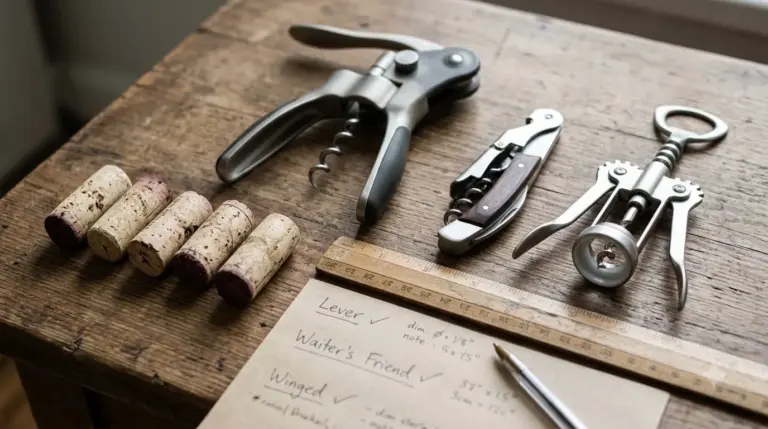
| Double-Hinged Waiter’s Corkscrew | Two-step fulcrum and spiral worm | Low to moderate | Pocket-sized | Young to moderately aged corks |
| Vertical Lever Opener | Gear-driven rack and handle | Very low | Countertop or large drawer | Standard natural and synthetic corks |
| Electric Wine Opener | Battery-powered motorized worm | Minimal (button press) | Countertop charging base | Young, firm natural corks |
| Two-Prong (Ah-So) Puller | Twin thin blades gripping cork sides | Moderate technique | Pocket-sized | Old, dry, or brittle corks |
| Winged (Butterfly) Corkscrew | Twin gear-driven side arms | Moderate | Kitchen drawer | Fresh, elastic corks |
Best for Everyday Versatility and Portability: Double-Hinged Waiter’s Corkscrew
Compact, folding, and mechanically straightforward, the double-hinged waiter’s corkscrew—often called a wine key—is the standard tool carried by sommeliers and bartenders worldwide. It combines a small serrated foil blade, a coated spiral worm, and a two-step boot lever in a frame that fits easily in a pocket or utensil drawer.

Why it stands out: As reviewers at Wine Enthusiast point out, a two-step lever lets you extract a cork in two straight stages rather than yanking it upward at an awkward angle. Single-hinge models tend to bend or snap longer corks halfway out, whereas a double hinge keeps vertical alignment steady from start to finish. Because there are no gears, batteries, or plastic housings to wear down, a well-built steel wine key can open thousands of bottles without failing.
Keep in mind and best for: Mastering the two-step pivot takes a few practice bottles, and you still need enough hand strength to twist the helix into dense corks. If you want a deeper look at specific designs and handle materials, our roundup of corkscrews breaks down what separates an entry-level key from a lifelong tool. This style is best for everyday wine drinkers, travelers, picnic packers, and anyone who wants one dependable opener that tucks neatly out of sight.

- Type
- Double-hinged waiter's key
- Material
- Stainless steel and plastic
- Extras
- Foil cutter, bottle opener
- Weight
- 2.24 oz
A practical pick for home bars and weekend hosting, this double-hinged corkscrew gives two-step leverage without much effort. The flat-blade foil cutter and built-in bottle opener keep the essentials in one slim tool. Stainless steel and plastic construction keeps it light at 2.24 ounces, so it fits easily in a kitchen drawer or on a bar cart.
Pros & ConsView
- Double-hinged arm for two-step leverage
- Built-in foil cutter and bottle opener
- Light at 2.24 ounces
- Plastic parts in the body
- Compact 4.75-inch size leaves little grip room
Best for Effortless Hosting and High Volume: Vertical Lever Opener
Frequently called “rabbit” or “bunny-ear” openers because of their gripping handles, vertical lever models clamp onto the bottle neck and use a long lever arm to drive and extract the screw in seconds. According to Wine Folly, lever corkscrews offer the easiest mechanical operation for beginners who want a smooth, dramatic pop without wrestling a stubborn cork.
Why it stands out: Leverage does almost all the physical work. You clamp the base over the bottleneck, push the lever down to sink the nonstick worm, and pull the lever back up to lift the cork clean out. A second down-and-up cycle ejects the cork from the spiral automatically, allowing a host to open half a dozen bottles before appetizers hit the table.
Keep in mind and best for: Lever openers are noticeably bulkier than folding wine keys and occupy significant drawer or counter space. Reviewers also note that certain extra-dense synthetic stoppers can occasionally resist lever mechanisms or require extra care when centering the worm. Choose this type if you entertain frequently, struggle with wrist twisting, or love the tactile satisfaction of a heavy-duty bar tool.

- Type
- Vertical lever corkscrew
- Material
- Stainless steel, die-cast zinc handle
- Screw
- Non-stick, spare included
- Extras
- Removable foil cutter
Counter speed is the draw here: squeeze the handles around the bottleneck, then pull the lever down and up, and the cork comes out in two moves. The non-stick screw releases both natural and synthetic corks with another pump of the lever. A soft, nonslip grip keeps pressure controlled, and the foil cutter detaches for use and stores back on the body.
Pros & ConsView
- Two-motion lever pulls corks in seconds
- Soft nonslip grip keeps control
- Spare non-stick screw included
- Larger than a folding waiter's key
- Heavier zinc and steel build at 483 grams
Best for Limited Grip Strength and Push-Button Ease: Electric Wine Opener
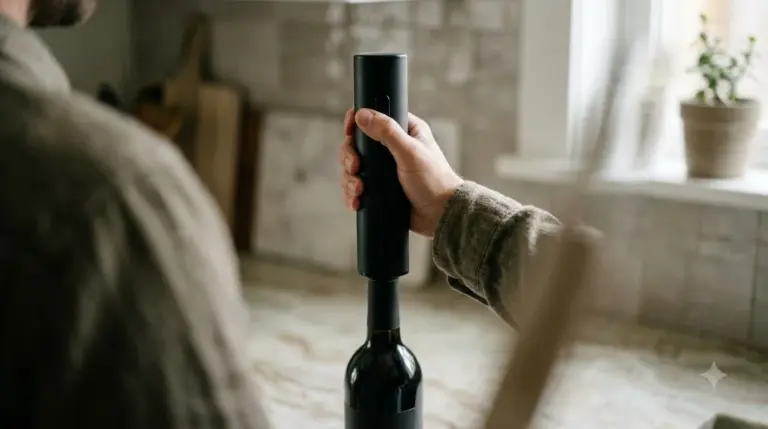
An electric wine opener automates the entire uncorking sequence with a motorized spiral housed inside a sleek cylindrical shell. You simply place the unit vertically over the bottleneck, press a button, and watch the helix draw the cork out and release it in reverse.
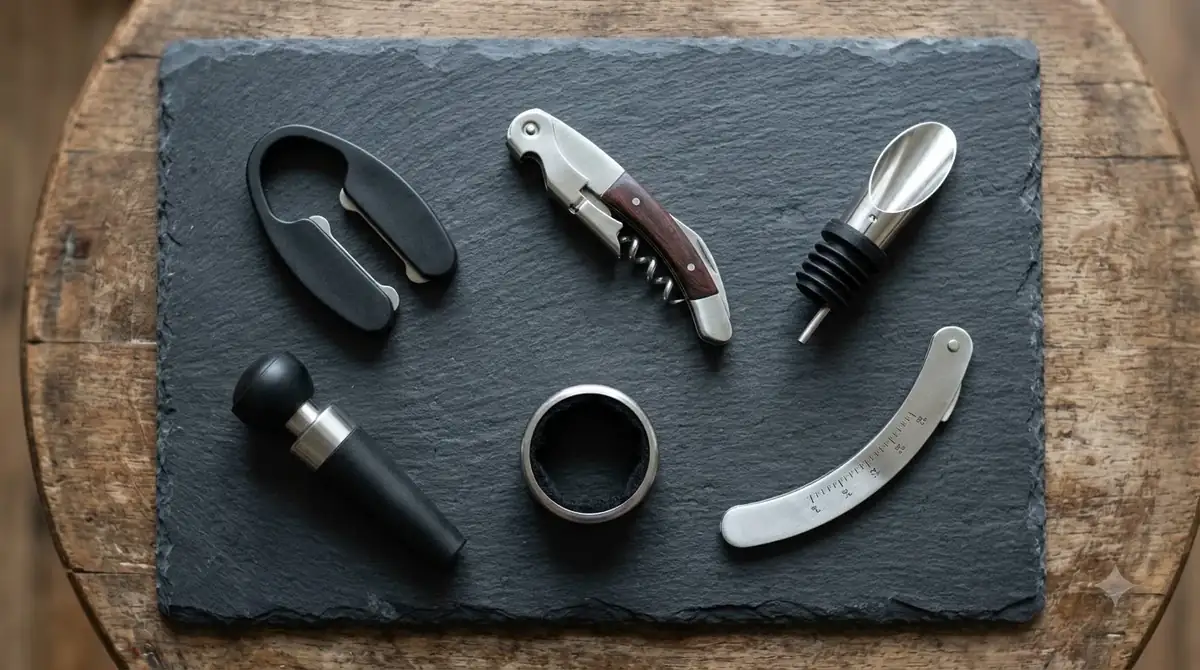
Why it stands out: Zero twisting or pulling is required, making cordless electric models an ideal solution for people with arthritis, carpal tunnel, or reduced hand strength. Many units include an illuminated window so you can watch the cork rise, along with a separate foil cutter that snaps onto the charging base. When kept docked on a kitchen counter or home bar cart, it is always ready for weeknight dinners.
Keep in mind and best for: Because these openers rely on rechargeable batteries and internal plastic gears, they require periodic charging and have more potential failure points than manual metal tools. They also perform poorly on crumbly, aged corks, which can shred under continuous motorized torque. An electric model is best for casual weeknight drinkers, gift shoppers, and anyone prioritizing maximum comfort and speed over longevity.

- Type
- Cordless electric opener
- Power
- Rechargeable base, 110-120V
- Per charge
- Up to 30 bottles
- Extras
- Foil cutter, soft grip handle
Casual drinkers who open a bottle now and then can keep this cordless opener ready on its base. A simple push button controls the cork removal, and a single charge handles up to 30 bottles, so it rarely needs attention. The soft grip handle and built-in foil cutter round out the basics without extra accessories or a pile of parts to store.
Pros & ConsView
- Simple push-button operation
- One charge opens up to 30 bottles
- Includes foil cutter and recharging base
- No aerator or stoppers in the package
- Plastic body weighs 16 ounces
Best for Vintage Bottles and Fragile Corks: Two-Prong (Ah-So) Puller
Unlike every other opener on this list, the two-prong cork puller—widely known as an Ah-So—has no spiral screw at all. Instead, two thin, flat spring-steel blades slide down between the outside of the cork and the inside wall of the glass neck, gripping the stopper from the sides.
Why it stands out: Corks in bottles aged ten years or longer often turn dry, spongy, or brittle, meaning a traditional spiral worm will bore straight through the center and leave fragments floating in your wine. As Wine Folly notes, the Ah-So lifts delicate corks intact without piercing them, and it can even re-insert a cork cleanly if you do not finish the bottle. For ultra-fragile collector bottles, hybrid tools combine a central worm with twin side prongs for dual stabilization.
Keep in mind and best for: Using an Ah-So properly requires patience and a gentle rocking motion; pushing straight down with too much force can accidentally shove the cork into the bottle. Before uncorking an older vintage, reviewing how to open a wine bottle step by step helps prevent common slip-ups. This tool is best for collectors, cellar owners, and enthusiasts opening older vintages.

- Type
- Ah-So two-prong puller
- Material
- Stainless steel
- Size
- 4.3" L x 2.4" W
- Weight
- 2.08 ounces
Collectors with aged red wine need a gentler approach than a screw. This two-prong puller is designed to protect the cork while lifting it out, which matters when the cork is old and brittle. It is made from stainless steel, measures about 4.3 inches long, and weighs roughly two ounces, so it stores easily in a drawer. Expect a short learning curve.
Pros & ConsView
- Two prongs protect old, fragile corks
- All stainless steel construction
- Compact 4.3-inch body stores easily
- No foil cutter included in the listing
- Technique takes practice versus screw-style openers
Best for Casual Familiarity: Winged (Butterfly) Corkscrew
Recognizable by the two geared arms that rise like wings as you twist the top knob, the butterfly corkscrew is the classic opener found in millions of American kitchen drawers. Once the arms reach the top, pressing them downward simultaneously levers the cork out of the neck.
Why it stands out: Its operation is immediately obvious even to someone who has never opened a bottle of wine before, requiring no instruction manual or special wrist angle. Heavier die-cast metal versions feel steady on the rim of the bottle and include a built-in bottle opener loop at the top for crown-cap beers and sodas.
Keep in mind and best for: Wine experts caution that inexpensive winged corkscrews often feature thick, dull worms that chew up natural corks, and their short screws can leave the bottom tip of a long cork behind. Even well-made models are better suited to young, firm stoppers than aged bottles. Pick a sturdy winged opener if you drink young everyday wines and want an intuitive backup tool for guests to use in the kitchen.

- Type
- Wing corkscrew
- Material
- Zinc alloy body
- Handle
- Ergonomic, non-slip
- Weight
- 7.84 oz
Choose this wing-style opener if grip comfort matters more than pocket size. The ergonomic non-slip handle reduces the downward pressure needed to pull a cork, while the sharp-edged screw glides into the cork cleanly. A heavy-duty zinc alloy body adds durability, and the tool also lifts bottle caps when you need to open a beer.
Pros & ConsView
- Ergonomic non-slip handle
- Sharp-edged screw enters cork cleanly
- Heavy-duty zinc alloy body
- Heavy at 7.84 ounces for travel
- Bulkier 7.75-inch body takes more storage room
How to Choose
Selecting the right tool depends on matching the opener’s engineering to your bottles and physical comfort. Consider these four factors before buying:
- Worm design and coating: Look for an open, hollow-center spiral (called a helix or augur) rather than a solid, thick auger bit. A true helix grips the cork fibers cleanly without tearing them apart, and a nonstick Teflon coating helps the metal glide into tight stoppers with far less friction.
- Bottle age and cork material: Standard young wines sealed with firm natural cork or agglomerated cork work well with waiter’s keys, lever openers, and electric models. If you regularly open cellar-aged bottles or suspect a cork has dried out, keep a two-prong puller on hand to avoid crumbling.
- Hand strength and ergonomics: Manual wine keys reward technique over brute force, yet they still require firm finger and wrist control. If twisting causes discomfort, a vertical lever model or push-button electric unit removes nearly all strain from your hands.
- Foil removal and storage: A sharp, serrated foil blade or separate four-wheel foil cutter ensures clean capsule removal without jagged metal edges. Think about where the tool will live—a pocket-sized wine key disappears into any drawer, whereas a lever or electric opener needs dedicated counter or cabinet space.
Tip: Always cut the foil capsule cleanly below the bottom lip of the bottle neck rather than across the top rim. This prevents wine from touching the metal wrapper as you pour and keeps your wine glasses free of stray foil flecks.
Frequently Asked Questions
Why do sommeliers prefer a double-hinged waiter’s corkscrew?
Restaurant professionals rely on double-hinged waiter’s corkscrews because they fit in an apron pocket, have almost no parts that can break, and pull corks straight upward in two smooth stages. The first notch lifts the cork halfway out without bending it, while the second notch finishes the pull cleanly with minimal wrist strain.
Are electric wine openers bad for corks?
Electric wine openers work very well on young, firm natural corks, smoothly extracting them in a few seconds without tearing. However, the continuous spinning torque can shred older, brittle corks or struggle with extra-dense synthetic stoppers, so they are best reserved for everyday bottles.
What is the easiest wine opener for someone with arthritis?
A cordless electric wine opener or an air-pressure pump opener is typically easiest for anyone with arthritis or limited grip strength. Electric models require only a light button press while resting on top of the bottle, eliminating the need to twist a handle or squeeze a lever.
Can you use one wine opener for both still and sparkling wine?
No, sparkling wines like Champagne and Prosecco use pressurized mushroom-shaped corks held in place by a wire cage rather than straight stoppers driven flush into the neck. You should never use a corkscrew on sparkling wine; instead, untwist the wire cage while holding the cork firmly and twist the base of the bottle slowly until the cork eases out.
The right opener turns opening a bottle from a minor chore into an effortless start to your evening. Whether you carry a pocket-ready waiter’s key or keep a sleek lever model on your bar cart, matching the tool to your favorite bottles ensures clean pours every time. Browse our full collection of Openers & Corkscrews to compare top-rated designs for your home bar.
More in Openers & Corkscrews
 Best Two Step Corkscrew Options for Home, Travel, and Old CorksUpdated Nov 18, 2026
 Best Foil Cutter for Clean Cuts at Home, on the Road and in Your KitUpdated Nov 18, 2026
 Best Cordless Wine Opener Styles for Easy Uncorking AnywhereUpdated Nov 18, 2026
 Best Champagne Opener for Sabrage, Everyday Use and GiftsUpdated Nov 18, 2026Best Air Pressure Wine Opener Styles for Easy, Cork-Safe OpeningUpdated Nov 18, 2026
 Best Wine Opener Set for Home Use, Hosting, and Hands-Free OpeningUpdated Nov 18, 2026