

We may earn a commission when you buy through links on this page, at no extra cost to you. Learn more.
The best cordless wine opener for most homes is a rechargeable model with a two-button or auto-sensing design, a foil cutter, and enough charge for several dozen bottles on one battery. A cordless opener removes the need for a wall outlet, so you can open a bottle anywhere in the kitchen, on a patio, or at a table. Rechargeable lithium-ion models give the best long-term value, while replaceable-battery designs are simpler for occasional use or travel. The right choice depends on how many bottles you open in a week and where you like to keep the tool.
A cordless wine opener uses a small motor and a battery to turn the worm into the cork and pull it out. Compared with a manual corkscrew, it needs almost no effort, which makes it a good fit for guests, people with arthritis or limited grip, and anyone who opens wine most evenings. The downside is that you have to keep the battery charged or replace it. This guide groups the main cordless styles into five types so you can match the tool to your habits. For a wider view, see our overview of wine openers, the guide to electric wine openers, and the Openers & Corkscrews section.
Quick Comparison
Cordless openers differ in control style, battery type, and how many bottles one charge will handle. Compare the options below before you commit to a model.
| Opener Style | Power Source | Control Style | Typical Use | Best For |
|---|---|---|---|---|
| Auto-sensing buttonless opener | Rechargeable internal battery | Automatic contact activation | Fast, one-handed opening | Hosting and frequent use |
| Two-button rechargeable cylinder | Rechargeable internal battery | Separate up and down buttons | Everyday kitchen use | Most households |
| Replaceable-battery cordless | Standard AA batteries | Rocker or push switch | Occasional use and outdoor trips | Light users and travel |
| Compact USB-charging opener | Small rechargeable battery | Single button | Quick openings on the go | Travel and small kitchens |
| Heavy-duty cordless opener | Larger rechargeable battery | Two-button or automatic | Long sessions with many bottles | Large gatherings and collectors |
Best for Hosting and Fast Opening: Auto-Sensing Buttonless Openers
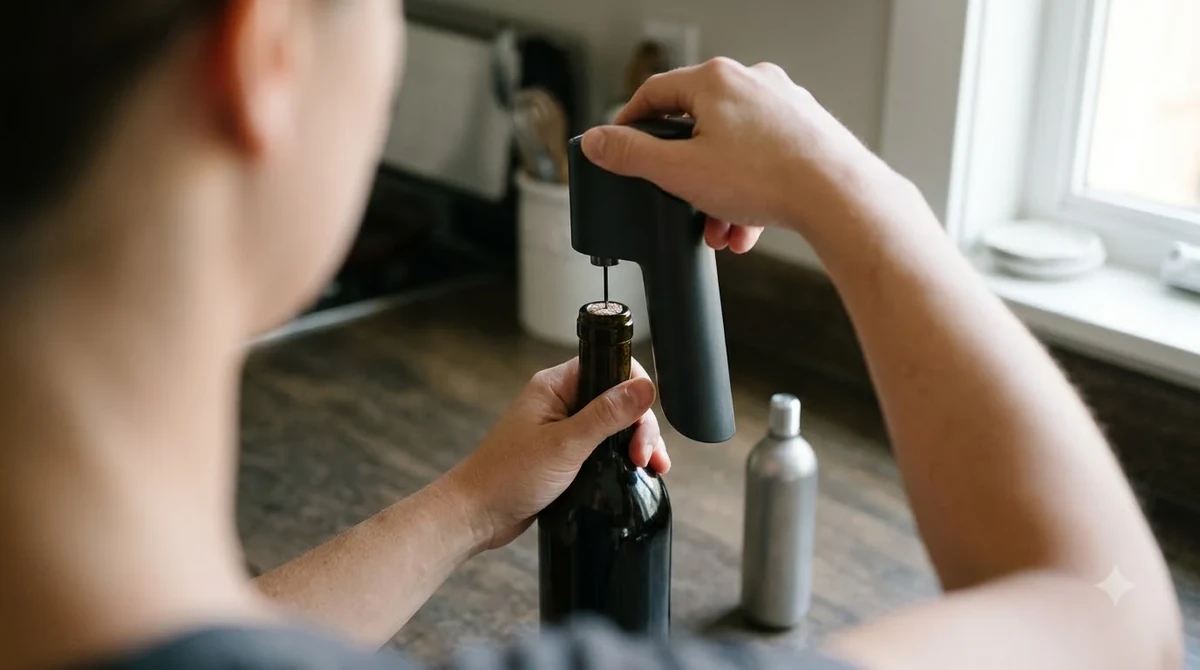
Auto-sensing openers start when the tool touches the bottle’s top and stop when the cork is out. There is no button to press during the process, so you can work with one hand while you hold a glass in the other. They suit dinner parties and bar setups where several bottles are opened in a row.
Why it stands out: It is the fastest way to open a bottle, and it needs very little attention. Guests can use it without a briefing.
Keep in mind: Automatic sensing can be startled by a bottle that is not centered, so line the opener up before you press it. Check that the model has a safety cut-off if the cork does not come out cleanly.
Best for: Hosts who open several bottles at once, and anyone who wants the quickest possible opening.
Best for Everyday Kitchen Use: Two-Button Rechargeable Cylinders
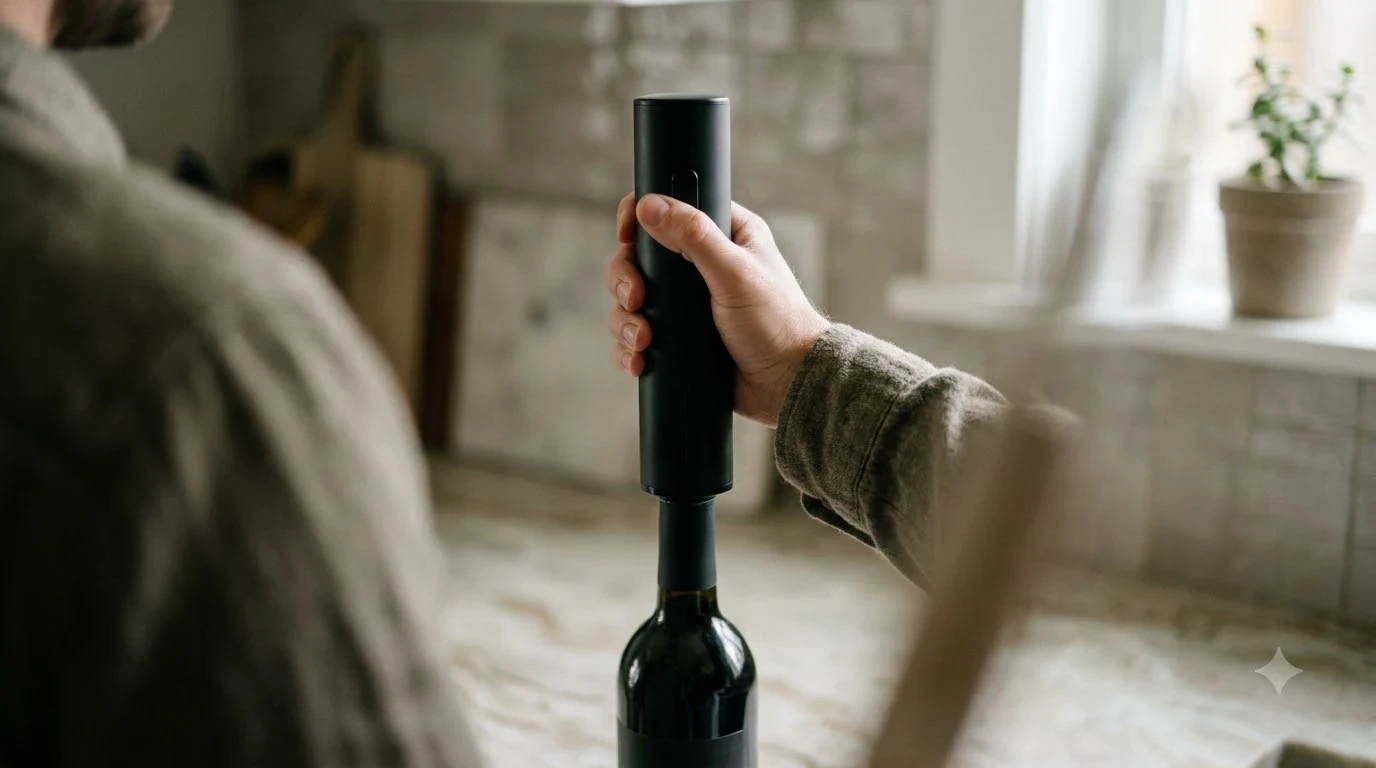
A two-button cylinder with a down button and an up button is the classic cordless design. You hold the tool on the bottle neck, press down to pull the cork, and press up to release it. The rechargeable battery stays topped up between uses, and many models come with a charging base or a USB cable.
Why it stands out: It gives clear control over both the pull and the release, which helps with fragile corks. It is predictable for beginners and easy to explain to guests.
Keep in mind: You still need to press both buttons, so it takes a little more attention than an automatic model. Check the charging method and whether a foil cutter is included.
Best for: Most households that open wine most nights and want a balance of control and speed.
Best for Occasional Drinkers: Replaceable-Battery Cordless Openers
Replaceable-battery models run on standard AA batteries and need no charging base. They are simple to maintain, and you can swap in fresh batteries when the motor slows. For someone who opens a bottle once or twice a week, this can be the lowest-effort option.
Why it stands out: It works anywhere, from the kitchen to a campsite, and needs no outlet or cable. A spare set of batteries in a drawer keeps the tool ready.
Keep in mind: Disposable or replaceable batteries add ongoing cost over time, and a weak battery can slow the motor partway through a cork. Keep a spare set on hand.
Best for: Light wine drinkers, cabins, and households that do not want to manage a charger.
Best for Travel and Small Kitchens: Compact USB-Charging Openers
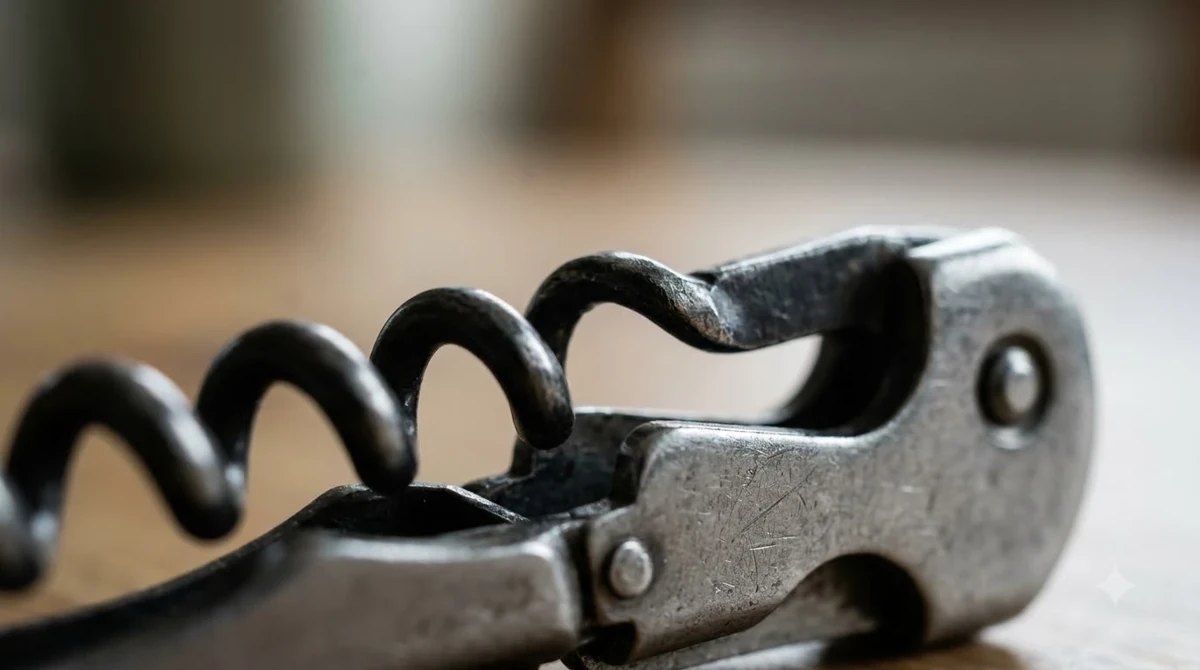
Compact openers are small enough to carry in a bag or keep in a narrow drawer. Most use a small built-in battery and charge over USB, so you can top them up from a laptop or a phone charger. They usually have a single button and a slim body.
Why it stands out: It is easy to pack and charge with cables you already own. The slim shape fits a drawer or a cabinet shelf.
Keep in mind: A small battery can handle fewer bottles per charge than a full-size model. Plan to recharge after a long evening, and check the charge before a trip.
Best for: Travelers, RV owners, and small apartments where counter space is tight.
Best for Large Gatherings: Heavy-Duty Cordless Openers
Heavy-duty cordless openers use a larger battery and a sturdier motor. They are built for long sessions, such as a wedding reception, a wine tasting, or a restaurant-style home bar where many bottles are opened in a single evening. The larger battery holds a charge for more openings.
Why it stands out: It keeps working through a long session without slowing down. The heavier build feels stable on a bar counter.
Keep in mind: Larger models are heavier and take more space, and they cost more than a basic cylinder. They are overkill for a few bottles a week.
Best for: Collectors, hosts with frequent events, and anyone who opens many bottles at once.
How to Choose
Decide how often you open wine and where you will use the tool. Those two answers set the battery type and the control style, and the rest of the decision follows.
- Battery type: A rechargeable battery is cheaper to run over time. A replaceable battery is simpler if you never want to charge. Both work well if you keep the battery in good condition.
- Bottles per charge: A full-size rechargeable model usually handles a useful number of bottles per charge, while compact models handle fewer. Check the stated figure and plan for your busiest night.
- Control style: Auto-sensing suits hosts, two-button suits most homes, and single-button suits quick openings.
- Battery care: Lithium-ion cells last longest when they are kept away from heat and not stored fully charged. The Wikipedia article on lithium-ion batteries notes that heat speeds up degradation, and that keeping the charge in a middle range can reduce capacity loss.
Store the opener in a cool, dry place, and charge it before a party rather than after. If the motor slows or the cork stops mid-pull, check the battery first and then the cork.
Frequently Asked Questions
How many bottles does a cordless wine opener open on one charge?
It depends on the model and the battery size. Full-size rechargeable openers usually handle a good number of bottles per charge, while compact models handle fewer. Check the manufacturer’s stated figure, and plan to recharge before a large event.
Is a rechargeable or battery cordless opener better?
A rechargeable model is better for frequent use because it costs less to run over time. A battery model is simpler if you open wine only now and then, or if you do not want to manage a charger.
Can a cordless opener damage a cork?
It can if the motor pulls too hard on an old or crumbly cork. Line the tool up straight, and use a two-button model if you want more control over the pull. For fragile corks, a traditional twin-prong tool is a gentler backup.
How do I keep a cordless opener working well?
Charge it regularly, keep it out of heat, and avoid leaving it fully charged for long periods. Clean the worm after use, and replace the batteries if the motor loses power.
A cordless wine opener makes uncorking quick and simple, whether you open one bottle or ten. Pick an auto-sensing model for hosting, a two-button cylinder for everyday use, or a compact model for travel. For a broader choice of tools, read our guide to how to open a wine bottle.
More in Openers & Corkscrews
 Best Two Step Corkscrew Options for Home, Travel, and Old CorksUpdated Nov 18, 2026
 Best Foil Cutter for Clean Cuts at Home, on the Road and in Your KitUpdated Nov 18, 2026
 Best Champagne Opener for Sabrage, Everyday Use and GiftsUpdated Nov 18, 2026Best Air Pressure Wine Opener Styles for Easy, Cork-Safe OpeningUpdated Nov 18, 2026
 Best Wine Opener Set for Home Use, Hosting, and Hands-Free OpeningUpdated Nov 18, 2026
 Best Lever Corkscrew Styles and How to Pull Corks Faster at HomeUpdated Nov 18, 2026