

We may earn a commission when you buy through links on this page, at no extra cost to you. Learn more.
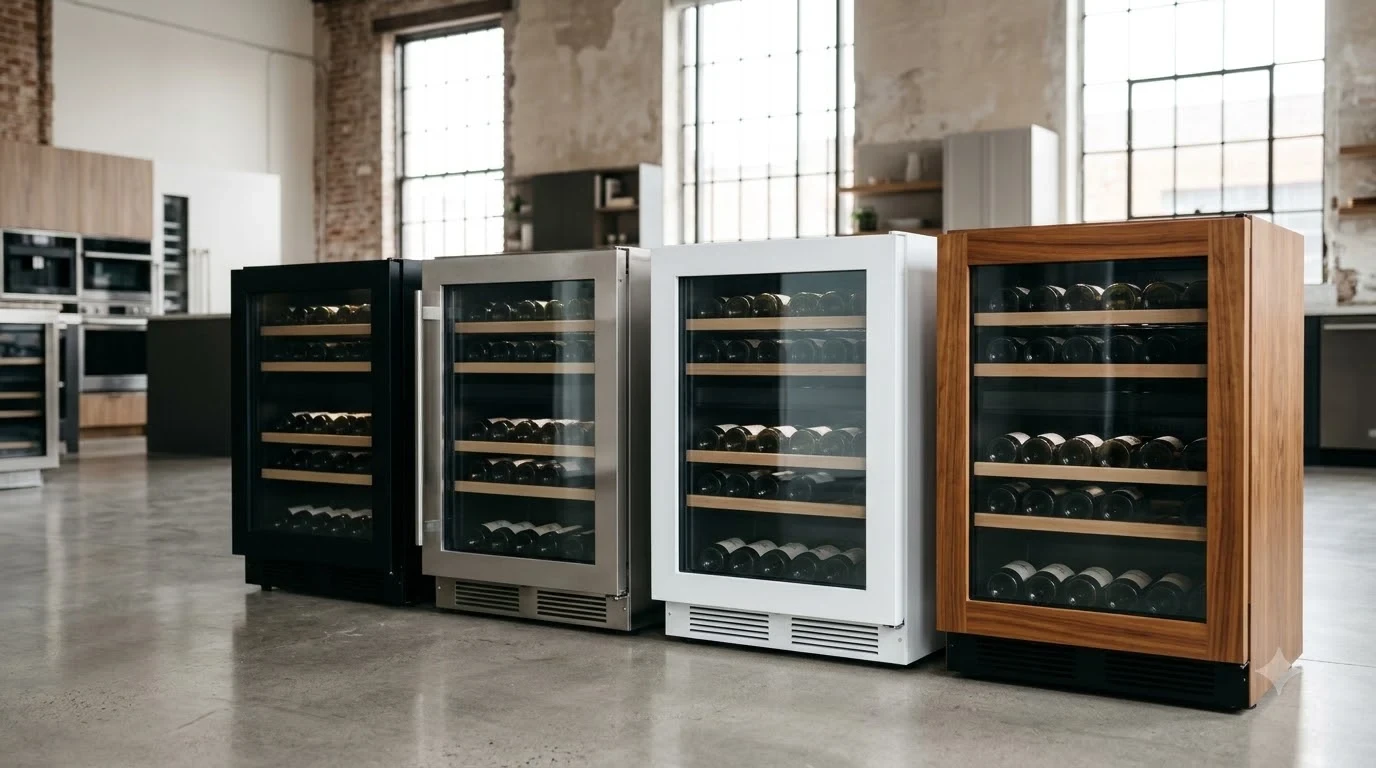
The best wine fridges hold steady cellar temperatures around 55°F while blocking harmful light, vibration, and odors that ruin bottles in standard kitchen refrigerators. Compact thermoelectric units fit neatly on apartment countertops for short-term chilling, while front-venting built-in compressors integrate flush under kitchen cabinets. Collectors with mixed inventories benefit most from dual-zone cabinets that keep whites crisp and reds ready to pour, whereas serious buyers aging bottles long term need high-capacity freestanding vaults.
Your standard kitchen refrigerator is built to keep milk and produce cold at roughly 35°F to 40°F, a dry environment that shrinks corks, lets oxygen sneak into the bottle, and dulls delicate aromatics. Dedicated wine fridges solve this problem by maintaining gentle cooling and balanced humidity so every bottle tastes the way the winemaker intended. Whether you keep six weeknight bottles on hand or manage a multi-case cellar, matching the cooling system, venting design, and shelving layout to your space makes all the difference.
Quick Comparison
Each wine fridge style balances cooling technology, installation footprint, and zone control differently depending on how and where you store your bottles.
| Wine Fridge Type | Cooling System | Ventilation | Typical Capacity | Best Use Case |
|---|---|---|---|---|
| Countertop Compact | Thermoelectric | Rear and side clearance | 6 to 18 bottles | Small apartments and casual weeknight chilling |
| High-Capacity Freestanding | Compressor | Rear and side clearance | 70 to 300+ bottles | Long-term aging and growing collections |
| Dual-Zone Cabinet | Compressor or hybrid | Front or rear (varies by model) | 24 to 170+ bottles | Storing reds and whites at separate serving temperatures |
| Built-In Undercounter | Compressor | Front-venting base grille | 24 to 54 bottles | Built-in kitchen remodels and bar islands |
| Low-Decibel Living Space | Inverter compressor or thermoelectric | Front or rear | 18 to 150 bottles | Open-concept dining rooms, bedrooms, and home offices |
Best for Small Apartments and Countertops
Compact countertop units give apartment dwellers and casual drinkers an affordable, space-saving way to keep six to eighteen bottles out of the kitchen fridge without rearranging furniture.
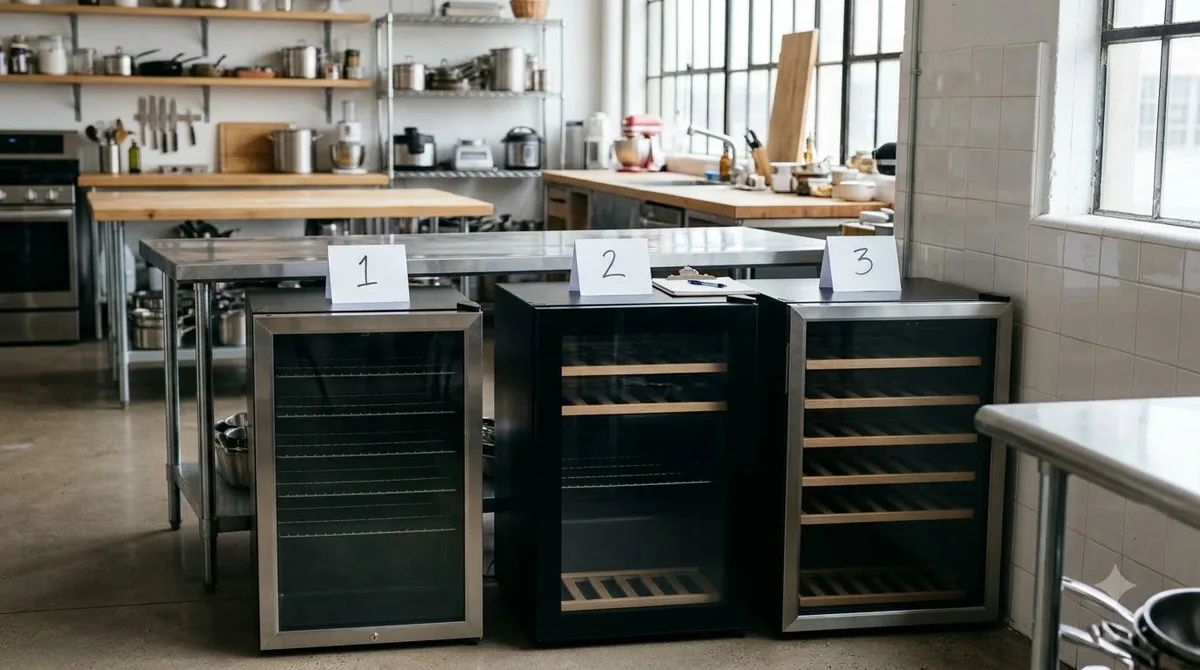
Why it stands out: Slim profiles—often around 10 to 15 inches wide—tuck onto kitchen counters, bar carts, or pantry shelves while holding enough wine for dinner parties and weeknight pours. Many compact models use solid-state thermoelectric cooling, which eliminates heavy mechanical compressors, reduces weight, and avoids harsh vibrations that disturb sediment. Select upright-rack designs also let you stand opened bottles vertically so half-finished pours stay chilled without leaking through a recorked neck.
Keep in mind and best for: According to Wine Folly, thermoelectric coolers run quietly and work well for short-term storage, yet they struggle to hold rock-steady temperatures when ambient room heat climbs above 75°F or 80°F. They also need a few inches of breathing room behind and beside the cabinet so heat can dissipate properly. Choose this style if you live in a climate-controlled apartment, drink your bottles within a few months of buying them, and want plug-and-play simplicity without renovating cabinetry.

- Size
- 11.02W x 14.88D x 16.73H in
- Capacity
- 2 wine bottles plus 6 cans
- Cooling
- Compressor
- Temp Range
- 40°F to 61°F
Where only a narrow gap is free on the counter, this slim unit measures just over 11 inches wide. A compressor keeps temperatures steady, and a blue LED light makes drinks easy to find. It holds two standard wine bottles plus six cans, or up to 24 cans, on horizontal racking with a movable shelf. The reinforced, airtight door helps hold the set temperature.
Pros & ConsView
- Only 11 inches wide fits narrow gaps
- Compressor holds steady temperatures
- Door seal and blue LED light
- Holds just two wine bottles with cans
- Manual defrost system
Best for Large Collections and Long-Term Aging
Full-height freestanding wine cellars provide the compressor power, UV protection, and racking capacity required to age seventy to three hundred bottles safely over multiple years.
Why it stands out: Unlike smaller chillers meant for quick turnaround, high-capacity cabinets replicate traditional underground cellar conditions with heavy-duty compressors, tinted double- or triple-pane glass, and activated charcoal filters that scrub stray odors from the air. Smooth-gliding beechwood shelves cushion bottles against micro-vibrations while sliding out cleanly so you never have to dig behind front-row labels. Many tall vaults also tolerate higher ambient temperatures, making them dependable options for basements or finished utility rooms.
Keep in mind and best for: Stated bottle counts almost always assume uniform 750-milliliter Bordeaux cylinders, meaning wider Burgundy, Pinot Noir, Champagne, or magnum bottles quickly reduce real-world capacity. Reviewers at Wine Enthusiast note that buyers frequently underestimate how fast a collection expands and recommend sizing up from your current bottle count—especially if you buy by the case and need room for multiple bottles in a case of wine at once. This category suits dedicated collectors aging structured reds and vintage Champagnes for five years or longer.

- Capacity
- 179 bottles
- Zones
- Dual: 40-55°F / 55-65°F
- Cooling
- Compressor
- Install
- Easy install, 4 wheels
Two temperature zones let a mixed collection live together: the cooler upper zone runs 40 to 55 °F and the warmer lower zone 55 to 65 °F. The 24-inch cabinet holds up to 179 standard Bordeaux bottles on wood and wire shelves. A compressor, temperature memory after a power loss, a safety lock, and blue protective light round out the features.
Pros & ConsView
- Two zones for mixed red and white storage
- Holds up to 179 Bordeaux bottles
- Temperature memory and safety lock
- One door opens both zones at once
- 24 inch width needs wide floor space
Best for Dual-Zone Storage of Reds and Whites
Dual-zone wine fridges split the interior into two independently controlled compartments so crisp whites and full-bodied reds stay at their ideal serving temperatures side by side.
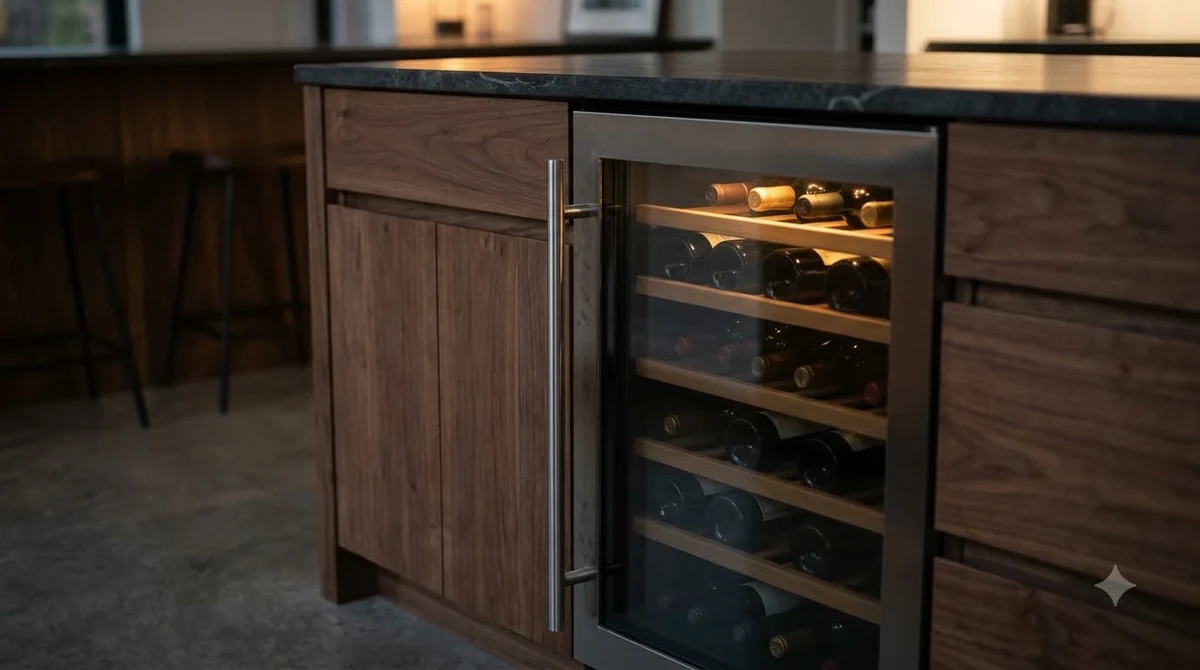
Why it stands out: While all wine ages happily at a single cellar setting around 55°F, serving temperatures vary widely by style—sparkling and crisp white wines shine between 45°F and 50°F, whereas Cabernet Sauvignon and Syrah open up best around 58°F to 65°F. A physical thermal divider with separate digital thermostats lets you pull a chilled Sauvignon Blanc from the upper zone and a cellar-temp Pinot Noir from the lower zone without waiting for an ice bucket or warming a bottle on the counter. Higher-end models even allow you to sync both zones to one uniform temperature when your inventory shifts.
Keep in mind and best for: The internal divider takes up shelf space, so a dual-zone cabinet holds slightly fewer bottles than a single-zone unit with identical exterior dimensions. Additionally, if you primarily buy wine to age rather than serve immediately, a single-zone fridge offers simpler mechanics and fewer components to maintain. Pick a dual-zone unit if you entertain regularly, keep both whites and reds in constant rotation, and value grab-and-pour convenience.

Two independently controlled zones let you keep whites and sparkling wine cooler than reds in the same cabinet, across a 41 to 64°F range. It holds up to 33 standard bottles on adjustable shelves, leaving room for a growing collection. Compressor cooling with air circulation, a touch LED display and a double-layer glass door round out a freestanding unit measuring 17 by 20 by 33.4 inches.
Pros & ConsView
- Independent dual-zone temperature control
- Holds up to 33 standard bottles
- Double-layer glass door with digital display
- Compressor system can produce operating noise
- Freestanding unit needs 17 by 20 inches of floor
Best for Built-In and Undercounter Installations
Front-venting built-in wine fridges slide cleanly into standard 15-inch or 24-inch base cabinet cutouts, turning unused kitchen or wet-bar space into a flush architectural feature.
Why it stands out: Standard freestanding fridges exhaust heat through their back and side panels, which causes compressors to overheat and fail early if boxed inside cabinetry. Built-in models solve this with zero-clearance side walls and a slotted toe-kick grille at the bottom front that pulls cool air in and vents warm air out into the room. Finished stainless-steel trim, panel-ready door frames, and reversible hinges let you match existing kitchen appliances and swing doors away from adjacent walls or islands.
Keep in mind and best for: Always measure rough opening width, height, and depth—including space behind the unit for the power plug—before ordering, and avoid installing any wine fridge right next to a dishwasher or oven that radiates excess heat. Because built-in units usually sit beneath standard 36-inch countertops, capacity maxes out around two to four dozen bottles. This design is the clear winner for kitchen remodels, butler’s pantries, and home bars where floor space is tight.

- Capacity
- 33 bottles (3 cu.ft)
- Temp Range
- 40–65°F, 1°F control
- Cooling
- Compressor, 360° air circulation
- Size
- 14.8 in. W x 22.4 in. D x 34 in. H
Wet bars and compact kitchens often leave little more than 15 inches for a cooler, and this one is built to that width. Six wood shelves hold up to 33 Bordeaux bottles, while a power-failure memory restores the set temperature after an outage. The double-layer glass door blocks over 90% of UV rays, and the front grille keeps children away from vents.
Pros & ConsView
- Six wood shelves reduce vibration and friction
- Power-failure memory restores the set temperature
- Insulating glass layer blocks over 90% of UV
- Capacity tops out at 33 bottles
- Door orientation is listed as right-hinged only
Best for Quiet Operation in Living Spaces
Low-decibel wine fridges use variable-speed inverter compressors or fanless thermoelectric systems to keep noise levels around 38 to 40 decibels—roughly as soft as a whispered library conversation.
Why it stands out: Traditional compressors cycle on and off at full power, creating an audible hum and start-up click that can distract you during dinner or while working from home. Modern inverter compressors ramp their speed up and down gradually, maintaining tighter temperature stability while eliminating sudden mechanical clatter. Combined with vibration-dampening rubber mounts and solid wood racks, these cabinets blend quietly into dining rooms, living areas, and home offices.
Keep in mind and best for: Check published decibel ratings carefully, because an inexpensive compressor fridge placed on hardwood flooring can resonate louder than expected unless leveled properly on a mat. Thermoelectric models remain the quietest option on paper, though inverter compressors deliver far better cooling consistency in warm rooms. Choose a low-decibel model if your wine fridge will live in an open-concept kitchen, dining room, or study rather than a closed basement.

- Capacity
- 12 bottles
- Cooling
- Compressor
- Controls
- Digital touch, °C/°F
- Lock
- Key lock
A narrow, freestanding wine-cellar-style cabinet that holds 12 standard bottles and can sit on a floor or table. A digital display with soft-touch controls handles the temperature and the °C or °F selection, while LED lights show off the shelves. The built-in door handle keeps the front smooth, so it slides next to other furniture without snagging. A key lock is fitted.
Pros & ConsView
- Narrow stainless design holds 12 bottles
- Digital touch controls with °C or °F
- Built-in handle keeps the front smooth
- Exact slim dimensions are not listed
- Compressor models can hum in very quiet spaces
How to Choose
Before settling on a cabinet, evaluate five practical details that determine how well a wine fridge protects your bottles and fits your home:
- Storage timeline vs. serving habits: A study highlighted by Wine Folly found that wine stored at warm room temperature ages roughly four times faster than wine kept at cellar temperature, losing antioxidants and fresh fruit character prematurely. If you hold bottles for years, prioritize a compressor unit with tight temperature stability and UV-blocking glass; if you open bottles within weeks, a simpler cooler works fine.
- Bottle shapes and shelf spacing: Check whether racks are removable or spaced wide enough for sloped-shoulder Pinot Noir, heavy Napa Cabernet, and wide Champagne bottles. Tight wire racks can tear paper labels or force you to skip every other slot.
- Ambient room temperature: Most indoor wine fridges operate reliably in rooms between 60°F and 80°F. If you plan to place a unit in a garage or sunroom that swings hotter or colder, look specifically for a garage-ready model rated for wider ambient extremes.
- Humidity and odor protection: Natural corks need roughly 55% to 75% relative humidity to stay supple and maintain an airtight seal, while built-in carbon filters prevent kitchen cooking smells from seeping into bottles.
- Opened bottle storage: Once pulled, corks only protect wine for a few days—knowing how long wine lasts after opening helps you plan, and models with vertical standing slots let you recork unfinished bottles safely upright.
Tip: Let a newly delivered compressor wine fridge stand upright unplugged for at least 24 hours before turning it on so internal lubricants settle back into the compressor, and complement your chilled cabinet with passive wine racks for everyday bottles you plan to drink within a month.
Frequently Asked Questions
Can I just keep my wine in a regular kitchen refrigerator?
A regular kitchen refrigerator is fine for chilling a white or sparkling bottle for a few hours before dinner, but it is too cold and too dry for longer storage. Temperatures below 40°F dry out natural corks, allowing air to enter the bottle and oxidize the wine, while frequent door openings and food odors further degrade flavor.
What is the ideal temperature setting for a single-zone wine fridge?
Set a single-zone wine fridge to 55°F, which is the universal benchmark for long-term wine storage across reds, whites, and sparkling wines. At 55°F, wines mature slowly and evenly; you can simply pop whites into your kitchen fridge for 20 minutes before serving or let bold reds warm slightly in the glass.
Should I choose a thermoelectric or compressor wine fridge?
Choose a thermoelectric model if you want a small, lightweight, ultra-quiet cooler for fewer than 20 bottles in an air-conditioned room. Choose a compressor model for larger capacities, built-in installations, dual-zone cooling, or warmer rooms where thermoelectric units cannot maintain steady cellar temperatures.
How much clearance does a freestanding wine fridge need?
Most freestanding wine fridges require at least 2 to 4 inches of open space at the back and sides, plus 3 to 4 inches above the top, so heat can escape from the condenser coils. Blocking those vents forces the cooling system to run continuously, shortening the lifespan of the unit and causing internal temperature swings.
Choosing among the best wine fridges comes down to matching the cooling engine and ventilation style to where you actually live and how fast you open your bottles. Once you lock in the right capacity, shelf spacing, and temperature zones for your routine, every pour tastes fresher, brighter, and closer to what the winery intended.
More in Best Wine Fridges
 Best Wine Fridge Bar Cabinet Setups for a Better Home BarUpdated Nov 20, 2026
 Best White Wine Fridge for Reliable Chilling and StorageUpdated Nov 20, 2026
 Best Smart Wine Fridge for Steady Temperatures and Remote ChecksUpdated Nov 18, 2026
 Wine Fridge for Champagne Bottles: Sizes and Storage GuideUpdated Nov 18, 2026
 Best Wine Cooler Under 1000 by Cooling Type and RoomUpdated Nov 18, 2026
 Best Wine Fridge for Champagne Bottles: Shelf and Bottle FitUpdated Nov 18, 2026