


We may earn a commission when you buy through links on this page, at no extra cost to you. Learn more.
The best built in wine fridge for most kitchens is a 24-inch dual-zone undercounter compressor unit with front ventilation. Dual-zone models let you hold reds and whites at their proper serving temperatures simultaneously while sliding flush beneath standard countertops. Narrow 15-inch units serve tight galley kitchens, panel-ready cabinets blend invisibly into custom millwork, and full-height column coolers support serious collectors.
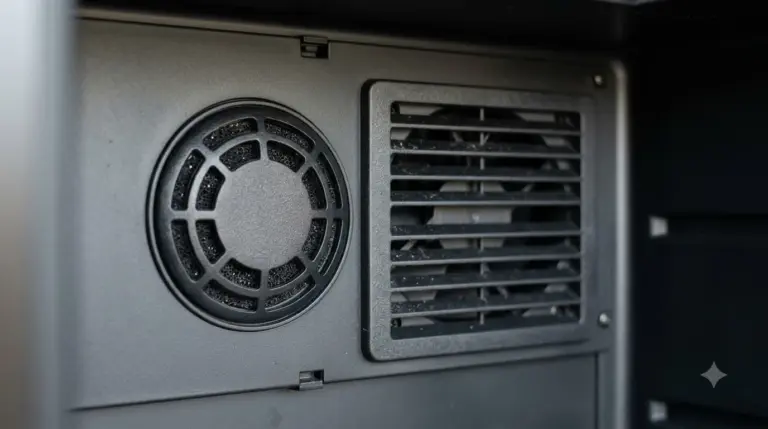
Installing refrigeration directly into kitchen cabinetry requires specific engineering that standard freestanding coolers lack. True built-in units vent heat through a front toe-kick grille rather than the rear or sides, allowing zero-clearance placement next to cabinets and dishwashers without overheating the compressor.
Quick Comparison
Different built-in configurations balance cabinet footprint, temperature control, and bottle capacity depending on how you cook, host, and collect.
| Built-In Type | Typical Width | Temperature Zones | Bottle Capacity | Primary Advantage |
|---|---|---|---|---|
| 24-Inch Dual-Zone Undercounter | 24 inches | Dual (41°F–68°F) | 40–55 bottles | Versatile serving temps for reds and whites |
| 15-Inch Slim Undercounter | 15 inches | Single or Dual | 24–34 bottles | Replaces a narrow trash compactor or cabinet |
| Panel-Ready Integrated | 15–24 inches | Single or Dual | 30–50 bottles | Accepts custom wood overlays to match cabinetry |
| Single-Zone Cellaring Unit | 24 inches | Single (41°F–68°F) | 45–60 bottles | Uniform long-term aging climate and extra capacity |
| Full-Height Built-In Column | 24–30 inches | Dual or Multi-Zone | 100–180+ bottles | High-capacity storage with label-forward display |
Best for Everyday Entertaining: 24-Inch Dual-Zone Undercounter
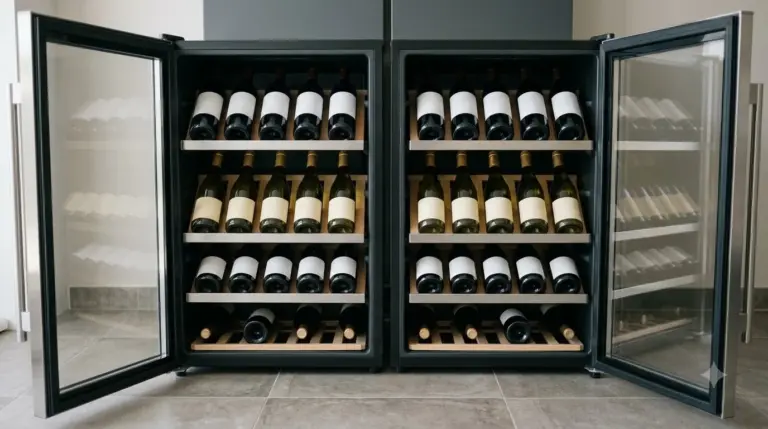
A 24-inch dual-zone undercounter wine fridge fits standard base cabinet openings and maintains two independent climates behind a single glass door.
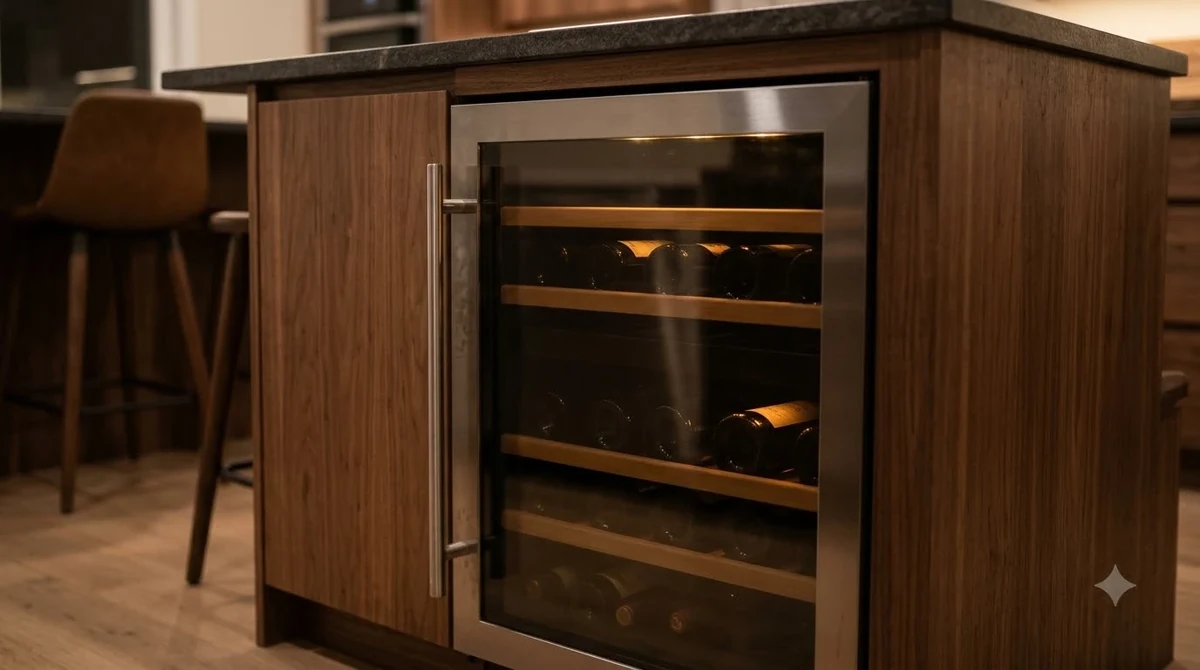
Why it stands out: According to Wine Enthusiast, front-venting undercounter units slide flush into kitchen cabinetry while separating upper and lower compartments—typically holding whites and sparkling wines around 41°F to 54°F and reds between 54°F and 68°F. Inverter compressors in modern models minimize vibration and keep operating noise near 39 dBA, which is quieter than a typical dishwasher cycle.
Keep in mind: The thermal divider that separates the two cooling zones takes up interior vertical space, reducing total bottle count by roughly six to ten bottles compared to a single-zone cabinet of identical exterior dimensions. Best for: Home cooks and hosts who regularly open both chilled whites and cellar-temp reds during dinner parties and want both styles ready to pour.
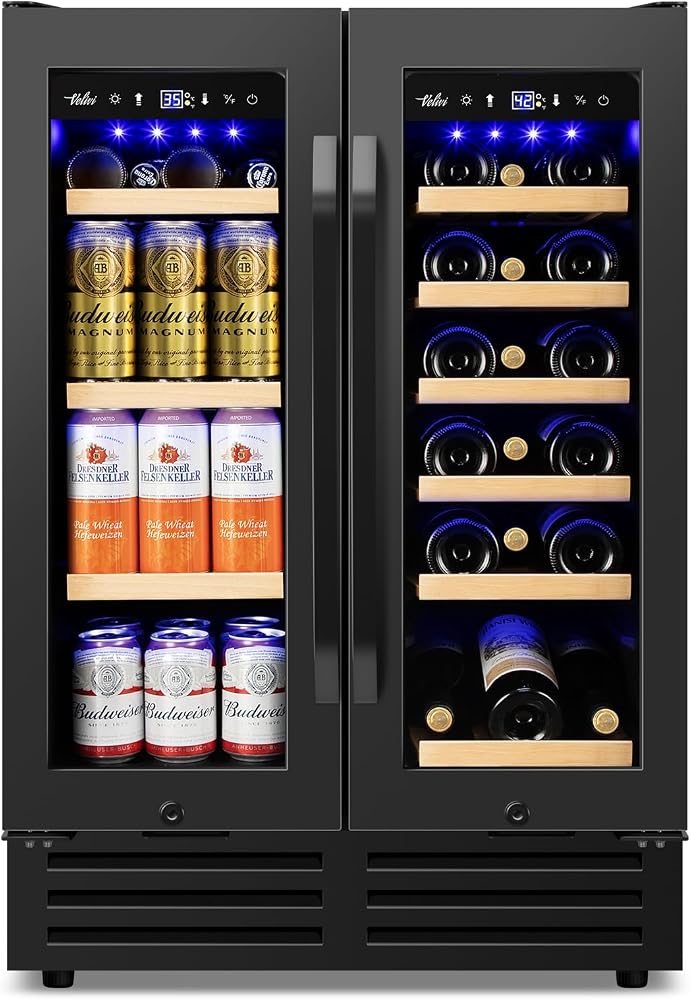
- Capacity
- 18 bottles, 68 cans
- Zones
- Dual, independent controls
- Cooling
- Compressor
- Install
- Built-in or freestanding
Renters can use this 24-inch unit as a freestanding cooler now and tuck it into cabinetry later, since it is designed for both placements at 23.4 by 23.6 by 34.2 inches. Two independently controlled zones separate wine from soft drinks, and the left beverage zone covers 35°F to 50°F. Seven shelves of metal and wood sit behind a black stainless steel door.
Pros & ConsView
- Two independent cooling zones
- Fits built-in or freestanding placement
- Holds 18 bottles and 68 cans
- Door hinges on the left only
- About 34 inches tall, so needs clear space
Best for Tight Kitchens: 15-Inch Slim Undercounter
Slim 15-inch built-in wine coolers slide into narrow cabinet bays where a standard 24-inch appliance cannot fit, such as beside a kitchen island or in place of a retired trash compactor.
Why it stands out: Despite a footprint roughly nine inches narrower than standard undercounter appliances, slim front-venting units still accommodate 24 to 34 standard 750 mL Bordeaux bottles on pull-out wooden racks. Many still incorporate dual-zone dividers or wide single-zone ranges, giving apartment dwellers and smaller kitchens dedicated temperature stability instead of relying on a kitchen refrigerator that runs too cold and dry. If your floor plan lacks cabinetry space altogether, browsing small wine fridge formats can reveal compact countertop or freestanding alternatives.
Keep in mind: Narrow shelves leave very little lateral clearance for wider Burgundy, Pinot Noir, or Champagne bottles, often forcing you to remove a shelf and drop capacity significantly. Best for: Compact kitchens, wet bars, and butler’s pantries with a 15-inch cutout that need dedicated bottle storage without remodeling base cabinets.

- Capacity
- 26 bottles, 2.8 cu ft
- Width
- 15 inches
- Zones
- Dual, 41-64°F
- Cooling
- Compressor, 360° airflow
Meant for tight kitchens where only a slim gap remains beside the cabinets. At 15 inches wide with front venting, it fits below a standard counter, yet still offers two zones set anywhere from 41 to 64°F. Touch controls, removable beech wood shelves and a double-layer tempered glass door keep the interior organized and shielded from light.
Pros & ConsView
- Only 15 inches wide with front venting
- Two zones with touch control
- Removable beech wood shelves
- Capacity tops out at 26 bottles
- Listed installation type is freestanding
Best for Custom Cabinetry: Panel-Ready Integrated Units
Panel-ready built-in wine fridges feature unfinished door frames designed to accept custom millwork overlays and matching hardware from your cabinetmaker.

Why it stands out: Industry guides such as Dunavox highlight integrated undercounter designs for achieving visual continuity in architectural kitchens, eliminating stainless steel borders that interrupt wood or painted cabinetry. Articulating hidden hinges allow the door to swing open cleanly within tight cabinet reveals without scraping adjacent panels, while UV-tinted low-E glass inserts protect labels from kitchen lighting.
Keep in mind: You must supply and install the custom overlay panel and handle separately, and exact panel weight and thickness limits vary by manufacturer. Best for: Kitchen renovations and custom builds where matching existing cabinetry lines and hardware finishes is a top design priority.
Best for Long-Term Aging: Single-Zone Undercounter Cellars
Single-zone built-in coolers maintain one uniform temperature across the entire interior cavity, replicating the steady environment of an underground cellar.
Why it stands out: Without an internal divider or second evaporator fan, single-zone models maximize interior shelf count and deliver rock-steady thermal consistency around 55°F—the classic benchmark for aging red and white wines alike. Fewer moving components and simplified airflow paths also reduce temperature swings of 3°C to 5°C that can prematurely age delicate aromatics over multi-year storage.
Keep in mind: Storing everything at 55°F means crisp whites and sparkling bottles will need 20 to 30 minutes in an ice bucket or kitchen refrigerator before serving. Once a bottle is uncorked, keeping it properly chilled also extends freshness; see our guide on how long does wine last after opening for storage timelines by varietal. Best for: Buyers building a cohesive aging collection of age-worthy reds or collectors who prioritize maximum bottle capacity per cubic foot.

- Capacity
- 18 bottles, 88 cans
- Zones
- Wine 41-64°F, drinks 35-50°F
- Cooling
- Compressor, fan circulation
- Install
- Built-in or freestanding
Anyone with a mixed collection of wine and canned drinks can run two independent zones: wine from 41°F to 64°F on the right and beverages from 35°F to 50°F on the left. Capacity is listed at 18 bottles plus 88 cans. A front vent allows built-in or freestanding use, and a lockable glass door, touch controls, and blue LED lighting come standard.
Pros & ConsView
- Two zones with separate temperature control
- Front vent allows built-in or freestanding use
- Lockable glass door and fan-assisted compressor cooling
- Only 18 bottles fit alongside the cans
- Wire shelves look plainer than wood shelving
Best for Serious Collectors: Full-Height Built-In Columns
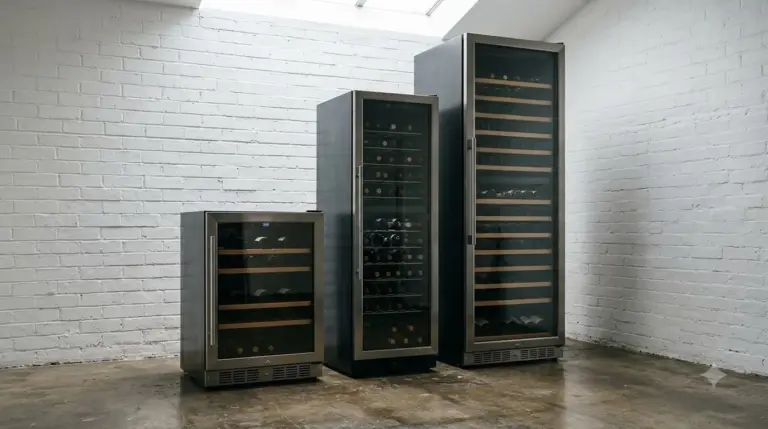
Full-height built-in column wine coolers stand 70 to 84 inches tall, integrating vertically into pantry walls or alongside full-size built-in refrigerators.
Why it stands out: Holding anywhere from 100 to over 180 standard bottles, column coolers eliminate the capacity ceiling of undercounter units while preserving front-venting zero-clearance installation. High-end column models frequently feature label-forward matrix shelving, charcoal air filtration, humidity management, and roll-out bottom cradles for magnums and wider sparkling bottles.
Keep in mind: Tall column units require dedicated electrical circuits, reinforced flooring to support hundreds of pounds of loaded glass, and careful verification of door-swing clearance against nearby walls or islands. Best for: Dedicated wine collectors outgrowing a 50-bottle undercounter fridge who want cellar-level capacity inside their main living space.

- Capacity
- 52 bottles, 5.12 cu ft
- Zones
- Dual, 40-65°F
- Shelves
- 5 removable beech wood
- Door
- Right-hinged, fixed
The roomiest pick in this lineup for collectors who buy by the case. Upper and lower zones run independently between 40 and 65°F, with the upper suited to champagne and whites and the lower to reds. Beech wood shelves are designed to reduce vibration, an internal fan circulates air, and the double-layer tempered glass door limits UV exposure and adds insulation.
Pros & ConsView
- Holds 52 Bordeaux bottles
- Upper and lower zones set separately
- Beech wood shelves reduce vibration
- Door hinge is fixed on the right
- Needs a 24-inch-wide space
How to Choose
Measuring your cabinet cutout accurately before ordering prevents costly return fees and installation delays. Measure the width, height, and depth of the rough opening at both the front and back, and leave at least two inches of rear clearance behind the cabinet for the power cord plug and water line if your model includes humidity control.
Check shelf spacing if your collection leans heavily toward Oregon Pinot Noir, Champagne, or Rhône blends. Standard 750 mL capacity ratings assume slim Bordeaux bottles; wider bottles often require removing a rack or choosing a model with adjustable rail heights. Look for vibration-dampened inverter compressors paired with beechwood or oak slats, which absorb micro-vibrations that can disturb sediment in older vintages. Compare all cabinet formats across our By type hub before finalizing your rough-in dimensions.
Tip: Verify whether the door hinge is field-reversible or ordered as a fixed left- or right-hinge model, and confirm that the door can open at least 90 degrees—or 115 degrees for full shelf extension—without hitting an adjacent wall or cabinet handle.
Frequently Asked Questions
Can you put a freestanding wine fridge under a counter?
No, freestanding wine fridges vent heat through their back and side panels and require several inches of open air around the cabinet. Placing a freestanding unit inside a closed cutout traps heat, forcing the compressor to run continuously until it fails prematurely.
How much clearance does a built-in wine fridge need?
Front-venting built-in models require minimal side and top clearance—often just one-eighth to one-quarter inch for sliding the unit into the opening. However, you must keep the front toe-kick grille completely unobstructed and allow roughly two inches at the back for the recessed power plug.
Are dual-zone built-in wine fridges better than single-zone models?
Dual-zone models are better if you want both reds and whites stored at ready-to-drink temperatures simultaneously. Single-zone units are better for long-term aging at a uniform 55°F and typically hold more bottles because they do not lose interior space to a thermal divider.
How noisy are built-in compressor wine fridges?
Modern built-in wine fridges equipped with variable-speed inverter compressors typically operate between 36 and 42 decibels. That sound level is comparable to a quiet library or soft hum, making them well suited for open-concept kitchens and dining areas.
Selecting the right built-in wine cooler comes down to matching your available cabinet cutout with how you drink wine week to week. Whether you need a slim 15-inch unit for a wet bar or a 24-inch dual-zone centerpiece for entertaining, prioritizing front ventilation, smooth-gliding wood shelves, and quiet inverter cooling will protect every bottle in your collection.
More in Wine Fridges by Type
 Best White Wine Fridge for Reliable Chilling and StorageUpdated Nov 20, 2026
 Best Smart Wine Fridge for Steady Temperatures and Remote ChecksUpdated Nov 18, 2026
 Best Black Under Counter Wine Fridge Options for Kitchens and IslandsUpdated Nov 18, 2026
 Best Black Slim Wine Fridge for Narrow Gaps and Dark KitchensUpdated Nov 18, 2026
 Best Built In Dual Zone Wine Fridge Options by Kitchen LayoutUpdated Nov 18, 2026
 Best Slim Built in Wine Cooler: 5 Space-Saving Styles for Tight KitchensUpdated Nov 18, 2026