

We may earn a commission when you buy through links on this page, at no extra cost to you. Learn more.
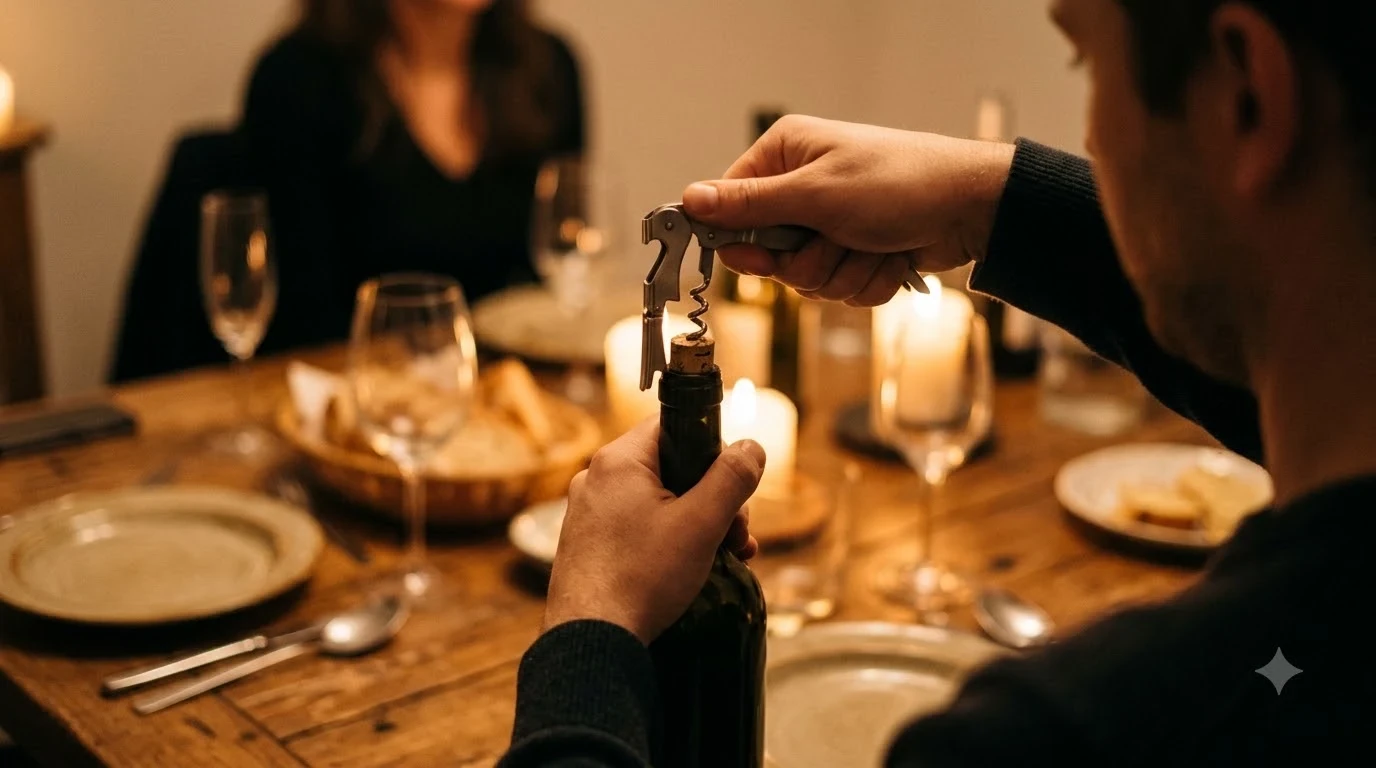
How to open a wine bottle is easiest with a waiter’s corkscrew: cut the foil, center the worm in the cork, set the lever on the lip, lift the cork out in two steps, and finish by hand. The same basic logic applies to most tools. A winged opener, an electric opener, or a screw pull each follow a similar sequence, and a few household items can work in a pinch when no opener is at hand.
Opening a bottle is the first physical step in serving wine, and it is also the one that goes wrong most often. A cork can snap, crumble, or refuse to move, and that is frustrating in front of guests. This guide walks through the most common method step by step, explains the other tools people use, and covers what to do when the cork does not cooperate.
Tools for Opening a Bottle
Most people use one of a few common openers. A waiter’s corkscrew, also called a wine key, is the most widely recommended because it is compact, cheap, and reliable with almost any cork. Other tools trade some of that simplicity for ease of use. Knowing the size of the bottle also helps when you plan the evening, so the how many ounces in a bottle of wine guide is a useful companion to this one.
| Tool | How it works | Best for |
|---|---|---|
| Waiter’s corkscrew | Worm, lever, and foil cutter in one tool | Everyday use and restaurant-style service |
| Winged corkscrew | Press the wings down to lift the cork | Quick opening with less hand strength |
| Screw pull | Push the screw in, then press the lever | Simple, low-cost opening |
| Electric opener | A button inserts the screw and removes the cork | Frequent use or larger gatherings |
| Gas cork extractor | A needle pushes gas into the bottle to force out the cork | Preserving leftover wine, with a synthetic cork afterward |
Tip: Buy a waiter’s corkscrew with a foil cutter if you only want one tool. It handles the foil, the cork, and most situations without extra gear.
The Waiter’s Corkscrew, Step by Step
The waiter’s corkscrew is easy to learn once you have done it a couple of times. The steps below follow the sequence in a practical guide to opening a bottle of wine, which covers the waiter’s style and several alternatives.
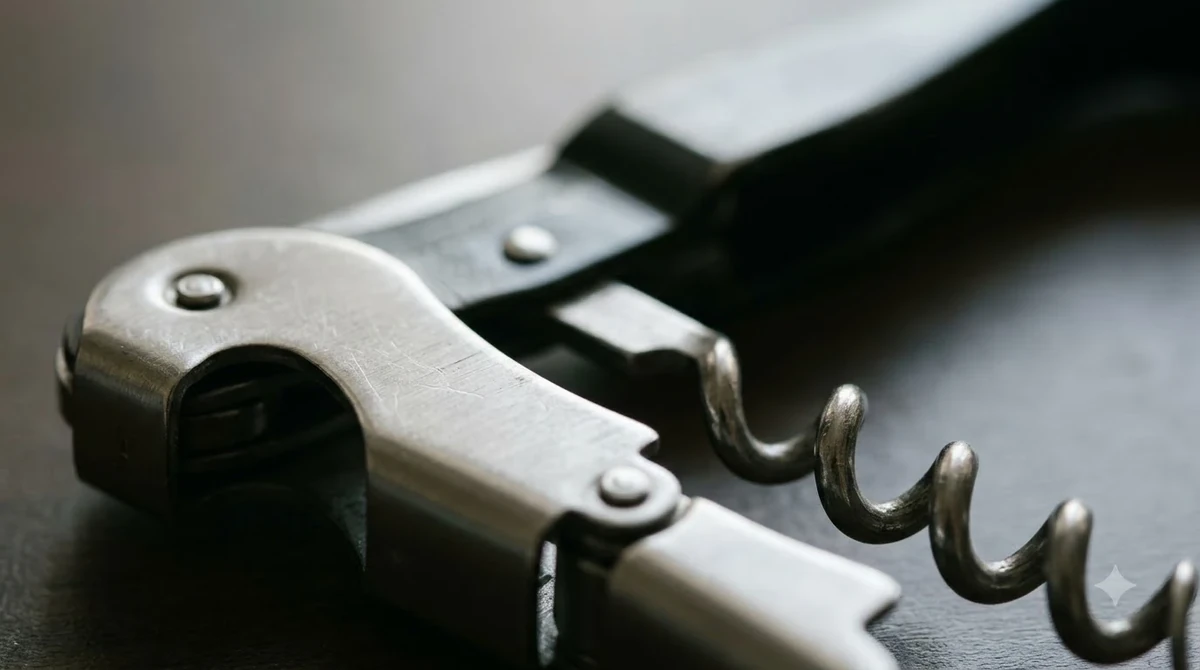
- Remove the foil. Rest the foil cutter on the lower lip at the top of the bottle, then turn the bottle in a circle to cut the foil. Lift it off by hand.
- Place the worm. Hold the bottle firmly by its neck. Center the screw in the cork and twist clockwise until it is fully inserted.
- Set the lever. Rest the shorter notch of the lever on the lip of the bottle.
- Lever the cork. Pull the lever up to lift the cork partway out.
- Finish the pull. When the cork is nearly out, remove the lever from the lip and ease the rest of the cork out by hand.
Take your time at each step. Most failed openings come from pulling too fast or inserting the worm at an angle. A straight, steady motion keeps the cork intact and reduces the chance of a crumbling cork falling into the wine.
Winged and Screw-Pull Openers
Winged corkscrews are popular because they lift the cork with less effort than a waiter’s style. The process starts the same way: remove the foil, then center the screw on the cork and twist the handle to insert it. Push the wings down with your dominant hand to raise the cork. When it is nearly out, use the base of the opener to pull it free.
A screw pull is the simplest option of all. Cut the foil, press the screw’s tip into the center of the cork, and push it in fully while holding the neck. Then press the lever to pop the cork out. It takes a little more hand strength than the other styles but needs very little practice.
Electric and Gas Openers
An electric opener is the easiest choice for anyone who opens a lot of bottles. After you cut the foil, position the opener on the bottle and press the button. It inserts the screw and removes the cork, usually in a few seconds. These tools are convenient at parties, though they cost more than a manual opener.
A gas cork extractor works differently. You push a needle through the cork into the neck of the bottle, then press a button that releases gas to push the cork out. It is mainly used to preserve leftover wine, since the gas keeps air out. Because the cork is damaged by the needle, you will need a synthetic cork or a good stopper afterward.
Opening a Bottle Without a Corkscrew
When no opener is available, several household methods can work. They are less tidy and sometimes damage the cork, so treat them as backups. Cut the foil first in every case.
A butler’s friend uses two flat prongs that slide down either side of the cork, not the neck. Wiggle the cork gently until it loosens and comes free. A screwdriver and a hammer also work. Drive a long screw into the center of the cork, leaving part of it exposed, then pull the screw out with the back of a hammer while holding the neck.
A wooden spoon is a classic method, but it pushes the cork into the bottle rather than removing it. Hold the spoon’s handle and push the cork in gently, keeping the neck firmly in your other hand. Be aware that the cork may crumble into the wine, so this method is best for a bottle you will decant.
A bike pump can force the cork out. Push the pump’s needle through the center of the cork, then pump air in slowly until the cork rises. Pull the rest out by hand. A serrated knife can work too, inserted at a 45-degree angle and turned slowly while you lift. This method can break the cork, so keep a spare stopper nearby.
Some people also use a shoe or a wire hanger. A shoe is set upright in the heel while you tap the sole against a sturdy wall until the cork moves. The cork may pop out after only a few taps, so keep your grip on the bottle steady. A wire hanger works when you shape a small hook at one end, slip it between the lip and the cork, and twist upward.
What to Do With a Crumbling or Broken Cork
Older wines often have dry corks that crumble when pulled. This is more common with the wooden spoon method and with a serrated knife, since both can split the cork. If a piece falls into the bottle, the wine is still drinkable, but you will need to remove the debris before serving.
Use a clean napkin or a coffee filter to strain the wine as you pour. Hold the filter over the glass and let the wine pass through slowly. This catches bits of cork and any sediment without much effort, and it keeps the bottle looking neat at the table.
Keep a synthetic cork or a good wine stopper nearby in case a cork breaks. A stopper lets you finish the bottle later, and it protects the leftover wine from air while it waits.
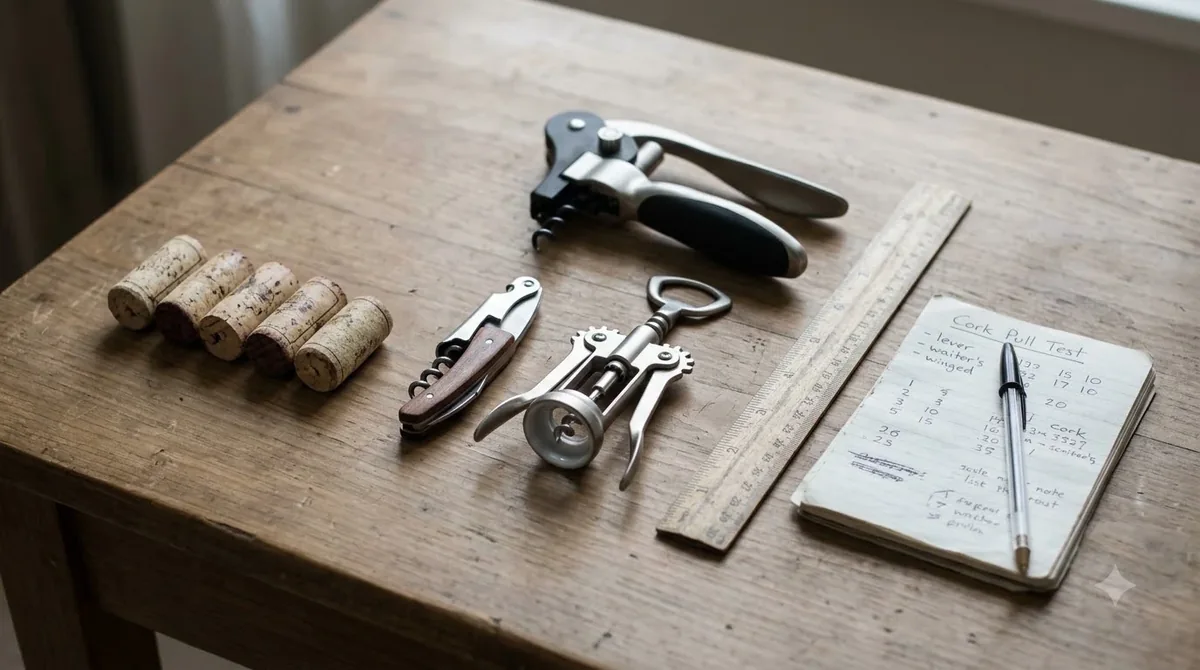
The more you open bottles, the better your technique becomes. If you find that corks break often, check the tool’s worm and make sure it is clean and sharp. A dull or bent worm is one of the most common reasons for a failed opening.
Frequently Asked Questions
What is the easiest way to open a wine bottle?
A waiter’s corkscrew is the most common choice because it is compact and reliable. An electric opener is the easiest to use, though it costs more. Both work well with most cork types.
How do you remove the foil from a wine bottle?
Rest the foil cutter on the lower lip at the top of the bottle and turn the bottle in a circle to cut the foil. Then lift the foil off by hand before you insert the corkscrew.
What if the cork breaks while I am opening the bottle?
Strain the wine through a clean napkin or coffee filter as you pour, and remove any cork bits or sediment. A stopper can also help if you want to save the rest of the bottle.
Can I open a wine bottle without a corkscrew?
Yes. A screwdriver and hammer, a bike pump, or a butler’s friend can work in a pinch. Each method can damage the cork, so keep a spare stopper ready and cut the foil before you start.
Opening a bottle is a simple skill that improves with practice. Choose the tool that suits how often you open wine, cut the foil cleanly, and move slowly at the cork. Once the bottle is open, the wine is ready to pour, and the rest of the evening can begin. To plan how many pours you will get from it, see our guide to how many glasses in a bottle of wine.
More in Wine Basics
 Which Rose Is Best for Your Taste, Budget, and Food PairingsUpdated Nov 21, 2026
 Is Cheap Wine Bad? How to Find Bottles Worth DrinkingUpdated Nov 21, 2026
 What To Write On A Wine Gift Tag: Thoughtful Messages For Every OccasionUpdated Nov 21, 2026
 Which Wine Is Best For Weight Loss? Compare Lower-Calorie ChoicesUpdated Nov 21, 2026
 What Is The Best Wine For Mimosas? Choose Bubbly That Balances Orange JuiceUpdated Nov 20, 2026
 Which Prosecco Is Best for Your Taste and OccasionUpdated Nov 20, 2026