

We may earn a commission when you buy through links on this page, at no extra cost to you. Learn more.
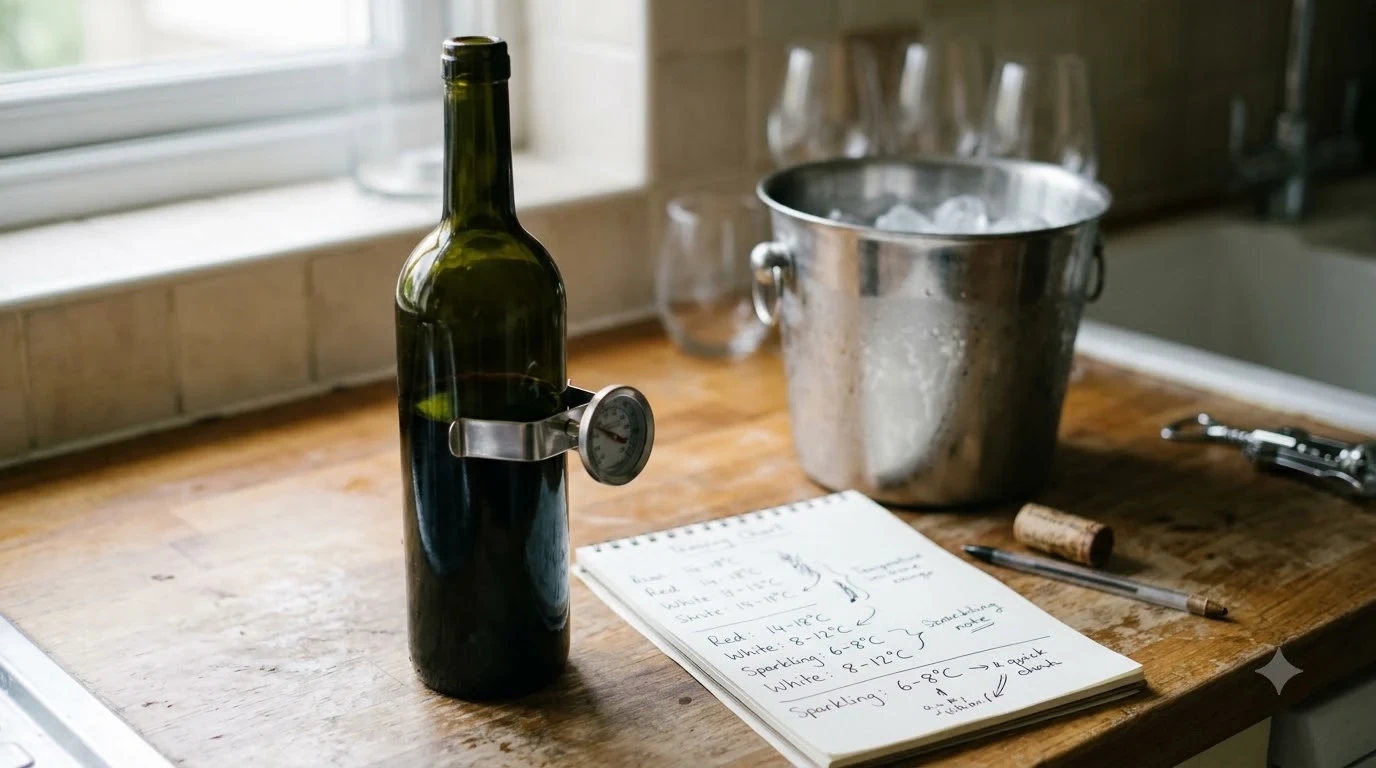
Should white wine be chilled? Yes, most white wines taste better cool, usually between 44 and 57 degrees Fahrenheit (7.5 to 12 degrees Celsius), with lighter styles at the colder end. Serving temperature changes how aromas and acidity come across in the glass. A white that is too warm can taste heavy and alcoholic, while one that is too cold can hide its fruit and floral notes.
This guide explains how temperature changes white wine flavor, gives a simple style-by-style chilling guide, and shows when a short cool-down is enough. If you already keep a bottle in the fridge, you will learn how to tell whether it needs more time or a quick rest before pouring.
Why Serving Temperature Matters for White Wine
Temperature has a direct effect on what you smell and taste. Cooler wine tends to feel crisper and more refreshing, while warmer wine lets more aroma rise from the glass. The right balance depends on the style of wine in front of you.
Wine Folly notes that some delicate floral aromas are muted when a wine is too cold and can fade quickly when it is too warm. The same guide says that affordable wines served slightly chilled can mask some off aromas. That is one reason a cool white is often the safest choice for everyday bottles.
Heat also changes how alcohol shows up. According to Wine Folly’s guide to serving basics, a wine above about 70 degrees Fahrenheit starts to smell more alcoholic as ethanol evaporates. A white that sits on the counter through a long dinner can taste sharper and hotter than the winemaker intended.
Ideal Serving Temperatures by White Wine Style
Most white wines belong in the cool range, but the exact target shifts with body and style. Sparkling and light-bodied whites sit at the coldest end, while richer, oak-aged whites can be served a little warmer. The table below summarizes the ranges published by Wine Folly.

| White wine style | Suggested serving range | What the cooler or warmer end does |
|---|---|---|
| Sparkling and light-bodied whites | 38 to 45 degrees F (3 to 7 degrees C) | Cold keeps the wine crisp and lively |
| Full-bodied whites and rosé | 44 to 55 degrees F (7 to 12 degrees C) | Slightly warmer lets texture and fruit show |
| Zesty whites in general | About 44 to 57 degrees F (7.5 to 12 degrees C) | Cooler keeps acidity bright |
| Oak-aged whites | Toward the warmer end of the white range | Warmth helps vanilla and buttery notes open |
These ranges are guidelines, not strict rules. Wine Folly publishes slightly different numbers on different pages, so treat the table as a starting point. If the label or the producer’s website gives a recommended serving temperature, follow that first.
Should Light-Bodied White Wines Like Pinot Grigio Be Chilled?
Yes, light-bodied whites are the clearest case for chilling. A bottle of pinot grigio is usually light, crisp and fresh, and it shows its best qualities when it is served cold. Cool temperatures keep its citrus and green fruit notes lively.
Because these wines have less weight, warm temperatures can make them taste thin and flat. Serving them from the fridge helps them hold their structure through the pour. If the glass warms quickly on a patio, pour smaller amounts and refill from the bottle more often.
For light whites, a cool glass is usually better than a very cold one. Taking the bottle out a few minutes before you pour can soften an icy edge and let subtle aromas come through. The goal is a refreshing wine, not one so cold that you cannot taste it.
Should Crisp Whites Like Sauvignon Blanc Be Chilled?
Crisp, high-acid whites should be chilled, and sauvignon blanc is a good example. Its herbal, citrus and grassy character stands out most when the wine is cool and bright. Serving it too warm can make the herbal notes feel harsh or dull.
Zesty whites sit on the cool side of the white range, according to Wine Folly’s serving basics. Keep the bottle in the fridge until shortly before you pour, then return it to the fridge between glasses if the evening runs long. This keeps the wine fresh without freezing it.
If you are unsure, check how the wine feels on your palate. A sauvignon blanc that tastes sharp and vivid is at the right temperature. If it tastes flat, a few minutes in the glass will not fix it, so chill the bottle again. For more on this style, read the should sauvignon blanc be chilled guide.
Should Aromatic Whites Like Riesling Be Chilled?
Aromatic whites like riesling should be chilled, but usually not as cold as sparkling wine. Riesling is known for floral and fruit aromas, and those aromas can disappear if the glass is icy. A moderately cool serve lets you smell the bottle as well as taste it.
Wine Folly’s temperature guidance notes that wine aficionados generally do not like whites served too cold. That advice fits riesling well. Try a bottle at a cool temperature, then let it sit for a few minutes and taste again. Many drinkers notice more floral and fruity character as the wine warms slightly.
Sweetness and oak also matter. Off-dry rieslings can handle a slightly warmer serve, while very dry styles tend to show their minerality best when cool. If you want to compare styles, the should riesling be chilled page covers the details for this grape.
How Long to Chill White Wine and the Best Methods
The right chilling time depends on the bottle’s starting temperature, the size of the bottle, and the type of fridge you use. A bottle that starts at room temperature needs longer than one that has been stored in a cool cellar. Check the bottle or the producer’s notes for specific guidance when they are available.
A standard refrigerator is the simplest method and works for most whites. Placing the bottle in an ice bath with water and ice cools it faster than a fridge alone. Turn the bottle occasionally in the bath so the chill reaches the whole wine evenly.
A light cool-down is enough when the bottle is already near the cellar range or was kept in the fridge overnight. A quick stop in the freezer is not recommended for long periods, because forgotten bottles can freeze and burst. Set a timer if you use the freezer for a short chill, and check the bottle often.
- Start with a bottle that has been stored in a cool place, or the fridge if you have one.
- Place the bottle in the fridge for a while, then check the temperature by touch.
- For a faster chill, use an ice bath and turn the bottle every few minutes.
- Pour a small amount first and taste, then adjust by returning the bottle to the cold if needed.
Mistakes to Avoid When Chilling White Wine
The most common mistake is serving white wine straight from the fridge at the coldest setting. Extremely cold wine can taste closed and sharp, and its aromas stay hidden. Let the bottle sit out briefly before pouring if it feels icy.
Another mistake is leaving an opened bottle on the counter for hours. Wine Folly advises storing open wines in the fridge to slow their development and keep them fresh. Keep the bottle away from direct sunlight and heat sources like the top of the fridge or oven.
Tip: Keep a second bottle chilling when you host, so a fresh glass is ready when the first one warms. Enjoy wine in moderation and plan for the evening.
Finally, do not chill every white the same way. Sparkling wines and light whites need the coldest serve, while fuller whites can stay a little warmer. If you are building a collection, the Wine by Type section can help you group bottles by style.
Frequently Asked Questions
Is it bad to drink white wine at room temperature?
Room temperature white wine is not harmful, but it often tastes heavier and less refreshing. Wine above about 70 degrees Fahrenheit can smell more alcoholic, according to Wine Folly. A short chill usually improves the balance and makes the aromas easier to enjoy.
What temperature should white wine be served at?
Most white wines taste best between about 44 and 57 degrees Fahrenheit. Sparkling and light-bodied whites are best at the cooler end, while fuller whites can be a bit warmer. Check the producer’s notes when they give a recommended serving range.
Should I put white wine in the freezer to chill it quickly?
A short stay in the freezer can chill a bottle quickly, but it carries risk. Forgotten bottles can freeze and break, so set a timer if you use this method. An ice bath in a bowl of water and ice is a safer way to speed up the process.
Does chilling white wine hide flaws?
Cooler temperatures can mute some aromas, which is why Wine Folly notes that slightly chilled wine can disguise minor off notes in affordable bottles. Serving temperature is not a fix for a faulty wine. Taste a small amount and judge the wine at a moderate temperature too.
Chilling white wine is one of the simplest ways to improve your glass. Start with the style of wine you have, aim for the right range, and adjust to your taste. For more guidance, explore the wine type guides and enjoy your next bottle at its best.
More in Wine Types & Grapes
 Zinfandel Sugar Content: Dry Red vs. White Zinfandel GramsUpdated Nov 21, 2026
 Best Zinfandel Substitute Options for Sipping and CookingUpdated Nov 21, 2026
 Zweigelt Food Pairing: Best Dishes, Cheeses, and Serving TipsUpdated Nov 21, 2026
 Zinfandel Tannins Explained: How Structure Shapes Every BottleUpdated Nov 21, 2026
 Zinfandel Sweetness Level: Dry Red vs. Sweet White Zin ExplainedUpdated Nov 21, 2026
 Xinomavro Food Pairing: Best Dishes, Styles, and Serving TipsUpdated Nov 21, 2026