

We may earn a commission when you buy through links on this page, at no extra cost to you. Learn more.
There are roughly 113 to 121 calories in pinot noir per standard 5-ounce glass, depending primarily on the wine’s alcohol by volume. According to USDA SR28 data (NDB 14099), a standard 5-ounce serving of Pinot Noir table wine contains 120 calories, 3.39 grams of carbohydrates, and 15.3 grams of ethyl alcohol. Because dry Pinot Noir contains minimal residual sugar, nearly 90 percent of its caloric energy comes directly from alcohol rather than carbohydrates.
Understanding how these numbers translate from a tasting pour to a full 750-milliliter bottle makes tracking your intake far more straightforward. Whether you are pouring a cool-climate Oregon bottling or a riper California expression, knowing what drives the energy count in your glass removes the guesswork from wine labels that rarely print nutrition panels.
Calories in Pinot Noir by Pour Size and Bottle
A standard 5-ounce glass of Pinot Noir averages 120 calories, while a full 750-milliliter bottle totals roughly 600 to 609 calories across five pours. Larger restaurant pours and casual home splashes quickly change that baseline figure.
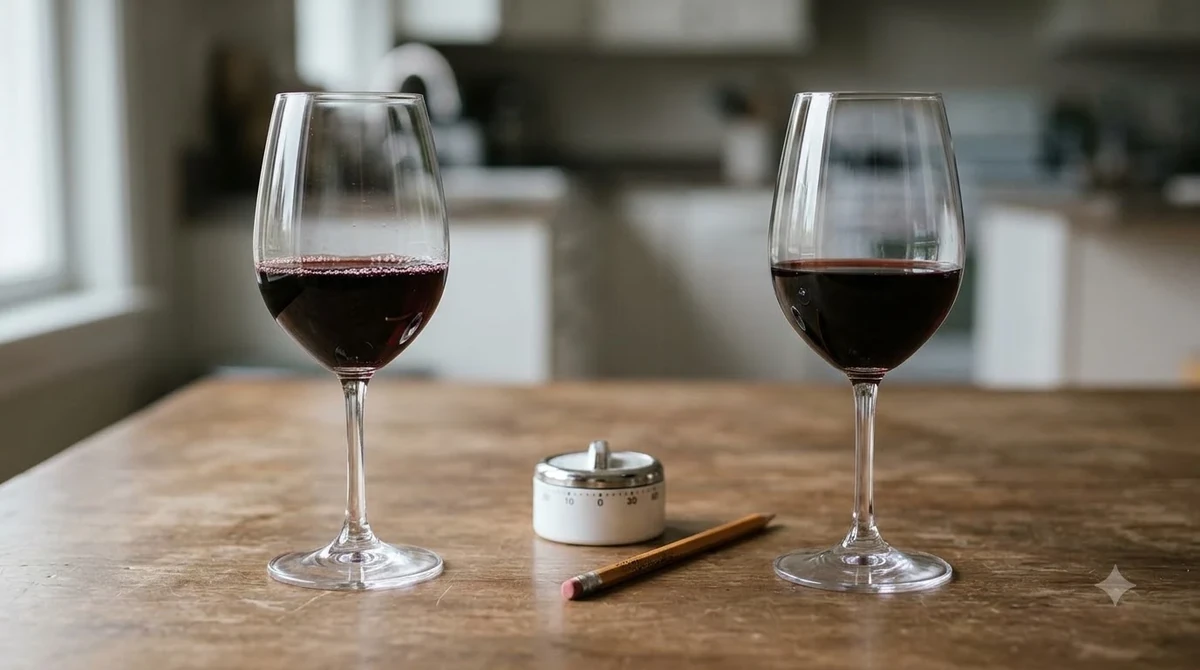
In the United States, a standard wine pour is measured at 5 fluid ounces, which equals roughly 147 to 148 milliliters. Based on USDA beverage data, each single fluid ounce of Pinot Noir carries about 24 calories and 0.68 grams of carbohydrates. When you scale that up to a standard 5-ounce pour, you reach 120 calories, 3.39 grams of total carbohydrates, and zero grams of fat. Protein is negligible at just 0.10 grams per glass.
Many restaurants, wine bars, and home drinkers routinely pour 6-ounce or 8-ounce servings rather than strict 5-ounce tasting portions. A generous 6-ounce pour pushes the count to approximately 144 calories and 4.1 grams of carbohydrates. An 8-ounce goblet—often served in oversized red wine stems—reaches roughly 192 calories and 5.4 grams of carbohydrates, which is more than half again as much as a standard serving.
Opening a standard 750-milliliter bottle yields approximately 25.4 fluid ounces, or just slightly more than five 5-ounce glasses. Multiplied across the entire bottle, USDA figures place the total at roughly 609 calories, 17.2 grams of carbohydrates, and 77.6 grams of alcohol. If two people split a bottle evenly over dinner, each person consumes roughly 300 to 305 calories.
| Serving Size | Volume (mL / oz) | Calories | Carbohydrates | Alcohol (g) |
|---|---|---|---|---|
| Tasting Pour | 29.4 mL (1 fl oz) | 24 kcal | 0.68 g | 3.1 g |
| Standard Glass | 147 mL (5 fl oz) | 120 kcal | 3.39 g | 15.3 g |
| Restaurant Pour | 176 mL (6 fl oz) | 144 kcal | 4.1 g | 18.4 g |
| Large Home Pour | 235 mL (8 fl oz) | 192 kcal | 5.4 g | 24.5 g |
| Full Bottle | 750 mL (25.4 fl oz) | 609 kcal | 17.2 g | 77.6 g |
Where the Calories in Pinot Noir Come From
Alcohol accounts for roughly 88 to 90 percent of the total energy in a glass of dry Pinot Noir, with residual carbohydrates supplying the remainder. Pure ethyl alcohol provides 7 calories per gram, whereas carbohydrates provide 4 calories per gram.
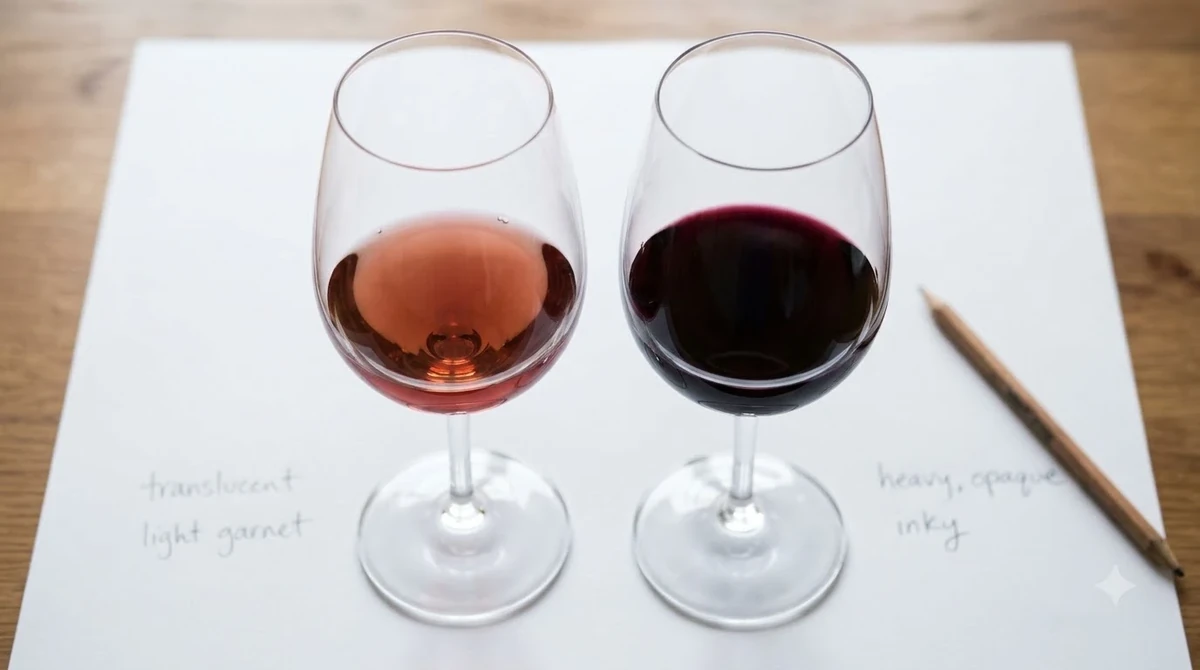
During fermentation, wine yeasts consume natural grape sugars—primarily glucose and fructose—and convert them into ethanol and carbon dioxide. Because almost all commercial Pinot Noir is fermented dry, very little unfermented sugar remains in the finished bottle. In a 5-ounce pour containing 15.3 grams of alcohol, ethanol alone contributes roughly 107 of the 120 total calories. The remaining 3.39 grams of carbohydrates contribute around 13 to 14 calories.
Unlike beer or sweet dessert wines, dry red table wine contains zero fat and no dietary fiber. Even if a winemaker leaves a tiny fraction of residual sugar to soften bright acidity—sometimes a gram or two per liter—that trace sweetness alters the final calorie count by only a couple of calories per glass. Understanding pinot noir alcohol content is therefore much more useful for estimating energy intake than worrying about hidden sugars.
According to VinePair’s breakdown of wine calories, you can estimate the alcohol calories in any pour using a straightforward formula that multiplies volume in milliliters by ABV, density, and 7 calories per gram. Because alcohol is nearly twice as calorie-dense per gram as sugar, even a single percentage point jump in alcohol by volume noticeably increases the calorie count in your glass.
How Regional Styles Affect Pinot Noir Calories
Cool-climate Pinot Noir generally carries slightly fewer calories per glass than warm-climate expressions because cooler growing seasons produce lower grape sugar levels at harvest. Lower sugar at harvest directly translates to lower finished alcohol after fermentation.
In regions with brisk maritime breezes and shorter summers—such as Oregon’s Willamette Valley, Burgundy in France, or coastal New Zealand—Pinot Noir grapes ripen slowly while retaining high natural acidity. Wineries in these regions frequently bottle wines around 12.5 to 13.5 percent ABV. VinePair calculates that a 5-ounce pour of Oregon Pinot Noir at 13.5 percent ABV lands right around 113 calories.
Warmer appellations with abundant sunshine—such as California’s Russian River Valley, Santa Lucia Highlands, or Central Otago—allow grapes to accumulate higher sugar concentrations before picking. Those extra sugars ferment into higher ethanol levels, commonly reaching 14 to 14.5 percent ABV. VinePair notes that a California Pinot Noir at 14.2 percent ABV contains roughly 119 calories per 5-ounce glass, putting it closer to medium-bodied reds.
Winemaking choices also play a subtle role in the final numbers. Producers who harvest slightly earlier for vibrant red-fruit tension produce leaner, lower-calorie wines than estates aiming for plush, extracted textures. While oak barrel aging adds vanilla, clove, and spice aromas—contributing to what does pinot noir taste like—seasoned or new French oak barrels do not add measurable calories or carbohydrates to the wine.
Pinot Noir Calories Compared to Other Wine Styles
Pinot Noir sits in the lower-to-middle tier of red wine calories, typically containing slightly fewer calories than full-bodied reds like Cabernet Sauvignon or Zinfandel. However, the difference between dry table wines is often smaller than most drinkers expect.
Per USDA SR28 benchmarks compiled by Vinovest’s analysis of Pinot Noir nutrition, a 5-ounce glass of Pinot Noir at 120 calories edges out Cabernet Sauvignon, Merlot, and Syrah, each of which averages 122 calories per serving. Light-bodied Gamay comes in slightly lower at 114 calories, while full-bodied Zinfandel climbs to 130 calories per 5-ounce glass due to its higher average alcohol concentration.
When compared against white and sparkling wines across the broader spectrum of Wine by Type, Pinot Noir holds its own remarkably well. Standard USDA figures list Sauvignon Blanc at 119 calories and Chardonnay at 123 calories per 5-ounce glass. Dry sparkling wines like Brut Champagne or Prosecco often land slightly lower—around 95 to 115 calories—primarily because they are bottled at lower alcohol levels around 11 to 12 percent ABV.
Sweet and fortified wines operate in an entirely different category because they combine alcohol with significant unfermented sugar. An off-dry Moscato or sweet Riesling can reach 130 to 160 calories per 5-ounce pour, while fortified wines like Ruby Port pack well over 200 calories into an equivalent volume due to both high alcohol and heavy residual sugar.
Practical Ways to Manage Calories Without Sacrificing Flavor
Choosing lower-ABV bottles and measuring your pours are the two most effective ways to keep calorie intake predictable while enjoying Pinot Noir. Neither adjustment requires switching to specialty diet wines or sacrificing traditional vineyard character.
Checking the alcohol percentage printed on the front or back label gives you an immediate indicator of energy density. Bottles labeled between 12 and 13 percent ABV will consistently sit near the 110 to 115 calorie mark per 5-ounce pour, whereas bottles labeled at 14.5 percent ABV push closer to 125 calories or more. Labels from cool-climate regions often highlight these restrained alcohol numbers prominently.
Glassware shape can unintentionally encourage oversized pours if you are not paying attention. Traditional Burgundy bowls have wide, cavernous bases designed to concentrate delicate floral and red-berry aromas, which makes 5 ounces look like a tiny splash at the bottom of the glass. Measuring 5 ounces of water into your favorite stemware once at home helps calibrate your eye so you know exactly where a standard serving sits.
Tip: Pour 5 ounces (10 tablespoons) of water into your everyday Pinot Noir glass once to see the exact fill line—wide Burgundy bowls make standard pours look smaller than they really are.
Serving Pinot Noir slightly chilled—around 55 to 60 degrees Fahrenheit—also slows down your pace naturally while sharpening the grape’s natural acidity and pinot noir color brilliance. Alternating each glass of wine with a full glass of sparkling or still water keeps your palate refreshed and prevents mindless refills over a long meal.
Frequently Asked Questions
Does Pinot Noir have fewer calories than Cabernet Sauvignon?
Yes, though the difference is modest. According to USDA SR28 data, a standard 5-ounce glass of Pinot Noir has 120 calories compared to 122 calories for Cabernet Sauvignon. Because Cabernet Sauvignon is more frequently bottled at higher alcohol levels around 14.5 percent ABV in warm regions, real-world pours of Cabernet can run 5 to 10 calories higher per glass.
Are there many carbs or sugars in Pinot Noir?
Dry Pinot Noir is very low in carbohydrates and contains virtually no sugar. A standard 5-ounce serving contains roughly 3.39 grams of total carbohydrates, and almost all natural grape sugars are fermented into alcohol before bottling. Unless a bottle is specifically labeled as sweet or late-harvest, residual sugar is negligible.
How many calories are in a 750ml bottle of Pinot Noir?
A standard 750-milliliter bottle of Pinot Noir contains roughly 600 to 609 calories total. Because a 750-milliliter bottle holds about 25.4 fluid ounces, it yields just slightly more than five standard 5-ounce servings. High-alcohol bottles at 14.5 percent ABV can push the bottle total closer to 625 calories.
Why do some bottles of Pinot Noir have more calories than others?
The main driver of calorie variation between bottles is alcohol by volume, not grape clone or oak aging. Warmer growing regions produce riper grapes with more sugar, which ferment into higher alcohol levels and more calories per ounce. Cooler regions yield lower-ABV wines that naturally contain fewer calories.
While Pinot Noir offers a lighter texture and brighter acidity than heavy reds, its calorie count remains remarkably consistent across styles at roughly 113 to 121 calories per 5-ounce glass. Paying attention to bottle ABV and glassware pour lines lets you enjoy everything from crisp Oregon bottlings to plush California expressions with complete clarity.
More in Wine Types & Grapes
 Zinfandel Sugar Content: Dry Red vs. White Zinfandel GramsUpdated Nov 21, 2026
 Best Zinfandel Substitute Options for Sipping and CookingUpdated Nov 21, 2026
 Zweigelt Food Pairing: Best Dishes, Cheeses, and Serving TipsUpdated Nov 21, 2026
 Zinfandel Tannins Explained: How Structure Shapes Every BottleUpdated Nov 21, 2026
 Zinfandel Sweetness Level: Dry Red vs. Sweet White Zin ExplainedUpdated Nov 21, 2026
 Xinomavro Food Pairing: Best Dishes, Styles, and Serving TipsUpdated Nov 21, 2026