

We may earn a commission when you buy through links on this page, at no extra cost to you. Learn more.
The Slovenia wine region is split into three main areas, Littoral (Primorska), Lower Sava (Posavje) and Drava (Podravje), and it is best known for white wines and for red wines from the Littoral’s Karst and Vipava areas. The country has about 22,300 hectares of vineyards, and roughly three-quarters of its production is white. Native grapes such as Rebula, Refosco and Malvazija give Slovenian wine a character that is hard to find elsewhere, and most of the output stays in the country.
This guide explains the three wine regions of Slovenia, the native and international grapes you will see on labels, how the country’s history shaped its wine, and how to choose a bottle. It is written for buyers who want to explore Slovenian wine without a lot of background knowledge.
The Three Wine Regions of Slovenia
Slovenia’s wine is grown in three regions, and each one has its own identity. Littoral, known in Slovenian as Primorska, is the most internationally known. It is the source of most of the country’s red wine, and its districts include Brda, Koper, Karst and the Vipava Valley. The Mediterranean influence in this western part of the country shapes both the climate and the style of the wines.
Lower Sava, or Posavje, is the only region that produces slightly more red than white. Its districts include Bizeljsko-Brežice, Lower Carniola and White Carniola. The source describes this region as more focused on bulk wine than premium bottles, although the quality of individual estates varies.
Drava, or Podravje, is the largest region, with seven districts. Nearly 97% of its wine is white, which makes it the centre of Slovenia’s white production. The region is also linked to the history of traditional sparkling wine: Radgona-Kapela is recorded as having made sparkling wine by the traditional method in 1852.
| Region | Main districts | Typical style |
|---|---|---|
| Littoral (Primorska) | Brda, Koper, Karst, Vipava Valley | Most of the country’s reds, plus aromatic and savory whites |
| Lower Sava (Posavje) | Bizeljsko-Brežice, Lower Carniola, White Carniola | Slightly more red than white, often bulk-focused |
| Drava (Podravje) | Seven districts | Nearly all white, including traditional sparkling |
The country’s overall picture is clear from the numbers. Slovenia has about 22,300 hectares of vineyards, and it produces roughly 80 to 90 million litres of wine a year. Around three-quarters of production is white, and almost all of the wine is drunk at home. Only about 6.1 million litres are exported, mainly to the United States, Bosnia and Herzegovina, Croatia and the Czech Republic.
Native Grapes and Their Character
The most interesting part of Slovenian wine is its native grapes. Rebula, also known as Ribolla Gialla, is one of the most recognizable whites from the Littoral. It gives aromatic, fresh wines with citrus and herbal notes, and it pairs well with seafood and light vegetable dishes. Malvazija is another traditional white from the coast, and Vitovska Grganja and Pinela add further variety in small quantities.
Refosco is the main native red grape of the western region. Wine Folly describes the Refosco family of closely related varieties as grown in Northern Italy and neighboring Slovenia. The wines are dry, with medium-full body and medium tannins, and flavors often include dried cherry, dried herbs and a touch of smoke. The local red Teran is made from Refosco, so it is a good label to look for if you want to try a native red.
Other native varieties include Laški Rizling, Šentlovrenka and Dišeči Traminec. Many of these are found in small quantities, so bottles from a single estate can be harder to find outside Slovenia. Looking for these names is an easy way to find a wine that is different from the usual international grapes on shop shelves.
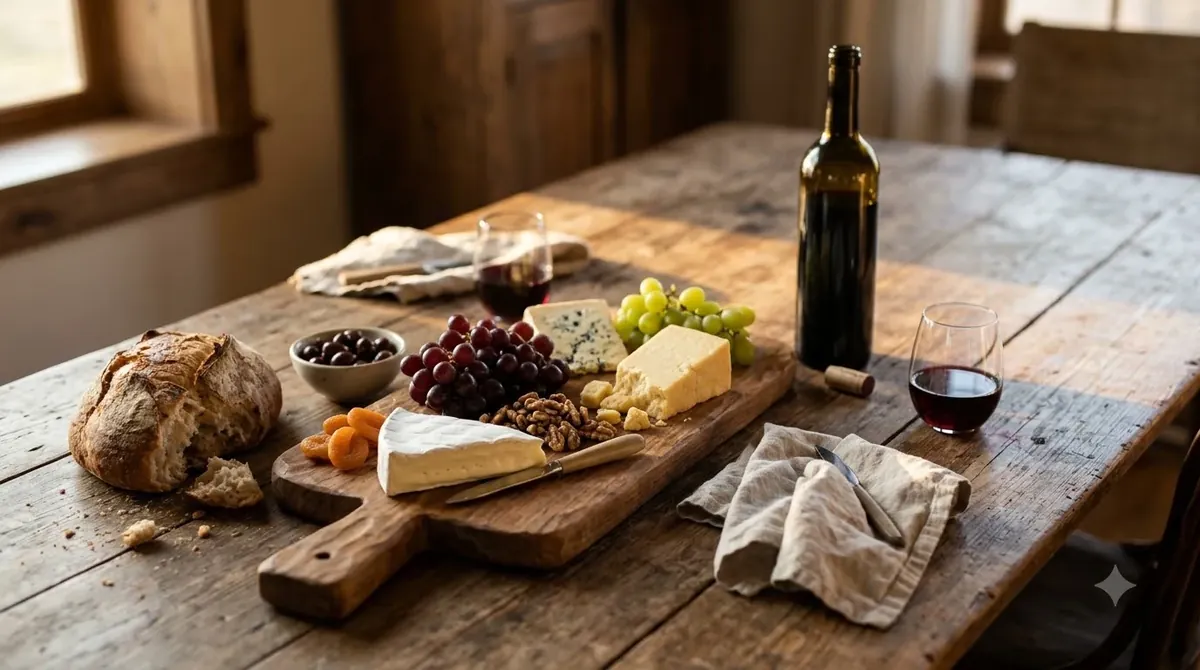
Tip: If you see Teran on a label, it is a Refosco-based red from the Karst area. It is a good choice for dishes with grilled meat or hard cheese, since its acidity and tannins hold up well.
International Grapes in Slovenian Wine
International varieties are common across the country. Merlot and Cabernet Sauvignon are the main international reds, and Pinot noir, Blaufränkisch, Zweigelt and Blauer Portugieser are grown in some areas. On the white side, Chardonnay, Sauvignon blanc, Pinot gris, Riesling, Muscat and Kerner appear on many labels.
Many producers blend native and international grapes, or make single-varietal wines from both. A Sauvignon blanc from the Vipava Valley, for example, can show a more savory edge than versions from cooler climates. Checking the producer’s notes helps you see which style the estate prefers.
How Slovenian Wine Developed
Slovenia’s history of wine stretches back much further than most visitors expect. According to the Wikipedia entry on Slovenian wine, the country’s viticultural history predates Roman influence and can be traced back to early Celtic and Illyrian tribes, with vines grown for wine from roughly the 5th to 4th centuries BC.
During the Middle Ages, the Church controlled much of the wine production through monasteries. Under the Austro-Hungarian Empire, private wineries existed but declined after the empire fell. By the end of the Second World War, cooperatives dominated, and quality was low because bulk production came first. In 1967, the government set up a body that introduced quality testing and seals of approval. After independence in 1991 and the Yugoslav wars, the industry recovered quickly, helped by its ties to Western markets.
How to Choose a Slovenian Wine
Start by deciding which style you want. For crisp, aromatic whites, look for a Rebula or a Sauvignon blanc from the Littoral. For a dry red with some structure, try a Refosco or a Teran from the Karst area. For a lighter, easy-drinking white from the Drava region, a Laški Rizling or a blend from a family producer can be a pleasant choice.
Next, read the label. The region name, the district and the producer name tell you more than a generic term does. A named district such as Brda or Vipava suggests a specific style, and a producer name helps you find more bottles from the same estate later. Keep in mind that availability outside Slovenia is limited, so specialist importers and wine shops are often the best place to look.
Finally, buy a small range of styles. A white, a red and one native grape give you a sense of what the country does well. Slovenian wine rewards curiosity, and the native grapes make it easy to build a tasting that feels different from the usual international shelf.
Frequently Asked Questions
How many wine regions does Slovenia have?
Slovenia has three main wine regions: Littoral (Primorska), Lower Sava (Posavje) and Drava (Podravje). Each region contains several districts with their own styles.
Is Slovenian wine mostly red or white?
White wine is the larger share. The source material notes that roughly three-quarters of production is white, and most of the reds come from the Littoral region.
What is Rebula?
Rebula, also known as Ribolla Gialla, is a traditional white grape from the Littoral. It is known for aromatic, fresh wines with citrus and herbal notes.
What is Teran?
Teran is a red wine made from Refosco grapes, mainly associated with the Karst area. It is dry, with firm acidity and tannins.
Slovenian wine is a good next step for anyone who wants to explore a small, distinctive wine country. Start with a Rebula or a Sauvignon blanc, then try a Refosco or a Teran to see how the native reds differ from international styles. For more regional guides, visit the Wine Regions section, or compare Slovenia with the coastal style of bandol wine region. For the grape background, see Wine Folly’s Refosco guide, and for the country’s wine history, see the Wikipedia entry on Slovenian wine.
More in Wine Regions
 Willcox Wine Trail: Discover Arizona’s High-Elevation Wine CountryUpdated Nov 20, 2026
 Yakima Valley Wine Region: Find the Best Styles to TryUpdated Nov 20, 2026
 Vosne Romanee Wine Tasting: Identify Aromas and Choose Better PairingsUpdated Nov 20, 2026
 Yakima Valley Wine Festival: Find the Best Seasonal Wine EventsUpdated Nov 20, 2026
 Wales Vineyards: Discover Cool-Climate Wines and Where to VisitUpdated Nov 20, 2026
 Yountville Wine Festival: Discover Napa Wines and Local FoodUpdated Nov 20, 2026