

We may earn a commission when you buy through links on this page, at no extra cost to you. Learn more.
Sassicaia red wine is a Cabernet Sauvignon from Tenuta San Guido in Bolgheri on the Tuscan coast, and it is one of the best known Italian wines made outside the classic Chianti and Brunello regions. The estate was founded by the Marchesi Incisa della Rocchetta family, and its first commercial vintage arrived in 1968 after several years of family and friends production. The wine is a structured, age-worthy red built around Cabernet Sauvignon.
Sassicaia often comes up in conversations about Italian reds, usually alongside questions about why it is so different from the wines of central Italy. This guide covers where it comes from, how the estate got started, the grape behind it, and how to serve and pair a bottle.
Where Sassicaia comes from
Tenuta San Guido sits in Bolgheri, a coastal strip of Tuscany where the sea breeze and the warm Mediterranean climate shape the vineyards. The estate belongs to the Marchesi Incisa della Rocchetta family.
The coastal setting is the main reason Bolgheri is often compared with Bordeaux. The estate’s own history says that the family’s founder moved to the Maremma area in the 1940s and noticed that its soils resembled those of Graves in Bordeaux, which was an early hint that French grapes could work on the Tuscan coast. The full history is on the Tenuta San Guido history page.
The history of the estate and the first vintage
The story starts in 1944, when the founder planted just over one hectare of Cabernet Sauvignon at about 400 meters near Castiglioncello di Bolgheri. The earliest plantings also included Cabernet Franc, along with local varieties such as Canaiolo and Ciliegiolo. Over time the selection narrowed, and between 1960 and 1968 the vineyard was focused on Cabernet Sauvignon alone.
Sassicaia was kept for family and friends from 1945 to 1967 before the first commercial vintage in 1968. The estate’s history names the Italian wine writer Luigi Veronelli as one of the first to praise the wine. Nicolò Incisa della Rocchetta joined the estate in 1959 and expanded its commercial work, and the estate today is run by the third generation of the family.
| Stage | Period | What happened |
|---|---|---|
| Early planting | 1944 | About one hectare of Cabernet Sauvignon planted near Castiglioncello di Bolgheri. |
| Family wine | 1945 to 1967 | Made for family and friends, not sold commercially. |
| Grape focus | 1960 to 1968 | The vineyard narrowed to Cabernet Sauvignon only. |
| First commercial vintage | 1968 | Released to the public for the first time. |
The grape and the style
Cabernet Sauvignon is the grape at the heart of Sassicaia. It is a thick-skinned variety that usually gives firm tannins, dark fruit like blackcurrant, and a backbone that lets the wine develop with time. In Bolgheri’s warm but breezy vineyards, the grapes ripen fully while keeping enough acidity for balance.
Sassicaia is generally described as a full-bodied, structured red rather than a light, fruity wine. Expect dark berry and cassis notes, savory earth, and a firm finish. The style rewards patience, and many drinkers find that the wine opens up after time in the glass or in the cellar.
Because the wine is built on Cabernet Sauvignon, it can feel closer to a Left Bank Bordeaux than to a Sangiovese-based Chianti. That is a helpful way to frame it for someone who already knows Cabernet and wants to try an Italian version.
How to serve and pair Sassicaia
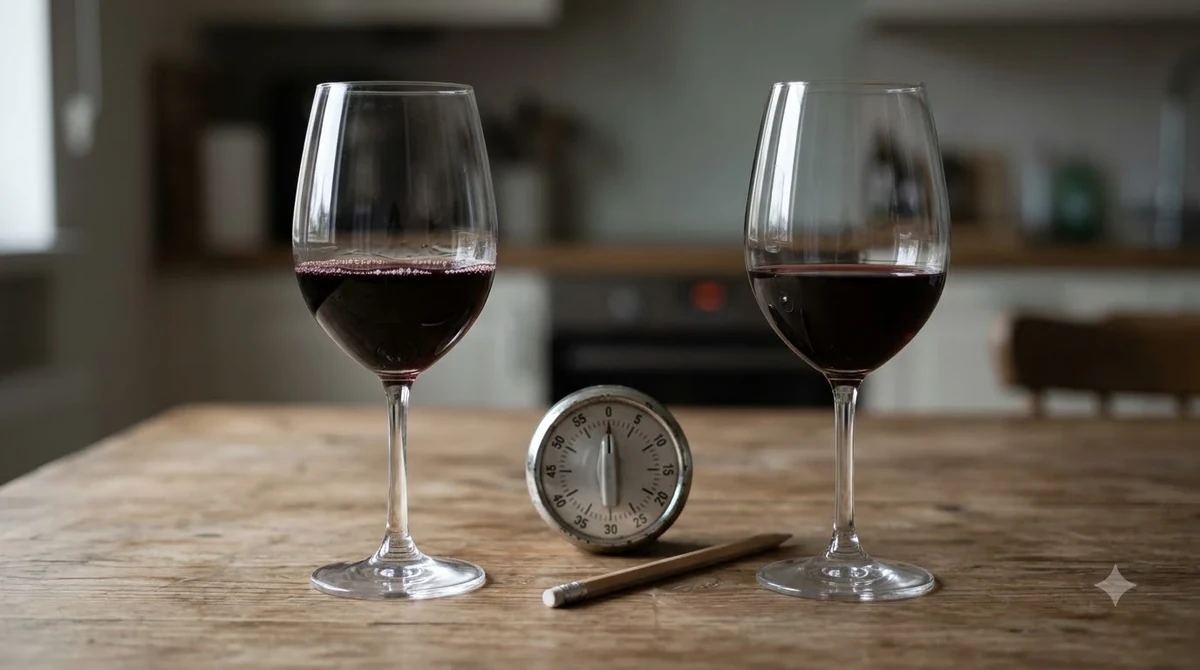
Serve Sassicaia at a cool room temperature, a little below what most people think of as warm room temperature. Open the bottle ahead of time if it is young, and pour into a large red wine glass so the aromas have space to develop. For older bottles, decanting gently can help separate the wine from any sediment.
The wine pairs well with rich, savory food. Roast lamb, grilled beef, braised short ribs, and aged hard cheeses all suit its tannins and dark fruit. Mushroom dishes and herb-rich sauces also work because they echo the earthy notes in the glass.
Tip: If you are opening a young Sassicaia, give it an hour or two in a decanter or a large glass before dinner. The tannins soften and the fruit becomes easier to read.
Who Sassicaia suits
Sassicaia suits readers who enjoy structured red wine and want to explore Italy beyond the usual Sangiovese styles. It is a strong choice for a special dinner, a gift for someone who knows Bordeaux, or a comparison bottle in a tasting with other Cabernet-based wines.
It is less suited to people who prefer light, fresh reds to drink without food. The tannins and the depth of the wine call for a meal, and a younger bottle may need time before it shows its best character. For everyday drinking, many people choose a simpler Italian red from the same region.
How Sassicaia compares with other Italian reds
Italy has many famous reds, and each region has its own grape and style. Chianti is built on Sangiovese, Brunello di Montalcino is also Sangiovese, and Barolo comes from Nebbiolo in Piedmont. Sassicaia stands apart because it brings a Bordeaux grape to a coastal Tuscan estate and treats it with the same seriousness that Italian producers give to their native varieties.
That difference is useful when you are building a table. A Sassicaia can sit next to a classic Chianti Classico, and the contrast shows how grape and place shape the wine.
If you want to see how other well known producers organize their lineups, the Antinori red wine guide covers another major Italian family estate, and the Austin Hope red wine page shows how an American producer presents a Cabernet-led range for comparison.
Buying and storing Sassicaia
Sassicaia is sold as a premium Italian red, so it is more often found in fine wine shops, restaurant lists and specialist importers than in general grocery aisles. Because the wine has a long history and a loyal following, the labels and vintages on the shelf can vary widely in age. When you buy, check the vintage on the label and ask the seller how the bottle has been stored.
Store unopened bottles on their side in a cool, dark place with steady temperature. Avoid storing them near a heater, a window or a kitchen appliance that gives off warmth. A cellar or a wine fridge set to a stable temperature is ideal for holding a bottle until it is ready to drink.
Younger bottles benefit from a short rest after transport, since bottles that have been moved or chilled hard may need a day to settle before you open them. Older bottles can show sediment, so stand them upright for a day before opening and pour slowly at the end.
Frequently Asked Questions
What grape is Sassicaia made from?
Sassicaia is made from Cabernet Sauvignon. The estate’s history says the vineyard narrowed to Cabernet Sauvignon alone between 1960 and 1968, after earlier plantings that included Cabernet Franc and local varieties.
Where is Sassicaia made?
It is made at Tenuta San Guido in Bolgheri, a coastal area of Tuscany in Italy. The estate is owned by the Marchesi Incisa della Rocchetta family.
When was the first commercial Sassicaia released?
The first commercial vintage was released in 1968. Before that, the wine was kept for family and friends from 1945 onward.
Is Sassicaia a good wine to age?
Sassicaia is a structured red with firm tannins, which many drinkers find rewards time in the cellar. Check the producer’s current guidance for specific vintages before you hold a bottle for a long period.
Sassicaia is a clear way to see how a French grape can thrive on the Tuscan coast. Start by reading the estate’s own history page for the full timeline, then compare the wine with a Bordeaux bottle or a Chianti at the same table. The history is part of what makes the bottle interesting, and the more you learn about the estate, the easier it is to choose the right moment to open one.
More in Wine Brands
 Underwood Wine Price: Compare Bottles, Cans, and Pack SizesUpdated Nov 21, 2026
 Zenato Wine Price: Compare Styles and Choose the Right BottleUpdated Nov 21, 2026
 Zuccardi Wine Price: Compare Bottles and Find the Right RangeUpdated Nov 21, 2026
 Yellow Tail Moscato Review: Taste, Sweetness and Serving TipsUpdated Nov 21, 2026
 Wolf Blass Yellow Label Review: Choose Your Best StyleUpdated Nov 21, 2026
 Wolffer Estate Rose Review: Choose the Right Bottle for Your TableUpdated Nov 21, 2026