

We may earn a commission when you buy through links on this page, at no extra cost to you. Learn more.
If you are wondering what is black muscat, it is a dark-skinned red wine and table grape variety officially known as Muscat of Hamburg, prized for producing intensely aromatic, floral, and fruit-driven wines. Created in mid-19th-century England by crossing Schiava Grossa with Muscat of Alexandria, it is one of the few dark-berried members in the vast Muscat family. Winemakers use it to craft everything from light, dry rosés and fruit-forward red table wines to rich, fortified dessert styles with notes of raspberry, rose petals, and black tea.
While most shoppers associate the Muscat family with pale, golden white wines, this dark-skinned cousin brings a completely different visual and sensory experience to the glass. Its plump berries pack tremendous perfume and natural sweetness, making it a favorite for both fresh eating and inventive winemaking around the globe.
What Is Black Muscat?
Black Muscat—also widely labeled as Muscat of Hamburg or Muscat de Hambourg—is a red-skinned grape variety belonging to the ancient Muscat family of Vitis vinifera. Unlike older white-berried relatives, this grape is a relatively modern deliberate crossing developed specifically for its large, attractive clusters and unmistakable perfume.
According to Wine Enthusiast, Black Muscat is one of more than 200 grape varieties that share a variation of the Muscat name, though very few of them have dark blue-black skins. Its genetic lineage connects two distinct European traditions: its parents are Schiava Grossa (a thin-skinned northern Italian red grape also known as Trollinger) and muscat of alexandria wine, an ancient Mediterranean white grape prized for its intense aroma and heat tolerance.
Historical viticultural records trace the grape’s creation to 1850 in Bedfordshire, England, where head gardener Seward Snow bred the crossing in the greenhouses at Wrest Park. Because northern Europe lacked the sunshine to ripen warm-climate table grapes outdoors, Victorian gardeners bred dark, sweet varieties that could thrive under glass. The resulting grape produced plump, juicy berries with pale flesh, thin dark skins, and a bold floral fragrance that quickly caught the attention of European growers.
In the vineyard, Black Muscat buds and ripens mid-season, requiring roughly 140 days from bloom to harvest and moderate warmth to develop full aromatic complexity. Growers prize its generous yields and large berries, though its thin skins mean vineyard teams must watch closely for downy mildew and botrytis bunch rot in damp climates. For anyone learning how to pronounce muscat, the name sounds like “MUSS-cat,” and adding “Black” simply signals its dark pigmentation rather than heavy tannins.
Flavor Profile and Wine Styles
Black Muscat wines are defined by expressive floral aromatics, bright red berry fruit, and remarkably soft tannins compared to traditional red grapes. Because the berries retain the signature grapey perfume of their lineage, even dry versions smell intensely sweet before the first sip hits your palate.
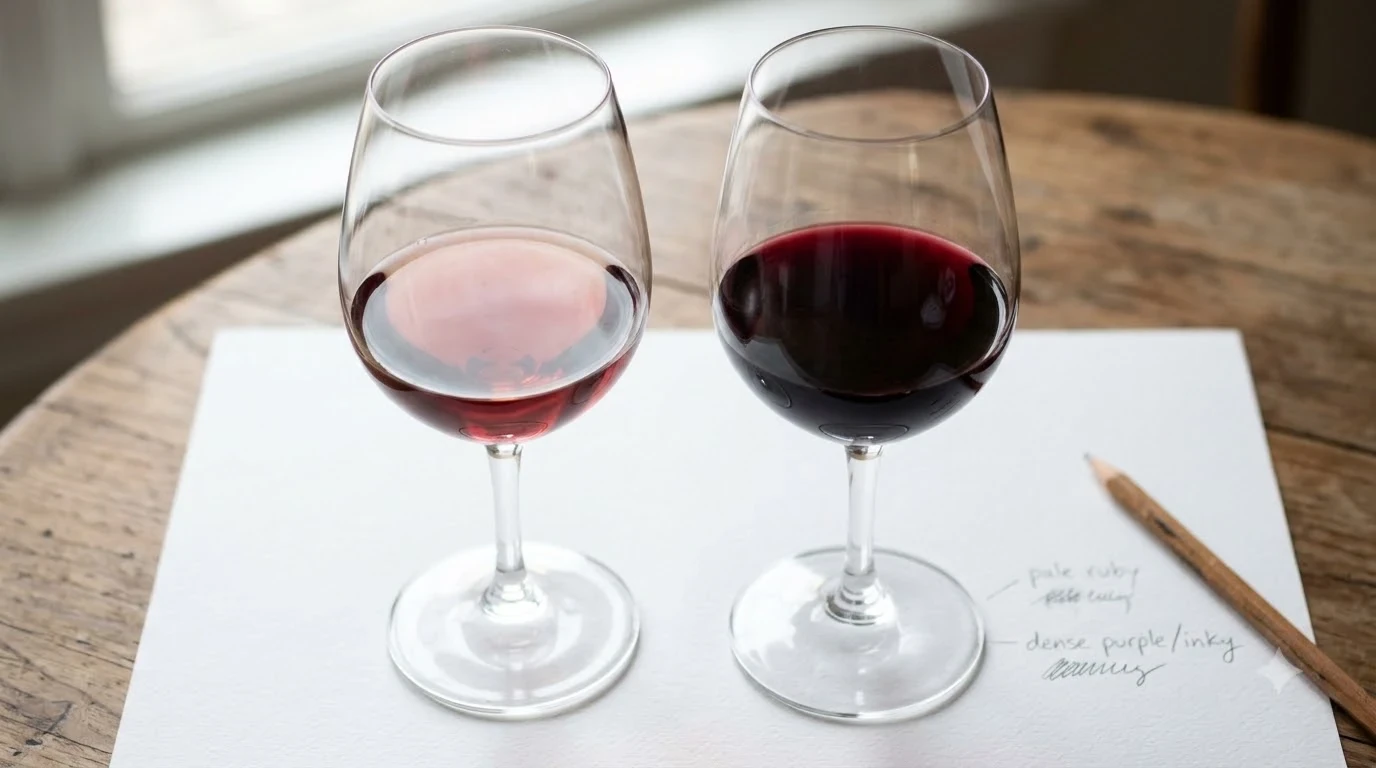
Reviewers at Wine Folly describe classic Black Muscat flavors as a layered combination of fresh raspberry, rose petals, and violets accented by subtle roasted notes of Assam black tea. You will also frequently encounter hints of lychee, ripe strawberry, orange peel, and sweet baking spices depending on how ripe the fruit was at harvest. Unlike Cabernet Sauvignon or Syrah, which rely on thick skins for dark color and grippy structure, Black Muscat yields translucent ruby-to-garnet wines with gentle acidity and minimal astringency.
Because winemakers can manipulate skin contact time and fermentation length, the grape appears in several distinct commercial formats across different Wine by Type categories:
| Wine Style | Color & Body | Typical Sweetness | Typical ABV | Core Flavor Notes |
|---|---|---|---|---|
| Dry Still Red | Translucent ruby, light-to-medium body | Dry | 12% – 13.5% | Crushed raspberry, violet, black tea, white pepper |
| Rosé & Blush | Pale salmon to bright pink, light body | Dry to off-dry | 11.5% – 13% | Wild strawberry, rosewater, mandarin orange, lychee |
| Semi-Sweet Red | Bright garnet, light-to-medium body | Off-dry to medium-sweet | 9% – 12% | Candied cherry, fresh red grapes, honeysuckle |
| Fortified Dessert | Deep ruby-garnet, full and syrupy | Sweet | 15% – 16% | Rose jam, lychee, dark chocolate, dried fig, spice |
When fermented completely dry with full skin maceration, Black Muscat behaves like a lighter, hyper-aromatic cousin to Pinot Noir or Gamay. When winemakers arrest fermentation early or fortify the must with neutral grape spirits—a signature approach in California—the wine retains lush natural grape sugars balanced by floral lift and warming alcohol.
Where Black Muscat Grows
Although bred in an English greenhouse, Black Muscat proved adaptable enough to spread across several continents as both a dual-purpose table grape and a specialty wine varietal. Today, you will find meaningful plantings in California, southern and eastern Europe, Greece, and China.

In the United States, California leads commercial Black Muscat wine production, particularly in the warm interior valleys and foothills where the grape easily reaches high sugar levels without losing its signature rose-petal perfume. Producers in Madera County and the Sierra Foothills have built a loyal following for fortified dessert bottlings, while smaller coastal and East Coast wineries experiment with crisp rosés, dry chillable reds, and aromatic grape brandies.
Across Europe, the grape goes by several regional synonyms. In France, where it is called Muscat de Hambourg, growers cultivate it widely in the southern Languedoc and Provence regions—primarily for fresh table consumption, though a small percentage goes into regional rosés and experimental red blends. In Italy, known as Moscato d’Amburgo, it appears in small pockets across Piedmont, Trentino-Alto Adige, and southern regions for local table wine and fresh fruit markets.
Eastern Europe and the eastern Mediterranean also maintain deep ties to the grape. Countries such as Romania, Bulgaria, Serbia, and Greece grow significant acreage for fresh eating, dry aromatic table wines, and traditional spirits. Meanwhile, China has emerged as one of the world’s largest growers of Muscat of Hamburg, using the grape both for its booming domestic table-grape market and for varietal red and rosé wines in regions like Shandong and Ningxia.
How to Serve Black Muscat
Serving Black Muscat at the right temperature is critical because excessive warmth can make its lush fruit and floral aromatics feel heavy or overly sweet. A light chill sharpens the wine’s natural acidity and keeps its delicate rose and berry notes crisp on the finish.
For dry red and rosé styles of Black Muscat, aim for a serving temperature between 50°F and 55°F (10°C to 13°C)—roughly 30 to 45 minutes in a standard refrigerator before pulling the cork. Sweet, fortified dessert bottlings perform best slightly warmer, around 54°F to 59°F (12°C to 15°C), where the chill keeps the sugar balanced without muting the complex black tea and lychee aromatics.
Glassware choice depends on the style in your bottle. Serve dry red and rosé versions in a standard tulip-shaped white wine glass or a medium-bowled Pinot Noir glass, which captures the volatile floral compounds while directing the wine toward the center of the palate. For fortified dessert styles, pour a smaller 2- to 3-ounce serving into a narrow dessert wine glass or small port glass so the higher alcohol does not overwhelm the delicate aromatics. Young dry and rosé bottles need no decanting and are meant to be enjoyed fresh within one to three years of vintage, whereas fortified styles can hold in the cellar for five to ten years.
Tip: If you open a fortified Black Muscat dessert bottle and do not finish it in one sitting, recork it and store it upright in the refrigerator—the added grape spirit and sugar will keep it fresh for three to four weeks.
Food Pairing Ideas
Black Muscat’s combination of low tannins, vibrant berry fruit, and floral spice makes it far more versatile at the dinner table than many drinkers expect. The exact pairing strategy shifts dramatically depending on whether your bottle is dry or sweet.
Dry and off-dry red or rosé versions shine alongside savory dishes featuring aromatic herbs, gentle heat, or subtle sweetness. Roasted duck breast with berry glaze, pork tenderloin with rosemary, grilled salmon, and mushroom flatbreads all echo the grape’s earthy black tea and red fruit nuances without clashing against harsh tannins. Off-dry styles also handle spicy Thai curries, Sichuan dishes, and Vietnamese barbecue beautifully because the touch of residual sugar cools chili heat while complementing ginger, lemongrass, and star anise.
Fortified dessert styles of Black Muscat are built for rich, salty, or fruit-driven finales. Pungent blue cheeses like Roquefort, Stilton, or Gorgonzola create a classic sweet-and-salty contrast against the wine’s syrupy raspberry and rose notes. On the sweeter side, pair fortified Black Muscat with flourless dark chocolate torte, raspberry tarts, vanilla bean panna cotta, or even drizzled directly over a scoop of vanilla ice cream for an effortless dessert.
How to Choose a Bottle
Shopping for Black Muscat requires checking the label closely, because the grape hides behind several regional synonyms and spans wildly different sweetness levels. Knowing what cues to look for ensures you bring home a dry dinner red rather than an after-dinner dessert wine—or vice versa.
First, check the varietal name and origin on the front label. American bottles almost always say “Black Muscat,” while European imports may read “Muscat of Hamburg,” “Muscat de Hambourg,” or “Moscato d’Amburgo.” Next, look immediately at the alcohol by volume (ABV) listed in small print: bottles sitting between 11.5% and 13.5% ABV are almost always dry or lightly off-dry table wines, whereas bottles listed at 15% ABV or higher are fortified dessert wines.
Finally, inspect the bottle format and vintage date. Fortified dessert versions frequently come in half-bottles (375 ml) rather than standard 750 ml wine bottles, signaling a richer, sweeter pour meant for small glasses. If you are shopping for a dry red or rosé style, choose the most recent vintage available on the shelf so the bright floral notes and fresh red-berry character remain at their peak, much like you would when selecting a crisp muscat blanc wine.
Frequently Asked Questions
Is Black Muscat always a sweet dessert wine?
No, Black Muscat is made in both dry and sweet styles depending on the producer and region. While California is famous for sweet, fortified versions at around 15% ABV, winemakers in Europe and North America also ferment the grape completely dry to create light-bodied, aromatic red and rosé table wines.
Is Black Muscat the same grape as Moscato?
They belong to the same extended Muscat family, but they are distinct grape varieties. Traditional Italian Moscato is made from pale-skinned Muscat Blanc à Petit Grains, whereas Black Muscat (Muscat of Hamburg) is a dark-skinned crossing of Schiava Grossa and Muscat of Alexandria.
Why does Black Muscat smell like roses and fresh grapes?
All Muscat varieties contain naturally high concentrations of aromatic compounds called monoterpenes, including linalool and geraniol. These exact compounds are also found in rose petals, orange blossoms, and lychees, giving Black Muscat its unmistakable floral and fresh-grape perfume.
Can you eat Black Muscat grapes fresh?
Yes, Black Muscat was originally bred in 1850 as a luxury greenhouse table grape and remains widely grown for fresh eating today. Its large, juicy berries, thin skins, and sweet floral flavor make it a popular table grape across France, Italy, Eastern Europe, and China.
Whether you encounter it as a chilled, rose-scented dry red alongside weeknight roast poultry or as a velvety fortified pour beside dark chocolate and blue cheese, Black Muscat offers one of the most expressive aromatic profiles in wine. Checking the ABV and regional synonym on the label makes it simple to pick the exact style that fits your table.
More in Wine Types & Grapes
 What Is Canned Wine? Styles, Sizes, and How to Serve ItUpdated Nov 21, 2026
 What Is Fiano? A Guide to Italy’s Textured White WineUpdated Nov 21, 2026
 What Is Cortese? The Crisp Italian Grape Behind Gavi WineUpdated Nov 21, 2026
 What Is Chardonel? A Complete Guide to This Cold-Hardy White WineUpdated Nov 21, 2026
 What Is Bonarda? A Guide to Argentina’s Smooth Red GrapeUpdated Nov 21, 2026
 What Is Baco Noir? Origins, Flavor Profile, and Pairing GuideUpdated Nov 21, 2026