

We may earn a commission when you buy through links on this page, at no extra cost to you. Learn more.
The best 15 bottle wine fridge depends on where you plan to put it and how you drink: a slim built-in compressor unit fits smoothly under kitchen counters, while a whisper-quiet freestanding thermoelectric cooler suits apartments, offices, and living rooms. Dual-zone 15-bottle models give mixed-wine households separate serving zones for whites and reds, whereas single-zone cabinets hold a steady cellar temperature for aging or single-varietal stashes. Slim vertical countertop units save precious counter depth, and wide-shelf models accommodate wider Burgundy, Pinot Noir, and sparkling wine bottles without forcing you to remove racks.
Fifteen bottles hits a practical sweet spot for casual collectors and weeknight drinkers—roughly one full case of wine plus three extra bottles for guests or special occasions. That capacity keeps your everyday rotation organized and off the kitchen counter without requiring the floor space or electrical draw of a full-size wine cellar, and it gives you a modest step up in storage room over a compact 12 bottle wine fridge.
Quick Comparison
The table below compares the five primary 15-bottle wine cooler styles across cooling system, installation layout, temperature control, and ideal home placement.
| Wine Fridge Type | Cooling System | Installation Style | Temperature Zones | Best Suited For |
|---|---|---|---|---|
| Slim Built-In Undercounter | Front-vented compressor | Built-in or freestanding | Single or dual zone | Kitchen remodels and narrow base cabinet cutouts |
| Quiet Freestanding Thermoelectric | Solid-state thermoelectric | Freestanding only (rear/side clearance) | Single zone | Bedrooms, home offices, and open living spaces |
| Dual-Zone Serving Cooler | Compressor or hybrid | Freestanding or undercounter | Two independent zones | Households serving crisp whites and reds simultaneously |
| Compact Countertop Vertical | Thermoelectric or mini compressor | Countertop or bar cart | Single zone | Apartments, condos, and tight kitchen counters |
| Wide-Shelf Multi-Bottle Cooler | Compressor | Freestanding or built-in | Single zone | Pinot Noir, Champagne, and wider-format bottles |
Best for Kitchen Remodels and Narrow Base Cabinets: Slim Built-In Undercounter Models
A 15-inch-wide front-vented compressor cooler slides directly into a standard trash-compactor or narrow base cabinet cutout, turning unused undercounter space into integrated wine storage. Because the exhaust grille sits at the bottom front plinth rather than the back, these units flush up against cabinetry without overheating.
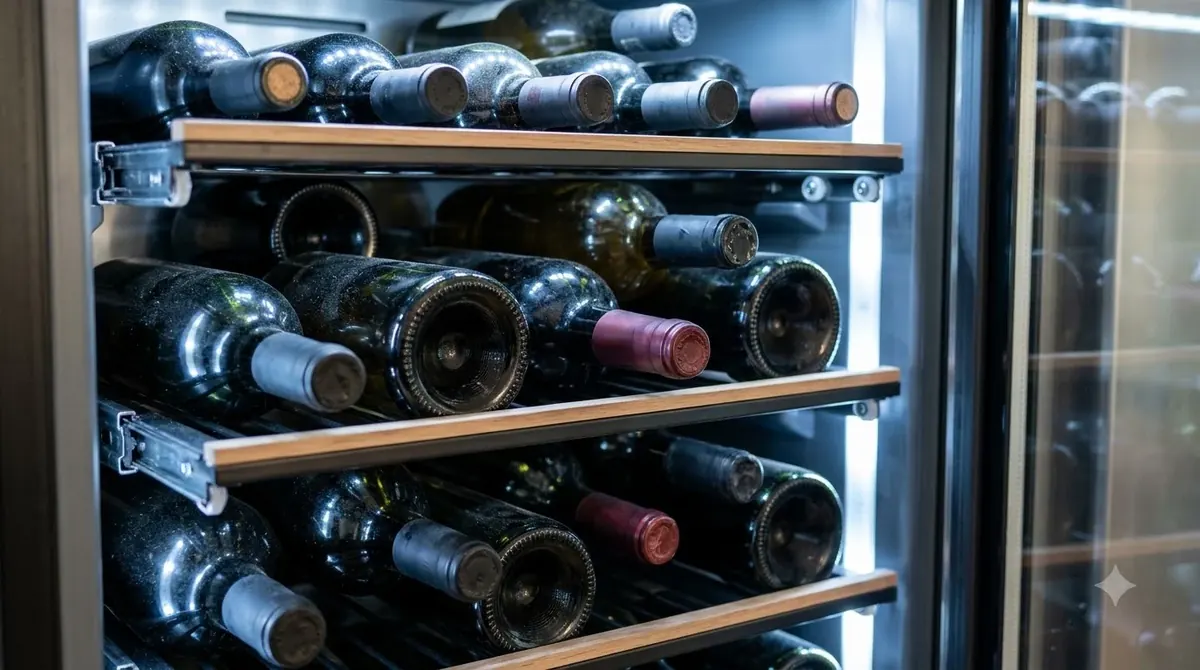
Why it stands out: Front-venting compressor hardware delivers dependable cooling performance even inside enclosed kitchen cabinetry and warm cooking environments. Reviewers at Wine Enthusiast note that freestanding coolers require open air clearance around the sides and back, whereas true built-in models are engineered specifically for zero-clearance cabinet integration. Most units in this category also include reversible stainless-steel or black glass doors, adjustable leveling legs to match standard 34-inch counter heights, and smooth-gliding beechwood or metal racks.
Keep in mind and best for: Compressor-driven undercounter units produce a gentle mechanical hum—typically in the high 30s to low 40s decibel range—and weigh significantly more than countertop coolers due to heavier insulation and steel housings. Leave a tiny fraction of an inch around the door swing so hinges clear adjacent cabinet faces cleanly. This style is best for homeowners updating a kitchen island, wet bar, or pantry who want a permanent, built-in appliance look without sacrificing a full 24-inch cabinet bay.
Best for Quiet Living Spaces and Home Offices: Freestanding Thermoelectric Coolers
Freestanding thermoelectric 15-bottle wine fridges cool bottles using an electronic Peltier heat pump instead of a traditional refrigerant compressor, eliminating moving mechanical parts and vibration. They run at a near-silent whisper while keeping bottle sediment undisturbed.
Why it stands out: Without a compressor cycling on and off, thermoelectric units avoid the low-frequency buzz and subtle cabinet vibration that can be distracting in quiet rooms or disruptive to resting bottles over time. They are lightweight, straightforward to set up out of the box, and typically feature digital touch controls on the exterior glass door so you can check or adjust temperatures without letting cool air escape.
Keep in mind and best for: Thermoelectric heat pumps cool relative to the surrounding room temperature, usually dropping the interior about 20 degrees Fahrenheit below ambient air. That means they perform best in climate-controlled interiors around 65 to 72 degrees Fahrenheit and struggle in hot sunrooms, garages, or next to ovens. They also need two to four inches of breathing room behind and beside the cabinet. Choose this type for living rooms, dining areas, bedrooms, or home offices where near-silent operation matters most.
Best for Serving Whites and Reds Together: Dual-Zone 15-Bottle Coolers
Dual-zone 15-bottle wine fridges split the interior cabinet into two independently controlled compartments separated by an insulated divider, letting you hold crisp whites and sparkling wines cold while keeping reds at proper cellar or serving warmth. Instead of compromising on a single middle-ground setting, every bottle stays ready to uncork.
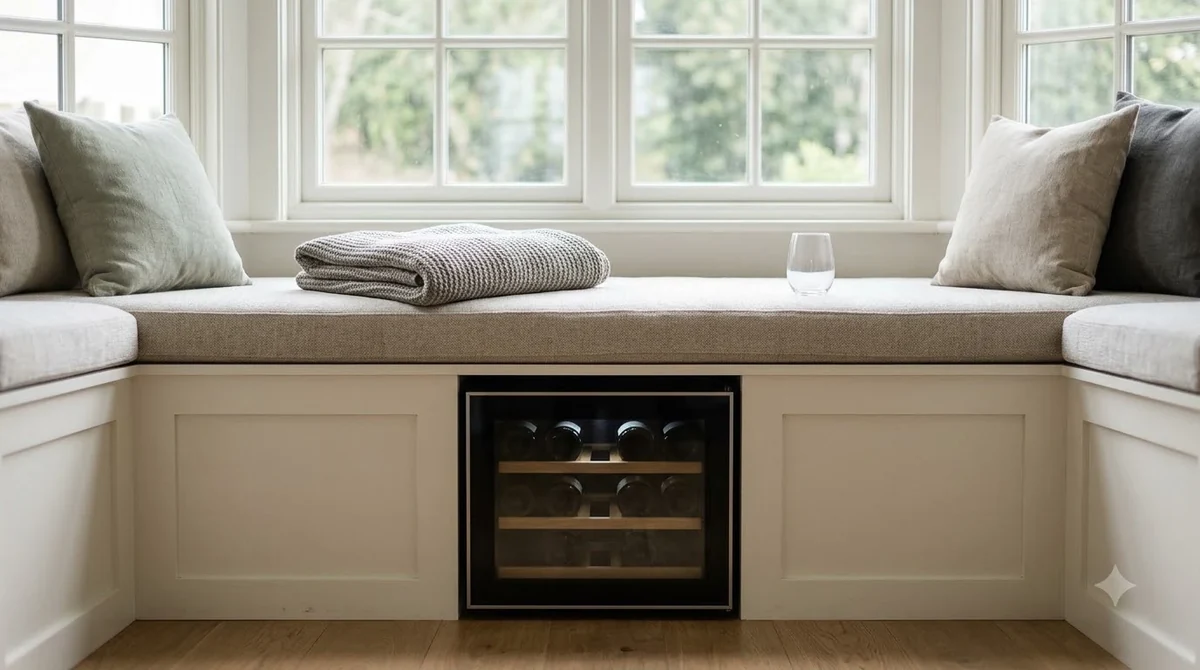
Why it stands out: According to VinePair’s wine serving temperature guide, sparkling and light white wines taste best chilled between 40 and 50 degrees Fahrenheit, while medium- to full-bodied reds shine between 60 and 65 degrees Fahrenheit. A dual-zone layout handles both ranges at once—typically dedicating the upper racks to whites and the lower section to reds—so you never have to chill a red in the kitchen refrigerator or wait on an ice bucket before dinner.
Keep in mind and best for: Adding an internal divider and second temperature sensor takes up a bit of vertical interior height, which can make rack spacing slightly tighter than in a single-zone cabinet of the same exterior size. Each zone also has a fixed upper and lower limit, so check the manual before assuming both compartments can run at identical temperatures. Dual-zone models are best for hosts and mixed-palate households that regularly open white, rosé, and red bottles in the same evening.
Best for Apartments and Tight Countertops: Compact Vertical Countertop Units
Tall, narrow countertop 15-bottle coolers trade width for vertical height, keeping their footprint compact enough to sit on a kitchen counter, sideboard, or bar cart without crowding prep space. Many models measure under 14 or 15 inches wide while stacking five or six tiers of bottles cleanly.
Why it stands out: Vertical proportions let apartment dwellers and renters keep fifteen bottles properly chilled without giving up floor space or modifying cabinetry. Many narrow countertop designs also incorporate tinted double-pane glass doors to block ultraviolet rays, soft interior LED lighting that generates minimal heat, and control-panel locks so accidental bumps against the front glass never change your temperature setting.
Keep in mind and best for: Measure the clearance between your countertop and upper wall cabinets carefully before ordering, as a 26- to 28-inch-tall cooler will not fit beneath standard 18-inch upper cabinet overhangs. Place the unit away from dishwashers, ranges, and sunny windows to keep internal cooling steady. If your counter space is even tighter and you only keep a week’s worth of bottles on hand, a smaller 6 bottle wine fridge may fit underneath upper cabinets more easily, whereas a 15-bottle vertical model is best for open counter stretches and dedicated bar tables.
Best for Pinot Noir, Champagne, and Wide Bottles: Wide-Shelf Flexible Models
Wide-shelf 15-bottle coolers feature removable racks and generous vertical spacing designed for broader Burgundy, Pinot Noir, Rhône, and Champagne bottles rather than only slender Bordeaux cylinders. Adjustable shelving prevents labels from scuffing and stops oversized bottles from jamming against the ceiling or door glass.
Why it stands out: Manufacturers calculate standard capacity ratings using slim 750 mL Bordeaux bottles, which often forces buyers to remove a shelf—dropping usable storage to 10 or 12 bottles—once wider bottles enter the mix. Models built with scalloped, sliding, or removable racks give you the flexibility to rearrange tiers for wider shoulders, magnum-style bases, or occasional upright storage for an opened bottle.
Keep in mind and best for: Removing a rack to accommodate oversized sparkling or Burgundy bottles will naturally reduce total bottle count by two or three bottles, so plan around real-world shapes rather than maximum brochure numbers. This style is best for Pinot Noir enthusiasts, Champagne drinkers, and collectors with varied bottle silhouettes who want easy access without scraping labels on tight metal wires.
How to Choose
Match the cooling system to room temperature: Choose a compressor cooler if the fridge will sit in a warm kitchen, sunny dining room, or built-in cabinet enclosure, since compressors reliably hold temperatures down into the low 40s regardless of summer heat. Choose a thermoelectric unit only for cool, air-conditioned living spaces where silence is a higher priority than rapid chill-down speed.
Decide between storage and serving temperatures: Wine experts at Wine Enthusiast point out that while serving temperatures vary by style, all wines—red, white, and sparkling—age and store safely at a steady 53 to 57 degrees Fahrenheit. If you want simple long-term or medium-term storage, a single-zone fridge set to 55 degrees Fahrenheit keeps every bottle safe. Pick a dual-zone cooler if you want bottles held directly at ready-to-pour serving temperatures.
Check ventilation clearance and door swing: Built-in coolers vent out the bottom front kickplate and require minimal side clearance, while freestanding models need two to four inches of airflow behind and beside the cabinet. Look for a reversible door hinge or verify whether the door opens left or right so it swings freely against nearby walls or islands.
Plan for realistic bottle geometry and growth: Standard 15-bottle ratings assume uniform Bordeaux bottles, so wider Pinot Noir or sparkling bottles will trim real capacity by 15 to 25 percent. If you frequently buy mixed cases or entertain large groups, compare dimensions across multiple capacity tiers in our By bottle count sizing guide before finalizing your spot.
Tip: After delivery, let any compressor-driven wine fridge stand upright and unplugged for at least 24 hours before turning it on. This allows internal compressor oil and refrigerant displaced during shipping to settle safely back into place.
Frequently Asked Questions
How many glasses of wine are in a 15 bottle wine fridge?
A full 15-bottle wine fridge holds roughly 75 standard five-ounce pours, based on five glasses per 750 mL bottle. If you pour slightly larger six-ounce restaurant servings, you will get around 60 glasses total—you can see the exact breakdown by pour size in our guide on how many glasses in a bottle of wine.
Will 15 Champagne or Pinot Noir bottles fit in a 15 bottle wine cooler?
Usually not all 15 at once, because manufacturers rate bottle capacity using slim 750 mL Bordeaux bottles. Wider-bellied Burgundy, Pinot Noir, and Champagne bottles typically reduce usable capacity to around 11 to 13 bottles unless the fridge has extra-wide rack spacing or removable shelves.
Can you put a freestanding 15 bottle wine fridge under a counter?
No, freestanding wine fridges vent heat through the back and sides, so enclosing them under a counter traps hot air, overworks the cooling system, and can void the warranty. If you want to slide a cooler into cabinetry, choose a front-vented built-in model designed for zero-clearance installation.
What temperature should I set a single-zone 15 bottle wine fridge?
Set a single-zone cooler to 55 degrees Fahrenheit if you store a mix of reds and whites, as 53 to 57 degrees is the ideal universal storage range for preserving wine. From 55 degrees, reds need only 15 to 20 minutes on the counter to warm slightly, while whites can chill in the kitchen fridge for 20 minutes before serving.
Choosing the right 15-bottle wine fridge comes down to matching the cooling mechanism and ventilation layout to the exact spot in your home. Whether you need a front-vented undercounter unit for a kitchen remodel or a quiet freestanding cooler for your dining room, picking the right configuration ensures every bottle stays protected and ready to pour.
More in By Bottle Count
 Best 52 Bottle Wine Fridge Options for Every Kitchen and CollectionUpdated Nov 18, 2026
 Best 34 Bottle Wine Cooler Types for Kitchens, Bars, and Home CellarsUpdated Nov 18, 2026
 Best 166 Bottle Wine Cooler Types for Serious Collectors and HostsUpdated Nov 18, 2026
 Best 54 Bottle Wine Fridge Types for Undercounter and Home CellarsUpdated Nov 18, 2026
 Best 46 Bottle Dual Zone Wine Cooler for Built-In Kitchens and Home BarsUpdated Nov 19, 2026
 Best 28 Bottle Wine Fridge for Two Cases and Entertaining StockUpdated Nov 18, 2026